BARI, ITALY, MAY 3, 2023
If you’ve sniffed around this blog before, you know that I have some strong travel related wishes and opinions. One of my obsessions of long standing revolves around Kaiser Friedrich II Hohenstaufen, my favourite emperor, and his last building project, Castel del Monte near Andria in Puglia, Kingdom of Sicily, present-day Apulia, Italy.
Do you have a favourite emperor?
Go ahead, laugh, but I am quite serious about it. Being aware of our geopolitical past and our cultural and religious heritage, builds an understanding of the complexities of historical events and their ramifications for our future. Looking back, we can now see the significance of the one thousand year period between the fall of Rome that gave rise to the importance of the new Christian leadership and the fall of Constantinople confirming the magnitude of the Islamic gravitas.
The first millennium of the Common Era was a time of great upheaval in Western Europe. Mass migration shifted power centres in a fluid, unpredictable pattern across the continent. Varying Germanic tribes, Ostrogoth & Visigoth, the Magyars, Vikings, and assorted Slavic peoples moved hither and yon. Now and then, strong leadership emerged here and there, but Mediaeval Europe was essentially a mosaïc of wannabe kings on the warpath. Near the halfway mark of the millennium, Odoacer, a man of uncertain Germanic origin, emerged from this squabbly mix and made history by unseating the last emperor in and of Rome, only to be eliminated himself by the Ostrogoth leader Theodoric the Great, whom we’ll encounter when we dock in Ravenna in a few days.
Whilst the last Western Roman emperor bit the dust in 476 CE thanks to Odoacer, his Eastern colleagues upheld the Roman-Hellenic ideals for another 1000 years in the Eastern Roman Empire till Sultan Mehmed II showed up in Constantinople on May 29, 1453, and ended the Roman Empire once and for all.
Albeit calling it ‘Eastern’ Roman Empire is somewhat misleading since it extended to the far western edge of the continent. The emperors, augusti, and their deputies, caesares, ruled not only in Italy, Greece, Cyprus, Anatolia, the Levant (modern Syria, Lebanon, Jordan, Palestine, Israel), Egypt, and the Maghreb, they also governed varying Roman provinces in present day Armenia, Iraq, and Iran, and they ruled in Hispania (Spain, Portugal), and north of the Alps to the Danube River, and in Gallia (France) to the Rhine River, as well as in England to Hadrian’s Wall. As a matter of fact, the future Eastern Roman Emperor Constantine I was proclaimed augustus by his late father’s troops in Eboracum, modern day York. It is safe to say that for those early days of the Middle Ages, the known world between the Atlantic ocean and the Euphrates river, from the river Tyne to the Atlas mountains was still governed by Roman and Greek laws and principles, and the official languages across the empire continued to be Latin and Greece. The Byzantine Empire still largely adhered to the ideals of Antiquity, but two emerging religious power bases were about to alter the political layout of the once all-mighty Roman Empire.
Remember the ‘Forty Martyrs’ we mentioned in connection with Sarandë, Albania, one post back? The martyrs were imperial Roman soldiers who happened to fervently believe in a new God. The sacred Pantheon was in danger of being kicked through the gate of Hades on Cape Tainaro when Emperor Constantine in 313 CE allowed this Christian God to join the Olympians. And only a few years later, he established his capital Constantinople, formerly Byzantium, as a Christian metropolis. Ouch! But Christianity wasn’t the only new belief system arising during the first millennium of the common era. In the 7th century, the Prophet Muhammad brought into being yet another Abrahamic religion, Islam. Both Christianity and Islam managed to quickly outgrow all other religions represented in Medieval Europe, the Near East, and North Africa, including their own foundation, Judaism. Popes and caliphs would become the major power players well before the dawn of the second millennium.
At long last, let’s return to my Swabian* friend Freddy the Staufer 😎
*In case you’re unsure what the heck Swabians might be 🤔 I’m one myself since I was born in Schwaben, quite close to the home castle of the Staufer dynasty.
When we arrived in the cruise port of Bari, Italy, I had one and only one objective in mind: visit Castel del Monte, at my own pace and leisure. Our cruise line, Silversea, offered an excursion that included the Castello, but only as a bus tour with several additional destinations. We booked a private driver instead, Vincenzo “Enzo” Salamino, through Viator Bari/Puglia, for a day of exploration on our own.


Castel del Monte lays roughly an hour’s drive inland from Bari in the Altoplano delle Murge, a limestone karst plateau in Apulia. The castle was built with locally quarried limestone, coral limestone breccia aka coral gravel, and marble, giving the building a creamy-white glow. But the ‘thing’ about Castel del Monte, its unique attraction among medieval castles, is its shape.
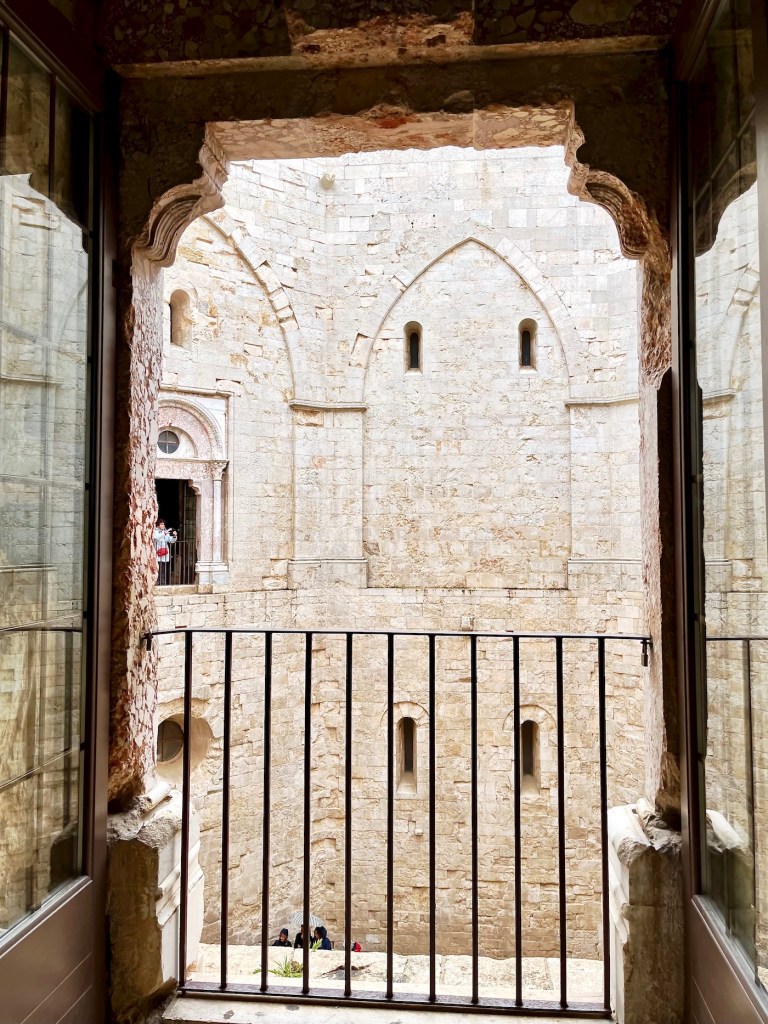
The castle is captivating and mesmerising in its simplicity and mathematical precision. Its base is an octagon of equal sides. Each one of the eight corners is connected to an octagonal tower of equal sides. The main body of the castle consists of an octagonal ring with an octagonal central courtyard open to the sky. The two-storied building is subdivided into eight equal-sized , interconnected rooms per level. There you have it, the sum-total of Castel del Monte, the embodiment of the number 8. It has fuelled speculations surrounding the secret meaning of emperor Frederick’s octagonal design through the centuries. Let us not forget, 8 is the symbol for infinity … 👻👻
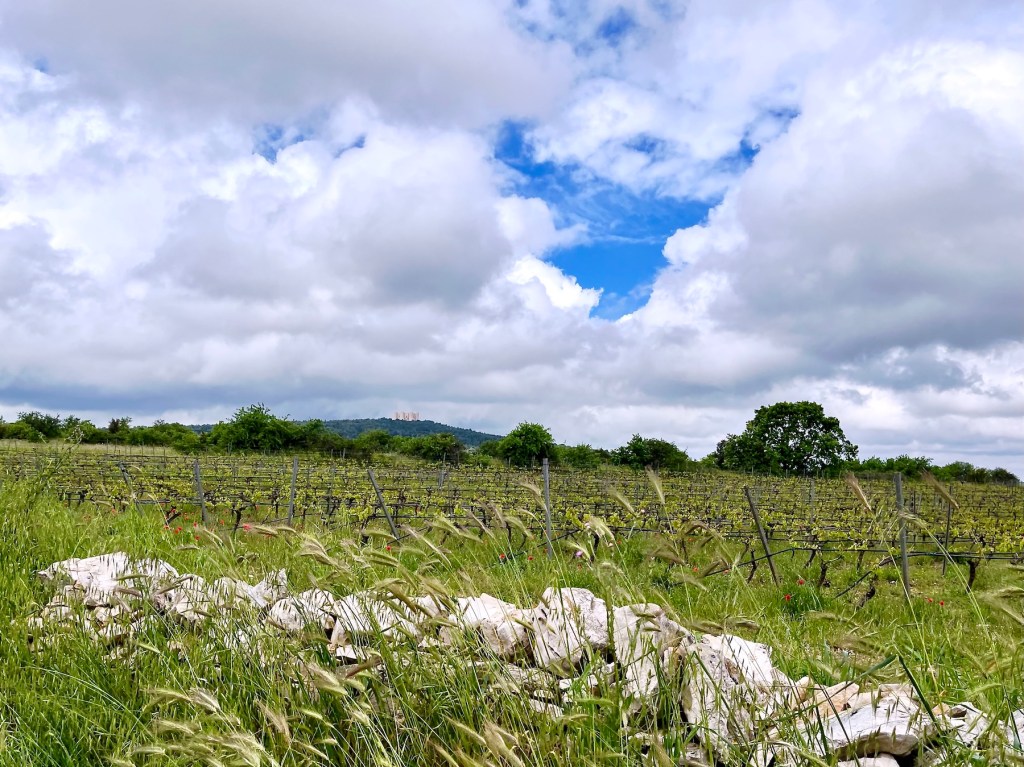
The castle sits on a hill of about 600 m, overlooking a fertile plateau with its vineyards, almond orchards, and olive groves. This was agricultural land with transhumance animal husbandry since time immemorial and it would not have looked appreciably different during the lifetime of one Constantine Friedrich Roger [1194-1250] of the Swabian Staufer dynasty. Federico became King of Sicily in 1198 as an orphaned three-year old, who was often referenced as Puer Apulia, boy (as in ‘son’) of Puglia.
The Norman Kingdom of Sicily of the second millennium CE was an amalgamation of Greek, Viking, Lombardi, Italian, German, Jewish and Arabic people with their assorted histories, traditions, and religions. The young prince soaked up and internalised the different theologies and diverse philosophies, Eastern arts and sciences, and languages on offer, soon speaking six, some even say nine languages. This would be Federico’s life-long true home. But he was also the son and grandson of Germanic Staufer Emperors, and as such he had responsibilities far beyond his snug little southern Italian paradise.
The princes of the German Electorate chose Friedrich as their King in 1212, and the Pope anointed him Holy Roman Emperor in 1220. Following the wedding to his second wife Isabella, Queen-regnant of Jerusalem, he added the title King of Jerusalem to his collection of crowns.
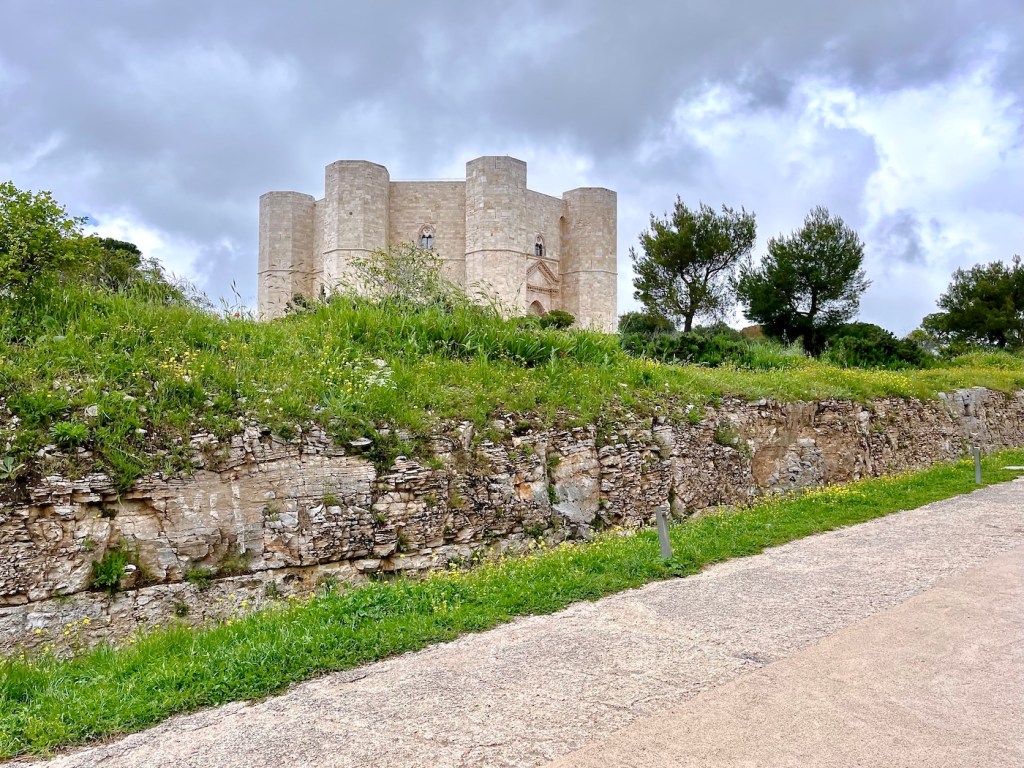
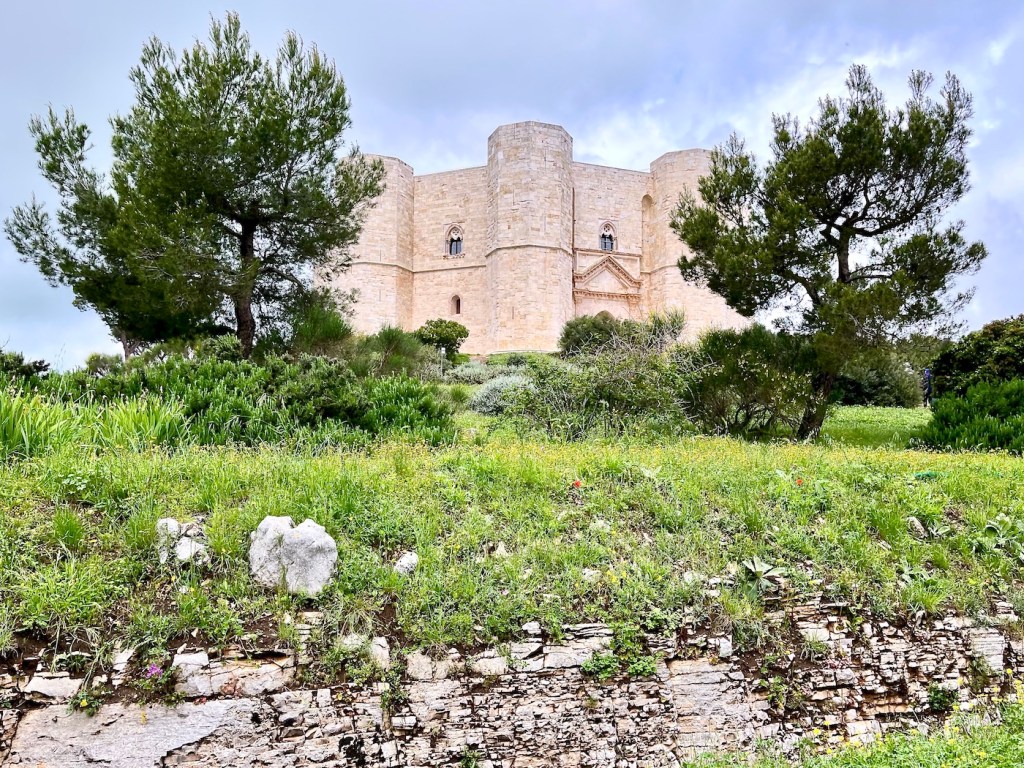
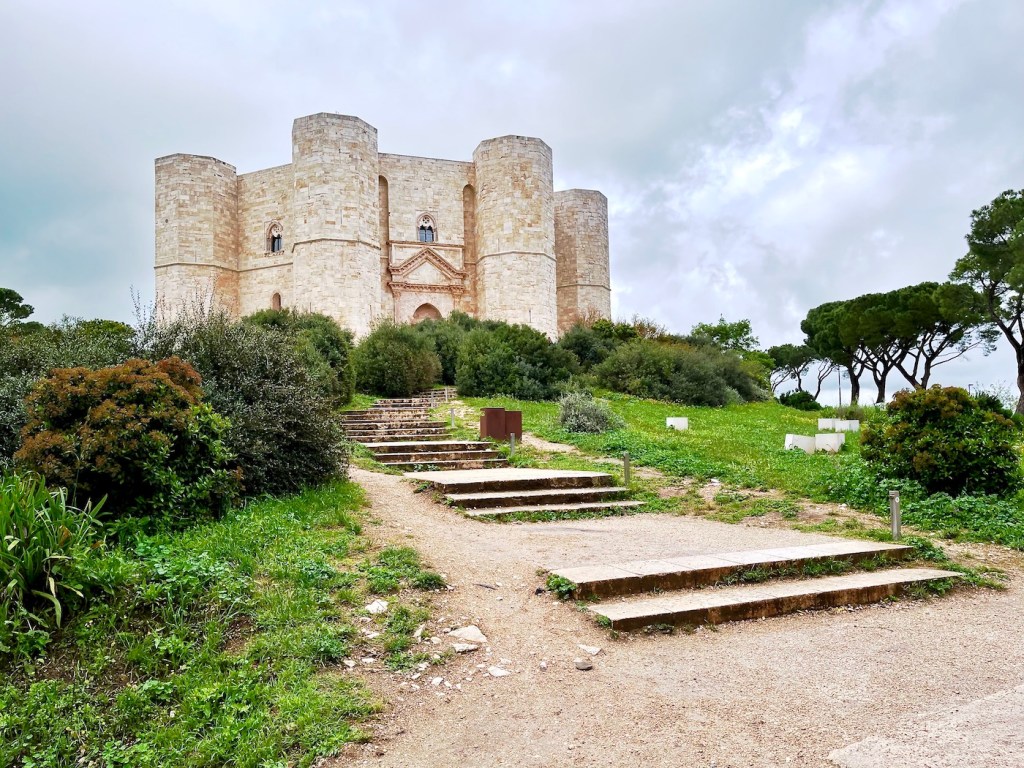
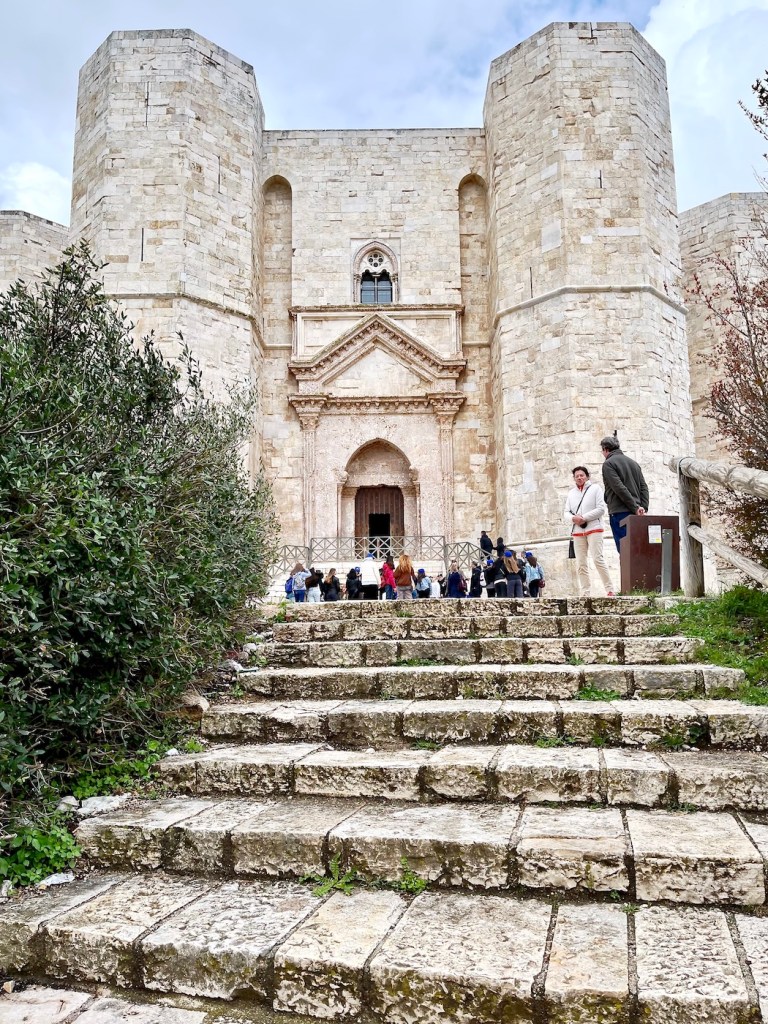

[The following text segments in italics are excerpts from the Castel del Monte UNESCO site]
… A unique piece of medieval military architecture, Castel del Monte is a successful blend of elements from classical antiquity, the Islamic Orient and north European Cistercian Gothic.

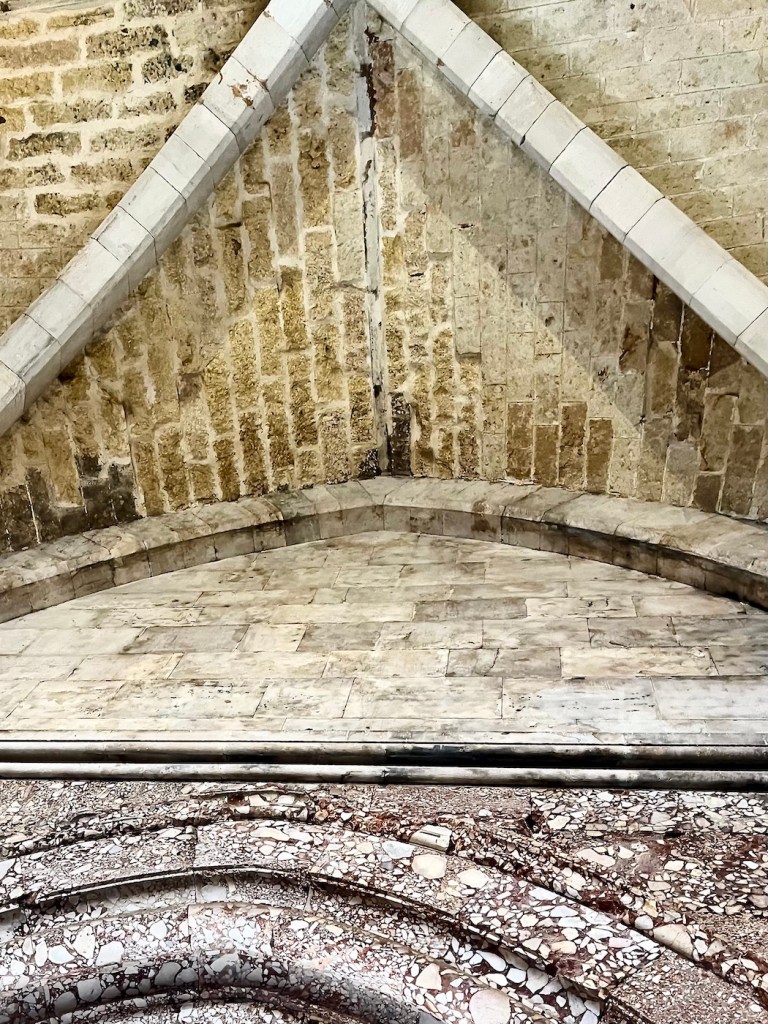


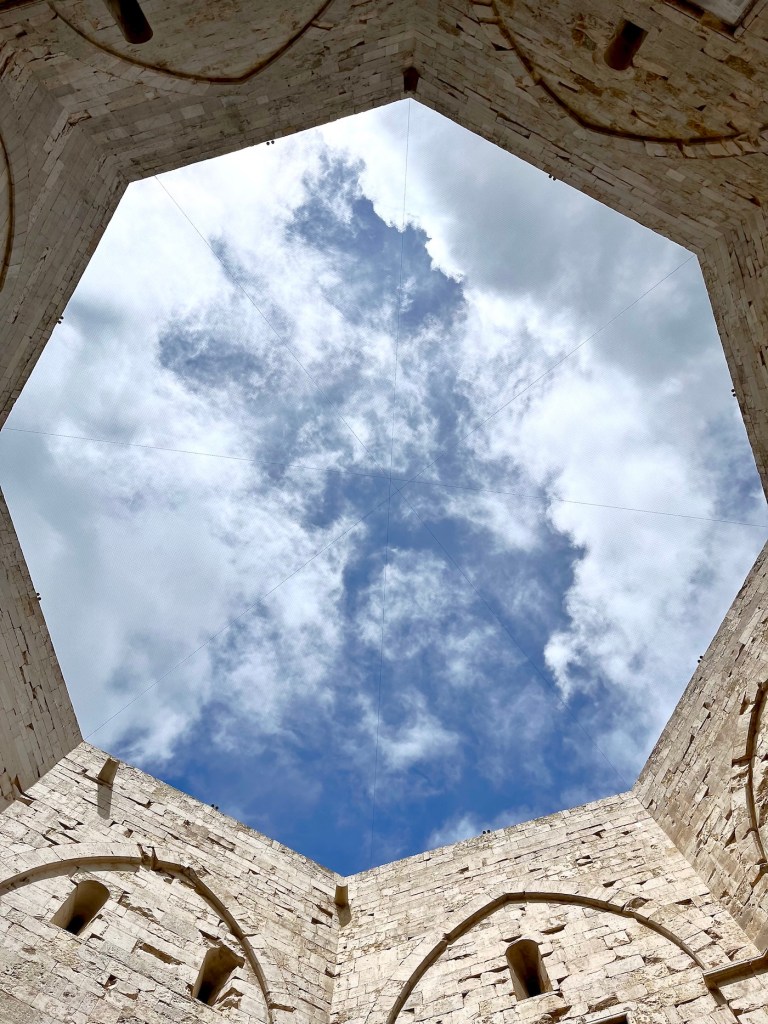
… it was completed in 1240. The castle’s location, its perfect octagonal shape, as well as the mathematical and astronomical precision of its layout all reflect the broad education and cultural vision of Emperor Frederick II.
… the Germanic Emperor brought scholars together in his court from throughout the Mediterranean, combining Eastern and Western traditions. The castle’s … interior features reflect Eastern influences, such as the innovative hydraulic installation used by Frederick II for bathing in accord to the typical Arabic customs.

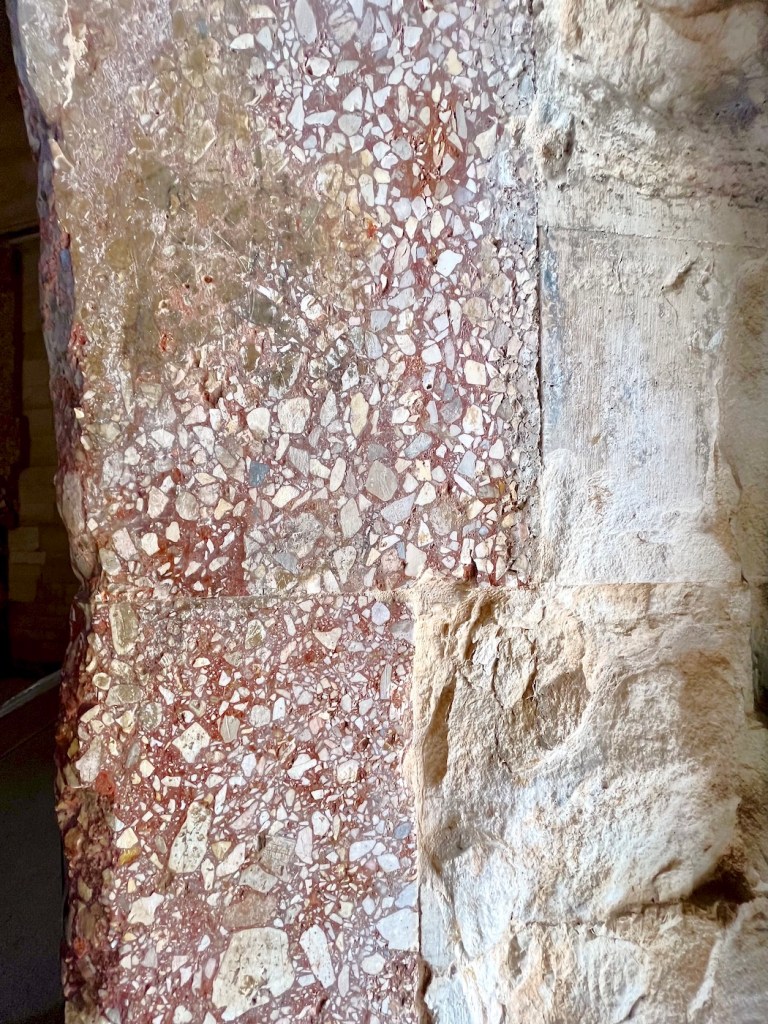


… the building of Castel del Monte illustrates the cosmopolitan spirit of the Emperor who brought together Greek, Arab, Italian and Jewish scholars to his court in Palermo. This designates him as one of the precursors of the modern humanists.

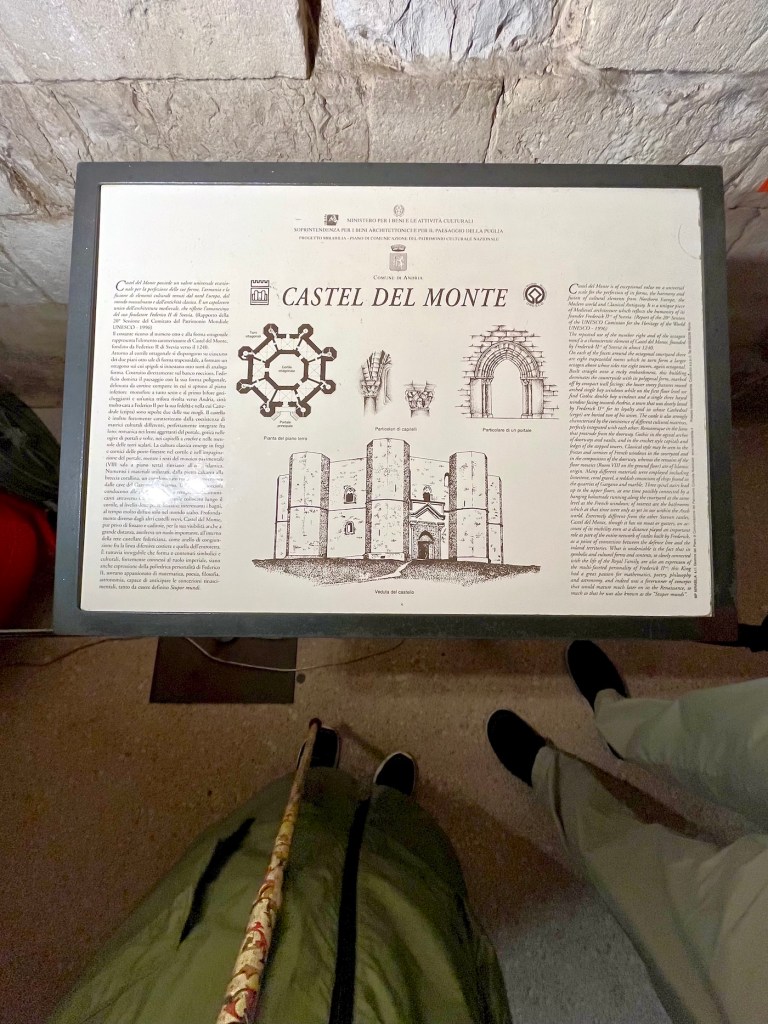
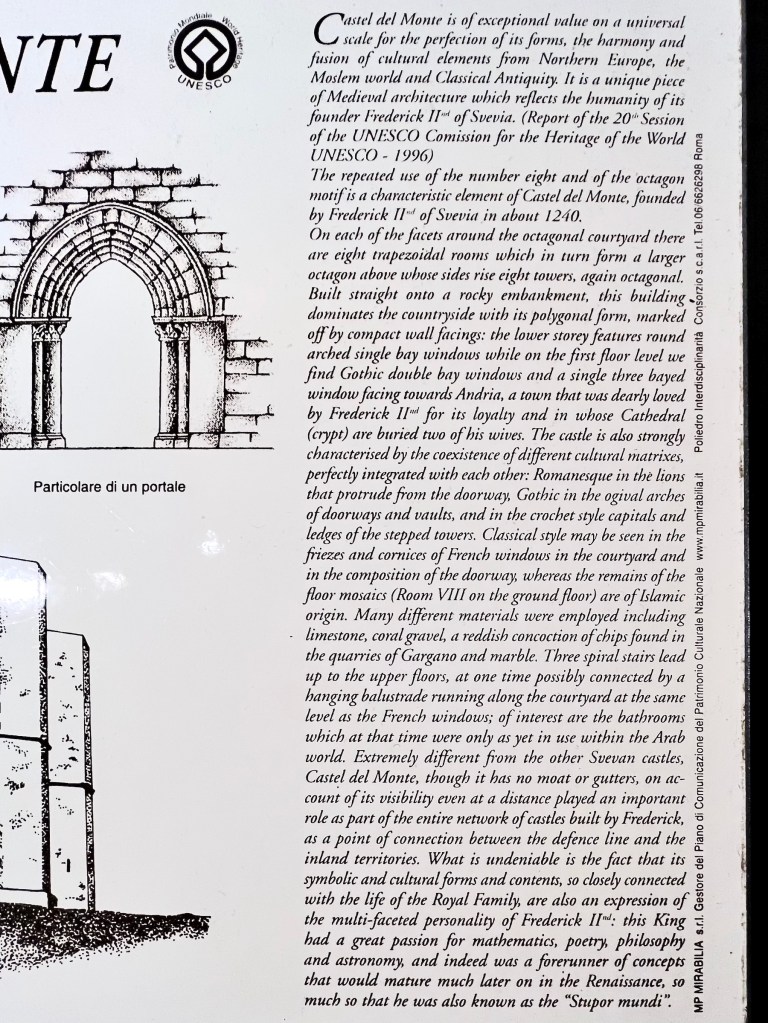
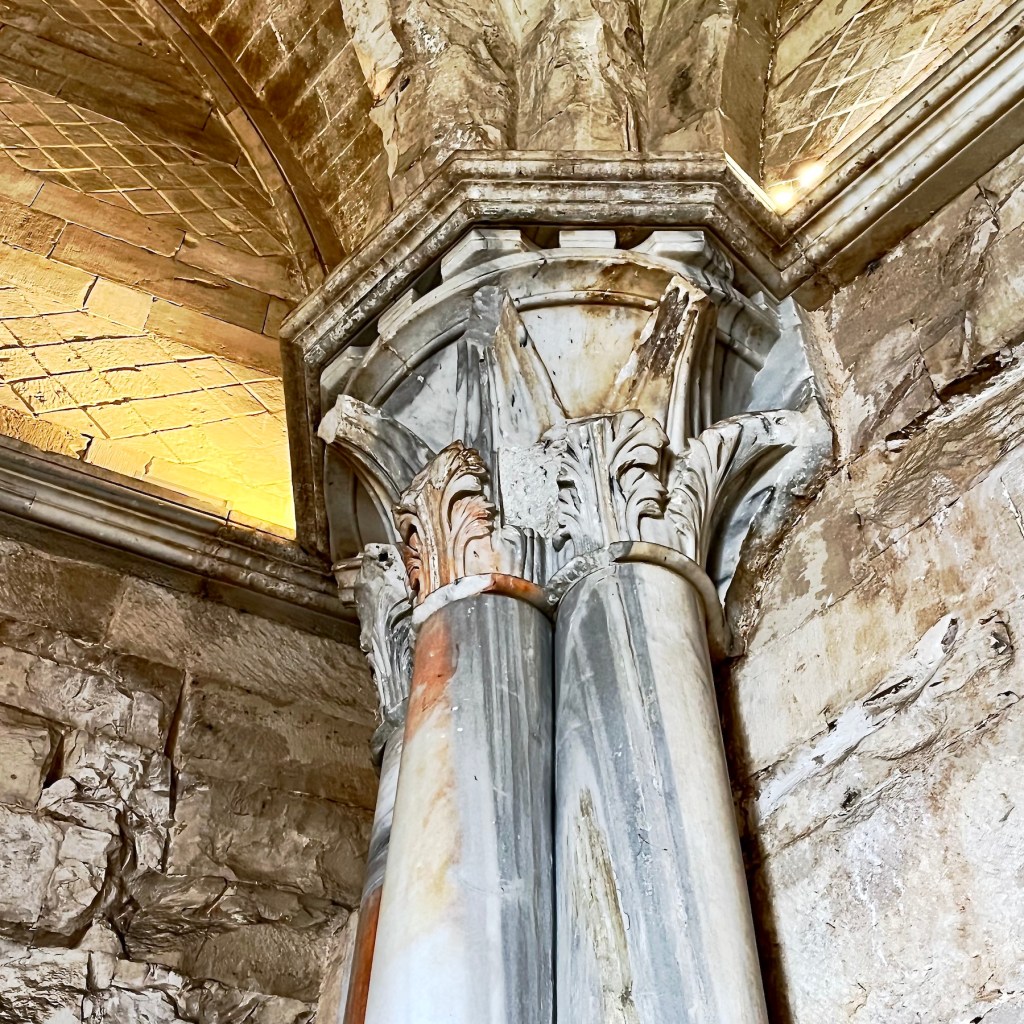
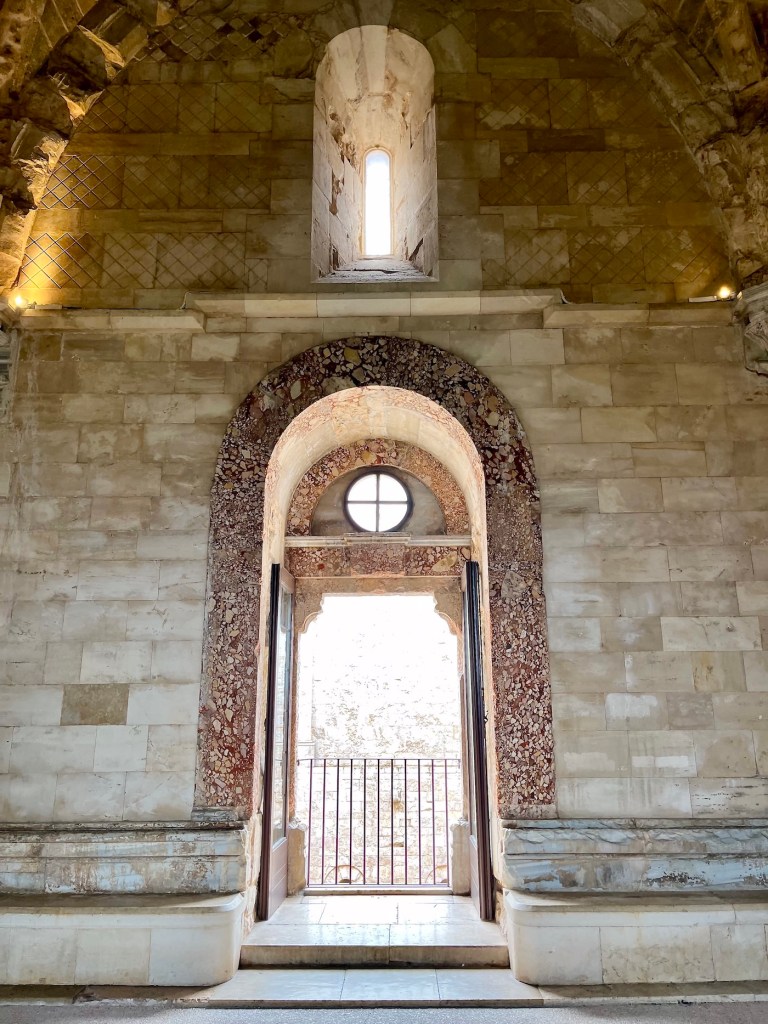
… The integrity of the site has been protected, in part, due to the fact that the castle has not undergone any significant structural alteration. Marble and mosaic interior decorative elements, however, have deteriorated and in many cases been removed.
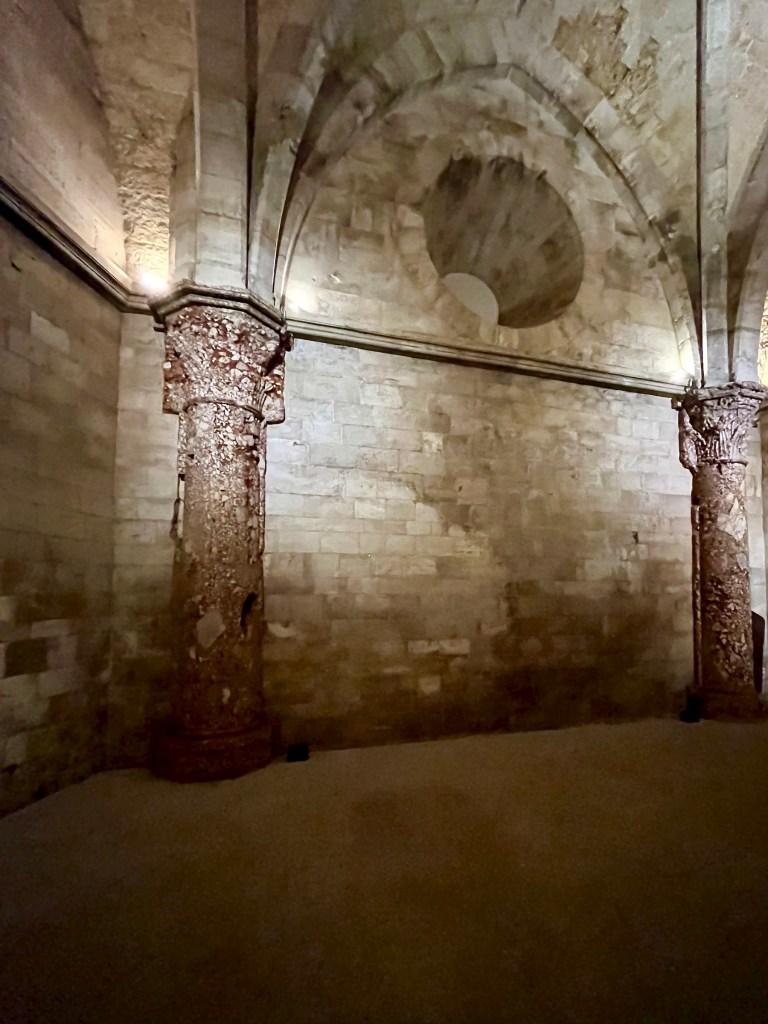

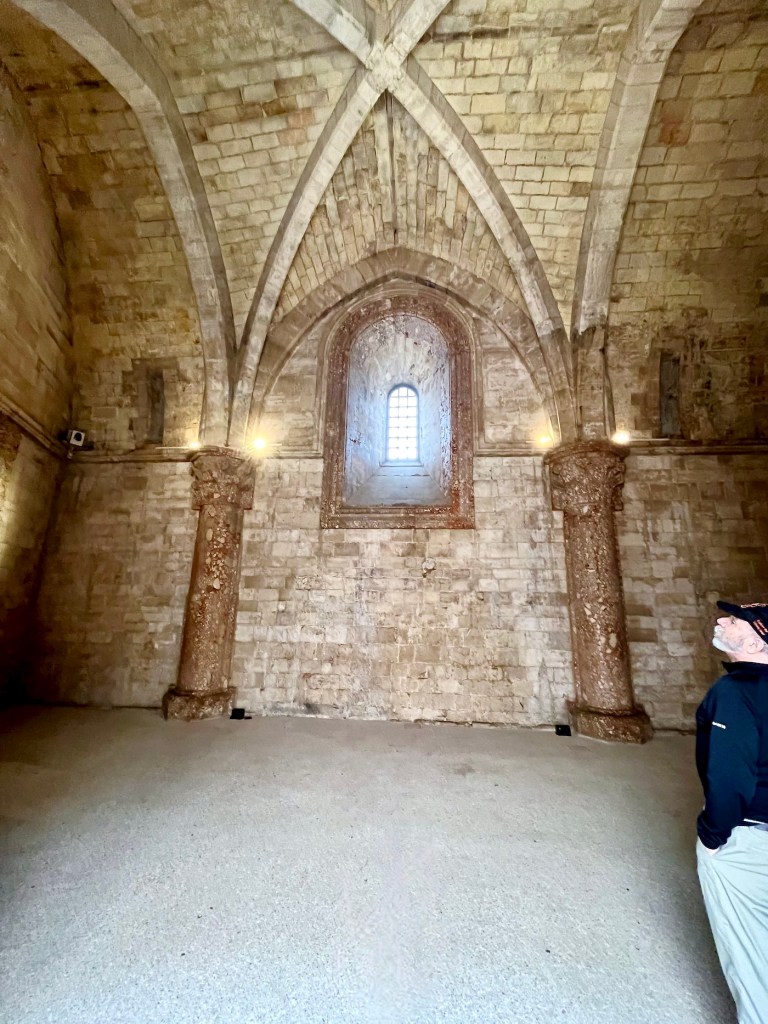

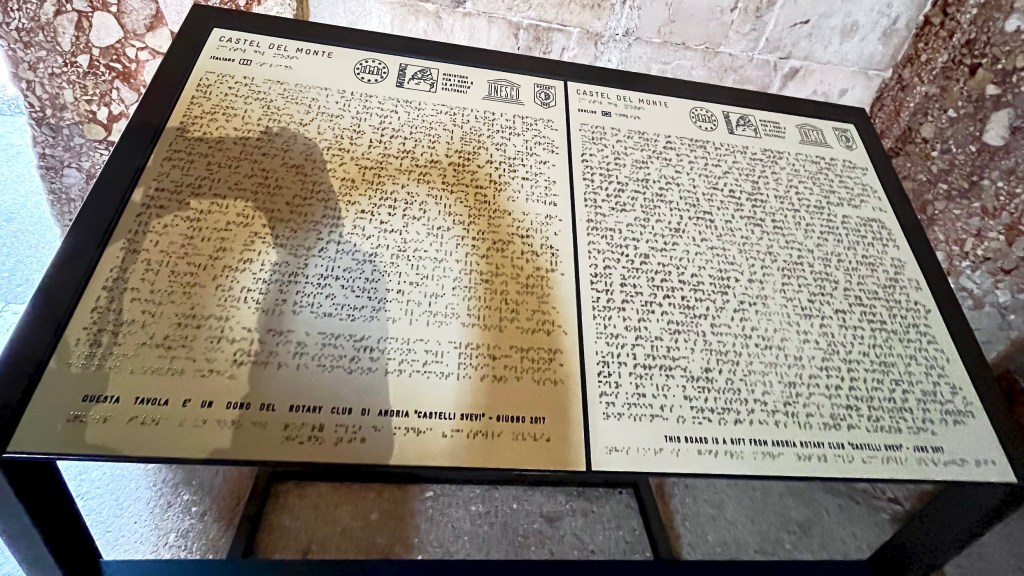

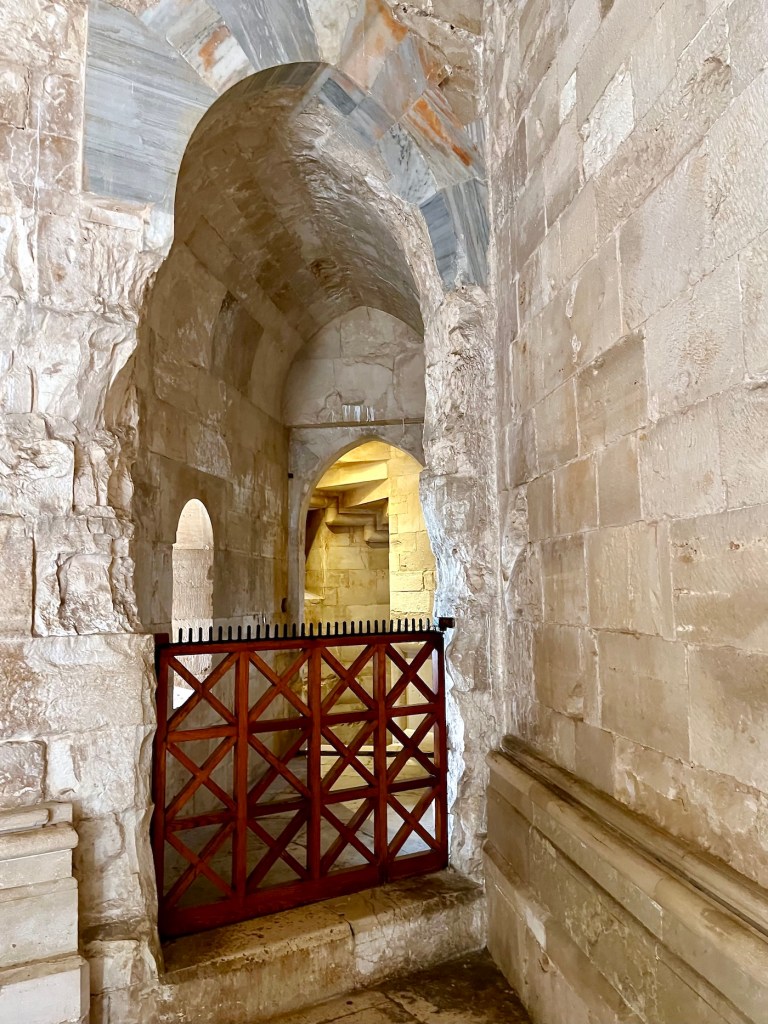
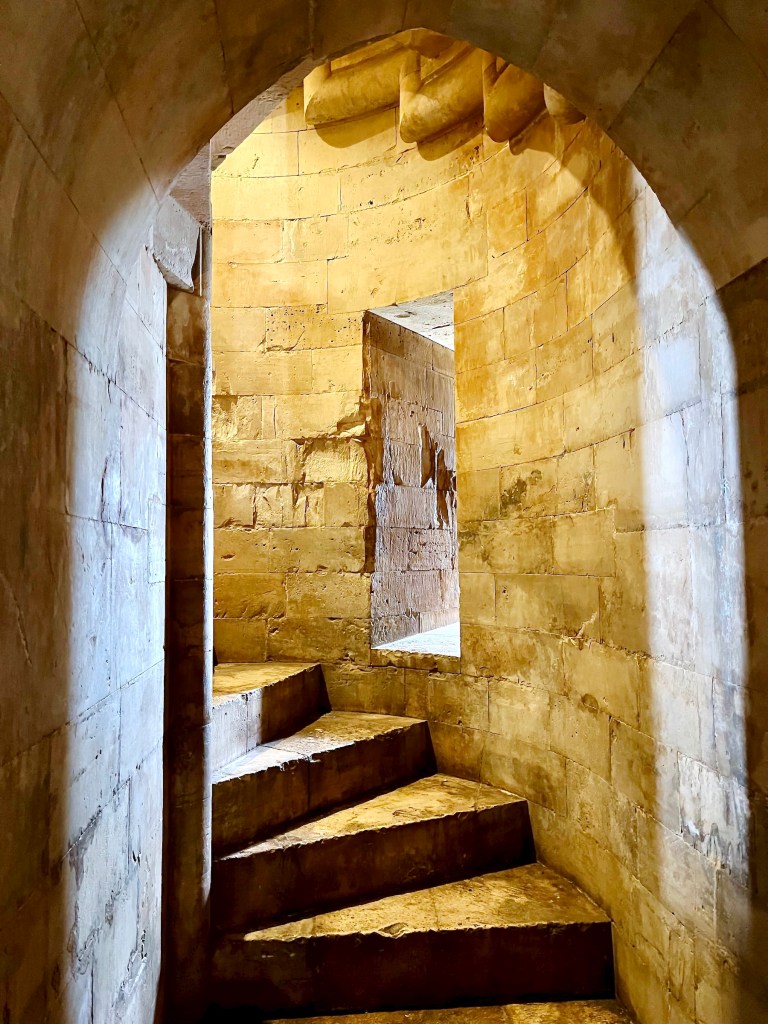
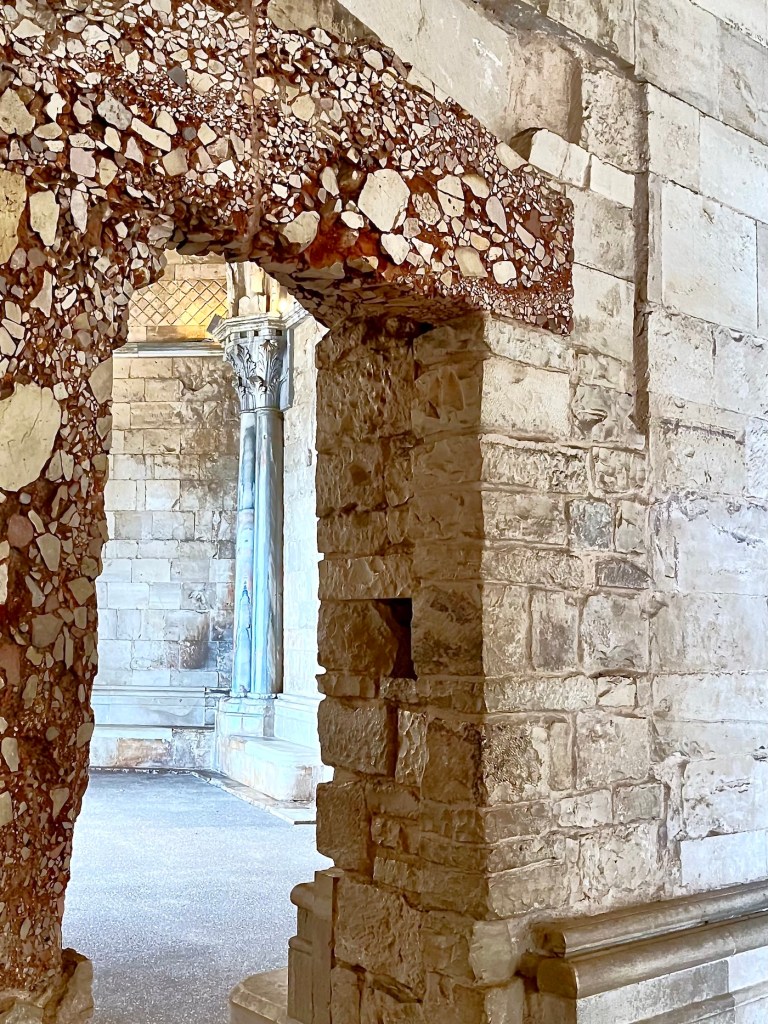
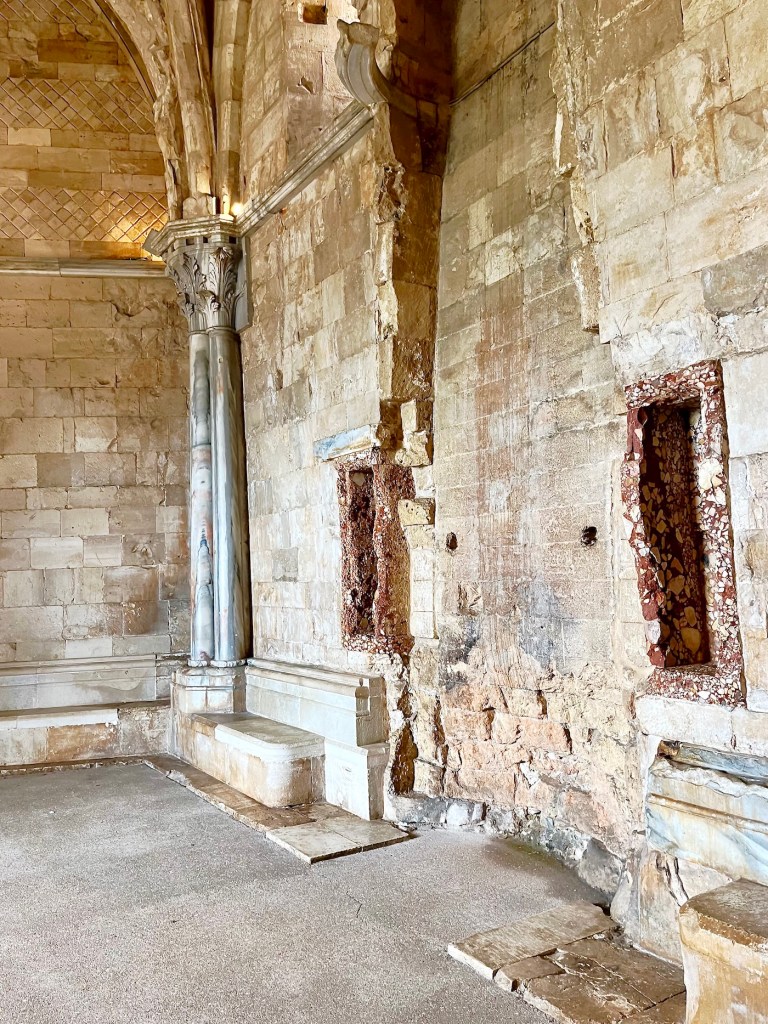

There are 16 chambers, eight per level. Though practically identical, there are subtle differences. Windows may have different shapes and sizes, or locations. Most upstairs chambers have marble benches along the perimeter, some used to have fireplaces, others doors overlooking the courtyard. Very little of the former marble cladding and other decorative art remains in the castel.



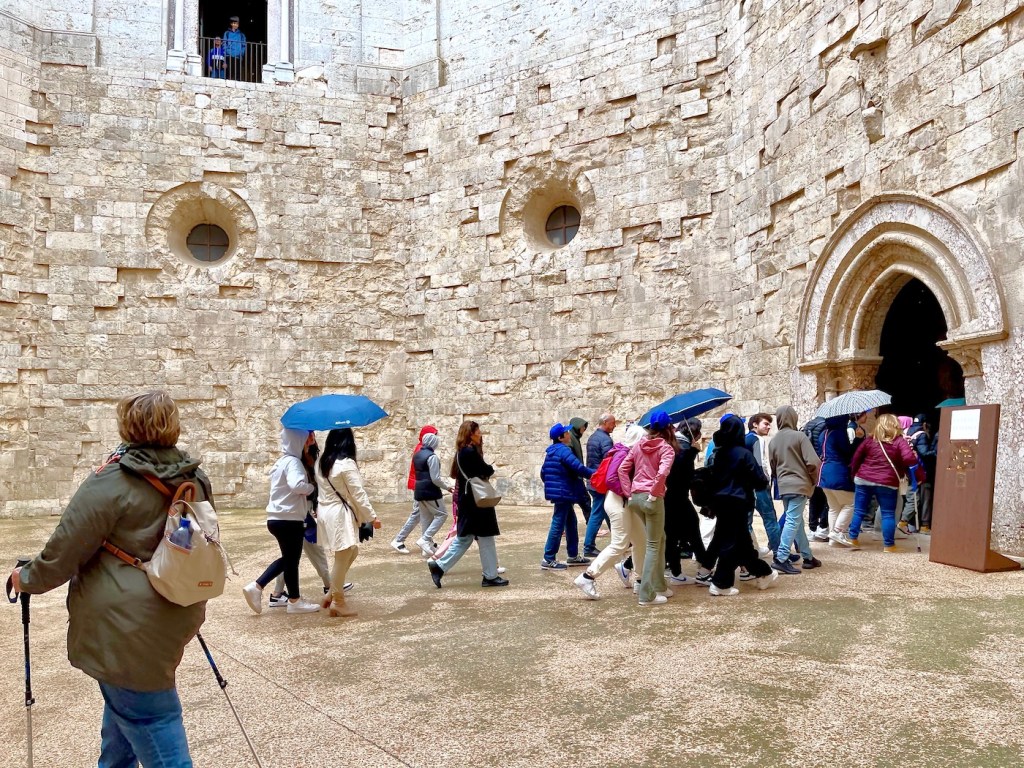

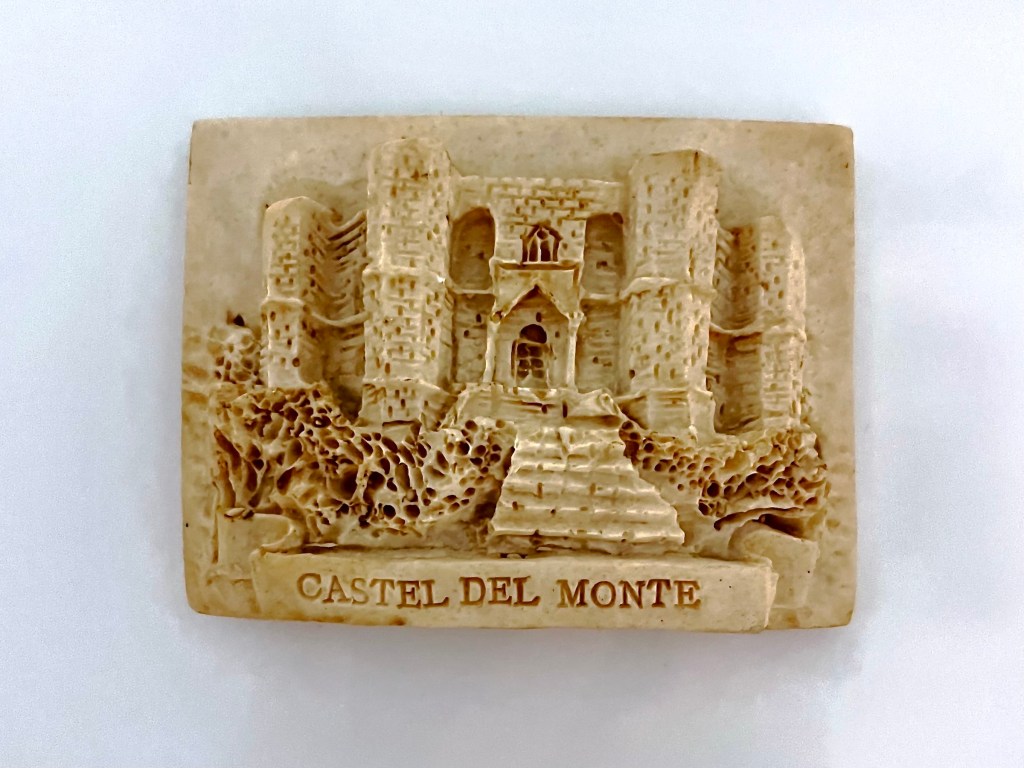
Leaving Frederick’s castel behind us, we walked back downhill through the fierce wind and persistent rain for a pitstop, a bracing espresso, and the obligatory purchase of a fridge magnet.
Both my husband and Enzo asked me if I was happy with my visit to Castel del Monte. As we all know, it can be disappointing to finally see or experience something one has anticipated for a very long time. As it turned out, Funky Freddy and I are in full accord about the proper design of a minimalist, uncluttered residence with an unobstructable 360º view. I found the architectural balance with its octagonal repetitiveness serene, while the grand dimensions added splendour. Although all sixteen room were essentially identical, the use of the variegated stones added interest, even surprise. Most importantly, one could easily install an attractive elevator cage – maybe one fashioned in a Parisian wrought iron Art Nouveau style to offset the overall austerity – in the interior court, utilising one of the elegant balcony doors on the upper level for ingress, thus eliminating any concerns for us elderly people about the steep stone steps of the spiral stair cases. Federico already designed the rainwater system for showers, hot tubs, and flush toilets. That just leaves finding the best spot for the kitchen … As you can see, I am ready to move in just as soon as UNESCO mails the permit of occupancy!
To return once more to the subject of favourite emperors, I’d like to tell you why I’m intrigued by an absolute monarch who lived ~800 years ago. As king of Sicily, Federico signed into law a detailed constitutional code that applied to all people equally, including Muslims and Jews. Among other interesting new laws, it decreed that trial by ordeal was forbidden in favour of witness testimony. He made it mandatory for physicians only educated through university lectures to gain practical experience before they were allowed to treat patients. Clergy became subjects of secular jurisdictions, and universities and landed commoners were invited to join the nobility in parliamentary assemblies, and so forth. These imperial laws, issued in 1231, remained on the books in Sicily till 1819. Emperor Frederick’s efficient bureaucracy was admired across Europe, except by the popes. The popes hated his easy ways with heretics and heathens, his love of science and poetry. They excommunicated the Holy Roman Emperor three times. One pope even called him preambulus antichristi – antecedent of the Antichrist, while the rest of the world called him stupor mundi – the amazement of the world, for his curiosity and learnedness, specifically in admiration of his linguistically groundbreaking Sicilian School of Poetry and his famous treatise on falconry, De Arte Venandi Cum Avibus – on the art of hunting with birds. A book filled with hundreds of illustrations and minute instructions for the proper breeding, keeping, and training of birds of prey.
After our visit at the Castello, Enzo took us sight-seeing-by-car toward the coastal city of Trani, via the town of Andria where two of the emperor’s four wives, Isabella of Jerusalem and Isabella of England, are interred in the cathedral. Castel del Monte has one window that is larger than all others. It looks in the direction of the town which Federico called [mea] Andria fidelis, my faithful Andria.
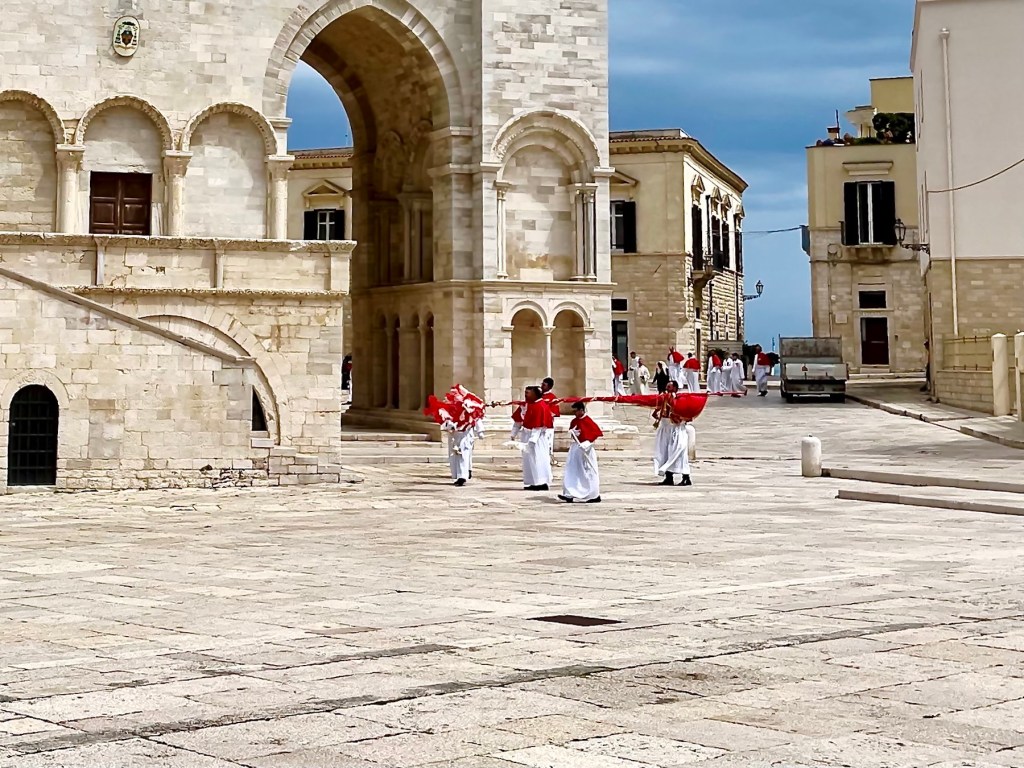
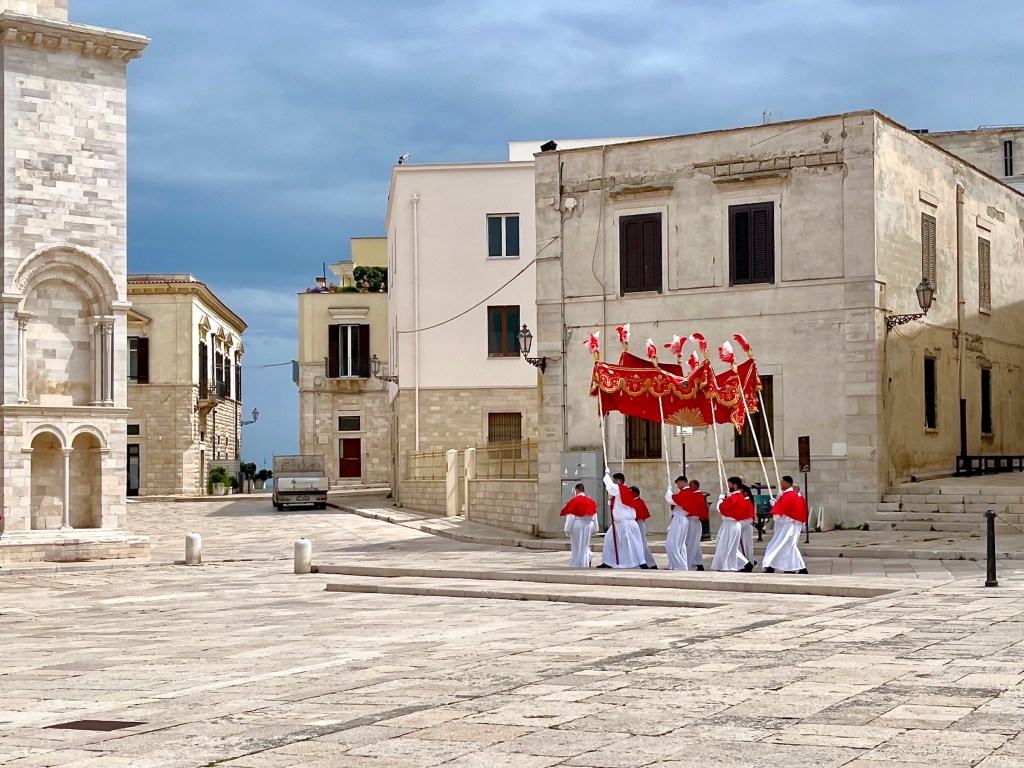
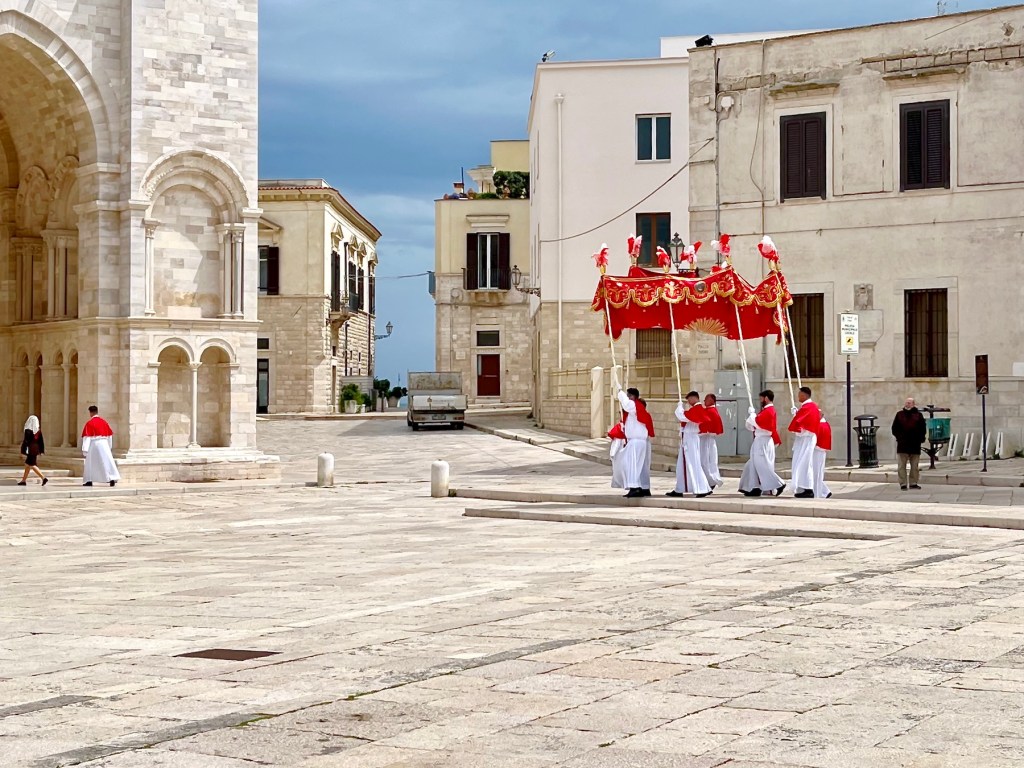
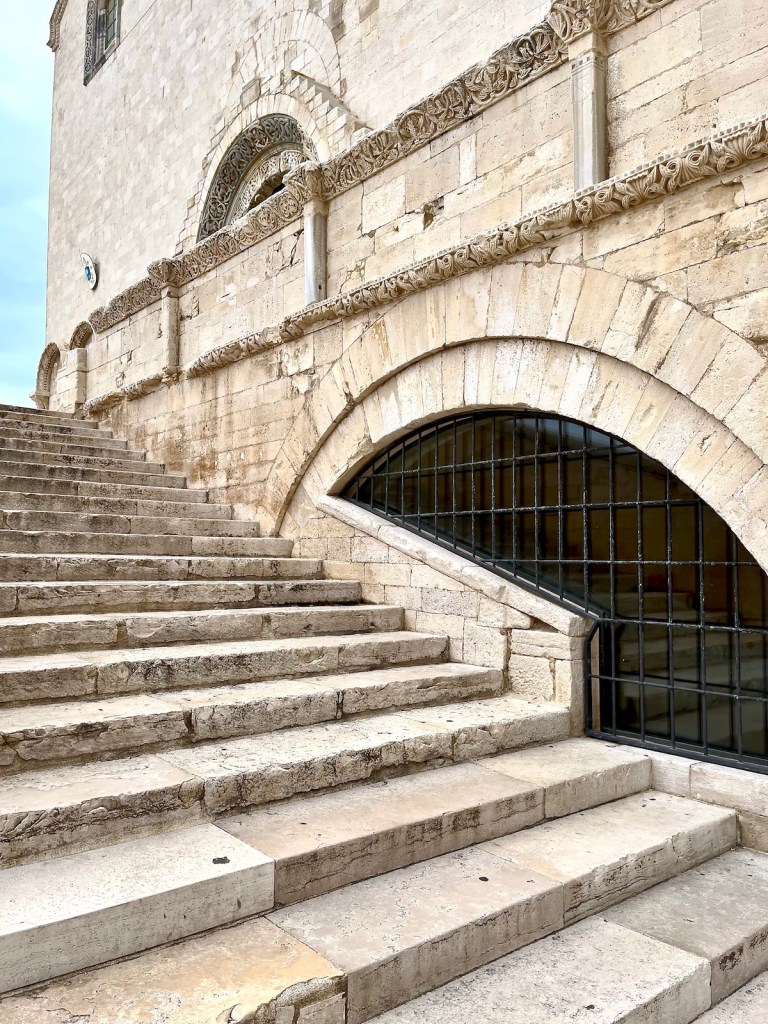
In Trani the rain let up a bit, so we could take a closer look at the fantastically decorated Western façade of Trani Cathedral, the Romanesque-style Cattedrale di San Nicola Pellegrino, dedicated to Saint Nicholas the Pilgrim (1075-1094) a much loved Fool in Christ. The cathedral is the seat of the archbishops of the diocese. Its construction began in 1099 and lasted a good 100 years, not counting the campanile.


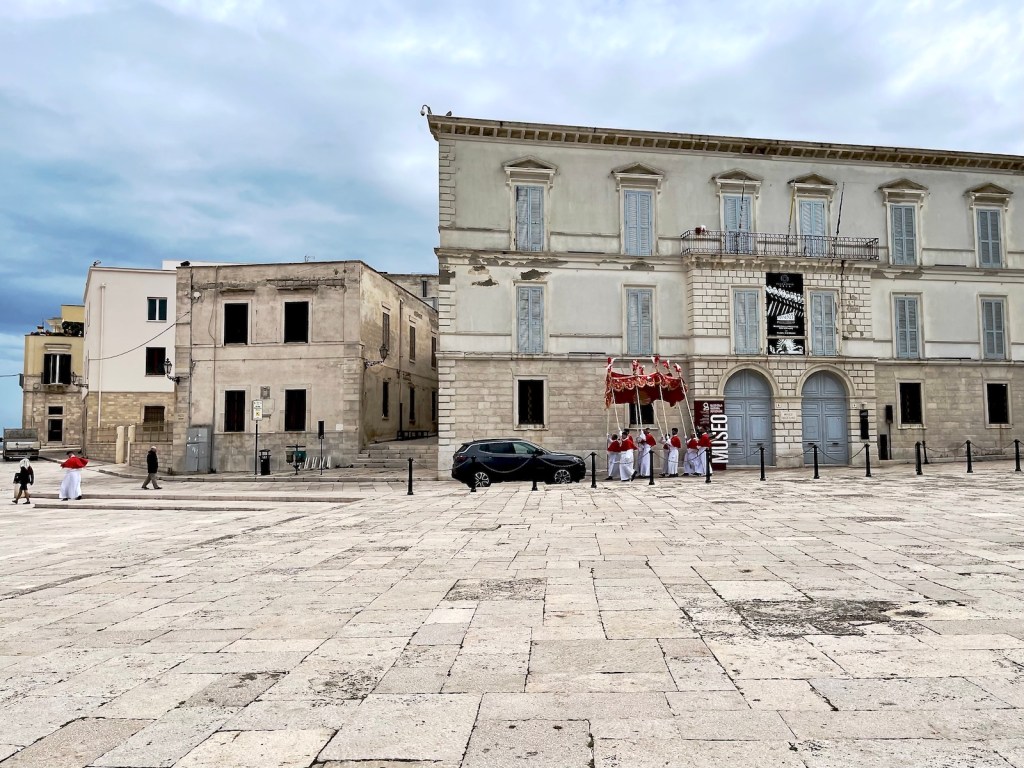
While we were still loitering on the wind-swept cathedral square, a gaggle of clerics appeared suddenly adding a colourful splash of motion to the limestone landscape.



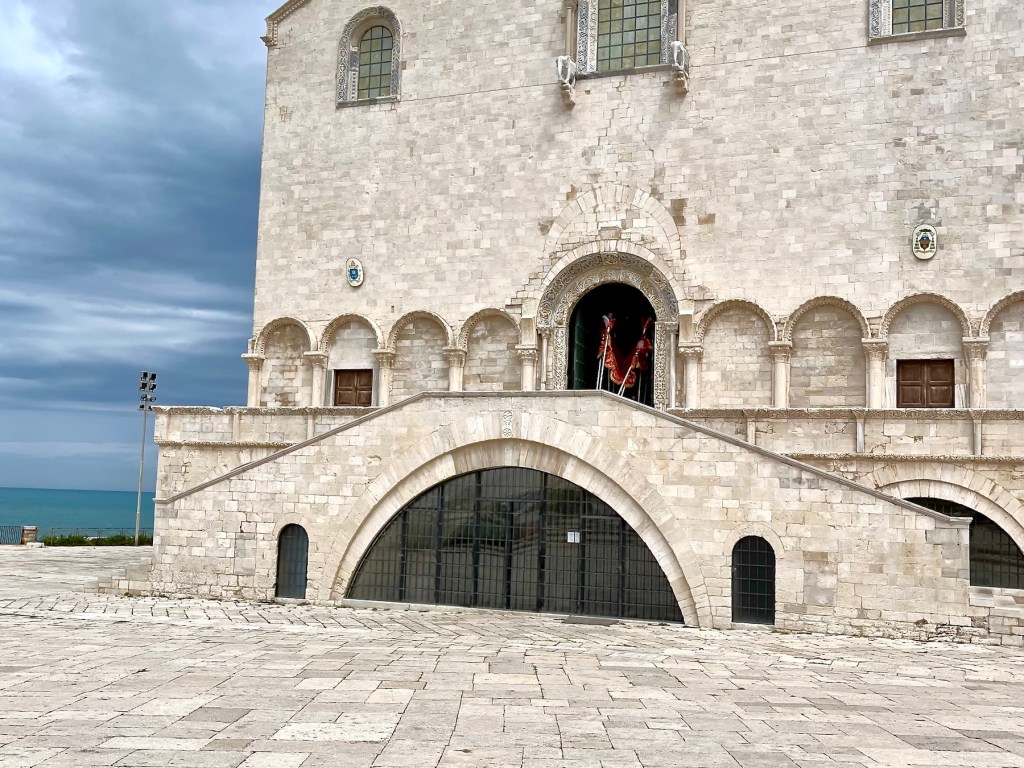

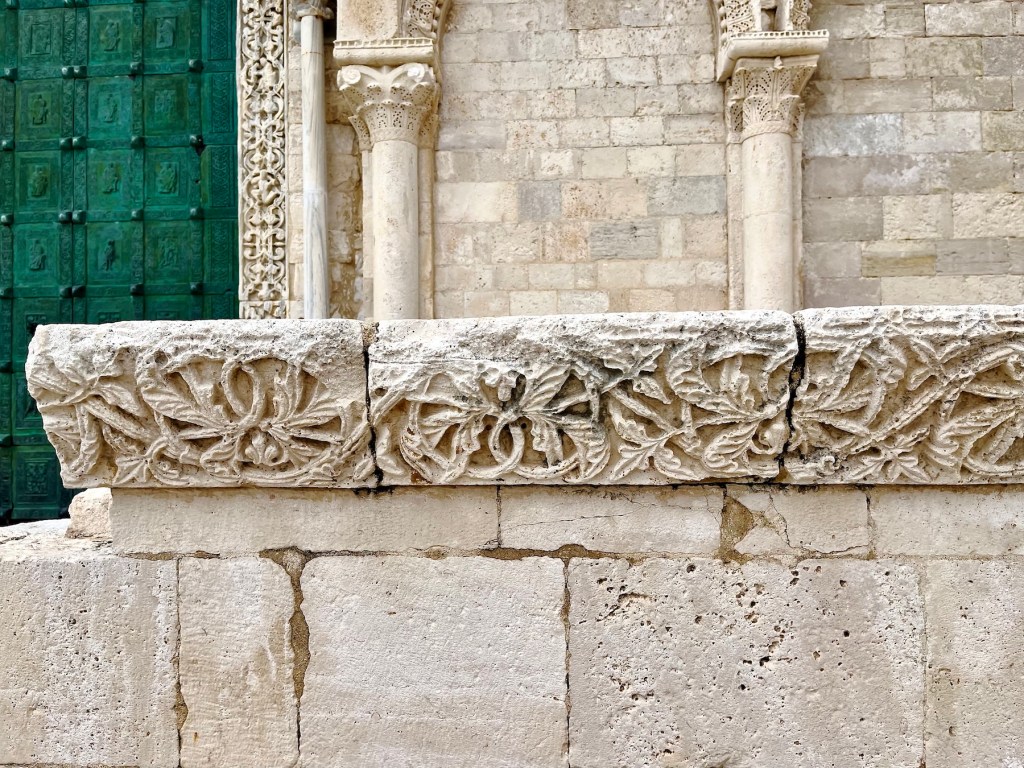
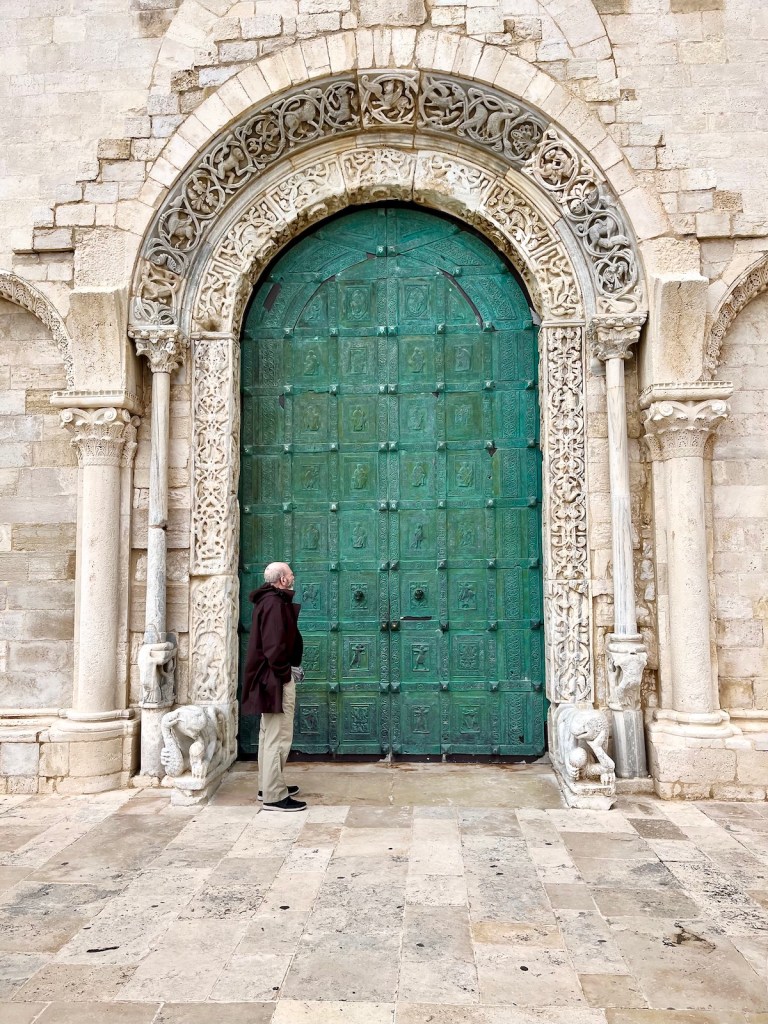

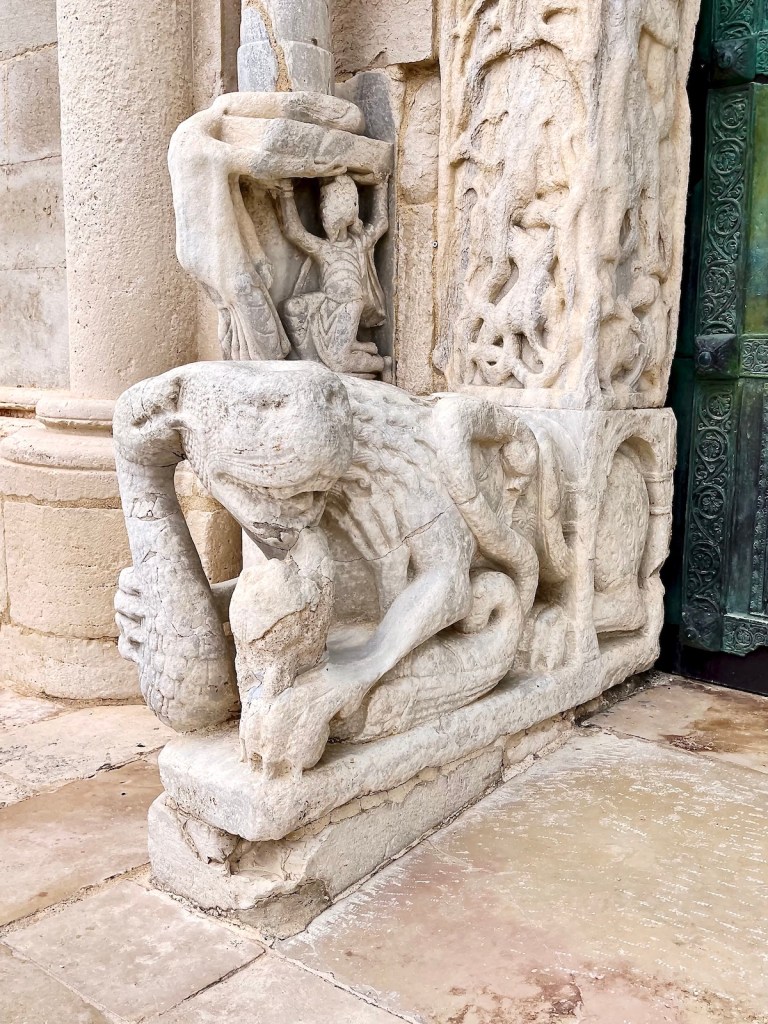
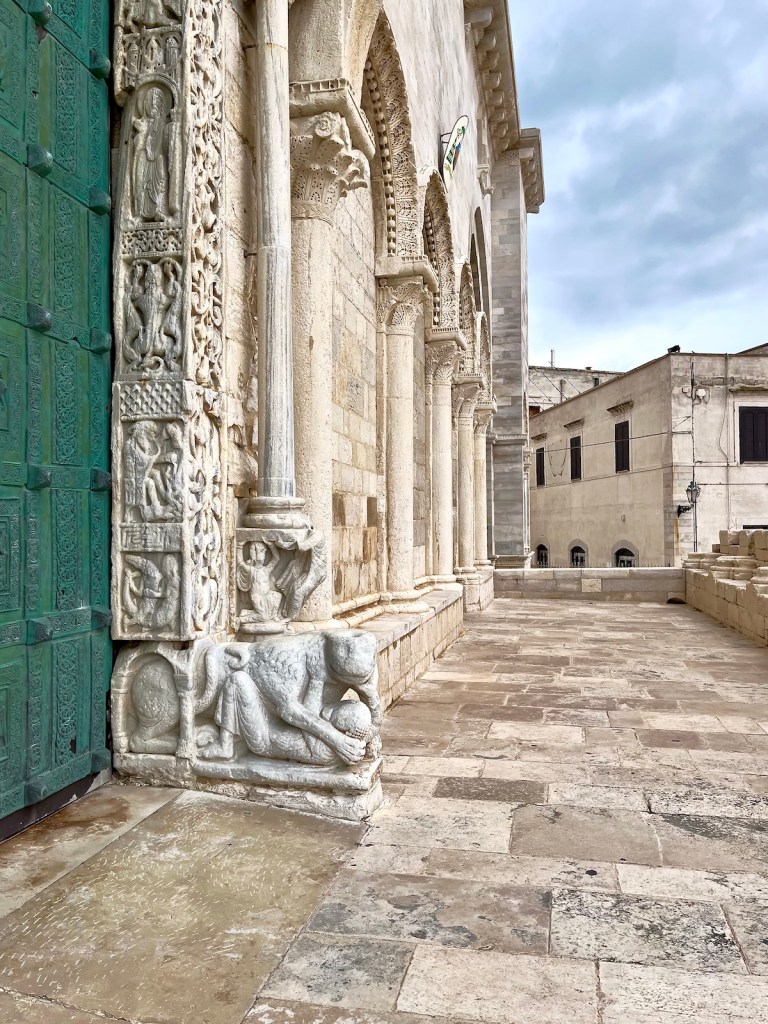
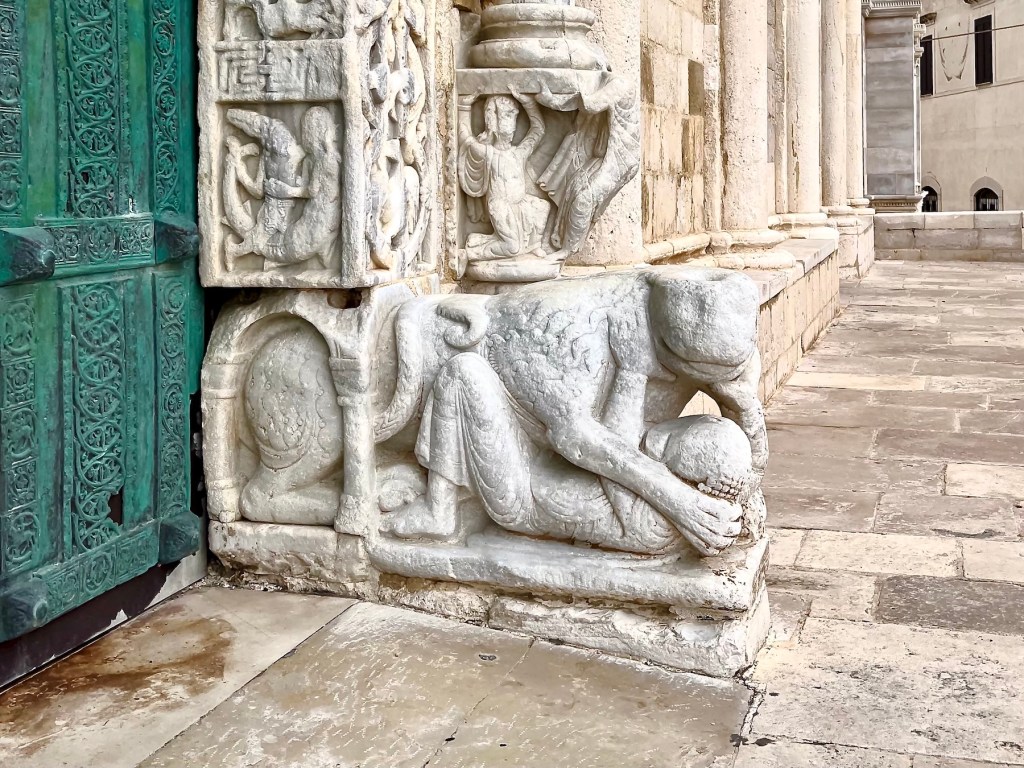

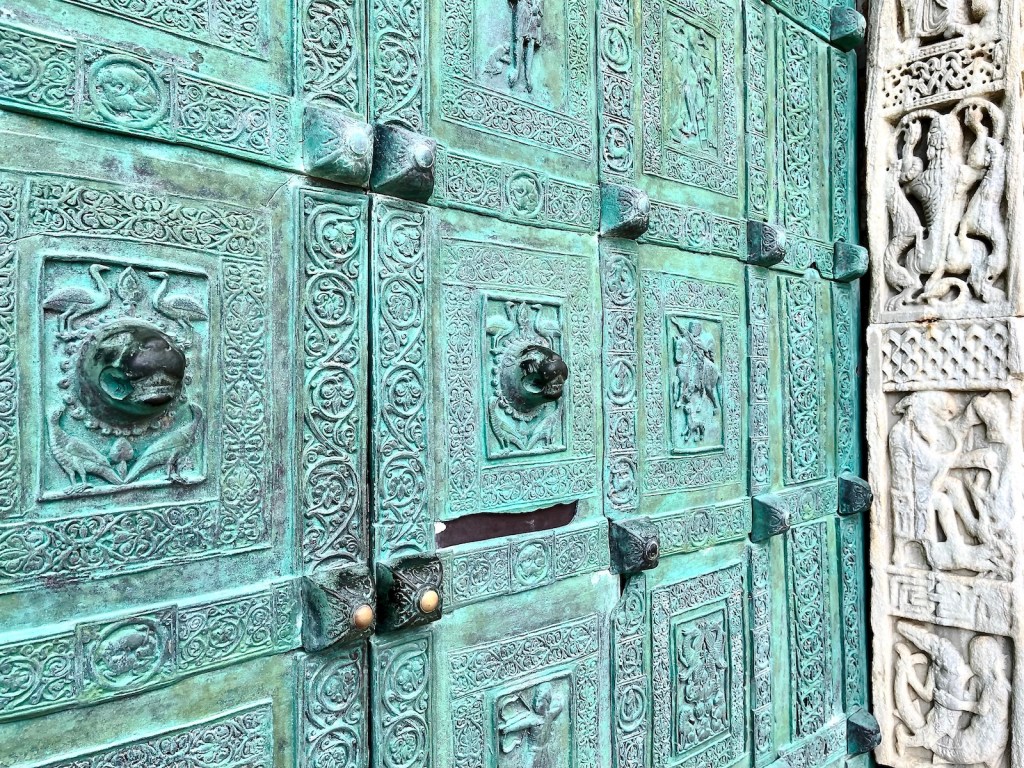
The bronze-relief panels of the super-sized main door was created by 12th century local sculptor Barisano da Trani. Barisano was influenced by Nordic as well as Middle Eastern artistic styles.

With a last look back toward the campanile across the boats gently bobbing in the harbour, we jumped back in the car in search of food.
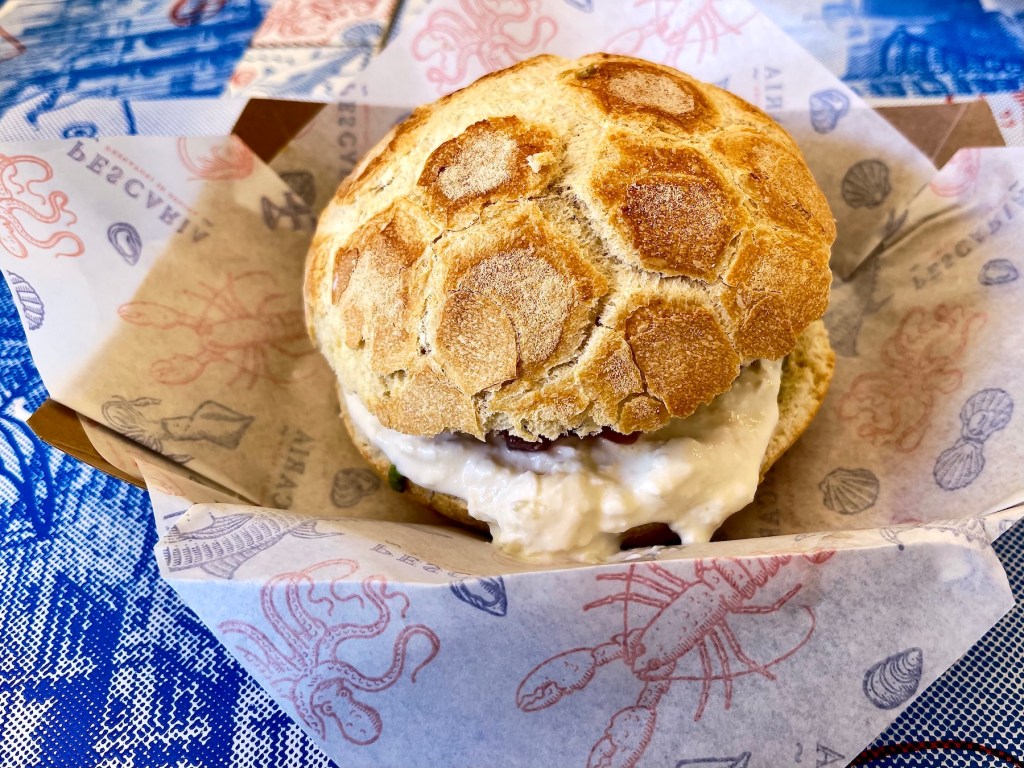
For this very late lunch we went to Enzo’s favourite fast food place in Trani, Pescaria. I had tuna tartar with burrata, fresh tomatoes, and basil pesto on a crispy bun. If only a Pescaria franchise would open in Cognac, if only! Fresh, simple, straight forward and delicious. Did I mention fresh?
Thank you, Enzo, for a terrific day in Federico’s Puglia!
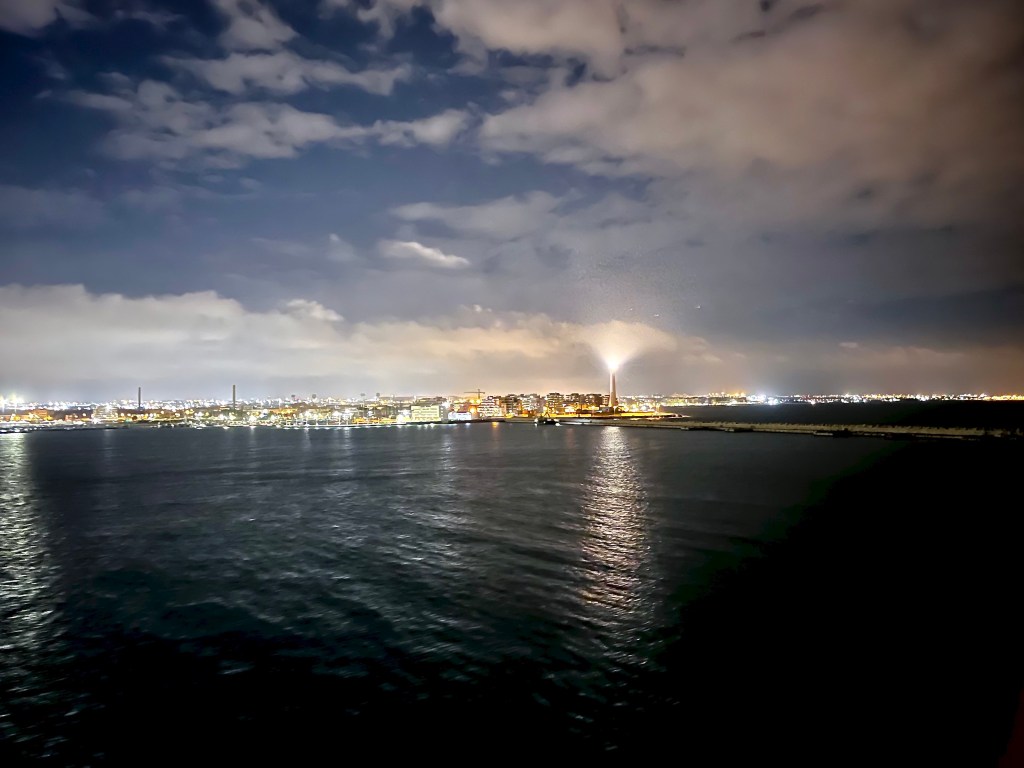
We sailed pretty late on this eventful day, leaving the Apulian coast with its glittering lights during the last hour of May 3rd anticipating a smooth crossing of the Adriatic Sea toward Montenegro.


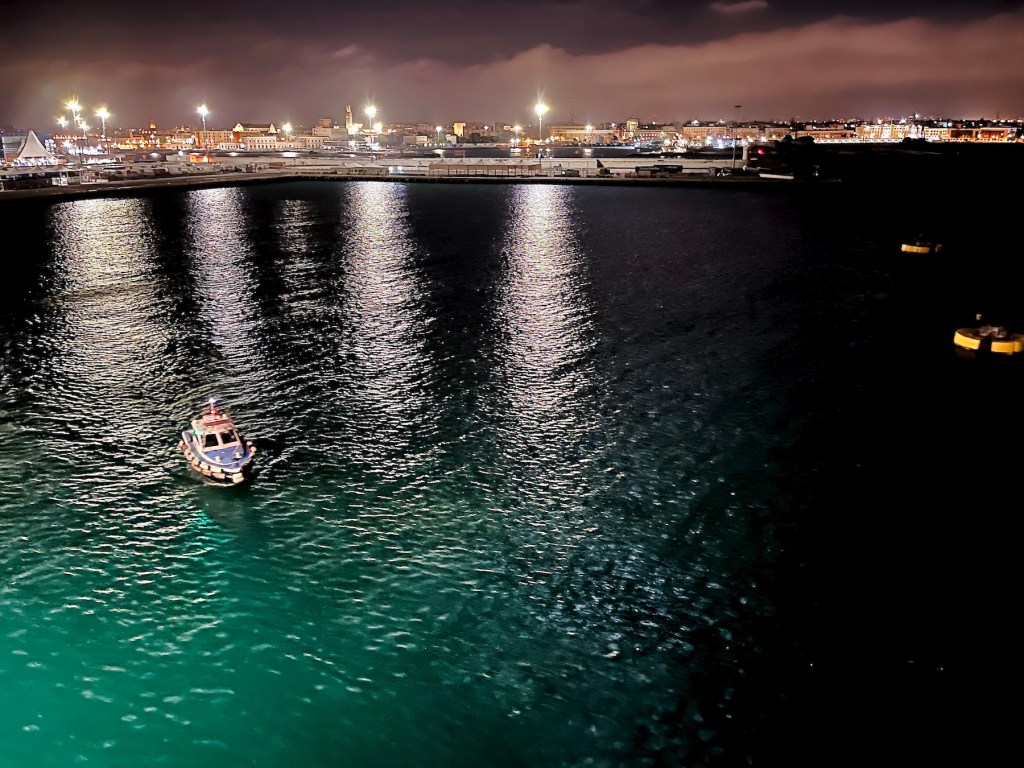

 NOT IN A STRAIGHT LINE by Photolera Claudinha
Swabians know no pity.
LikeLike
She dragged my weary bones all through that castle. I begged to be allowed to curl up and die but I was denied that small pity.
LikeLike