Returning to my “A Mediterranean Cruise” series, I am faced with a dilemma. Should I continue with these posts or chuck the whole idea? The cruise was months ago, and after Dubrovnik’s grandeur, I barely remember the two remaining Croatian ports of call. In Trieste I had considerable back problems, so we just took a guided bus tour through the rain and I never left the bus, hence no pictures to show you. Ravenna, on the other hand, was glorious – nothing much can hold a candle to those mosaïcs! Alright, that settles it. I’ll try to put some pictures together to remind myself of ‘highlights and impressions’ in Šibenik and Zadar, then we’ll cruise back to Italy, ultimately finishing the narrative with our after-cruise visit in Venice.
ŠIBENIK, CROATIA, May 6, 2023
The entire Dalmatian coast is one gigantic tourist attraction, starting with unique geological features like karst mountain ranges, with their above ground and underground rivers and waterfalls, not to forget extensive cave systems. There are wild coastal regions with natural harbours and a myriad of islands. This diverse landscape provides the opportunity for a wide range of athletic and leisure activities from scuba diving to mountain climbing, and everything in between.
But there is more than bird watching and sailing along rocky shores on offer here. Over the millennia, indigenous populations of Illyria had to cope with conquering powers and migrating peoples, bringing with them their own traditions, religions, customs, and most often, warfare. Territories changed hands so often, it makes your head spin. It is also important to remember that the last armed conflict was only two decades ago. But for us tourists, this divers past has resulted in an exceptionally rich cultural and historical offering, as well as delicious food. My first visit to the region was roughly 50 years ago as a protozoology student when I spent a very interesting stretch of time at what is now the Institute of Oceanography and Fisheries in Split, Croatia. Back then, of course, it was Split, Yugoslavia. There were few tourists, the majority of people were painfully poor, and the food at the Institut’s canteen was pretty awful, to put it kindly. Still, the landscape was just as glorious as it is now.

You can see in this early morning picture I took right after we docked in Šibenik, how tranquil the Adriatic can be. Tranquility not withstanding, some excited voices rose from the sea below. Looking down, I realised that there was something or someone floating in the still water.
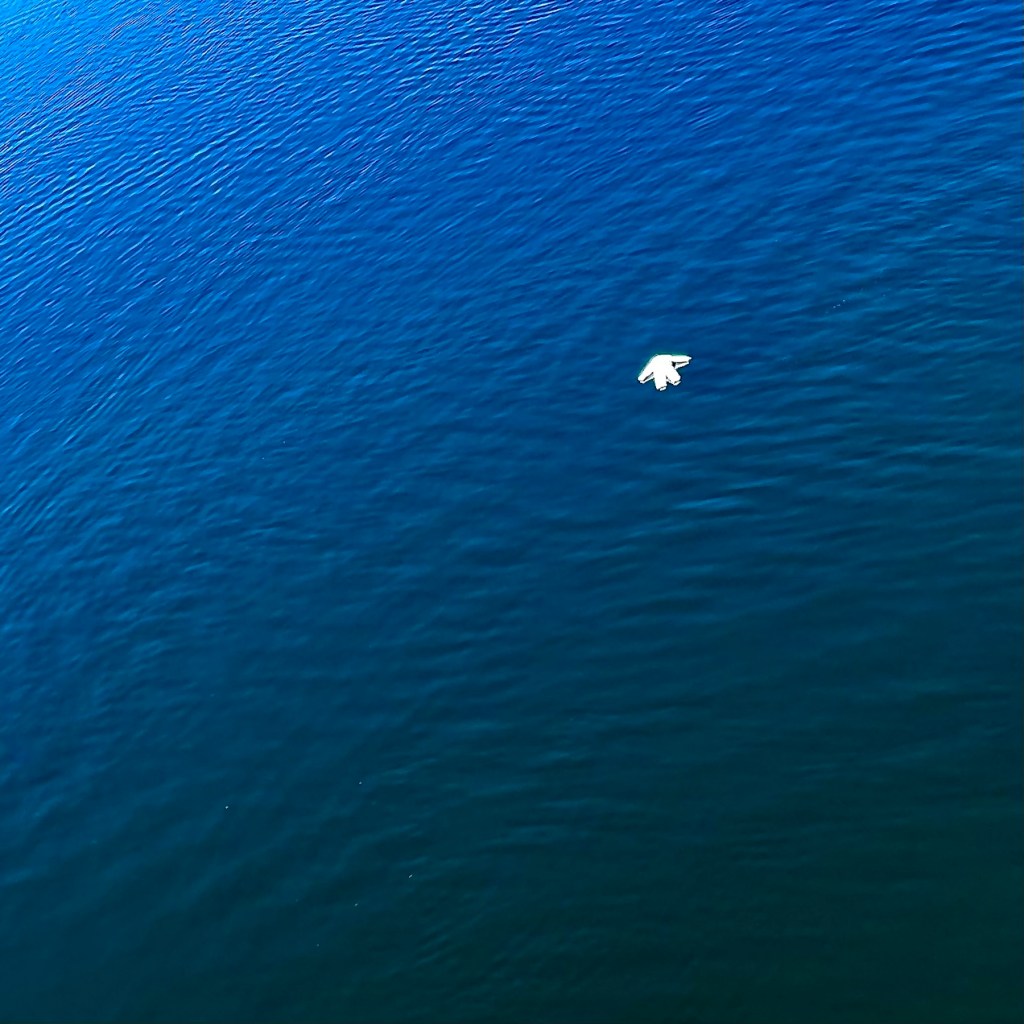
To my relief, it was a crew exercise in progress rather than an emergency!


Twenty minutes later the crew member who was being instructed in the proper procedure for a man-over-board recovery had passed his test, and boat, crew, and mannequin were ready to be winched back aboard.

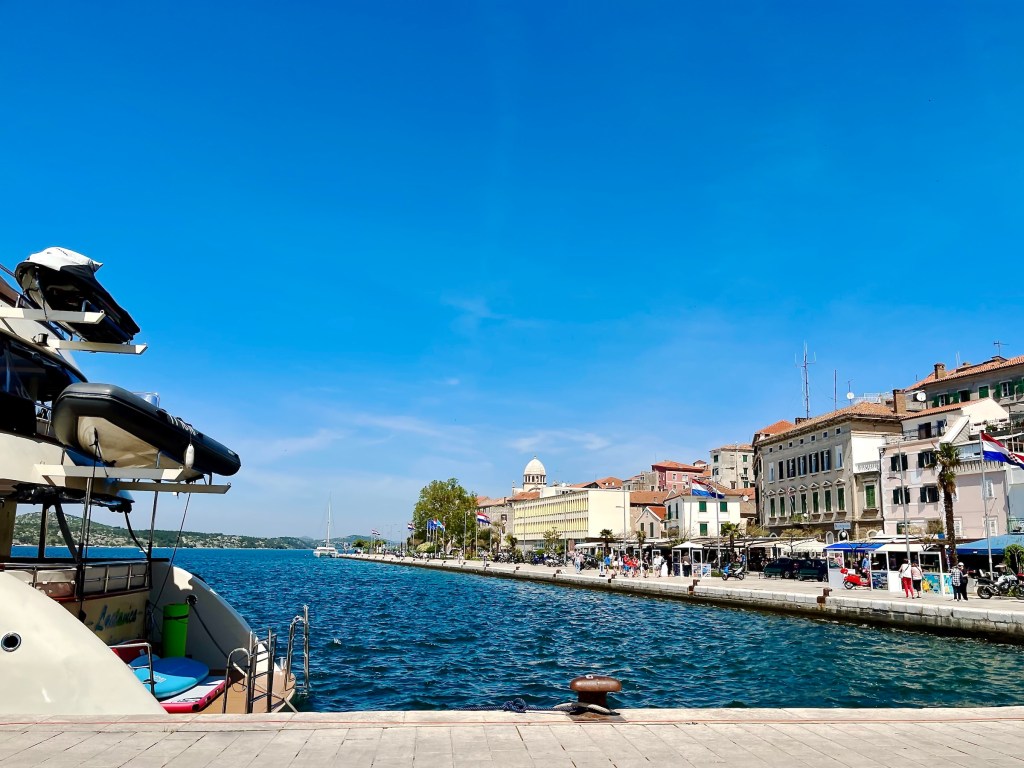
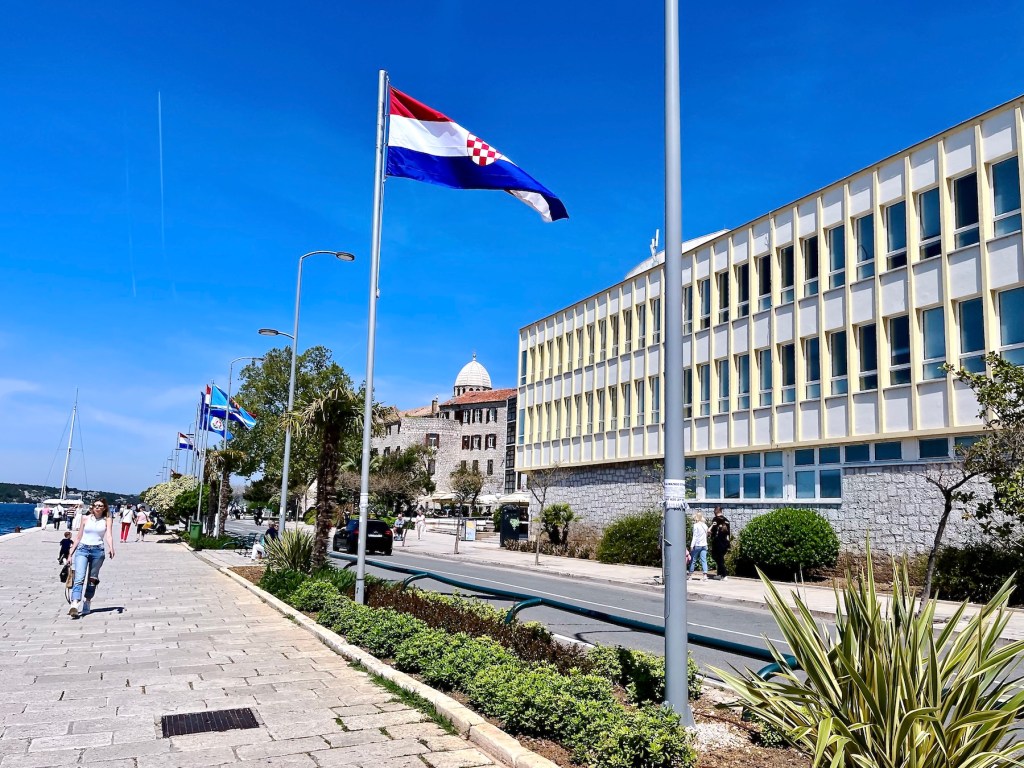
After this unexpected excitement and some breakfast, we walked into town to explore Šibenik’s Old Town district.

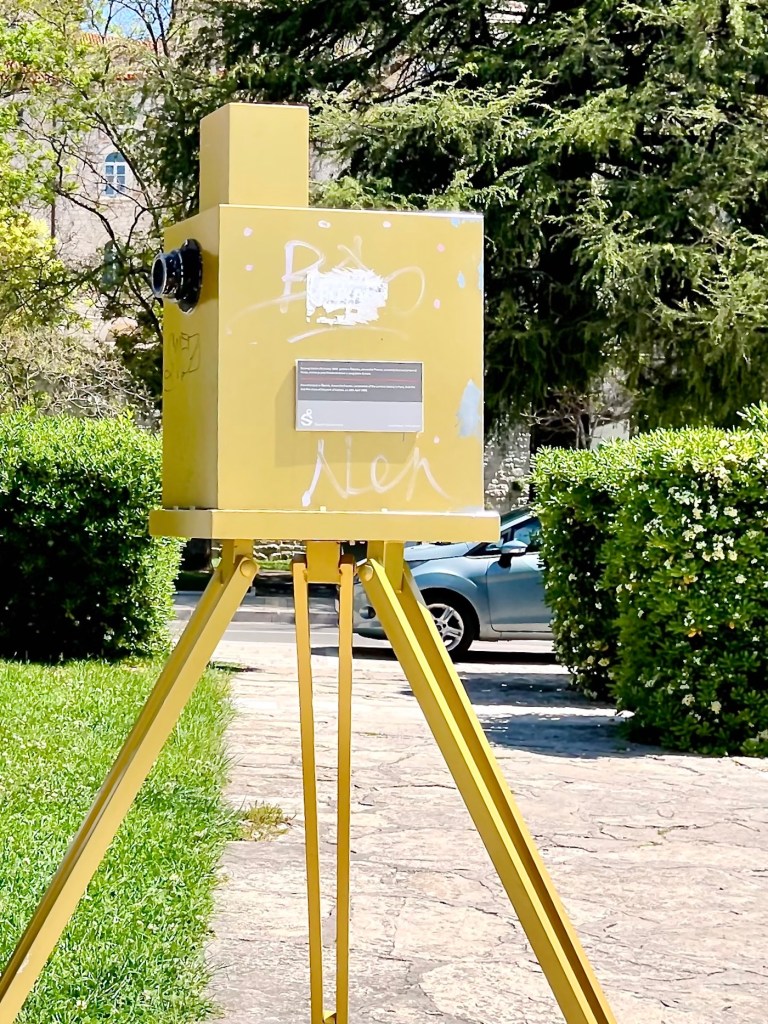

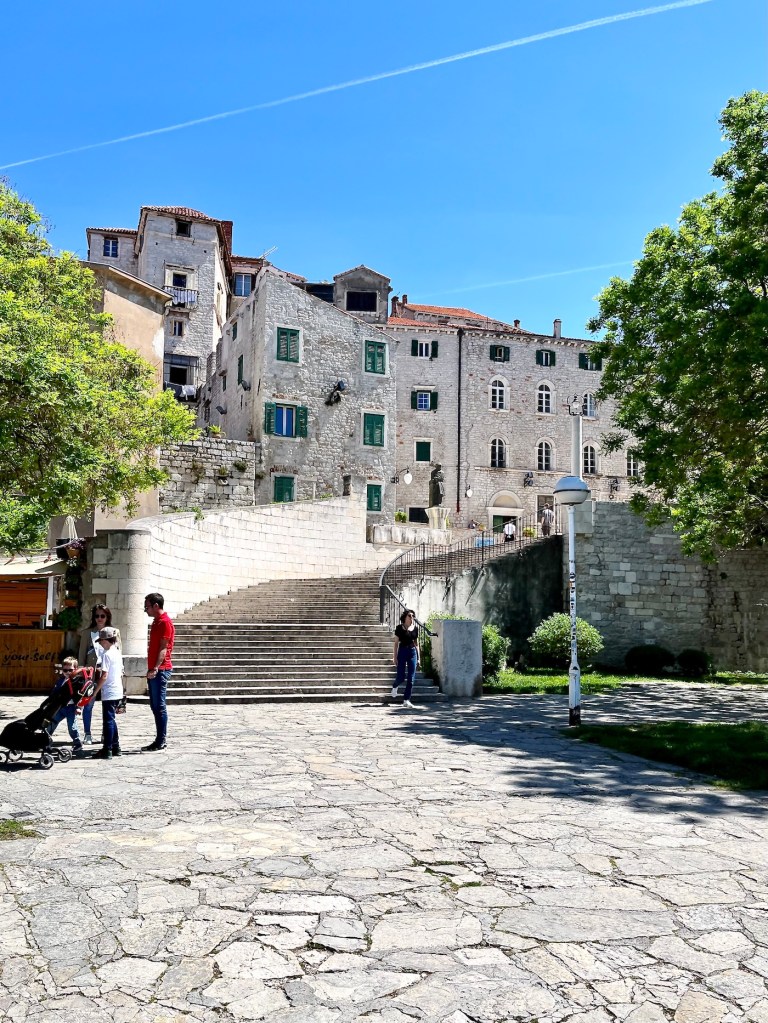

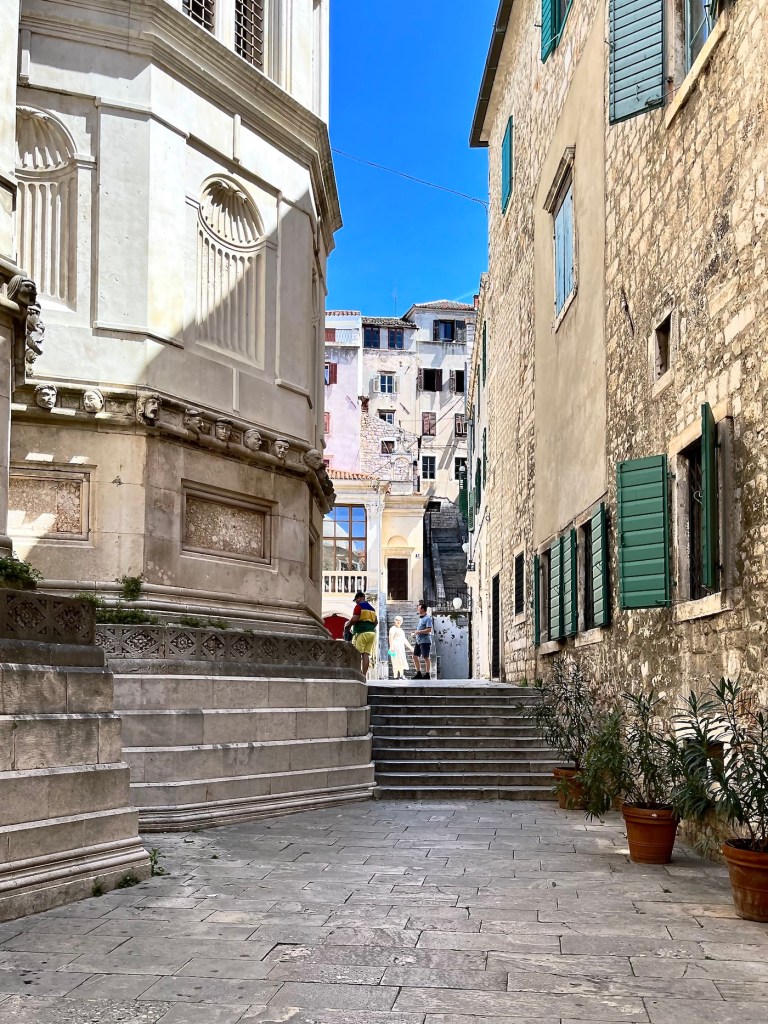
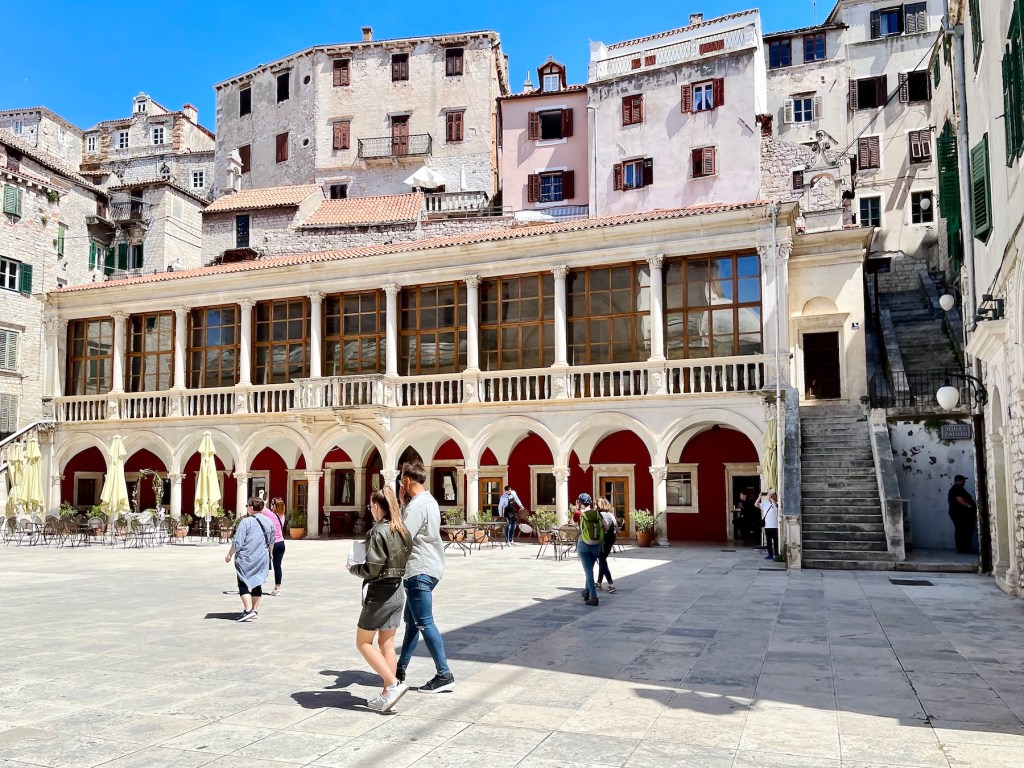
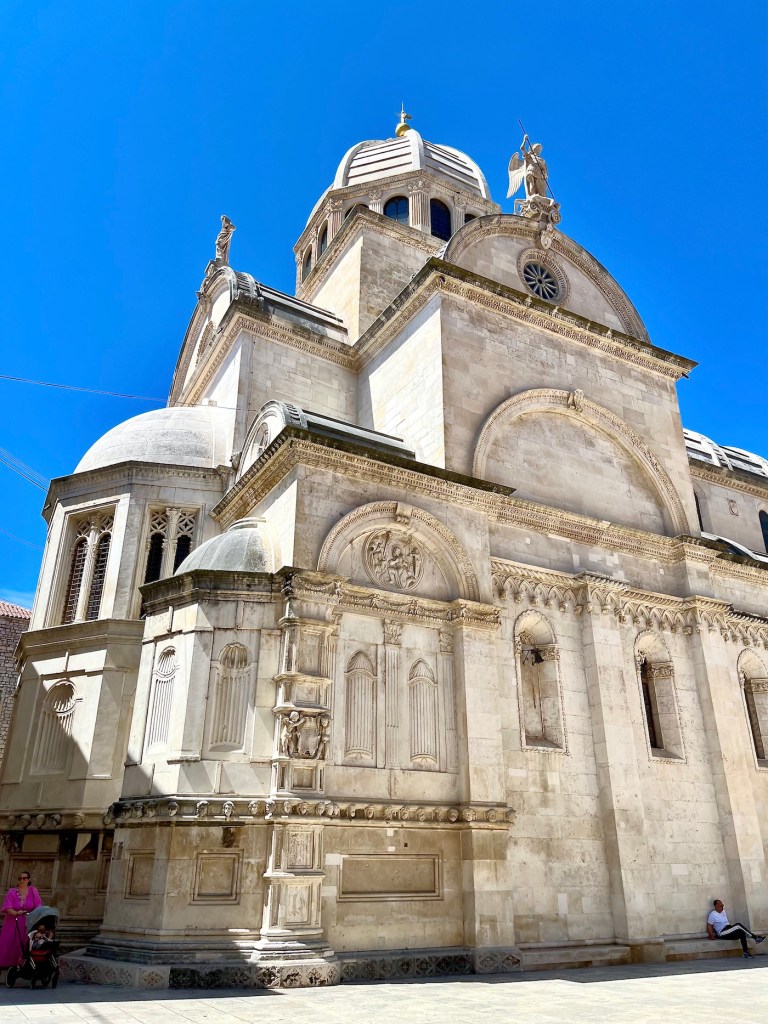
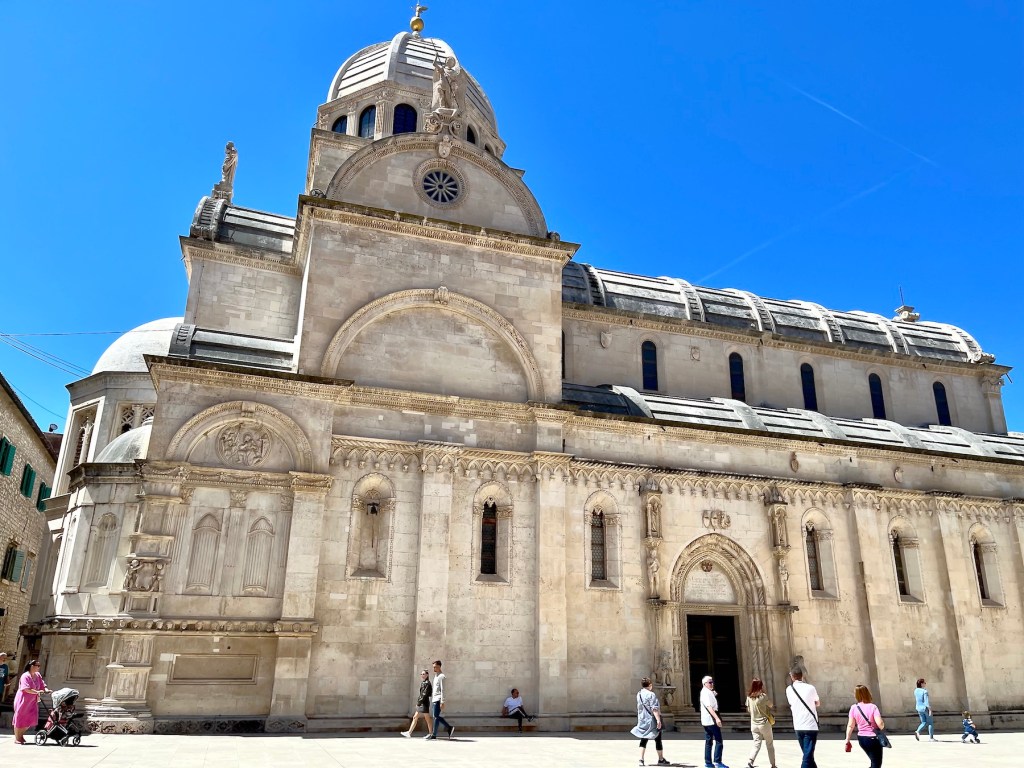

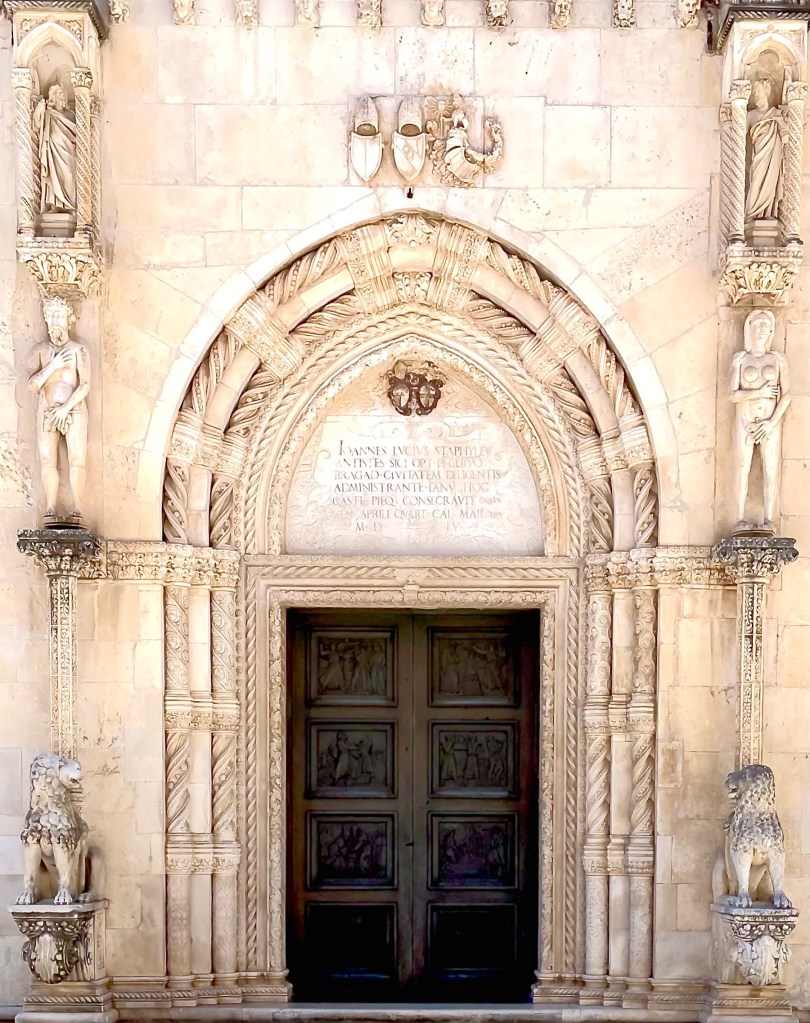

The statue by Ivan Meštrović of the Renaissance architect and sculptor Giorgio Orsini 1410-1473 aka Giorgio da Sebenico aka Juraj Dalmatinac, cathedral builder par excellence, was placed opposite his master piece Katedrala svetog Jakova, the Cathedral of Saint James the Apostle [in Croatian James and Jacob are the same]. Juraj was a member of the mighty Orsini family of Rome, but he was born in Venetian Zadar and worked predominantly in Croatia and in Ancona, now Italy. He designed the Šibenik cathedral to be constructed entirely of local limestone and marble, and he also carved most of its statuary.
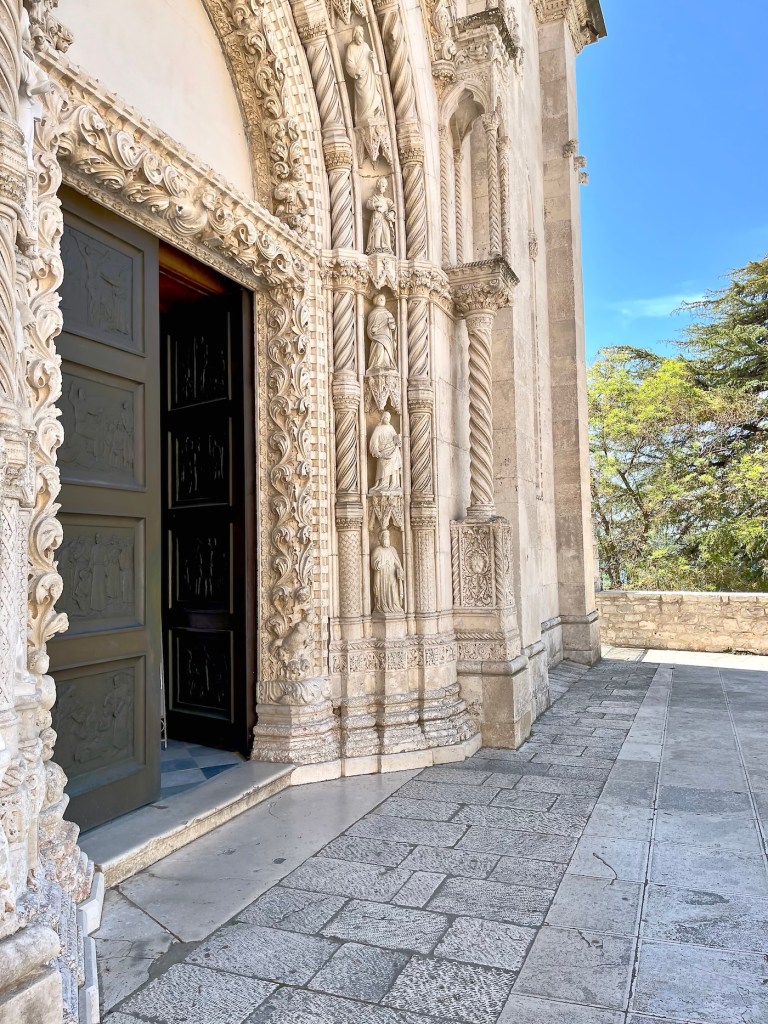
The cathedral’s imposing main doors opened onto the western square overlooking the sea. It was right there that we were asked by a couple to take their picture. They had just gotten engaged, literally mere seconds ago and they were glowing with love, sparkling with excitement, and floating on cloud nine. Their happiness was positively infectious!


We continued our explorations through the narrow alleys, following a series of stone steps to the upper levels of Old Town.


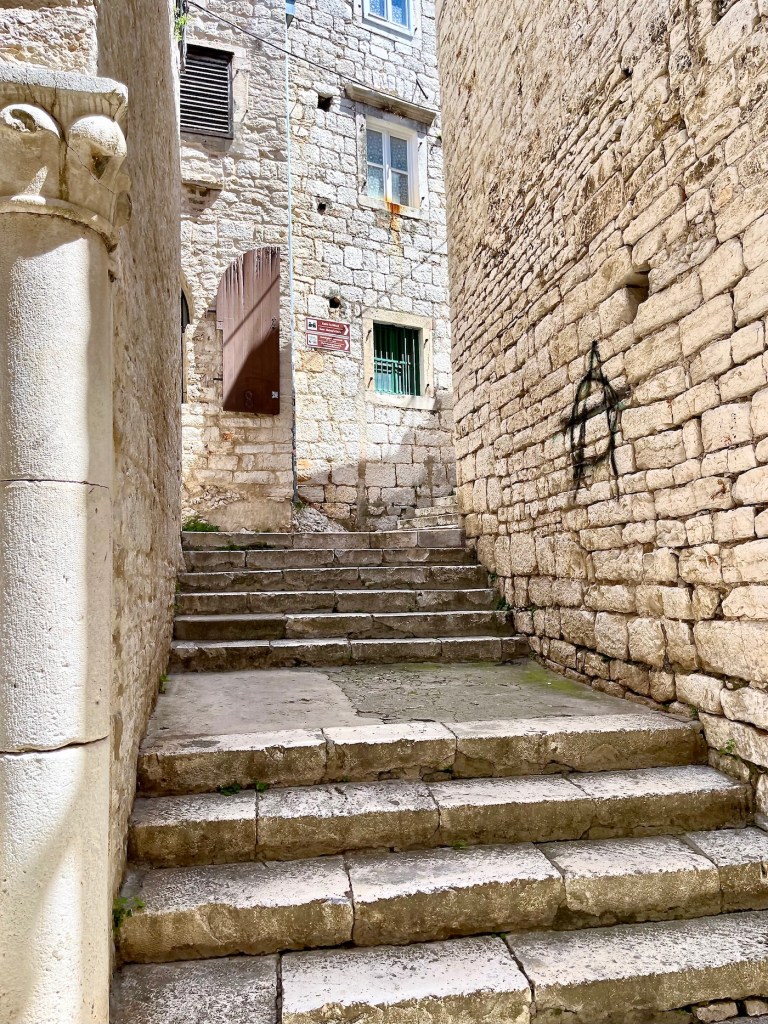

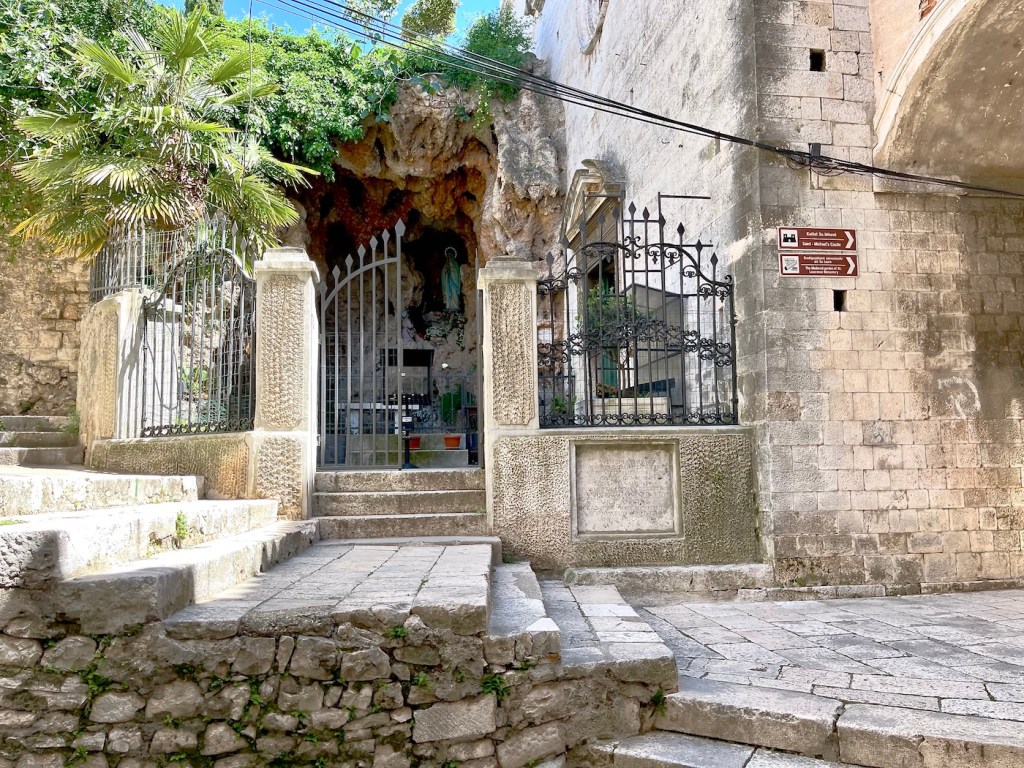
At an intersection, we came upon a Marian grotto of contemplation adjacent to a church fully integrated into the neighbouring residential row houses.
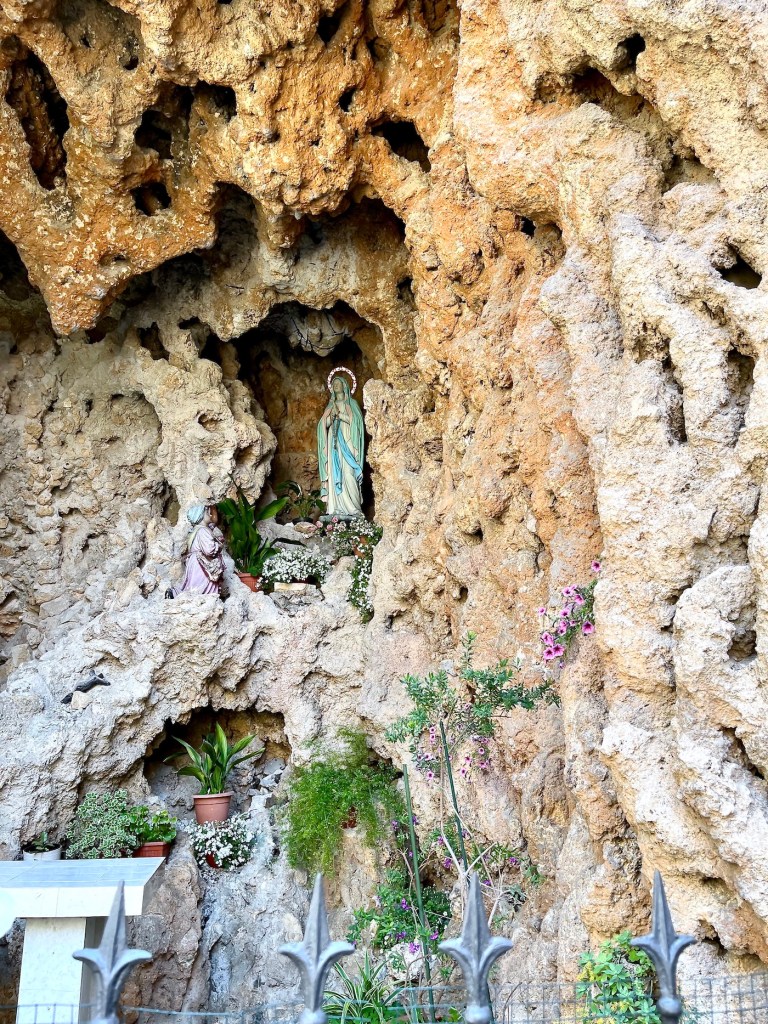

I rested for a while on a bench placed beside the grotto, letting snatches of song from the celebrants in the church wash over me before continuing with our walk.
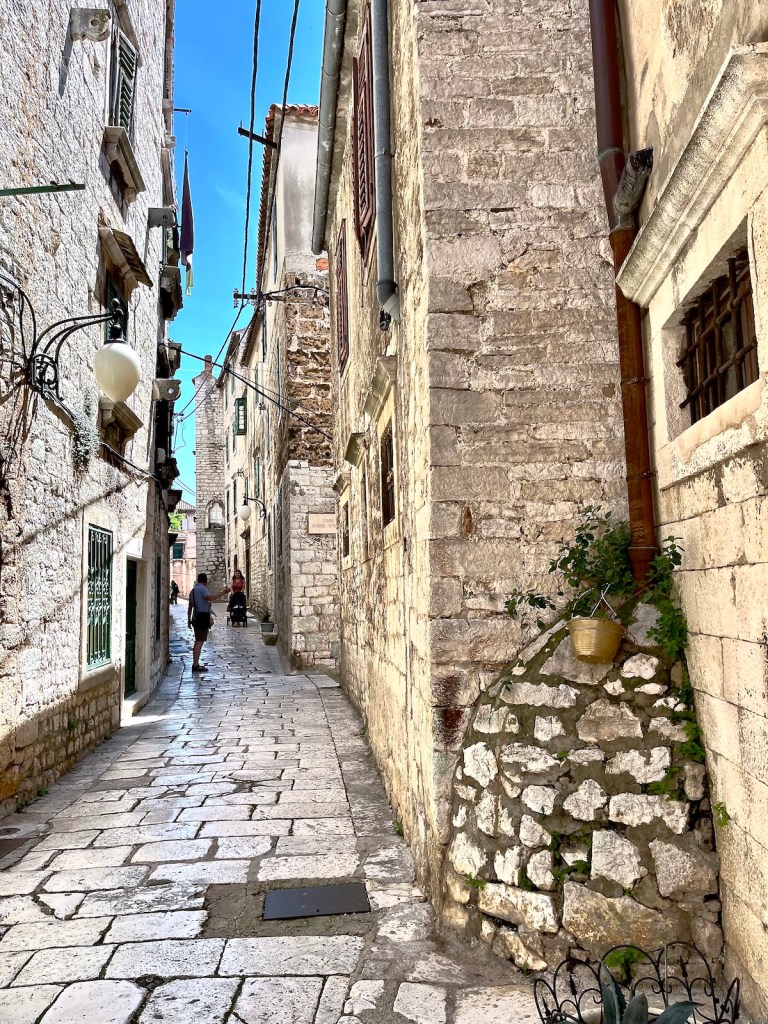
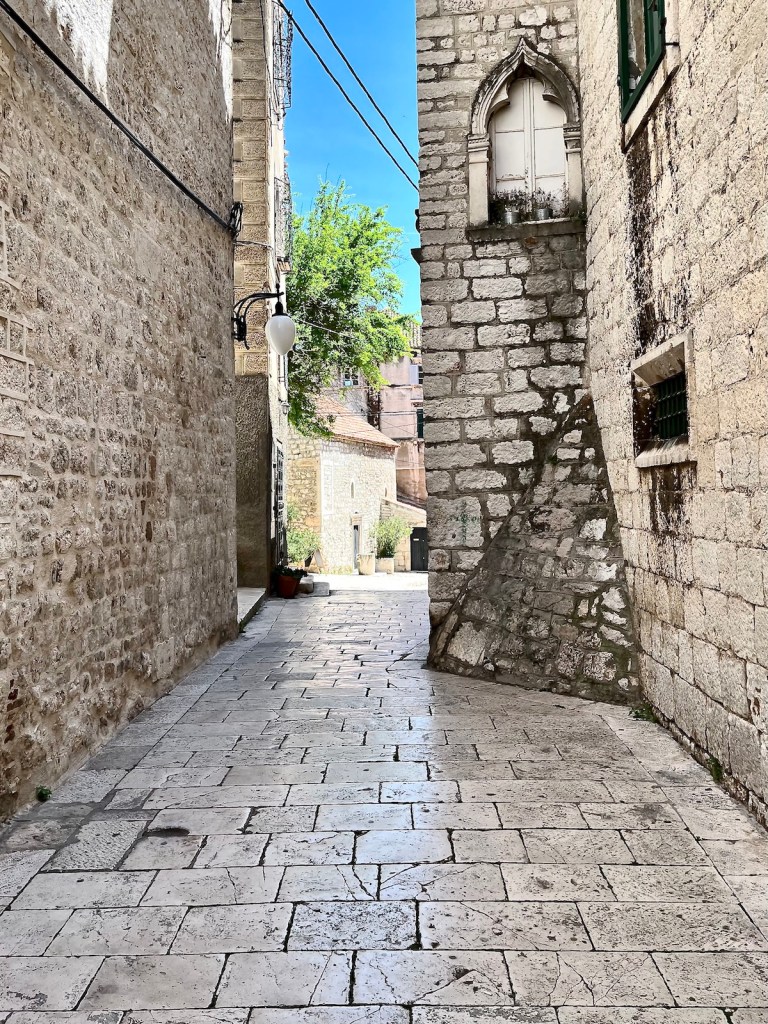

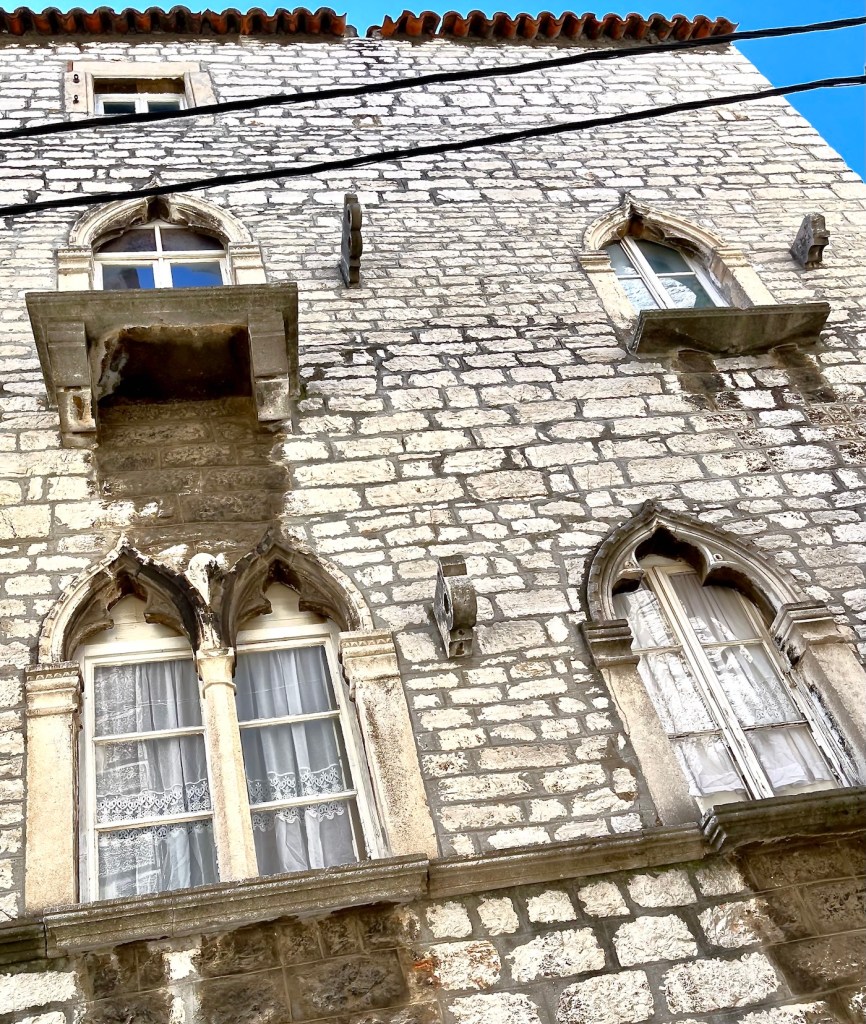


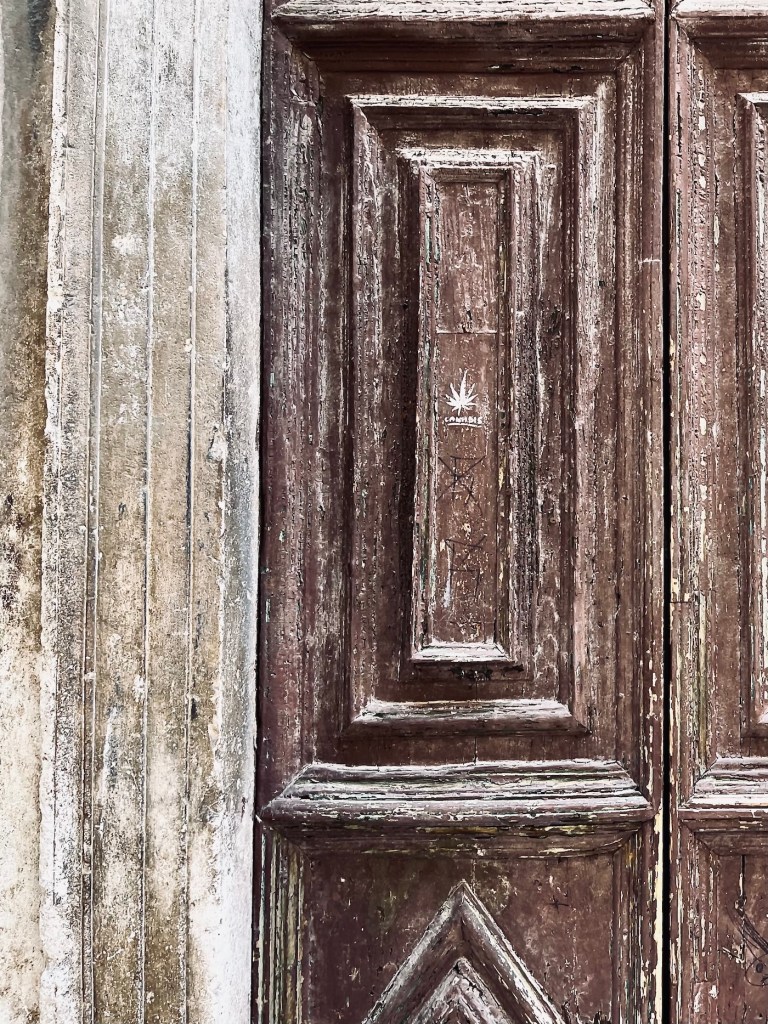
Leaving Old Town, we slowly strolled back toward the shore. Crossing through a lovely park, we came across an impressive contemporary statue of a medieval king.
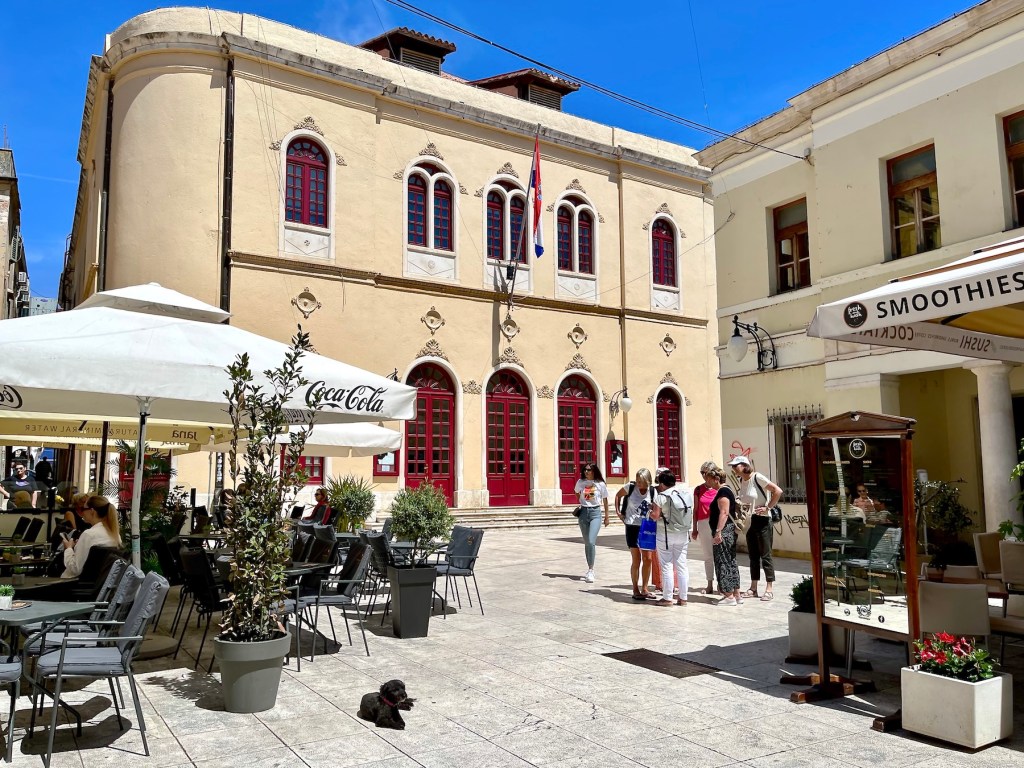


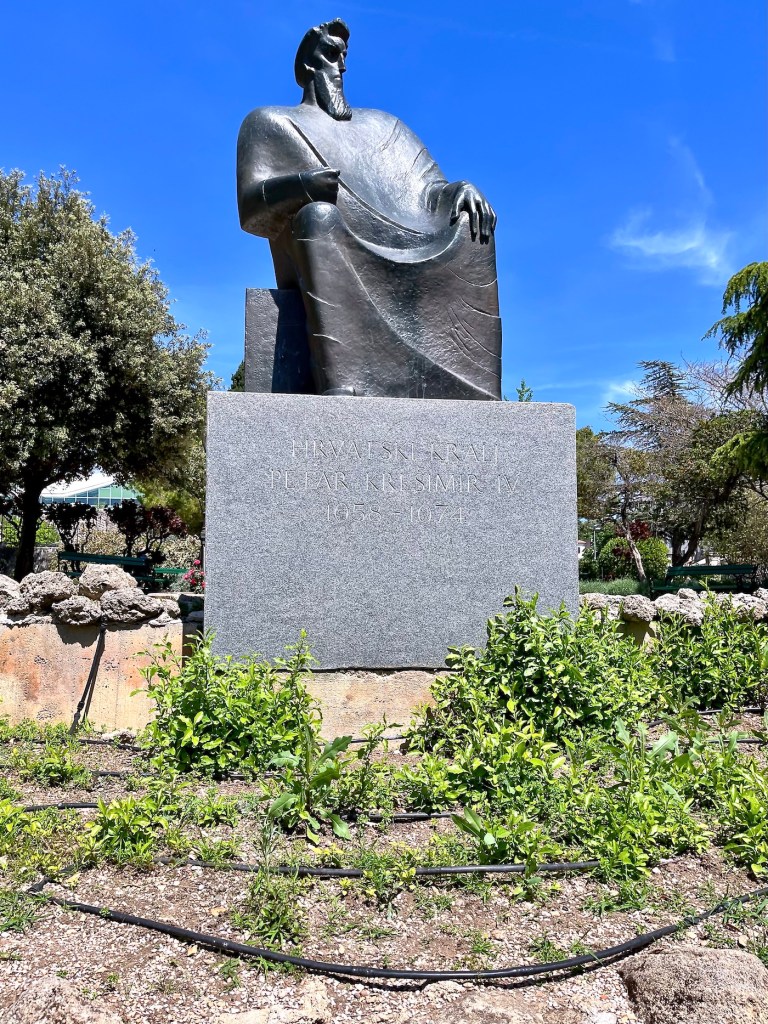
A presumably Croatian tourist asked my husband to take a picture of him in front of this statue of Hrvatski Kralj Petar Krešimir IV. Veliki, 1058 – 1074, King of Croatia Peter Kresimir IV, called the Great. He is considered a hero of the Croatian people and the founder of Šibenik. [I tried very hard to discover the artist who created this statue, but failed]
After meeting King Petar, we walked back to the ship and spent the rest of the day onboard the Silver Moon.

That evening we asked our friends and cruise companions to join us for some belated birthday cake and champagne after dinner. My cake was, naturally, le gâteau opéra, mon gâteau préféré. My husband’s choice was, equally naturally, carrot cake, his all-time favourite. He had pre-ordered the cakes through our Silver Moon butler, who arranged the whole lovely presentation.


Soon after, it was time to set sail for Zadar.

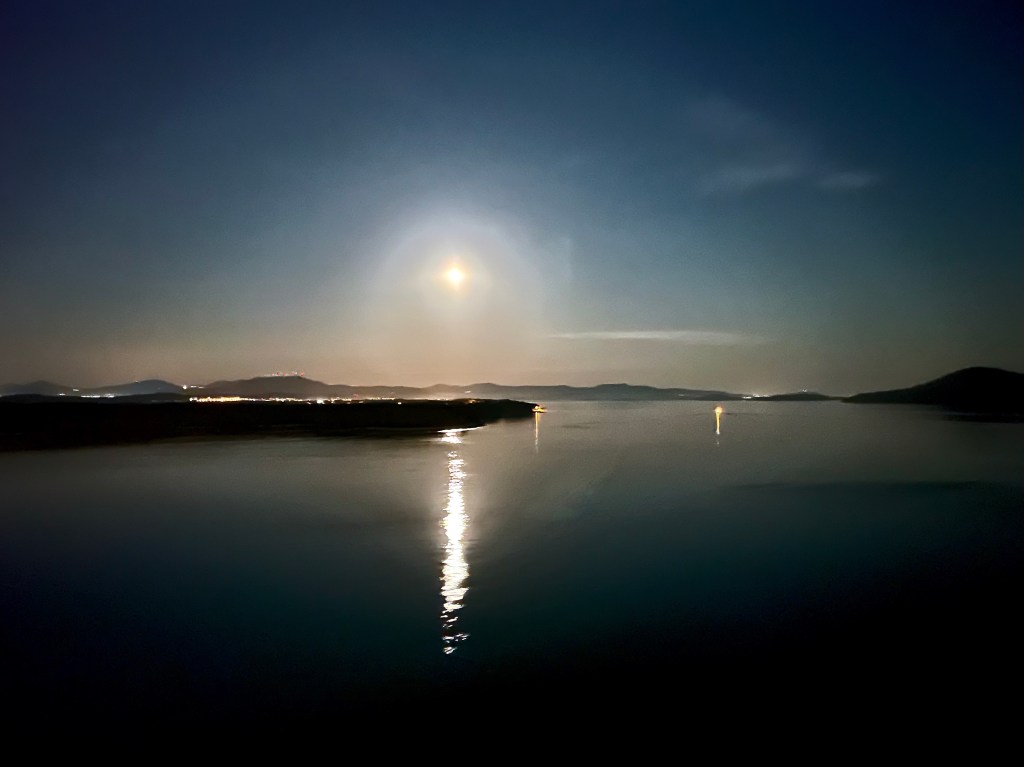
Good night, sweet dreams – for a short while anyway. On the way from Šibenik to Zadar, I was up and taking pictures shortly after 5h.
Looking out to sea versus looking toward the coast – two very different impressions in these early morning hours!


ZADAR, CROATIA, May 7, 2023
By noon, a bus transfer brought us from our docking site to the edge of Old Town Zadar, right in front of the traditional stone gate in the ramparts.

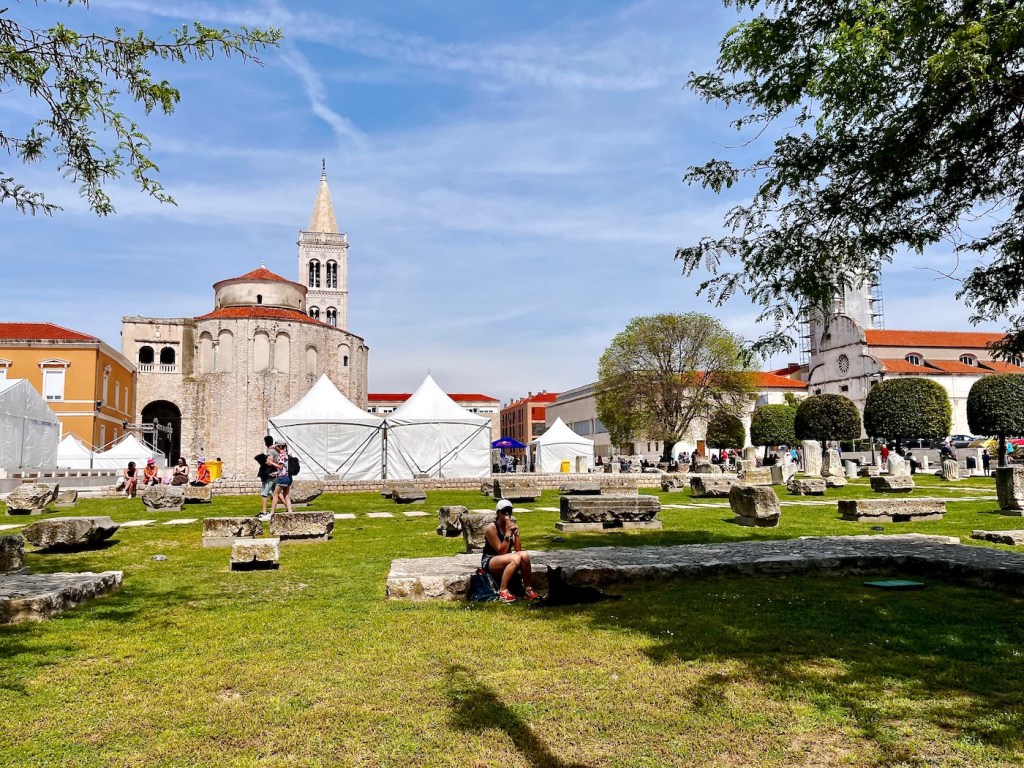
Reaching one of the main squares of Old Town, we gradually come upon a melange of roughly 2000 years in architecture, populated by a cheerful crowd, most of them participants of the May 7, 2023 Wings for Life World Run.


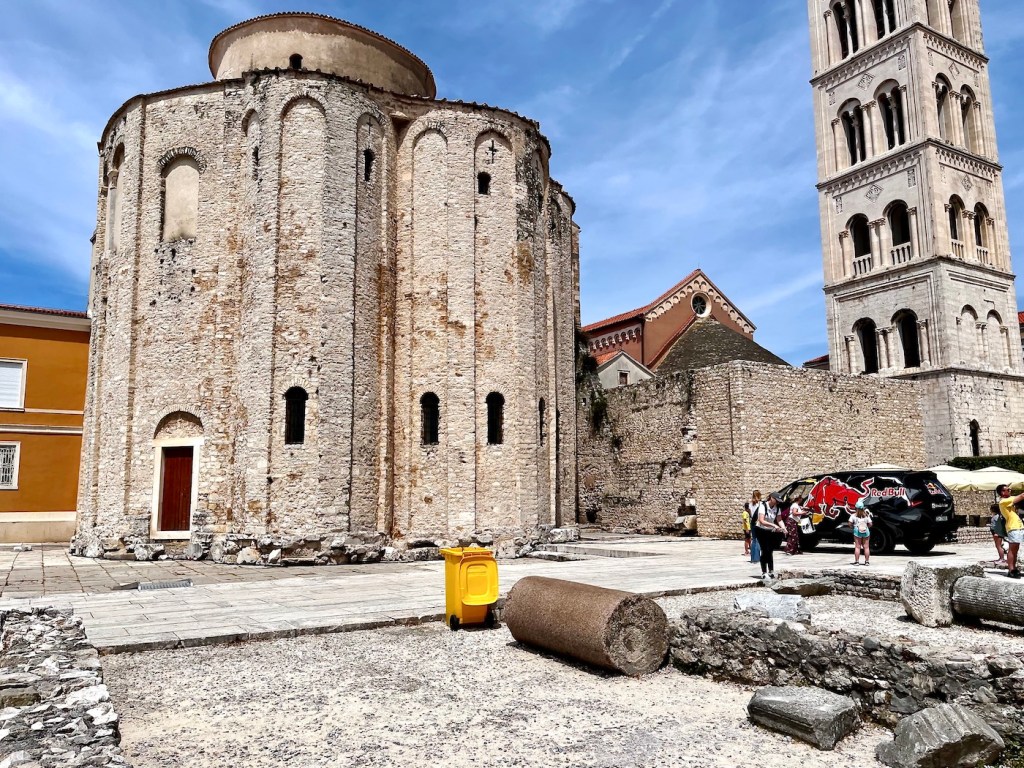
We identified a 9th-century fortified Church, cheek by jowl with the Romanesque Cathedral of St. Anastasia with its Renaissance-style bell tower which in turn snuggled closely to the Church of St. Mary with its Benedictine Nunnery founded by the Lady Čika in 1066, not to forget St. Michael’s Church run by the ‘Black Friars’ of the Third Order of St Francis. All of these sacred institutions, interspersed with contemporary secular buildings were jointly framing the remains of a Roman Forum of the first century CE. A truly unique set-up! Especially, when one throws a Red Bull Fan Zone complete with large screen and sponsor tents in the mix!!


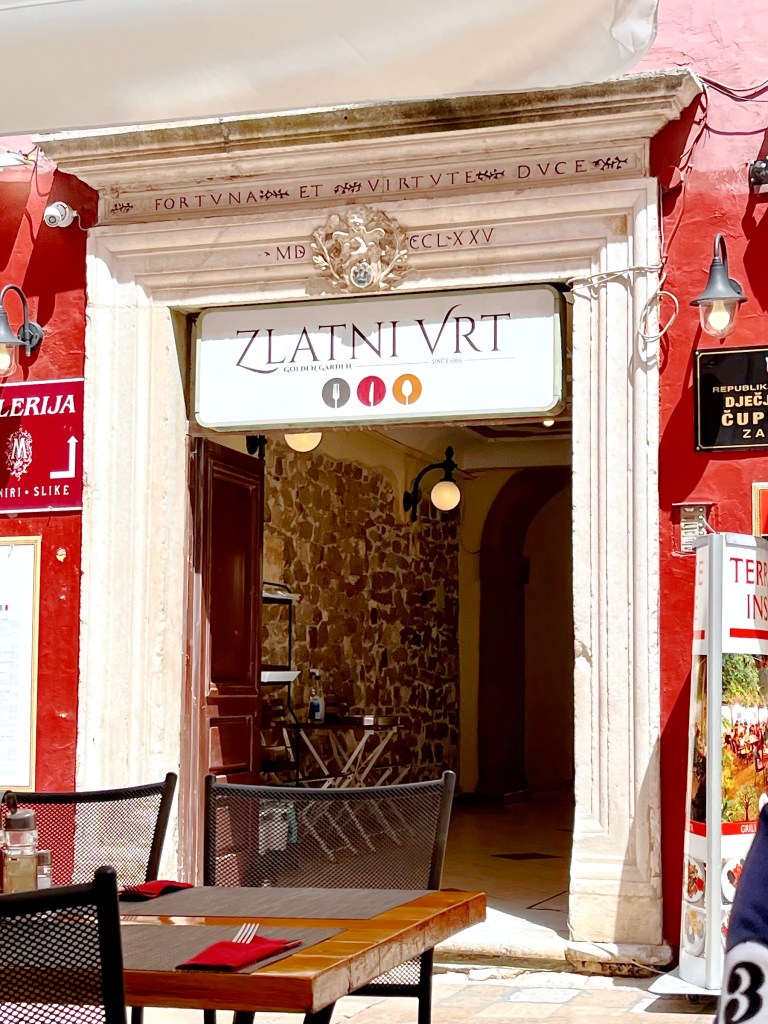
The restaurant Zlatni Vrt, the Golden Garden, provided us with chairs in the shade, a lovely cold beer, some delicious snacks, and a bathroom. Although it’s one of the oldest restaurants in Zadar, it doesn’t go quite as far back as the inscription might indicate 😁
Following lunch, we made our way along the shore toward the western tip of the Old Town peninsula to search for two mysterious objects called Morske orgulje, the Sea Organ and Pozdrav suncu, the Greeting to the Sun, both were designed by the Croatian architect Nikola Bašić.
We discovered the Sea Organ at the edge of the pier. It consisted of an arrangement of pipes hidden beneath a set of white marble stairs leading into the water. When the waves rolled in, they initiated sounds in the pipe system. It was difficult to distinguish the sounds made by the waves against the noises produced by humans, so one had to focus hard to isolate the Sea Organ music.
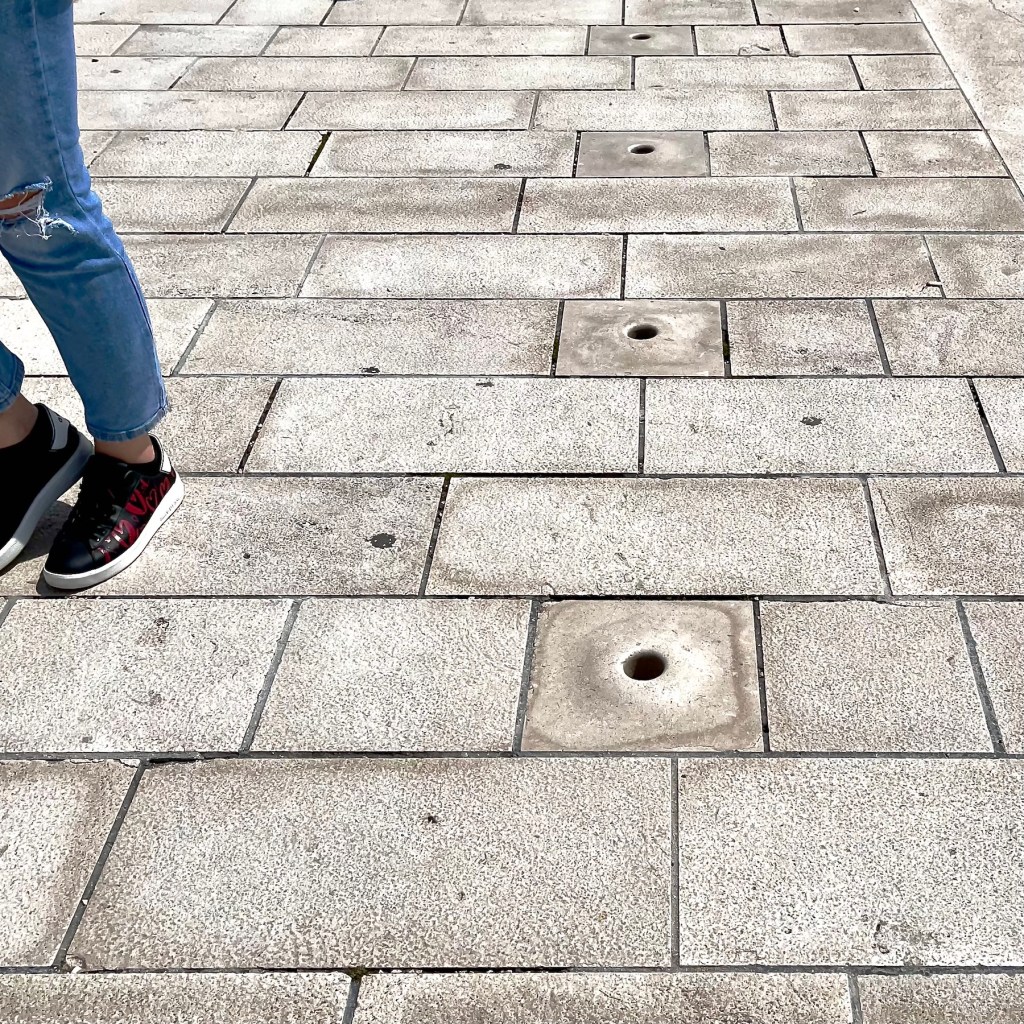
I tried multiple times to make a video clip of the wave sounds, but the tourist’s yapping, plus wind noise pretty much ruined the effect. The SEA ORGAN sounds reminded me of whale song and it was quite mesmerising. I searched for better recordings than my own pathetic effort, but couldn’t find anything worthwhile. Maybe you have better luck.
Next to the Sea Organ, we came upon the enormous photovoltaic installation called the Greeting of the Sun. It presented an impressive image, no doubt. But sitting there all blue and shiny, this large sphere with its 22m/72 ft diameter was a bit of a puzzle. It felt odd, even wrong, to step on the glass panels, but they clearly also discharged a great fascination. At night, I read, there are terrific light shows powered by the harvested solar energy, which also powers sections of the town. Unfortunately, we didn’t have an opportunity to see the nightly display.


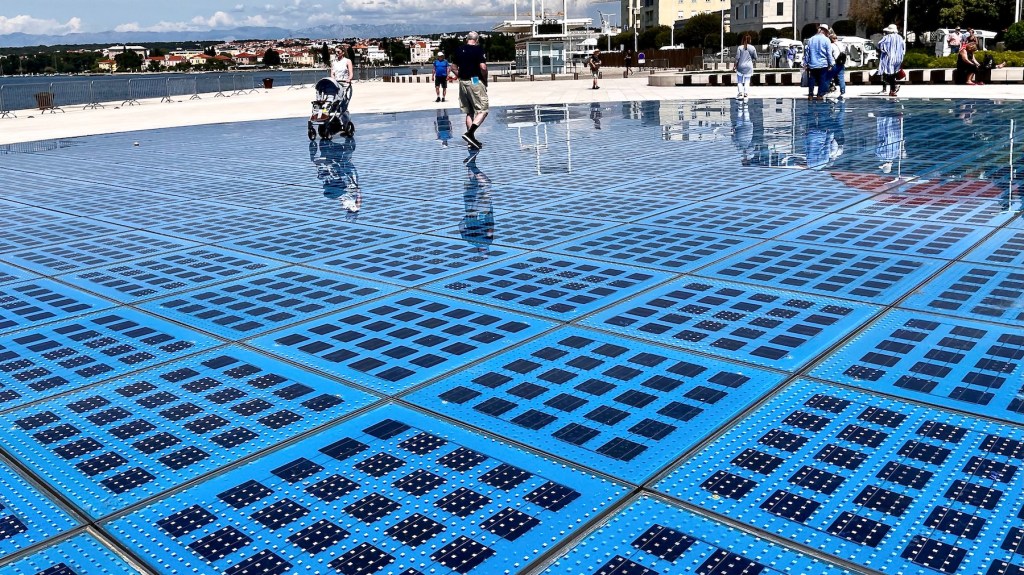
Wikipedia says, the two installations symbolize communication with nature. One communicates with light, while the other communicates with sound. Well …
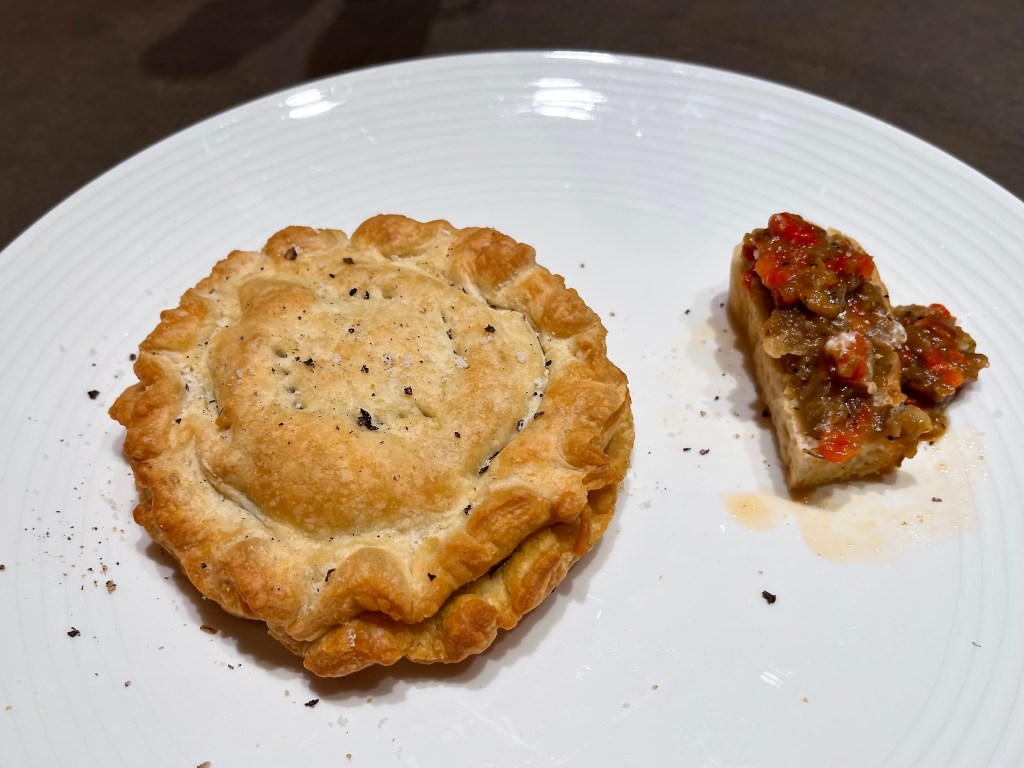
Later in the afternoon I participated in my second S.A.L.T. Lab* cooking lesson, this time with Croatian dishes. I learned to prepared Soparnik, a pie filled with Swiss chard, spring onions, garlic, and parsley. The other dish was Ajvar, a roasted pepper and aubergine relish.
*If I haven’t mentioned it yet, S.A.L.T. stands for Sea And Land Taste. These cooking classes focus on the cuisine of ports of call and are conducted by local chefs.
And in preparation of our arrival in Ravenna the next morning, we enjoyed an especially nice bottle of wine with dinner.

Off to Italy we go!

 NOT IN A STRAIGHT LINE by Photolera Claudinha
I loved this part of the cruise!
LikeLiked by 1 person
I loved this part of the cruise!!
LikeLike