Last and Lasting Impressions of Lyon
When we visit a new location during our home exchanges, I like to walk aimlessly through the borrowed neighbourhoods, usually fairly early in the morning when there are fewer people about and sharp shadows fall across my lazy steps. I am not keen on taking pictures of well known landmarks. Pros have done that already ad finitum, and their photographic skills and technical resources far exceed mine. Rather, I collect prosaïc vistas that catch my eye. There is an apt expression in French for this kind of activity, jeter un coup d’œil à qch. It means to glance at something, but literally it says to throw a glance. That’s what I do on my walks, I throw an eyeball at this and that, and later, when I edit my catch-of-the-day, I discover the details of what I reeled in. Sometimes it’s disappointing, at other times there are fun surprises. The “Gummibär” in the wall, for example, was a delightful find.


Lyon is a two-river city, and we crossed both multiple times. As it turned out, I didn’t take a single picture of the Rhone river. Oops.


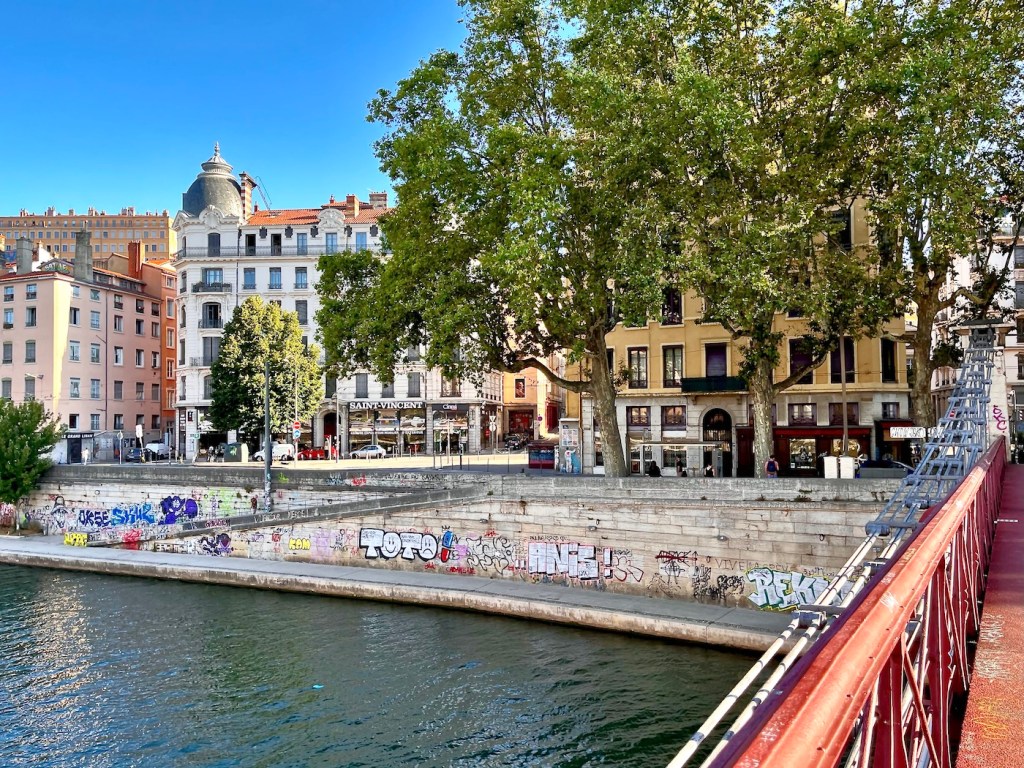

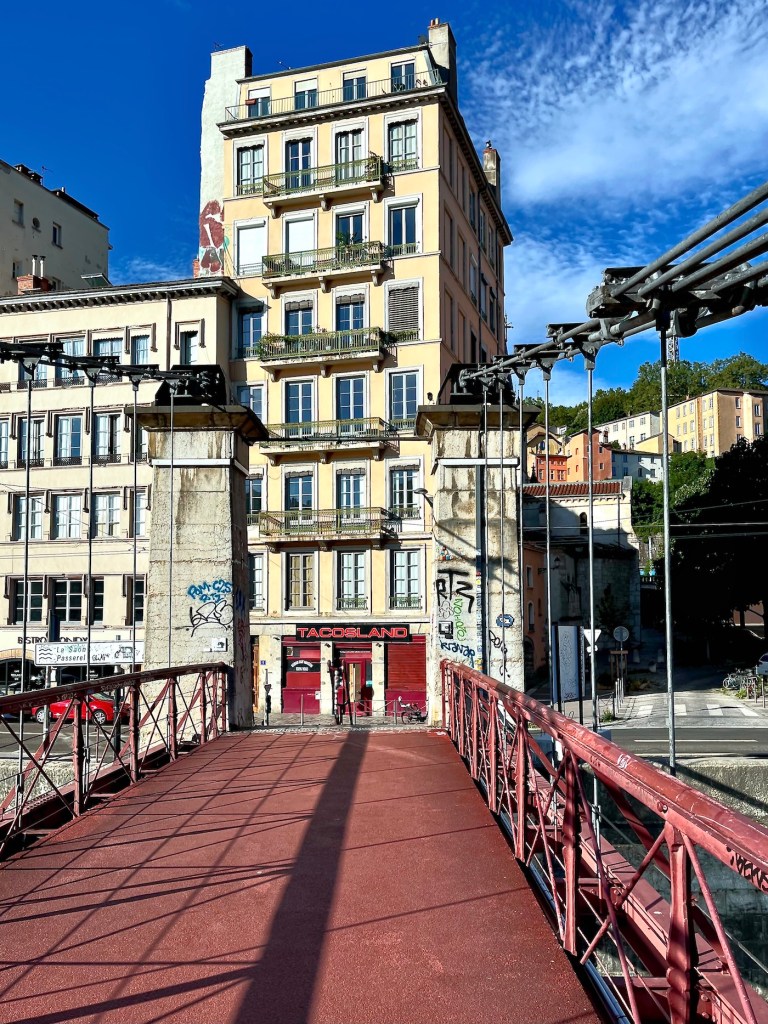
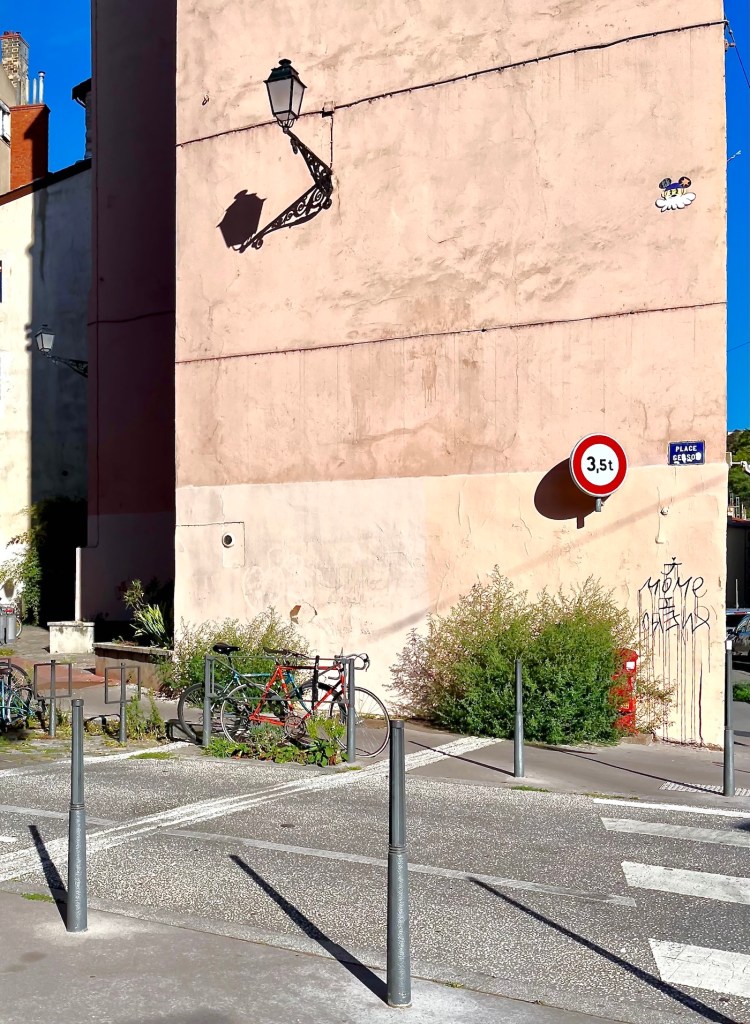
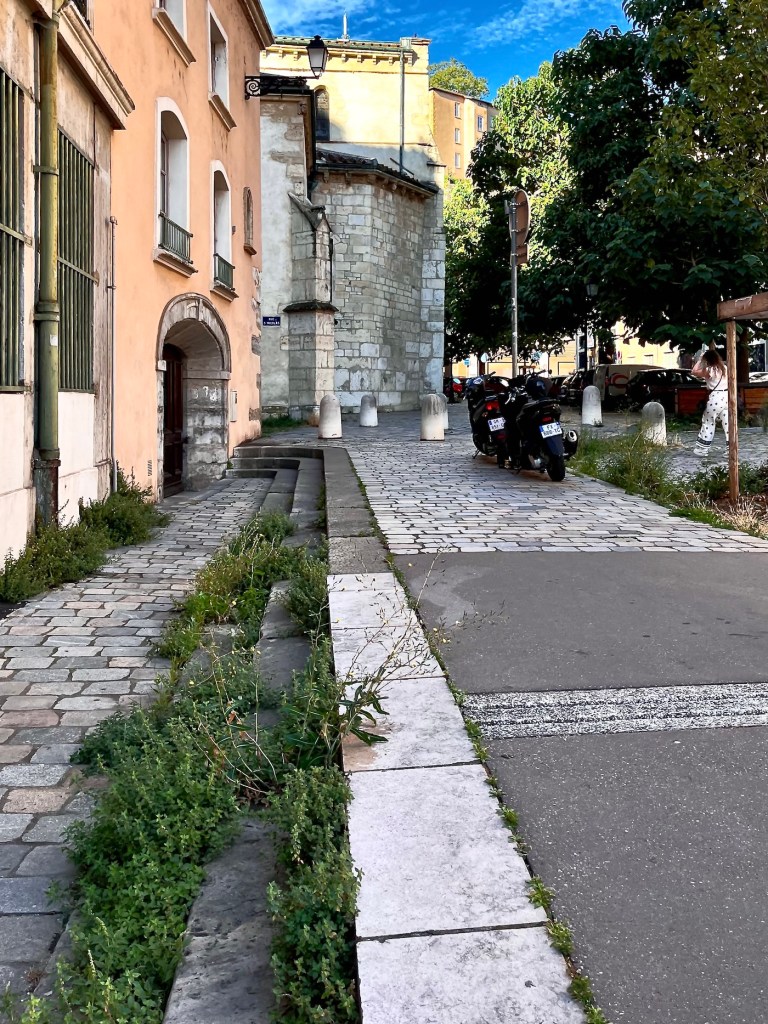
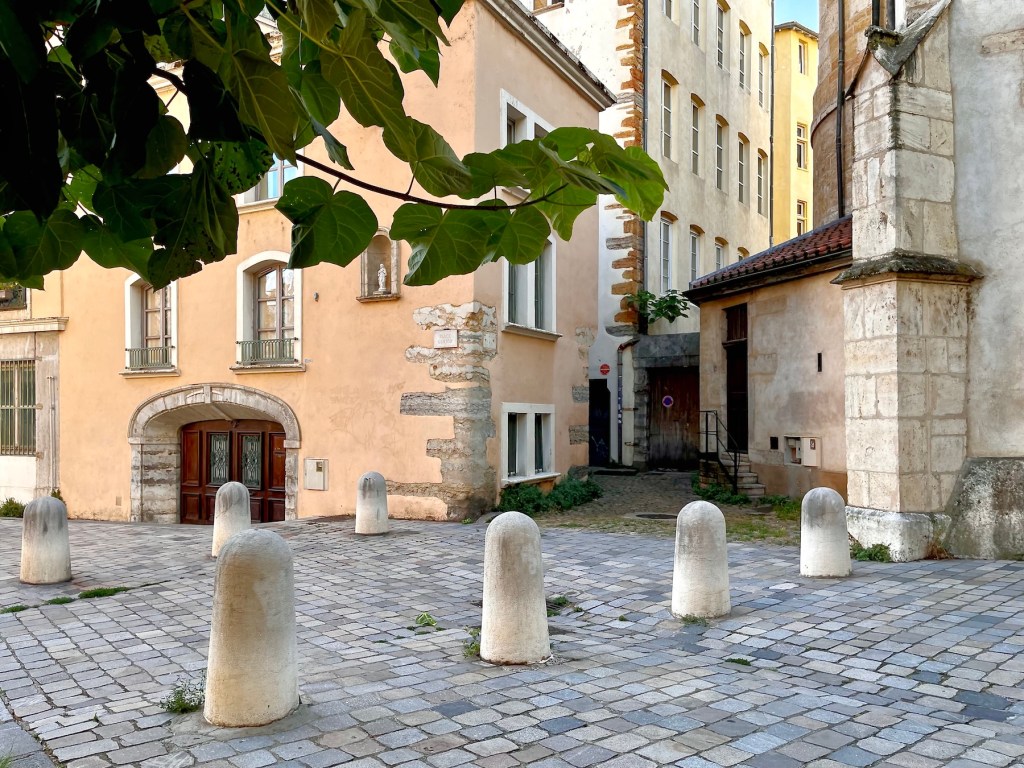
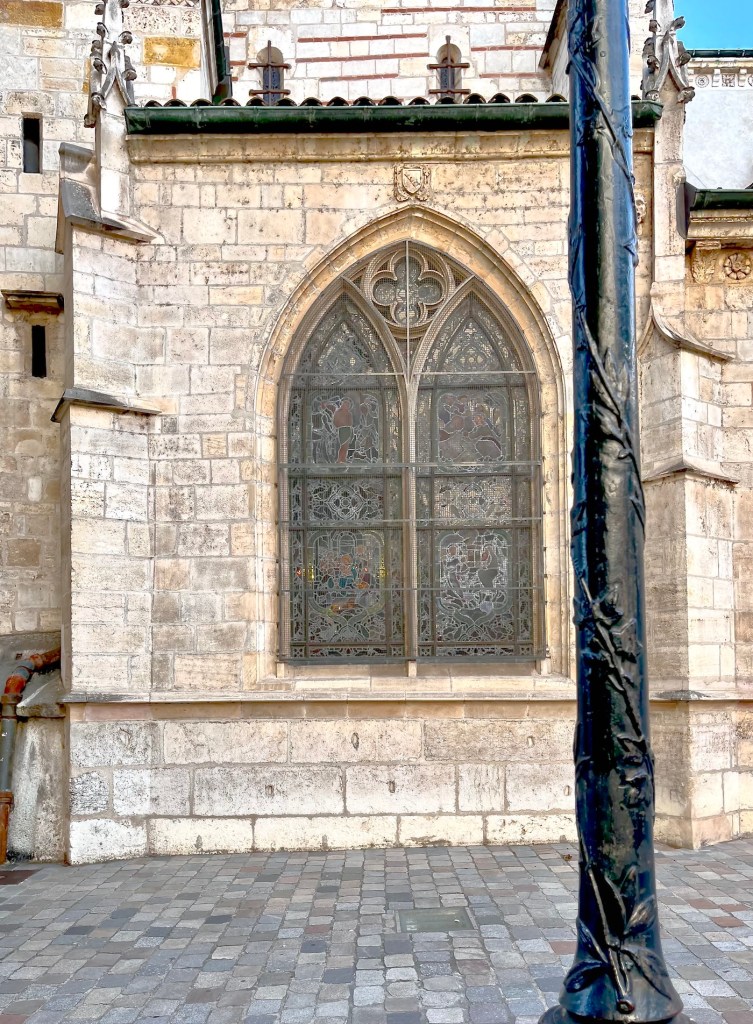


the sacred versus the secular


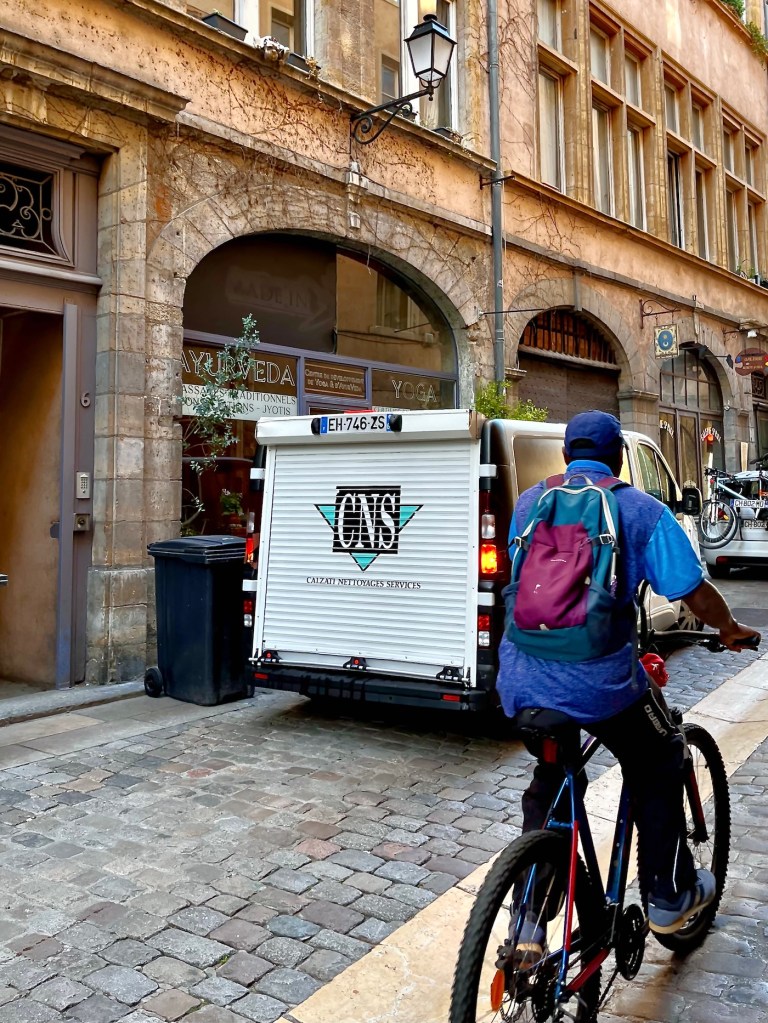
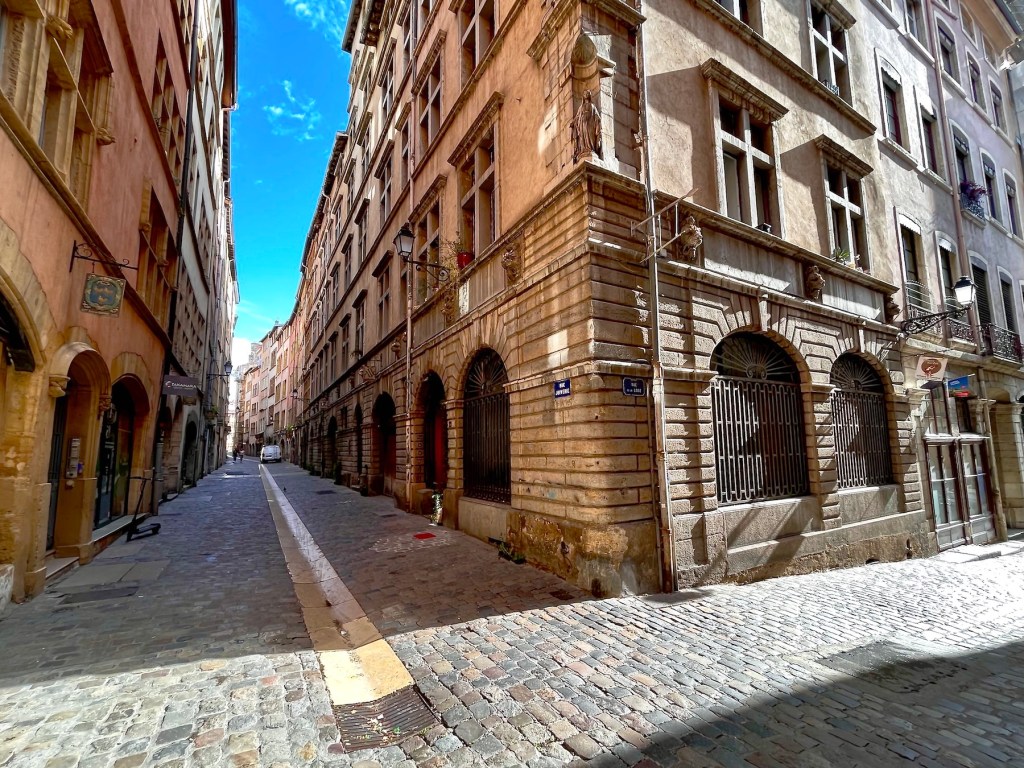
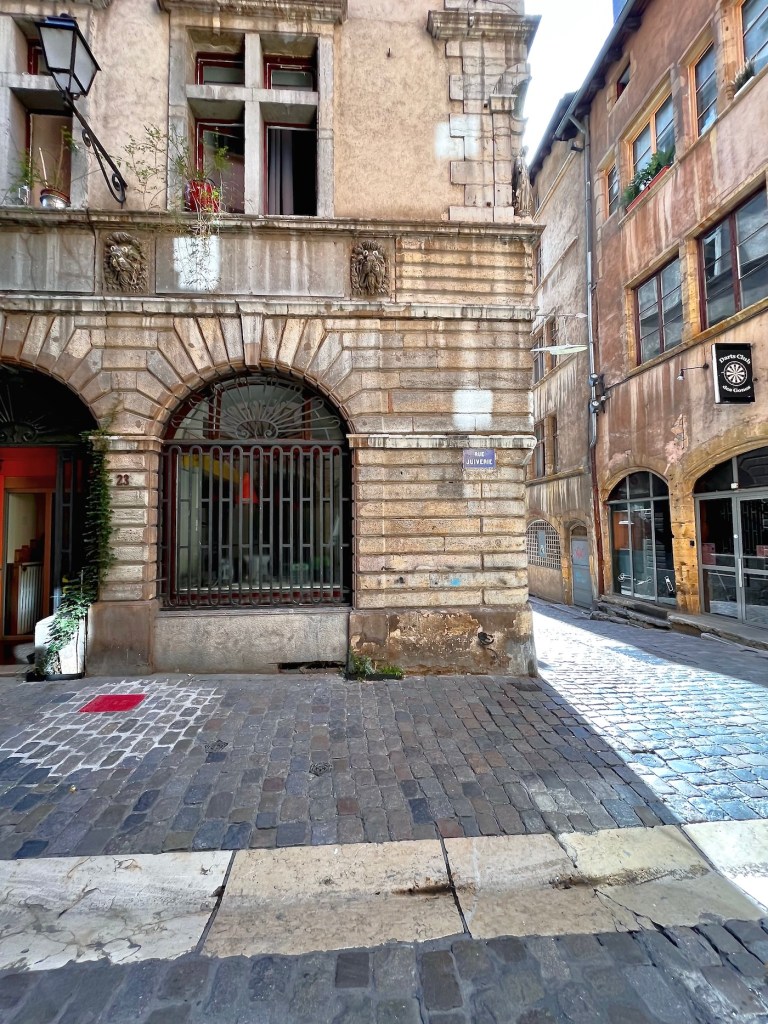
Across Place Saint-Paul with its train station, a Judengasse opened up. A narrow lane, slightly curved, and its name Rue Juiverie, street of the Jews, references a past as a predominantly Jewish neighbourhood. Until 1394 that is, when King Charles VI expelled all Jews from his realm. He kindly gave them a Gnadenfrist, a grace period, so that they could sell their ancestral homes and pay their debts before starting yet another exodus. On the other hand, the king forgave Christian citizens their indebtedness to Jews. No wonder he was called le Bien-Aimé, beloved. Rumours have it that Queen Isabeau de Bavière aka Elisabeth von Bayern-Ingolstadt of the House of Wittelsbach, was the driving force behind her husband’s antisemitism. Already in 1387, the crown had issued a stern warning to the Lyonnais Jewry to stay out of local politics and pay their taxes. Since the king was at that time still under the regency of his powerful uncles, which continued even after his emancipation during his psychotic episodes, I suspect, power games and greed were the true reason for the edict.
Even discounting Lugdunum’s long history, rue Juiverie is a very old street in an ever-developing settlement. The prestigious Renaissance townhouses we still admire today, were build upon timber-framed dwellings of the Middle Ages which in turn arose from modest homes and workshops of artisans and craftsmen. There were cattle markets here and farmers brought in fresh produce, grains, and preserved alimentation for the urban population of merchants, bankers, clergy, and other skilled professionals.

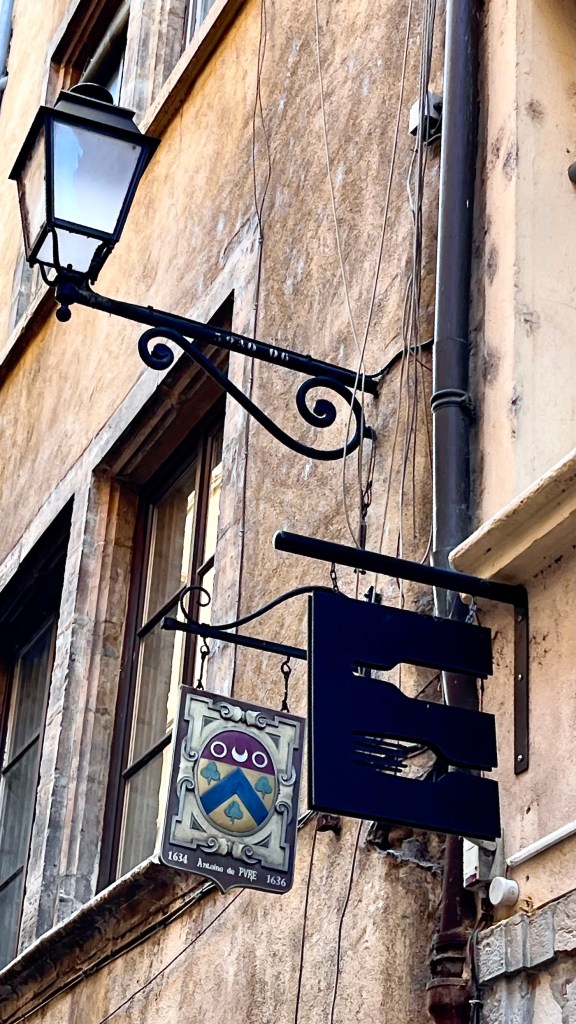
Continuing into the lane, a number of coats of arms mounted high on the walls stood out to me. A French Geneawiki page, titled: “The provosts of the merchants of Lyon” shows the names and the coats of arms of provosts and aldermen. It also explains the historical development of the Lyonnais city council from the 13th through the 18th centuries. The coats of arms I saw in Rue Juiverie were produced with the assistance of the City of Lyon and Crédit Foncier de France, CFF, a major bank, mostly making loans to communities. Wikisource gives this wildly fascinating explanation: CRÉDIT FONCIER, landed credit, the French name for a method of borrowing money on the security of landed property which is widely practiced in France and other Continental countries. … and so forth … 😴😴😉


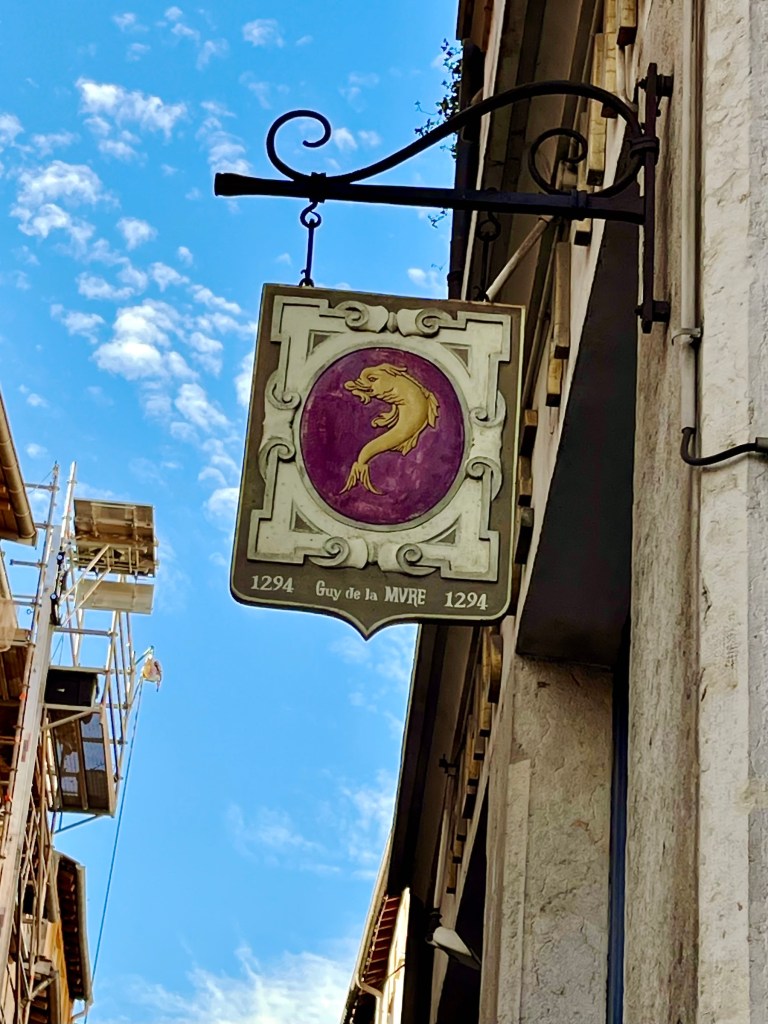

Guy de la Mure and Jean de Pressie didn’t yield much information in a casual search. A potential ancestor, a count Guy de Forez de la Mure died in 1202 in Acre, presumably during a crusade.
Antoine de Pure 1620-1680, was a clergyman, playwright, and historian. He would not be remembered, it is said, had he not been mocked mercilessly by the highly regarded and better known poet and critic Nicolas Boileau-Despréaux.
Antoine François Prost 1729-1784, however, was a very well known Lyonnais personality, a member of a highly educated and very wealthy family. In 1752 his papá François purchased an estate in the Royer hamlet an hour or so north of Lyon. Henceforth the family adopted the name Prost de Royer. Antoine-François became a lawyer like his father, and he was admitted to the bar at age 19, which was the beginning of a life dedicated to public service. As rector of a charitable hospital he proposed ways to improve conditions for sick, orphaned, and abandoned children. He became an alderman for the Fourvière district and was chosen as the president of the bar, both in 1765. By then, he was already so well known that Voltaire commented on his wisdom. Prost de Royer also served as lieutenant-general of police, building the Lyonnais police force from the ground up. He supported better representation of women in city government, cheaper bread for everybody, and more favourable loan conditions. Oh yes, and he corresponded with Benjamin Franklin regarding the Pennsylvania constitution.
Another well-known name in Lyon was Claude de Bourges. A powerful merchant, we already encountered him in conjunction with the gothically decorated home I showed you in a previous post. Another point of interest is his daughter Clémence de Bourges. She was a poetess of some renown among her contemporaries and her fame extended well past her lifetime, although none of her original work survived. Rainer Maria Rilke mentioned her in his prose masterpiece “Die Aufzeichnungen des Malte Laurids Brigge” which he published in 1910. I inherited my grandmother’s 1920 edition … circles within circles …

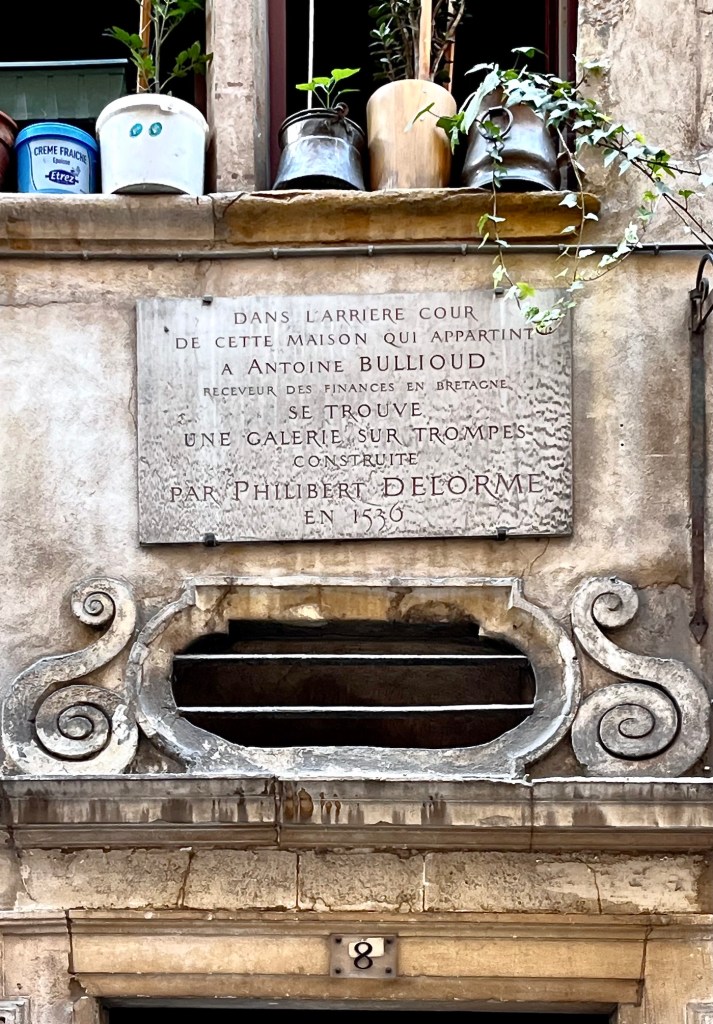
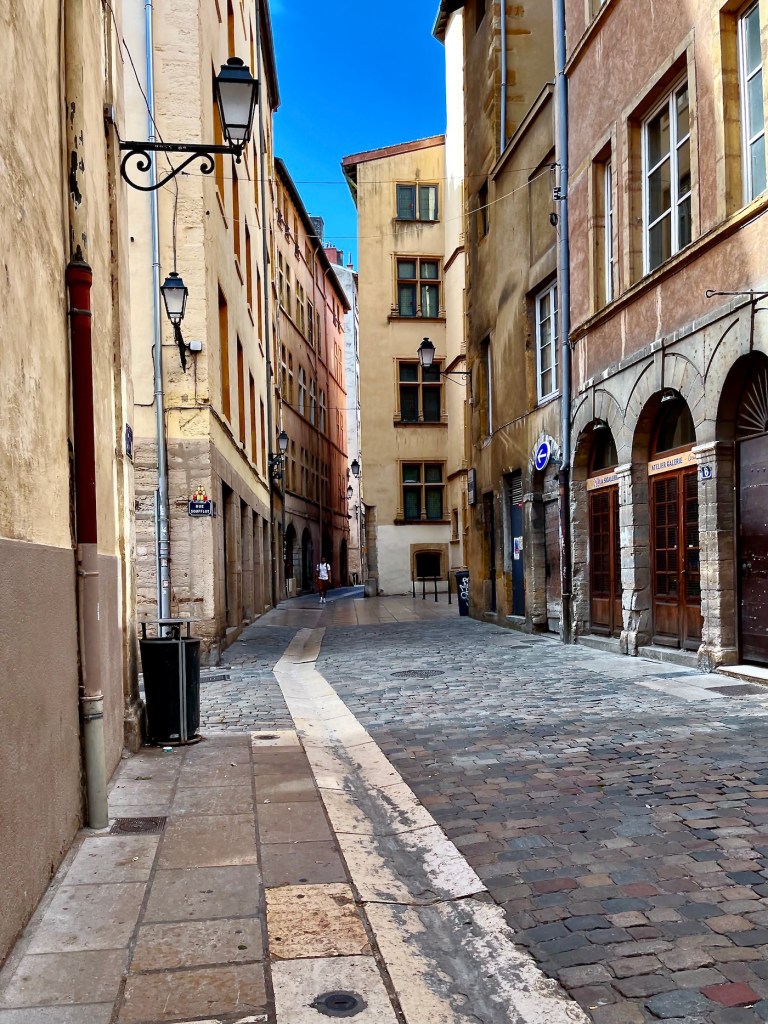
It’s time to walk on and look at a few more bits and pieces of interest in this cobbled lane filled with so much history, spanning an arch from medieval cattle markets to the very first Renaissance gallery in Lyon at house Nº8, designed by celebrated architect Philibert Delorme in 1530 upon his return from studies in Florence.

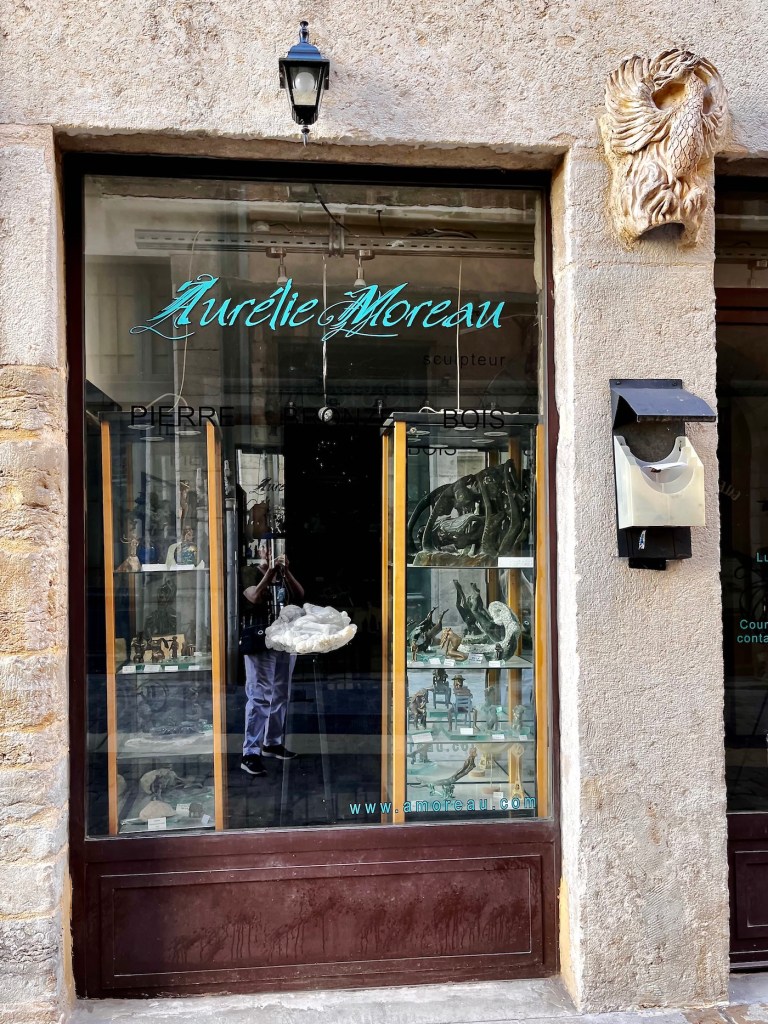

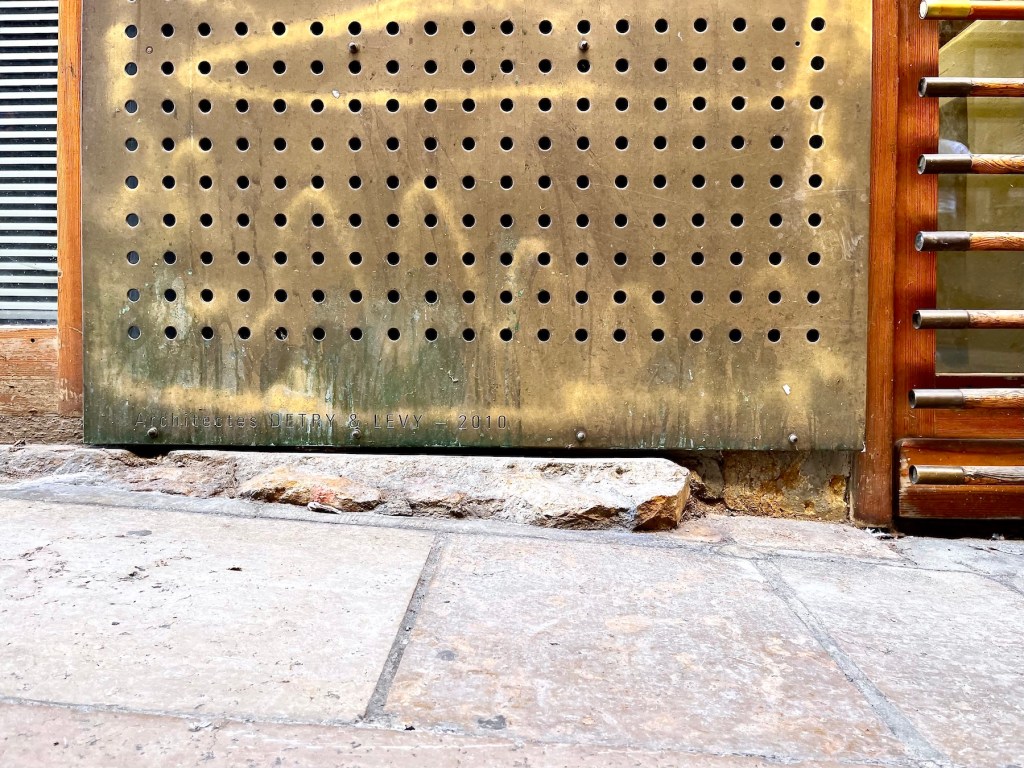
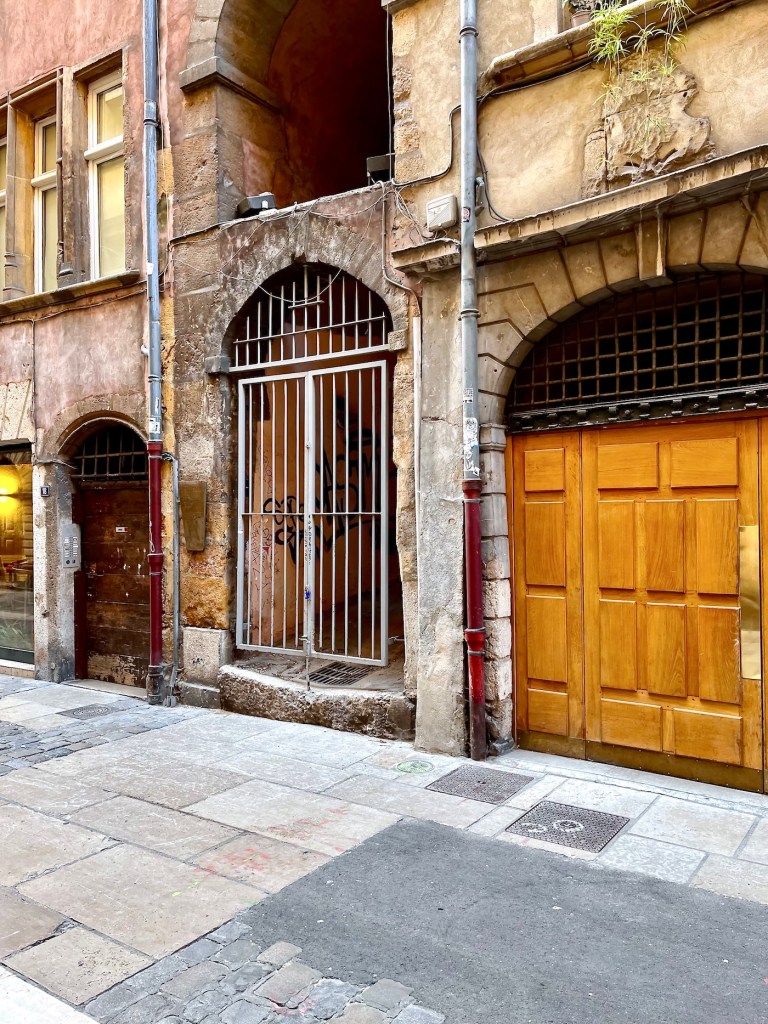
A little further along, I gasped in surprise at the sight of a splendid modernist gateway, anchored within the original Renaissance framework by an iron brace. It’s sad to see the the neglect, though. The architects Detry & Levy of Lyon created it in 2010.


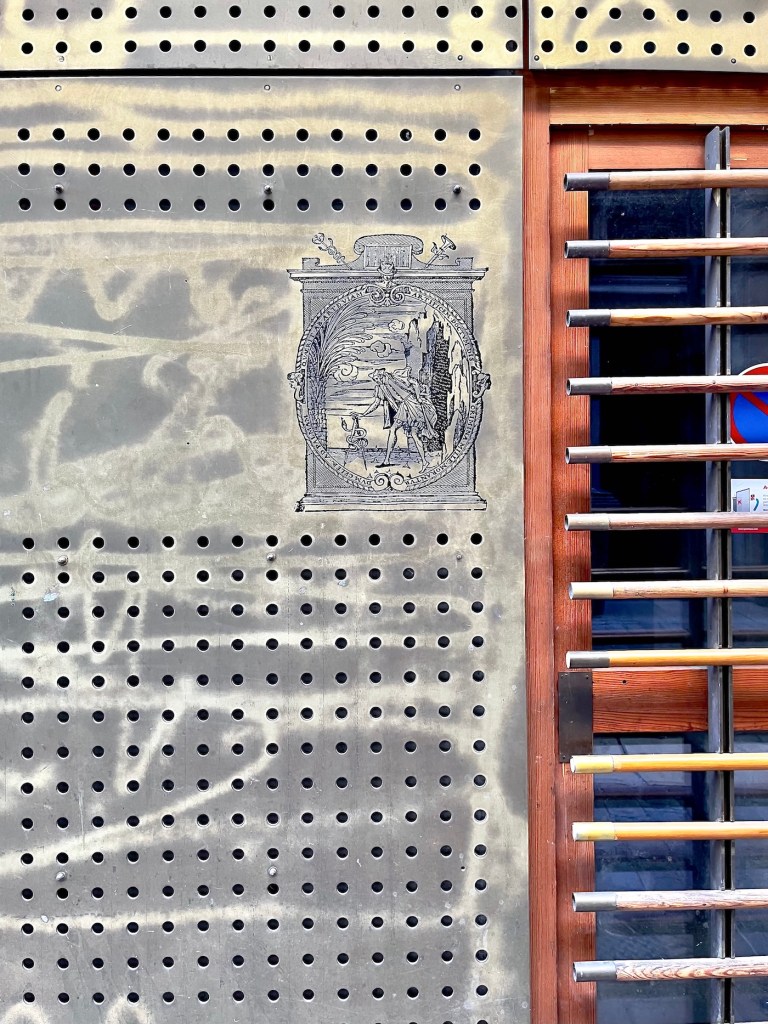
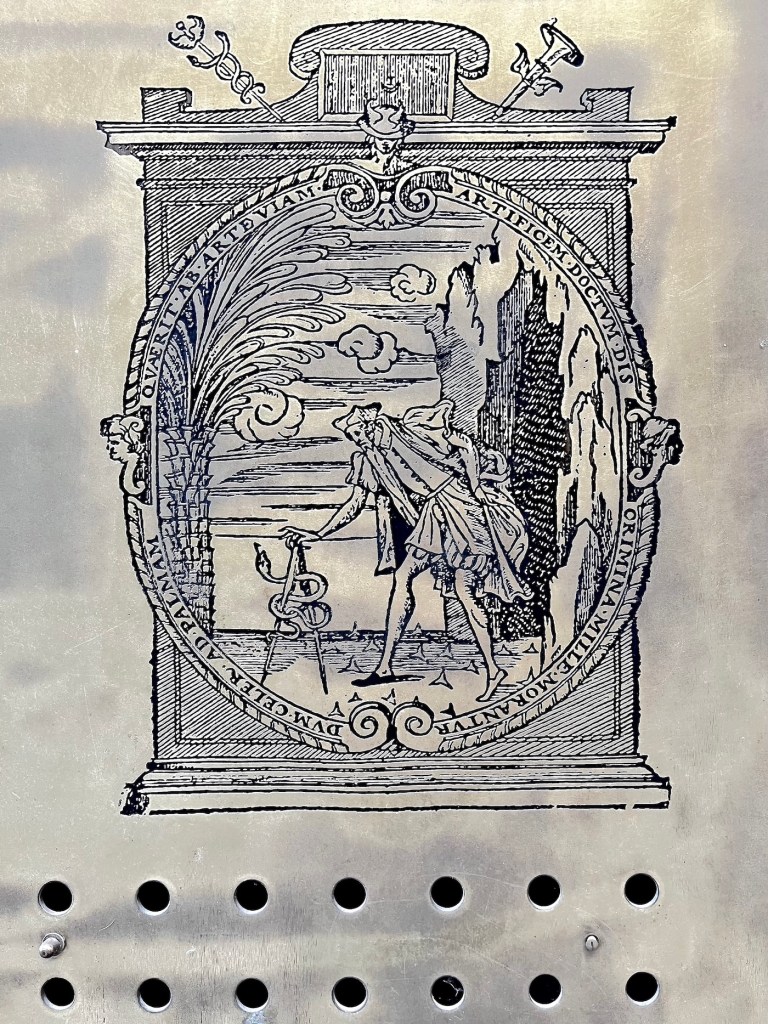





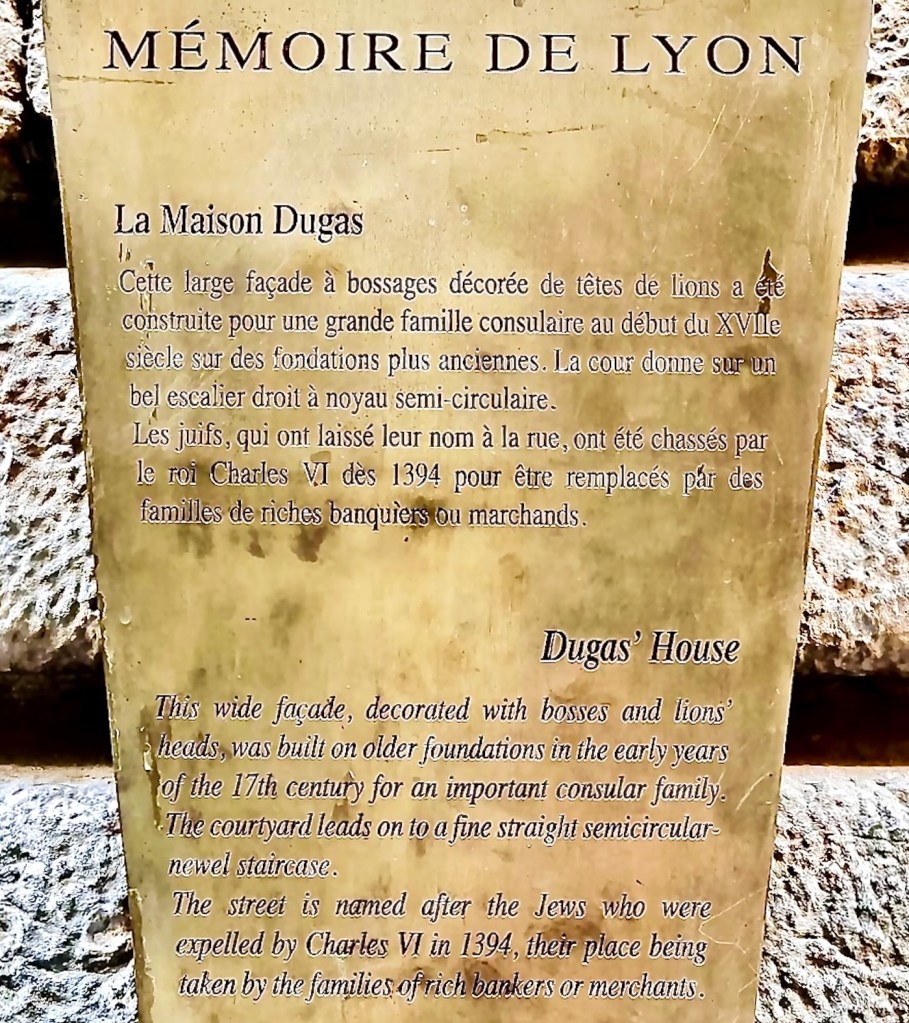
In the shield below, “consular family” refers to the family of an influential member of the town council, an alderman.


Just around this corner, I discovered the studio of the watercolorist Vincent Jeannerot. There were intriguing images in the display window and I would have loved to take a closer look, but alas, it was August. During the month of August, more so than in July, one finds notices of vacances estivales or congés d’été, summer vacation, taped to many firmly looked premises.


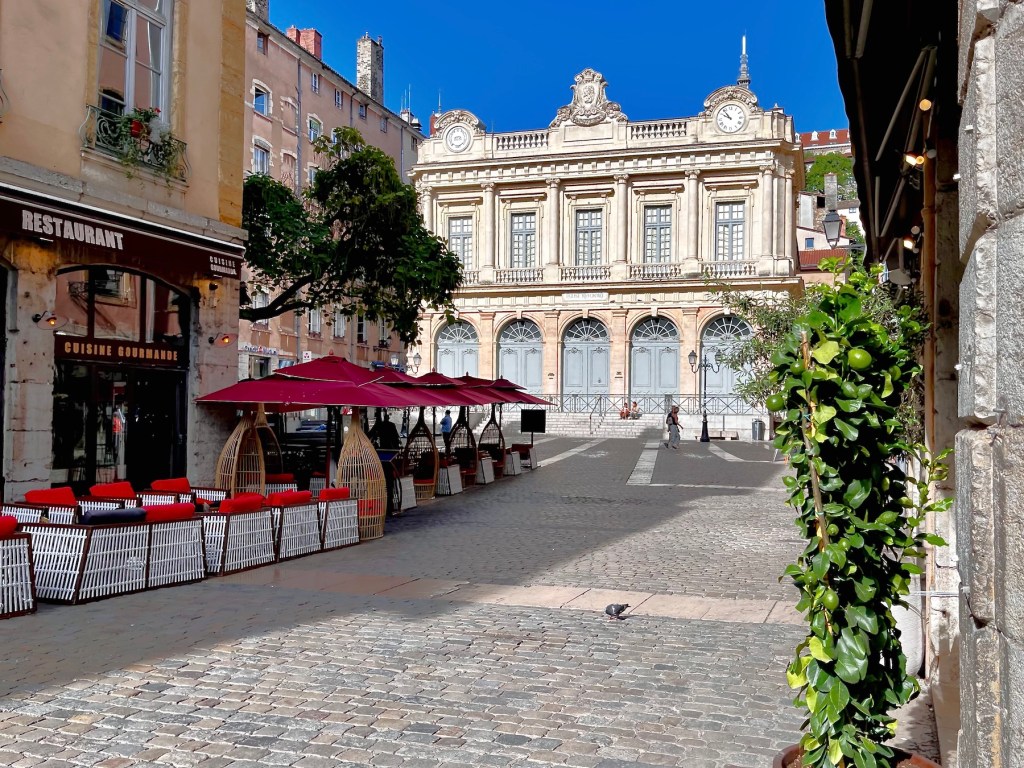
Circling around the church, the Temple du Change, a United Protestant Lutheran Church, we’ve returned once more to Place du Change. This Protestant church was established in 1800 in the former Exchange Lodge, the market hall, where the traditional Foires frances, the ‘duty-free’ markets of the merchants of Lyon took place. The front of the church faces la Maison Thomassin across the plaza.

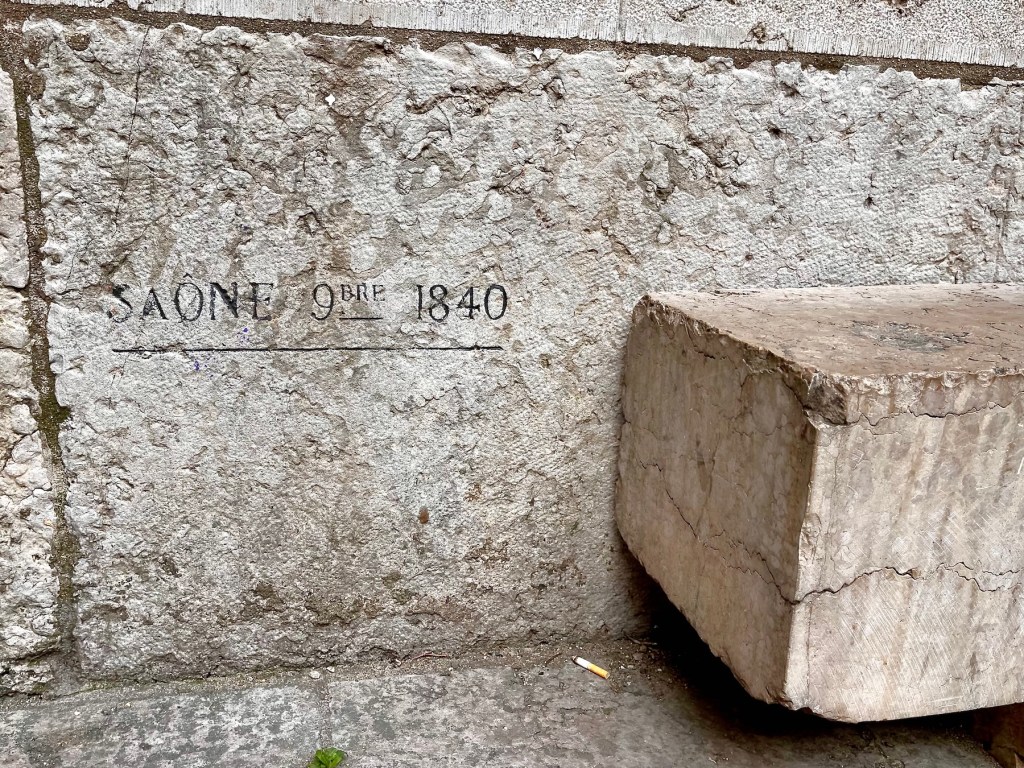
Next to the stone bench in front of the church, behind the streetlight, I found a marker commemorating the great flood of November 1840. It was caused by periods of torrential rains throughout the fall, that were reinforced in late October by several heavy storms downstream, when finally the whole shebang was whipped into a frenzy by very strong southerly winds. This Saône flood is still used as the reference flood to develop risk prevention plans. I wonder, if our current trend toward ever greater weather extremes might soon make this statistic obsolete.

The Hôtel Thomassin is one of the oldest houses in Lyon, containing one of the oldest preserved painted ceilings in France.

When we strolled through Vieille Ville on our first day in Lyon, we passed by a shop window displaying a couple of dolls made in the images of M Mme Neyret, celebrating and honouring their work. I didn’t quite understand what it was all about – then. Later, when I realised the couple’s dedication to Renaissance architecture in Lyon, I couldn’t find that shop any more 😳 !



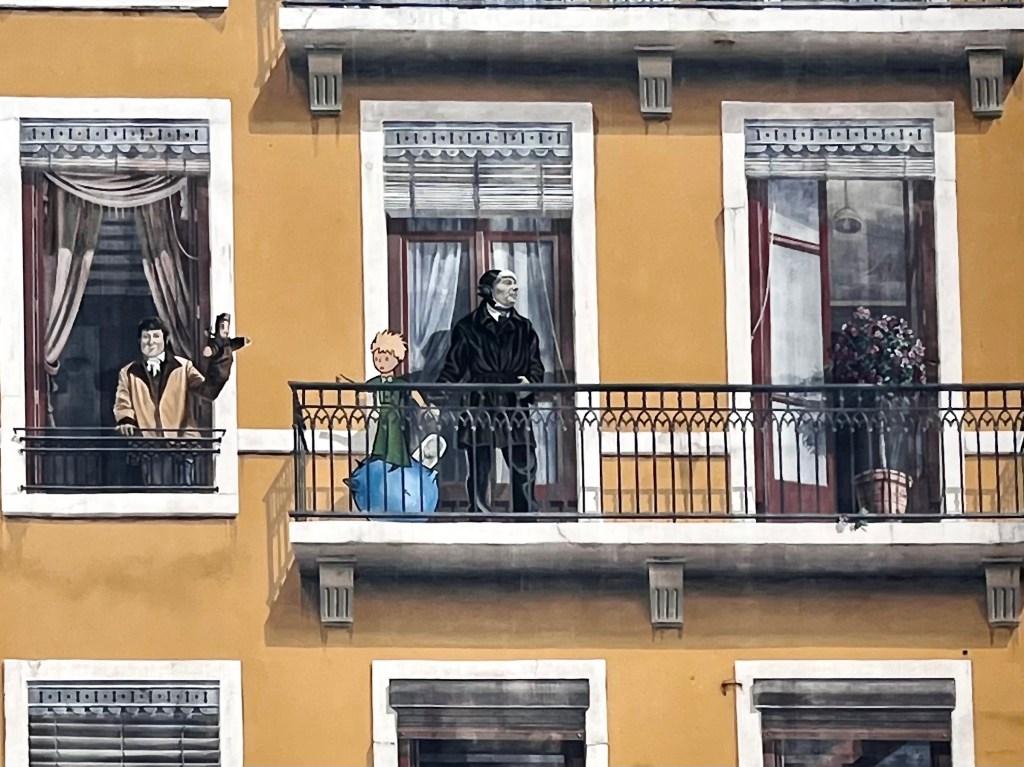
Across the street from the children’s art studio, I found the stage for one of Lyon’s hallmark artistic expressions, the puppet Guignol, the creation of Laurent Mourguet, 1795-1844, a canut, a worker in the Lyonnais silk factories. He lost his job during the French Revolution and became a dentist instead 😉. Read all about the original Lyonnais Théâtre Guignol in this link . A further wiki article adds some interesting info. Currently, the theatre is closed for renovations, so, I have to show you monsieur Mourguet’s balcony scene instead.
Next stop, some croissants for a late breakfast.

Our time in Lyon was rapidly coming to an end, and we made sure to enjoy one more dinner of juicy mango tacos and cheesy quesadillas at Two Amigos.

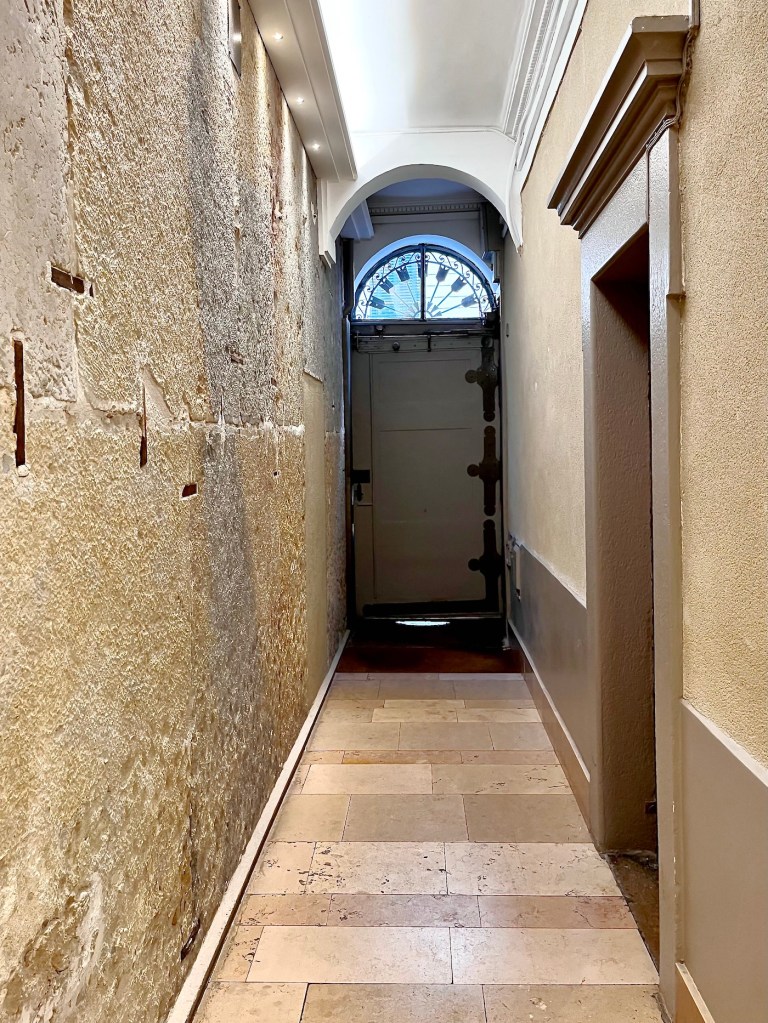
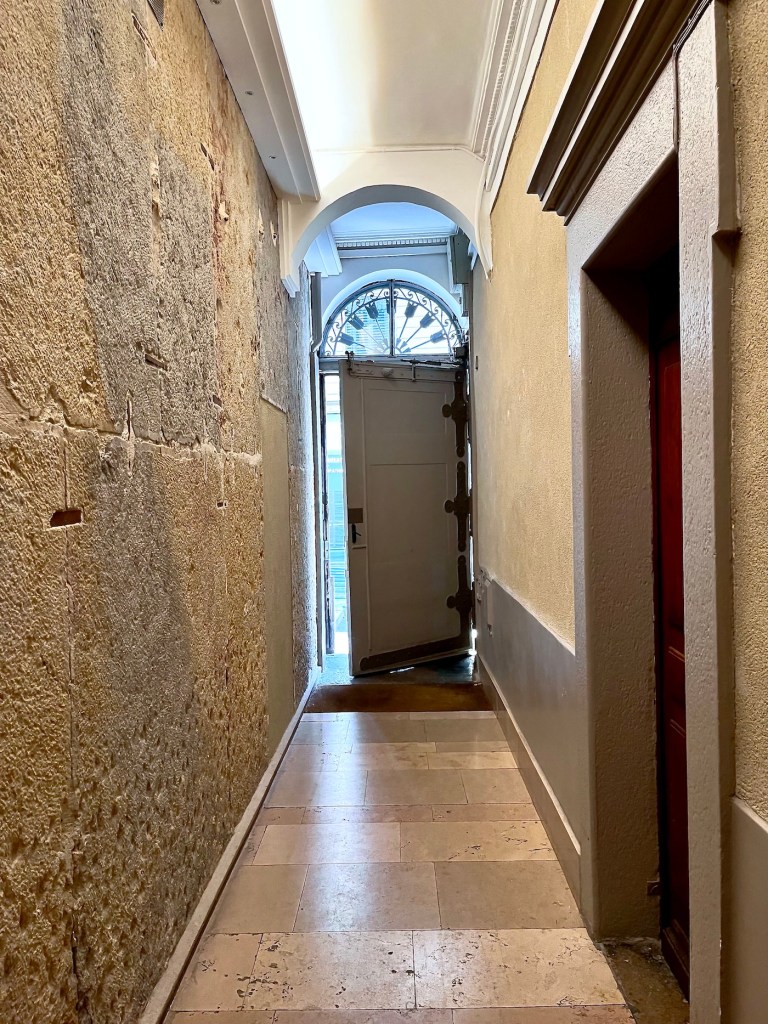
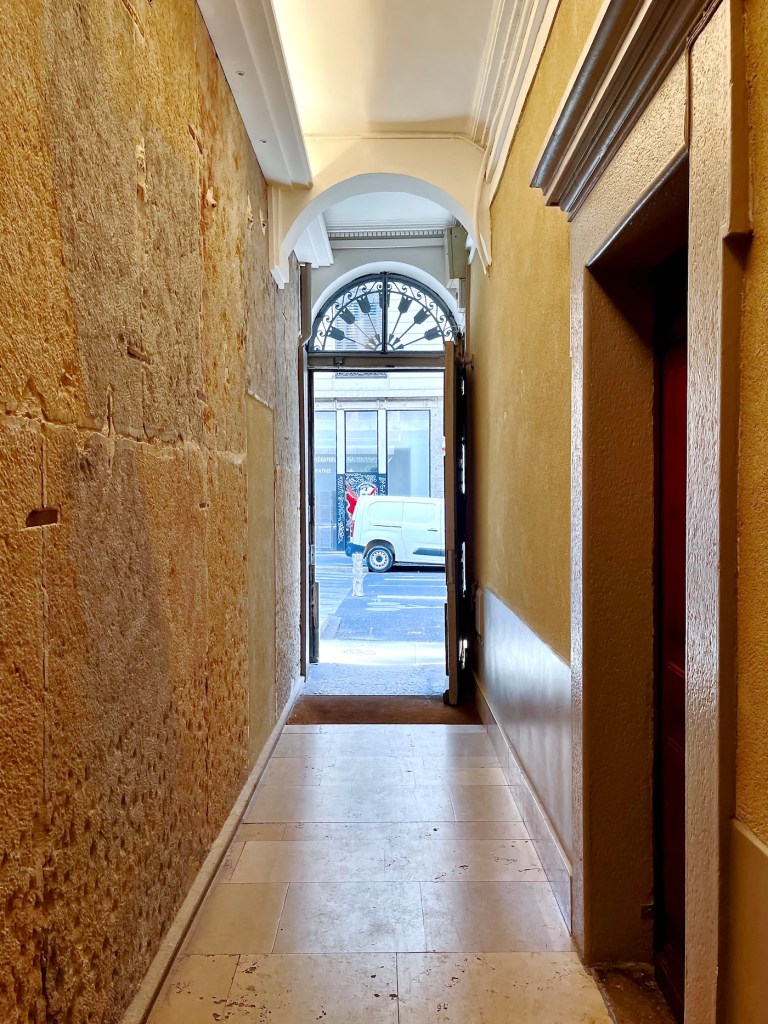
The next morning, we activated the opening mechanism of our building’s door for one last time to meet our Über driver for the ride to the train station.
Arriving home a few hours later, we found very tasty presents from our exchange partners, C and H, which disappeared rather quickly! Thank you for a terrific Home Exchange!!

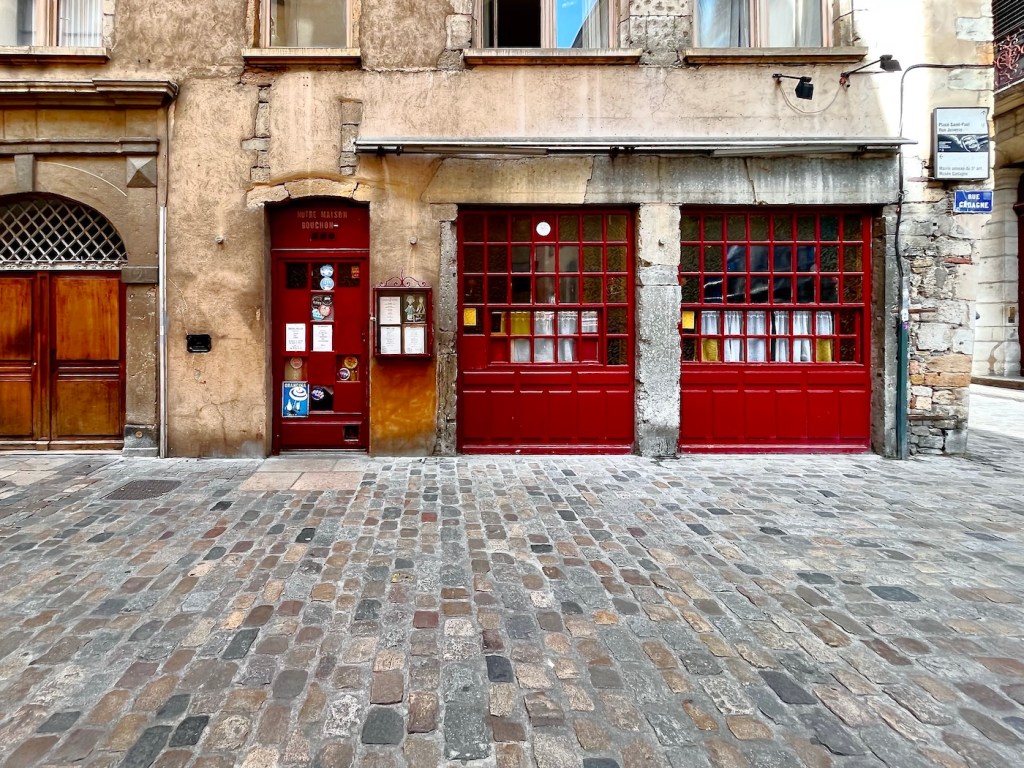
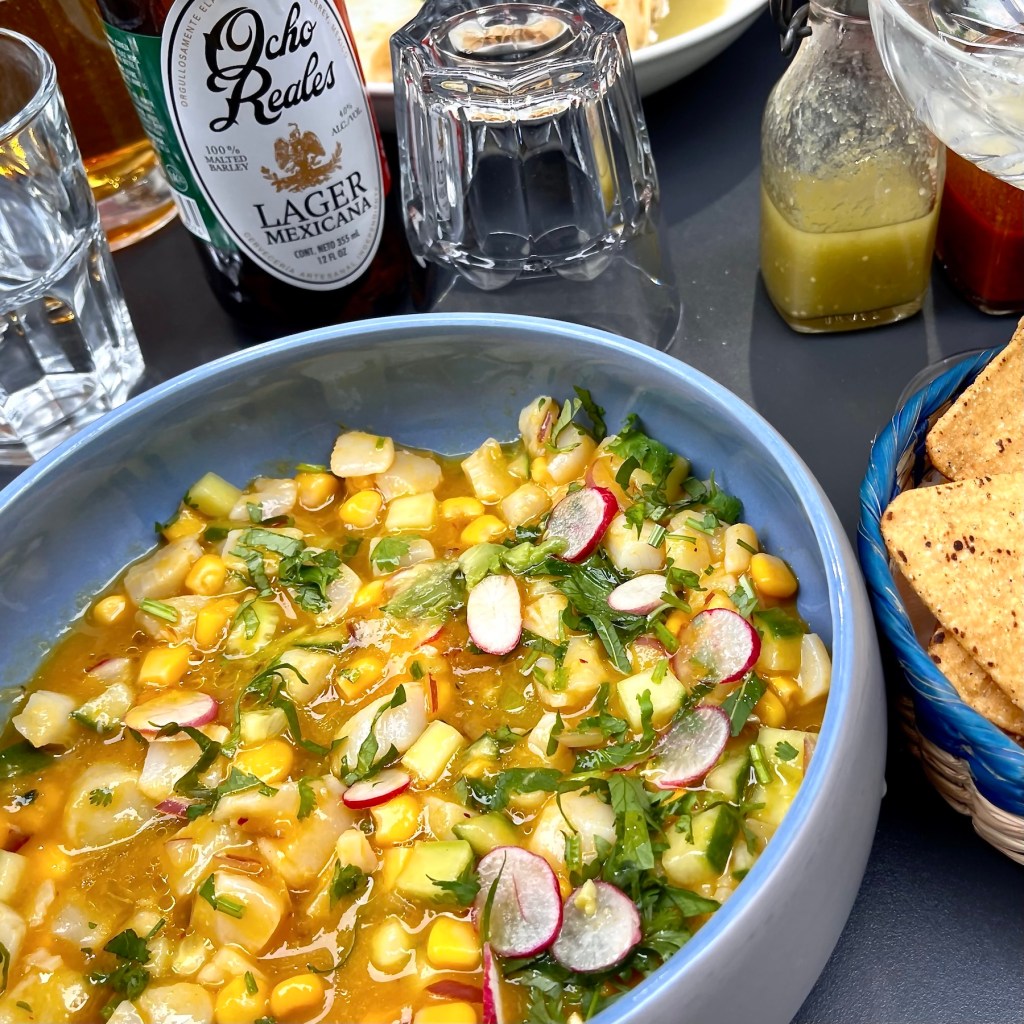
P.S. I forget to mention one other Mexican restaurant, where we greatly enjoyed the chef’s offerings, MULLI, which came recommended by our lovely server at Notre Maison Bouchon.


 NOT IN A STRAIGHT LINE by Photolera Claudinha
Fun place to visit. We might have gone even if there were no Mexican restaurants……No, upon reflection, there is no reason to visit a place that doesn’t have at least one Mexican restaurant.
LikeLiked by 1 person