During the last week of April, my husband organised a two-night trip to the village of Brantôme in the Périgord Vert for us. After a roughly ninety minute drive, we checked in at the historical Mill of the Abbey hotel. For our second evening in Brantôme, we had reservations for a special dinner in their Michelin-starred restaurant to celebrate my birthday.

It was Jules Verne who first called this part of the Département de la Dordogne the “green” Périgord in reference to its abundant forests, and its valleys crisscrossed by fast-flowing rivers and gurgling streams.
Brantôme en Périgord is a village on the river Dronne that grew around the Abbey of St. Pierre, a Benedictine monastery founded in the year 769 CE by Charlemagne himself, or so they say. At the time, he wasn’t yet that famed Charles-the-Great, the first Holy Roman Emperor in 300 years. Charles was named after his granddad Charles “the Hammer” Martel (688-741), the victor of the battle of Tours against the Umayyad Caliphate. He was still just young King Charles, co-ruler of the Frankish Kingdom with his brother King Carloman. At the time of the abbey’s foundation, the brothers had inherited their joint realm scarcely a year previously upon the death of their father Pepin-the-Short, the first Carolingian king. Owing to the relics of Saint Sicarius of Brantôme which King Charles [allegedly] donated to the monastery, pilgrims came in ever increasing numbers, turning Brantôme into a prosperous village.
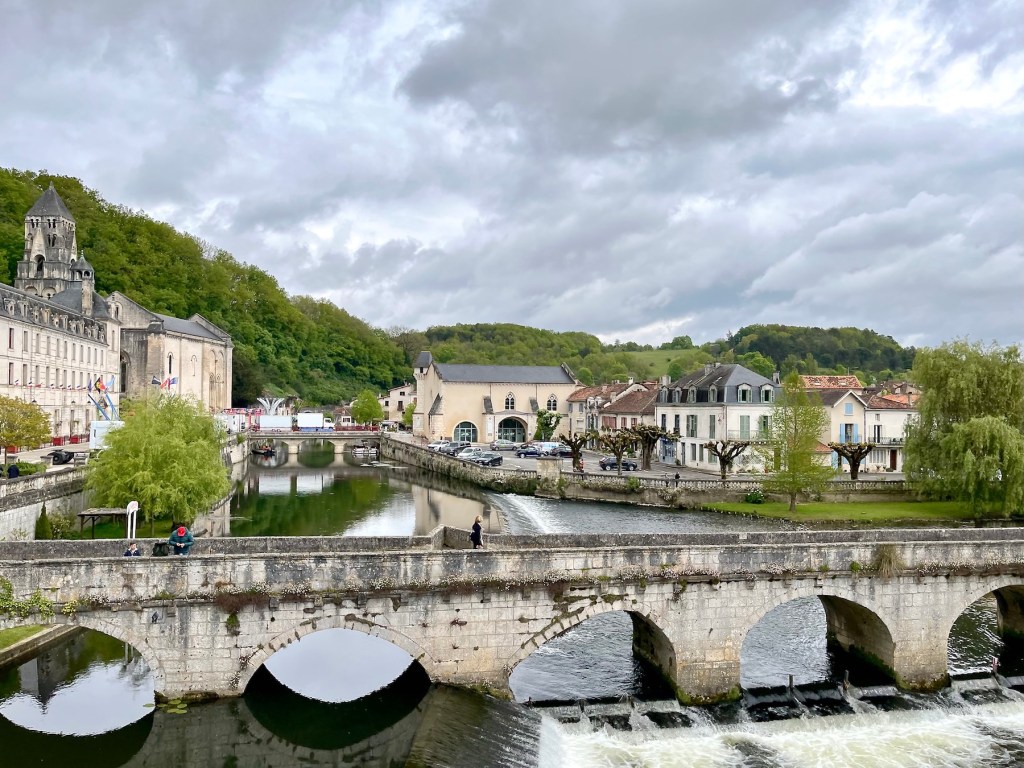
From our terrace, we overlooked the Abbey with church and clock tower (left) and vieille ville, the Old Town section of the village (right), which spreads over an island in the river Dronne. The two arms of the river reconnected right in front of the hotel in a series of weirs. After a short rest, we left the hotel to explore and find some lunch.


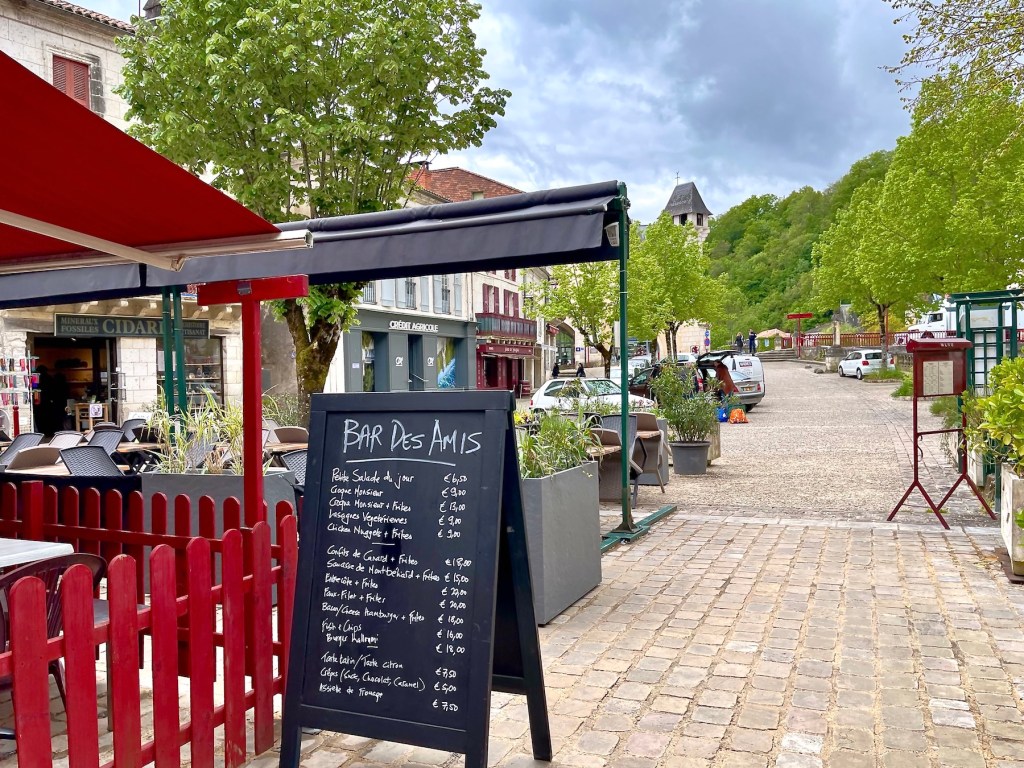
At the Bar des Amis, we enjoyed a very tasty lunch. I had a vegetarian lasagne faite Maison, homemade, with a fabulous mixed salad, while my husband had fish and chips.
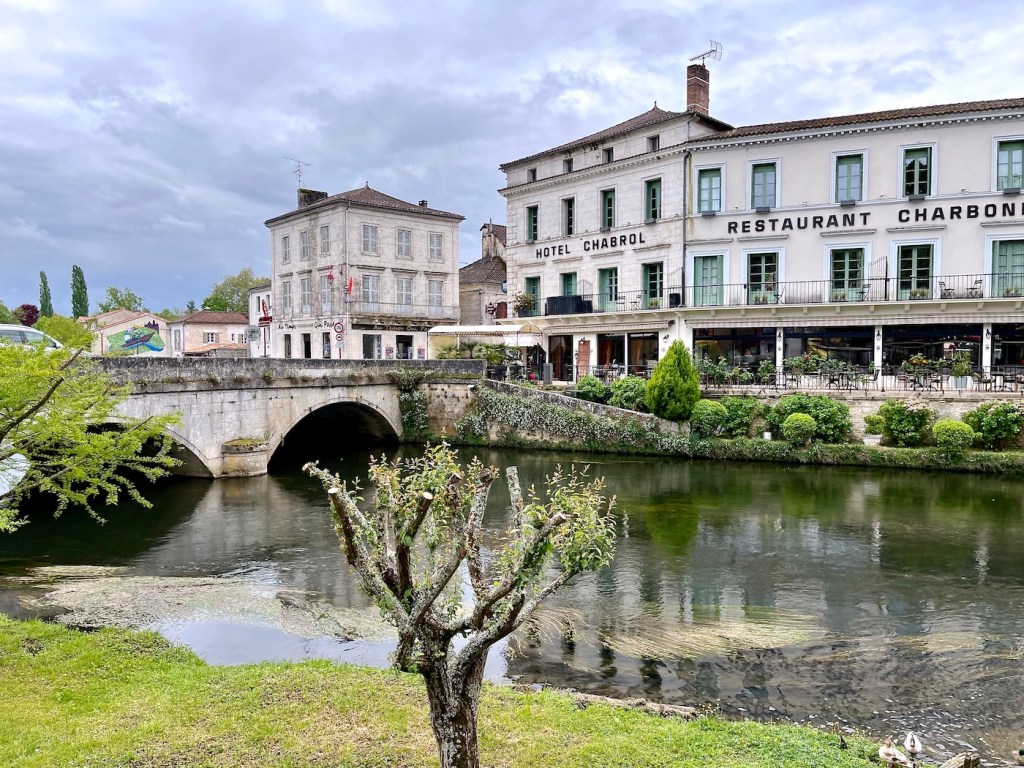


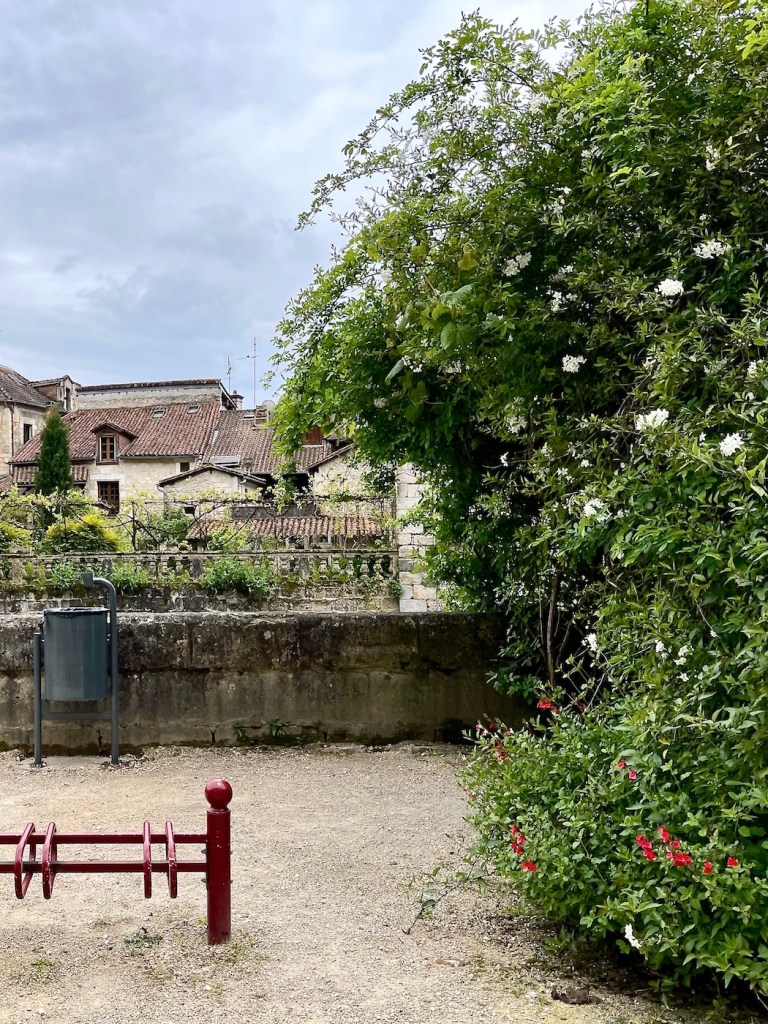

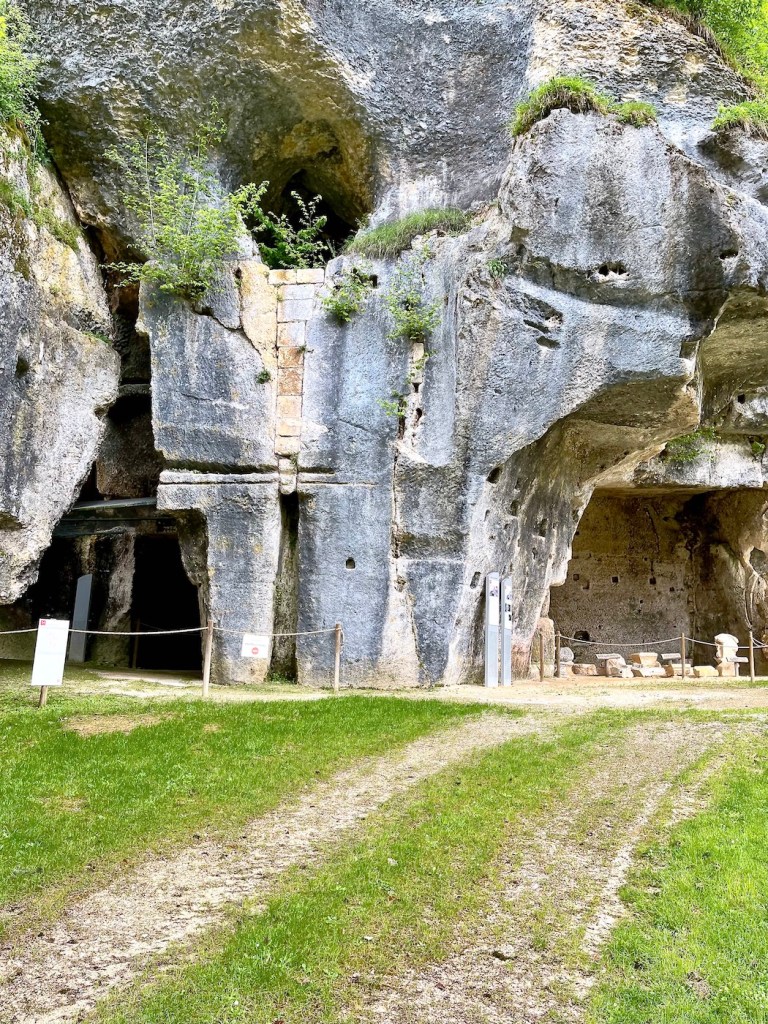
Walking around, we encountered the remarkable falaises, the limestone cliffs that frame the village, and which have special meaning for the abbey, as housing for the early monks.


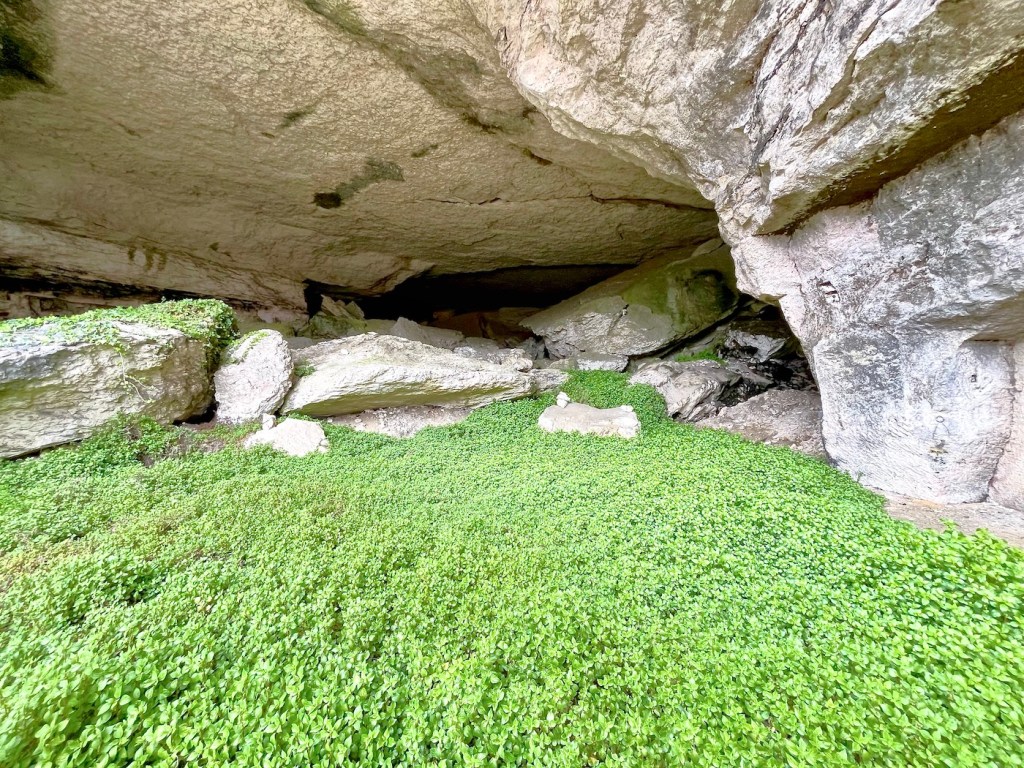

Just a few steps further, we approached the rear of the church in the closest proximity possible to the cliffs with their caves, where man-made meets nature.
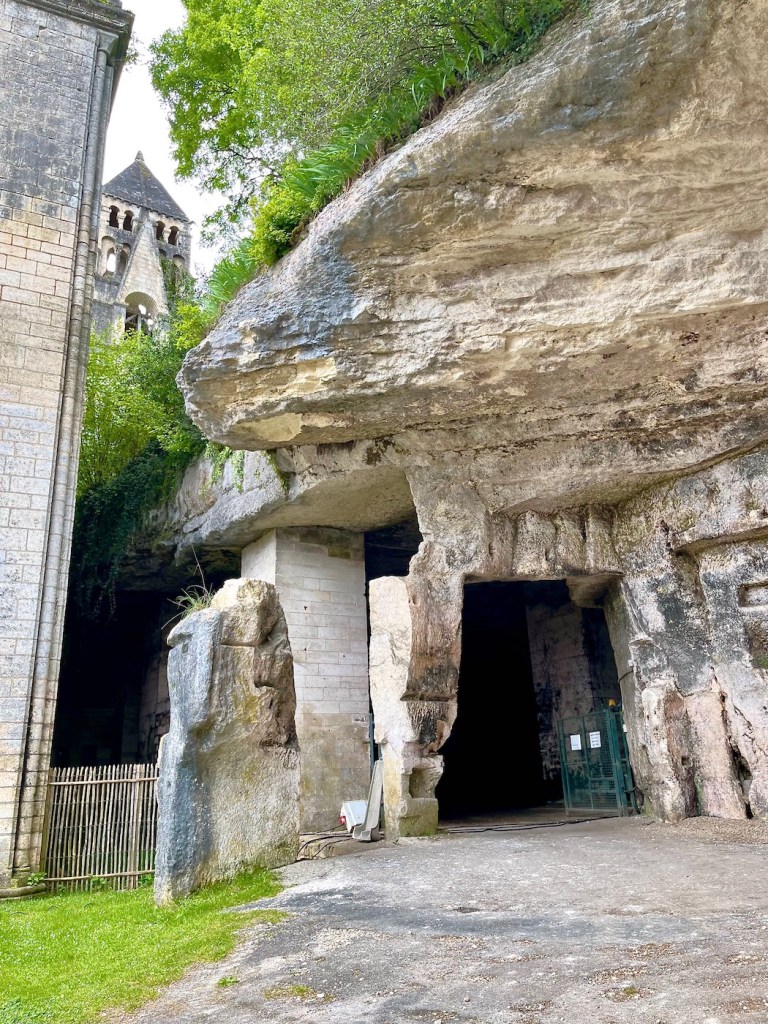
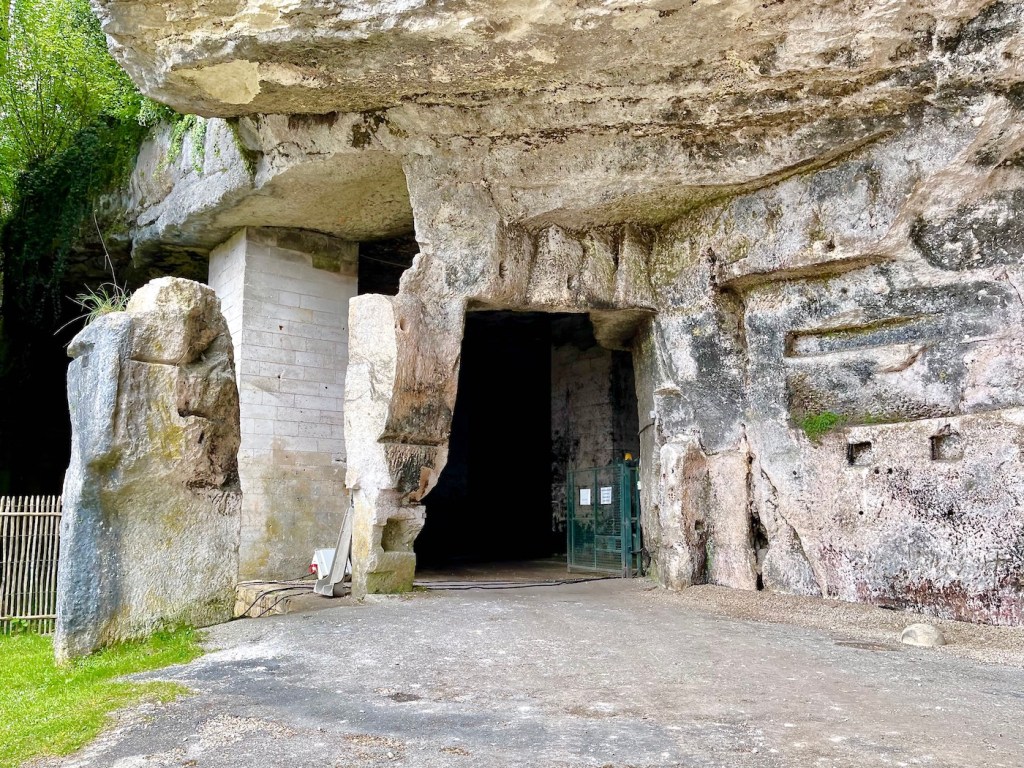

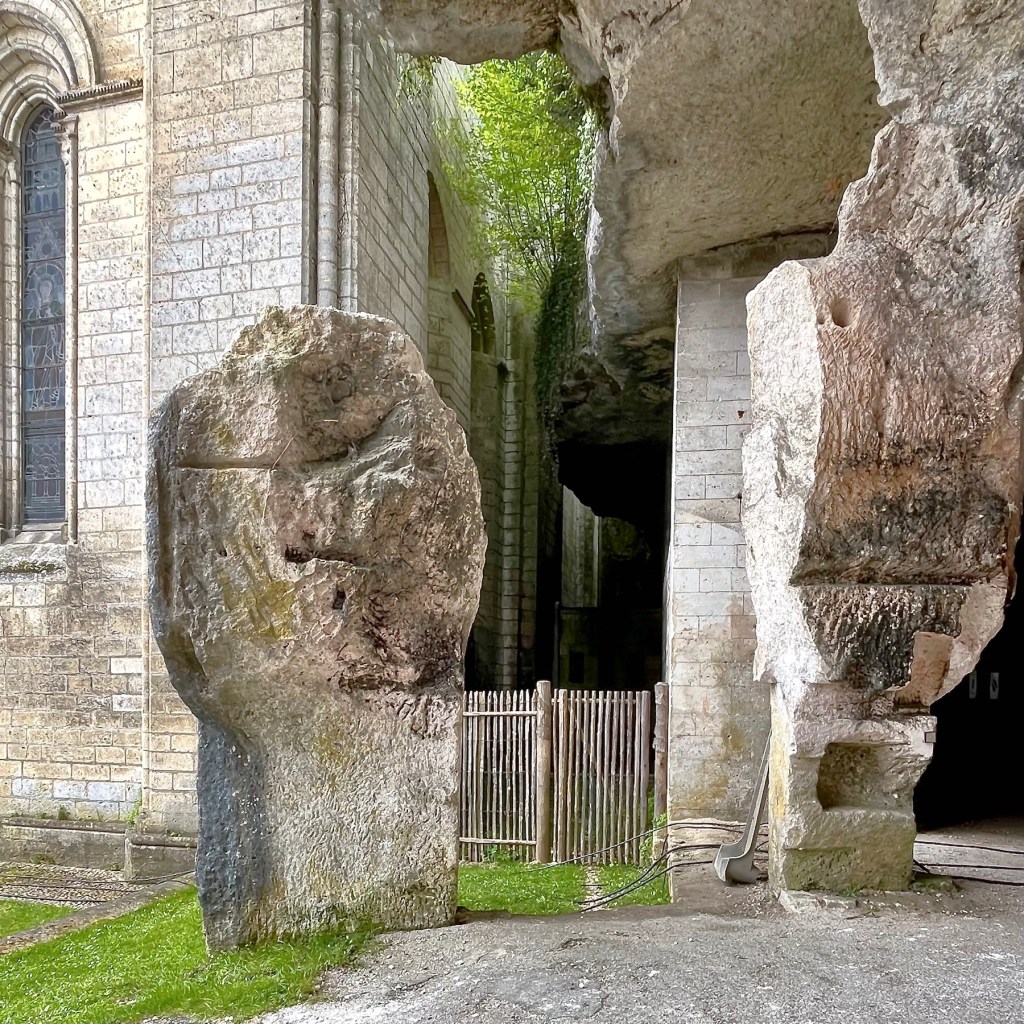
During the early days of the monastery, the monks lived in troglodyte dwellings in the cliffs. These caves behind the abbey building were maintained for a long time and gained special meaning over time. Significant stone carvings, and other artefacts developed into a troglodyte shrine of tremendous importance, drawing pilgrims, worshipers, and tourists alike to the monastery and village at large. Sadly, we weren’t allowed to benefit from this amazing history. The entire cliffside has been closed off to the public owing to falling stones and other hazards.
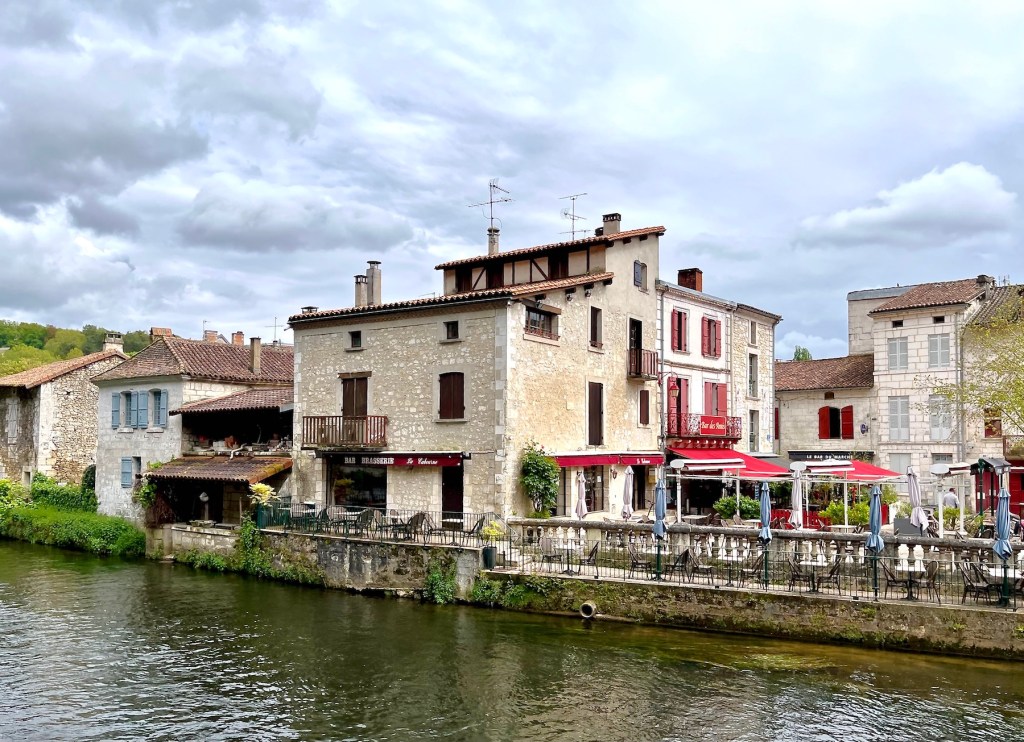
Learning about the closure of the monastery caves, plus a significant increase in rain activity, sent us straight back along the river bank to our comfortable room.

We had had quite a late lunch, and during our promenade through Old Town we had bought some cake in a pastry shop specialising in the walnut nougat of the Périgord, as well as a nice bottle of local wine, so there was no need to go out again for dinner. Instead, we settled in our room enjoying our goodies in homely comfort.


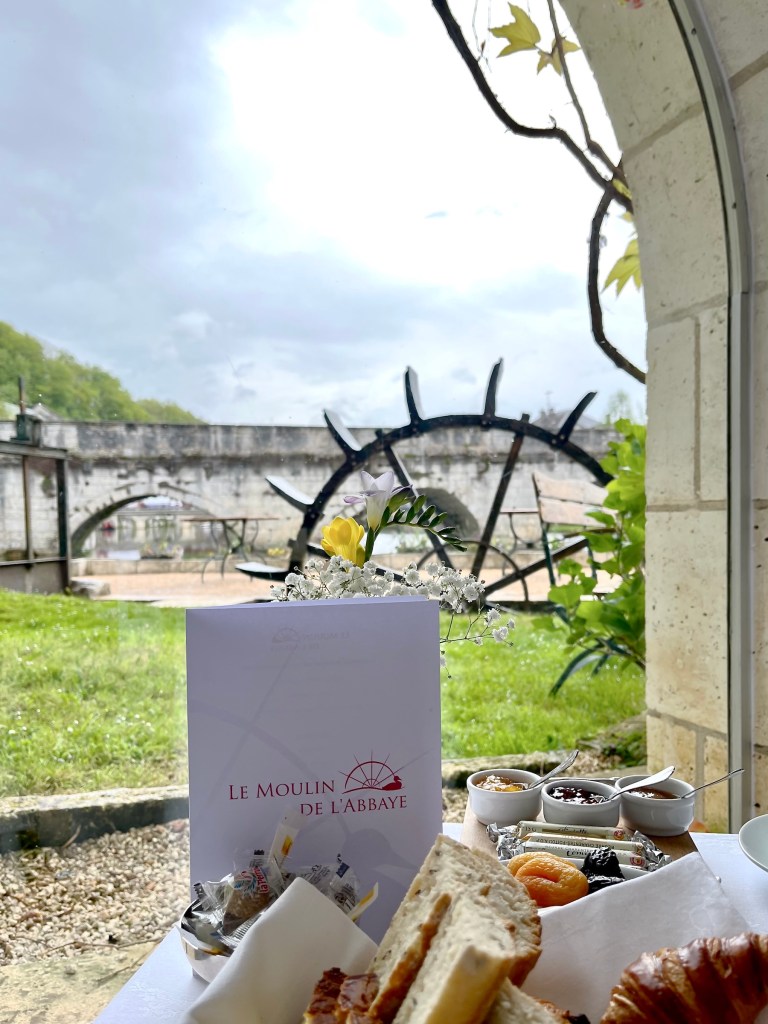
The next morning dawned less rainy and we enjoyed our breakfast with river views. Afterwards, a brief look behind the abbey building – as far as was permitted – gave us some idea what these troglodyte caves might look like.


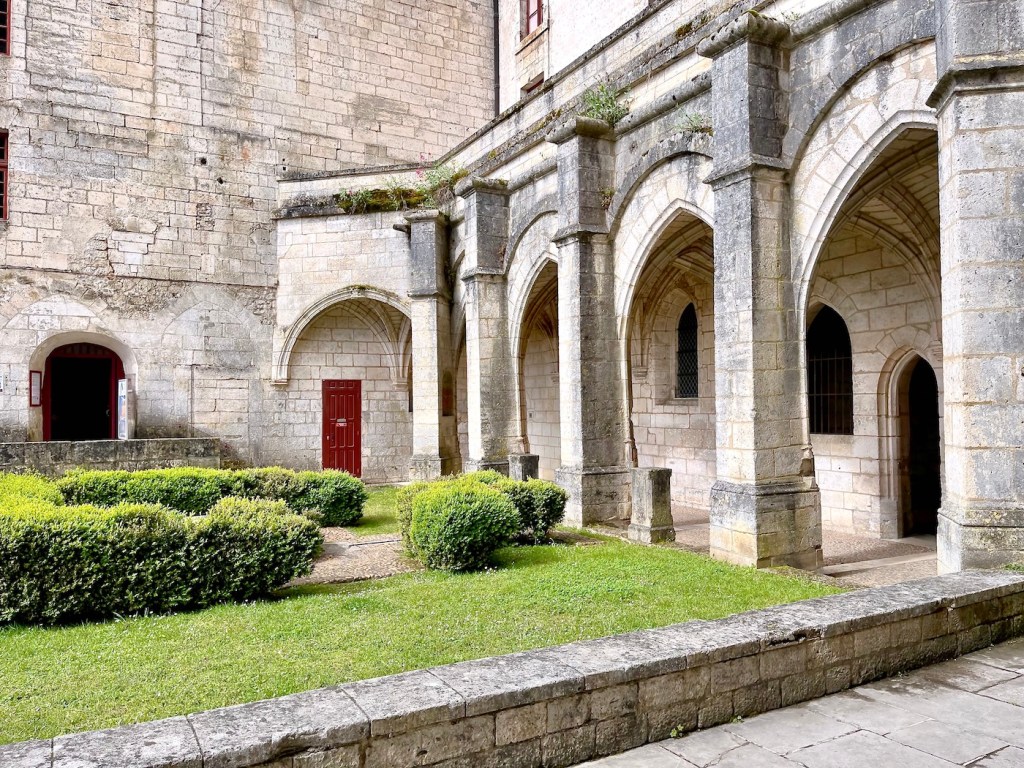
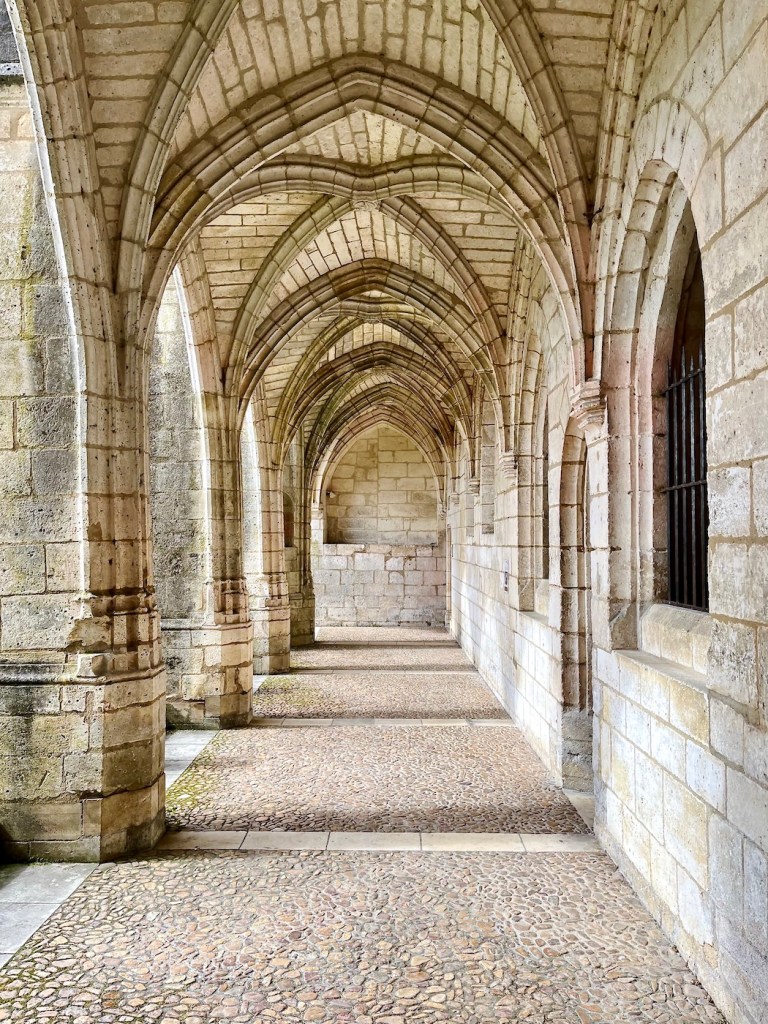
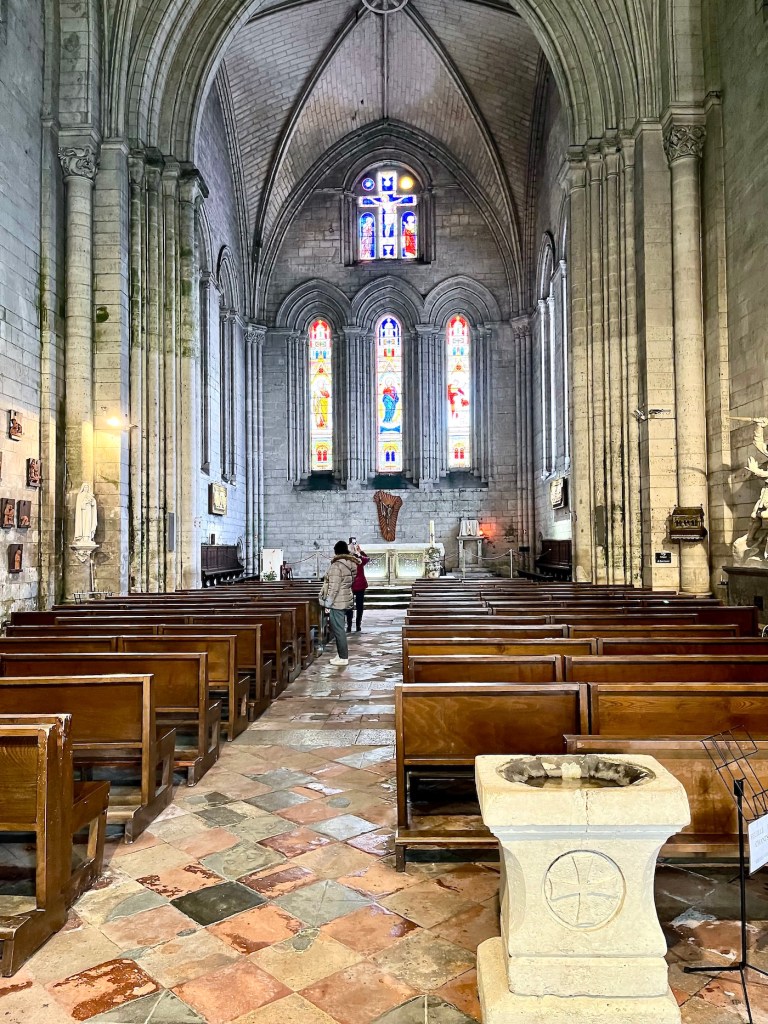
Walking along the front of the Abbey, we entered the small courtyard between the Abbey and the church, where one finds the entrance to the village mairie, the town hall. Immediately inside, substantial stone stairs lead to the upper floors. A plaque called it a corbeled staircase without support columns remarquable par la hardiesse de sa conception, remarkable for the boldness of its design, since it rests only on half-arches and its vaults are almost horizontal – not that I understand these details, but someone else certainly did. The staircase was part of a restoration of the abbey during the last decade of the 17th century. The building works were undertaken under the aegis of an abbot belonging to the powerful Le Prestre family. The abbot was, in fact, a nephew of Sébastien Le Prestre, marquis de Vauban (1633–1707), the genius military engineer who built most of the strategic fortifications that served King Louis XIV (1638-1715) and subsequent French rulers so well. There was nothing Vauban didn’t know about vaults, horizontal or otherwise!

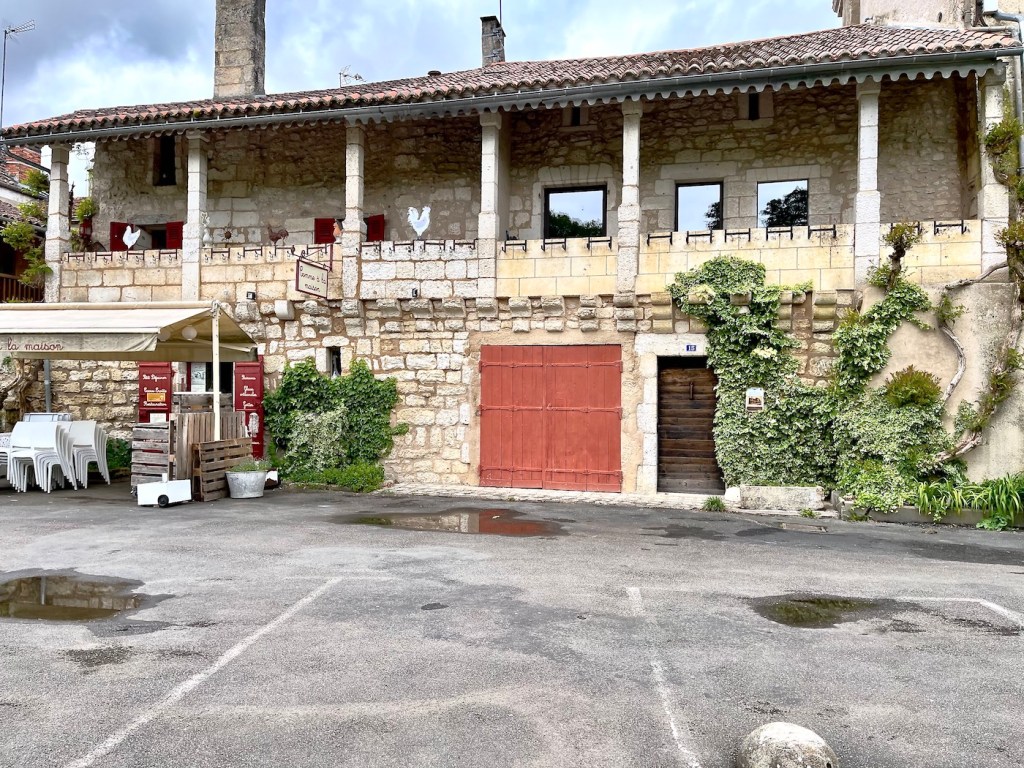
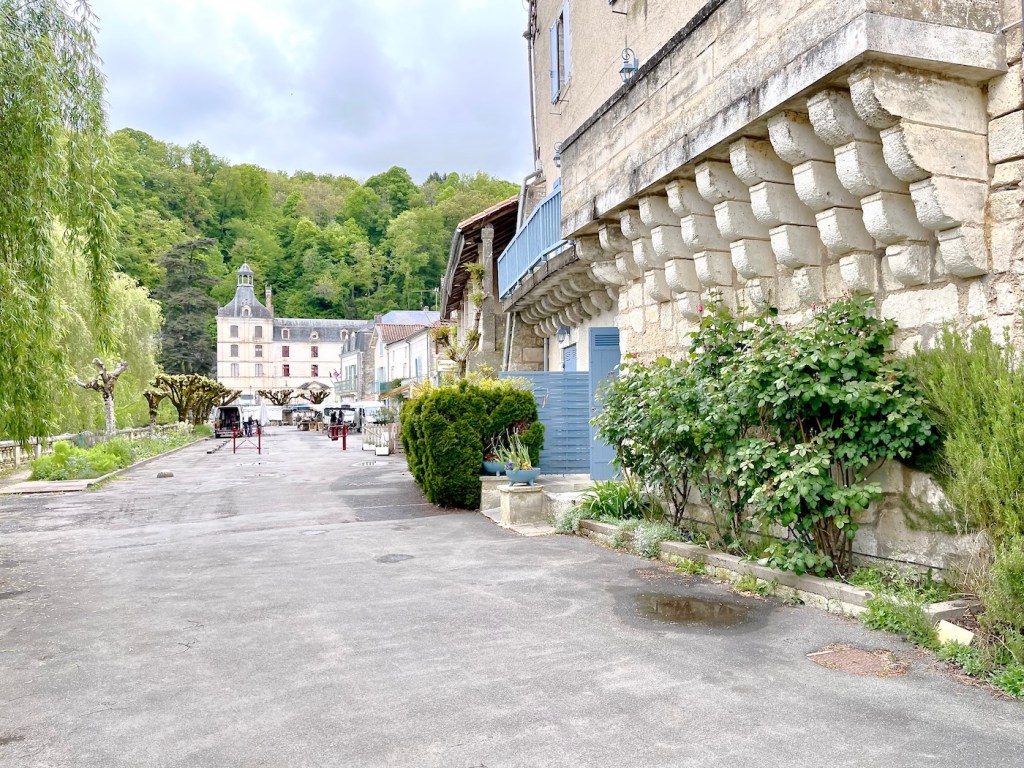
Leaving the abbey complex, we crossed a bridge to the river island and walked along Quai Bertin, where a few of the houses still incorporate remnants of former Remparts.


Crossing yet another bridge, we found ourselves at le Jardin des Moines, a large and beautiful public park. It once belonged to the abbey hence its name, the Monks’ Garden.

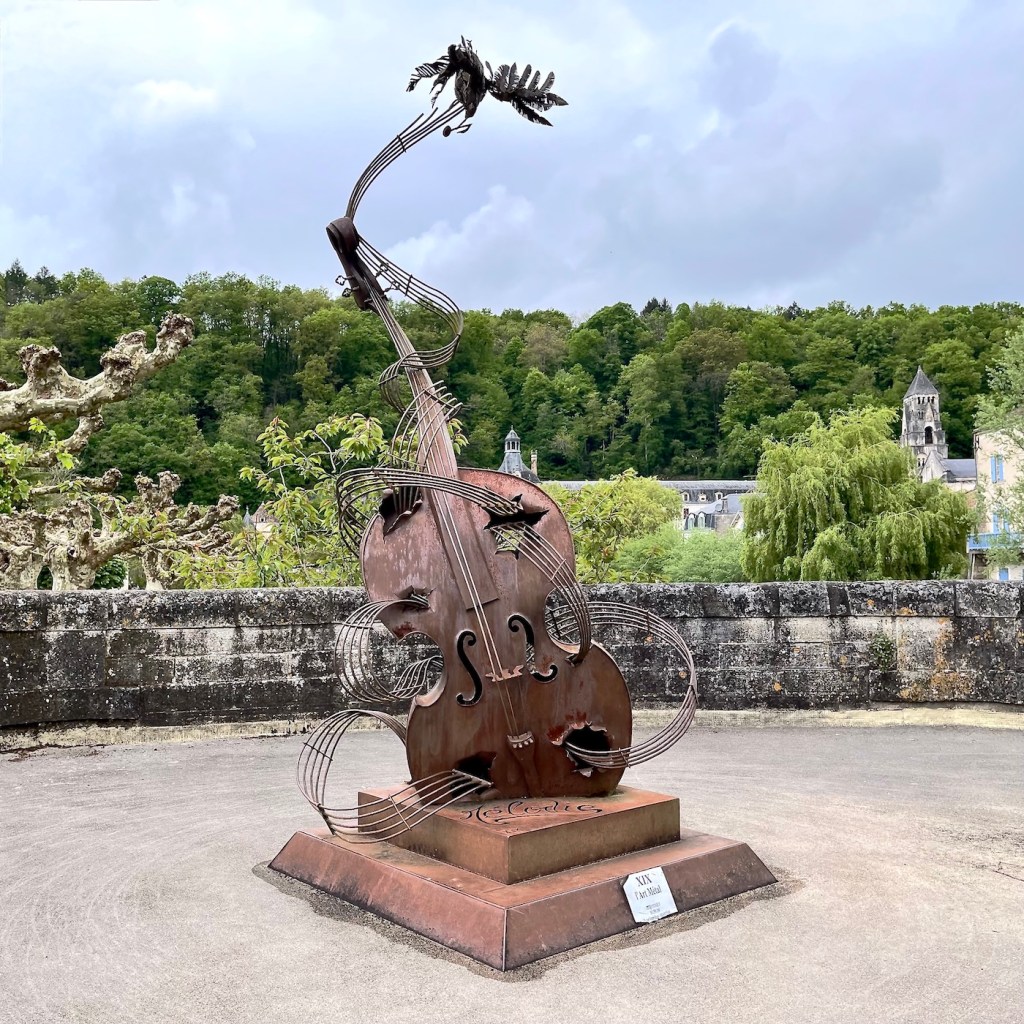


Like the tormented string instrument on the bridge, the dragon and her partially hatched egg [one can see the little wings emerging] are the work of an internationally known metal artist, the late Olivier Dixneuf, lovingly referred to as l’enfant terrible de la sculpture d’acier, unorthodox genius of the steel sculpting world. Our granddaughter would love this dragon on her small island, she adores female dragons.


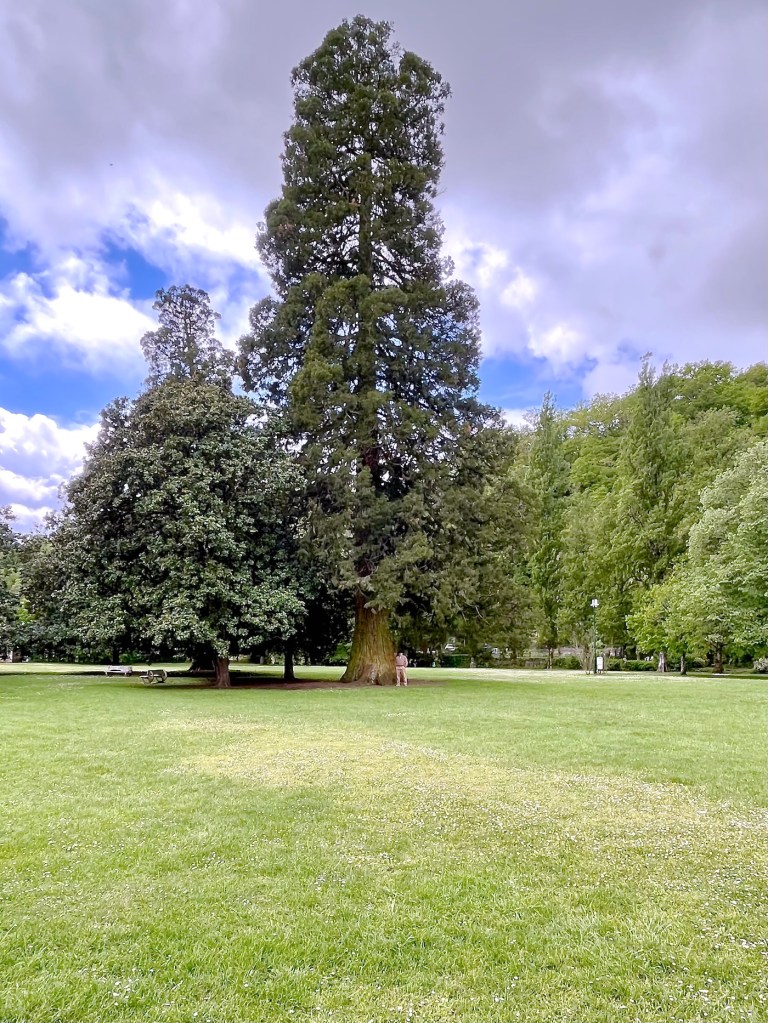
For my birthday dinner downstairs at the Moulin de L’Abbaye restaurant, we were escorted to a window table, beautifully set with starched linens, overlooking the park with its ancient tree.
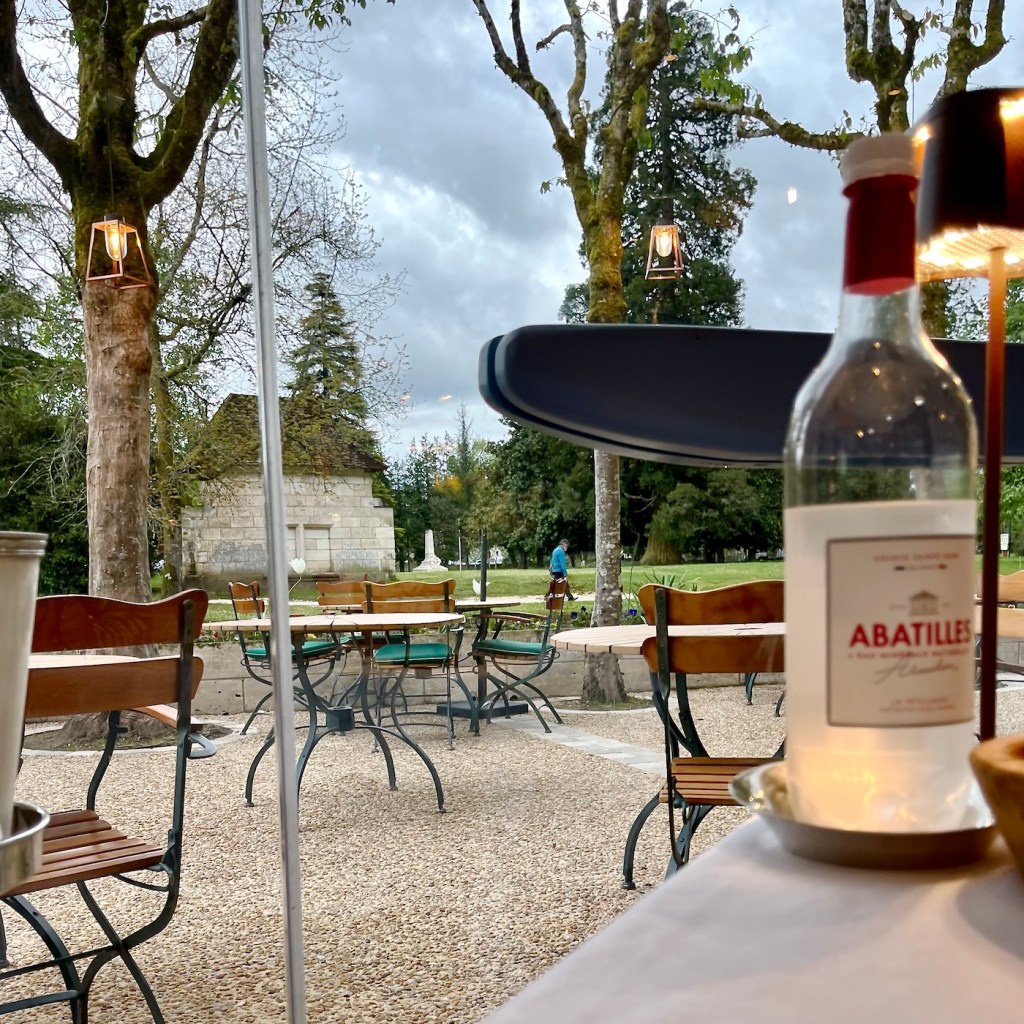
We had made arrangements to bring our own champagne, a Philipponnat non-dosé, simply because this is the one we like best, and handed it over to the sommelier upon arrival the day before.
The four-course dinner we had chosen opened with three tiny tidbits to awaken our tastebuds for the coming feast. Three biscuits were topped with a small dollop each of either foie gras cream, avocado cream, or carrot cream with roasted sesame seeds. The colourful canapés were floating on a layer of dried white beans in a triangular, white dish. Very stylish! Unfortunately, I didn’t remember to take a picture until, well, until it was too late.

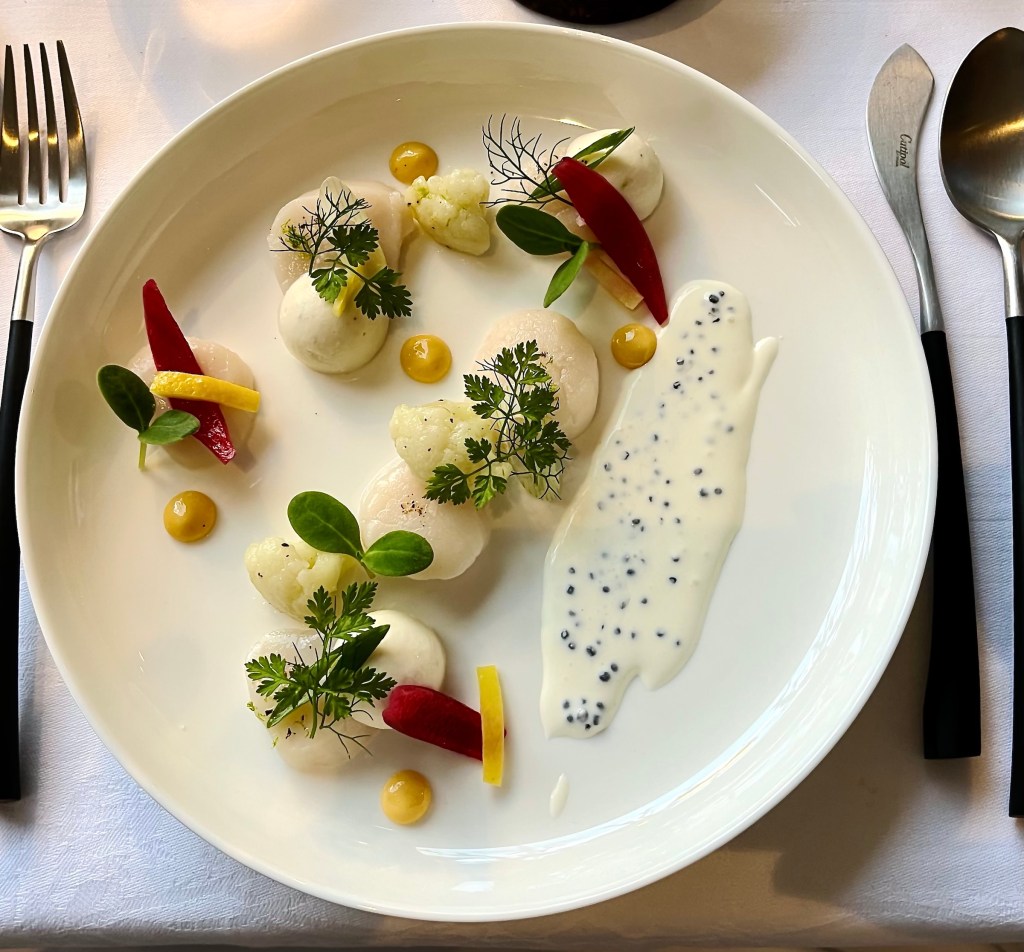


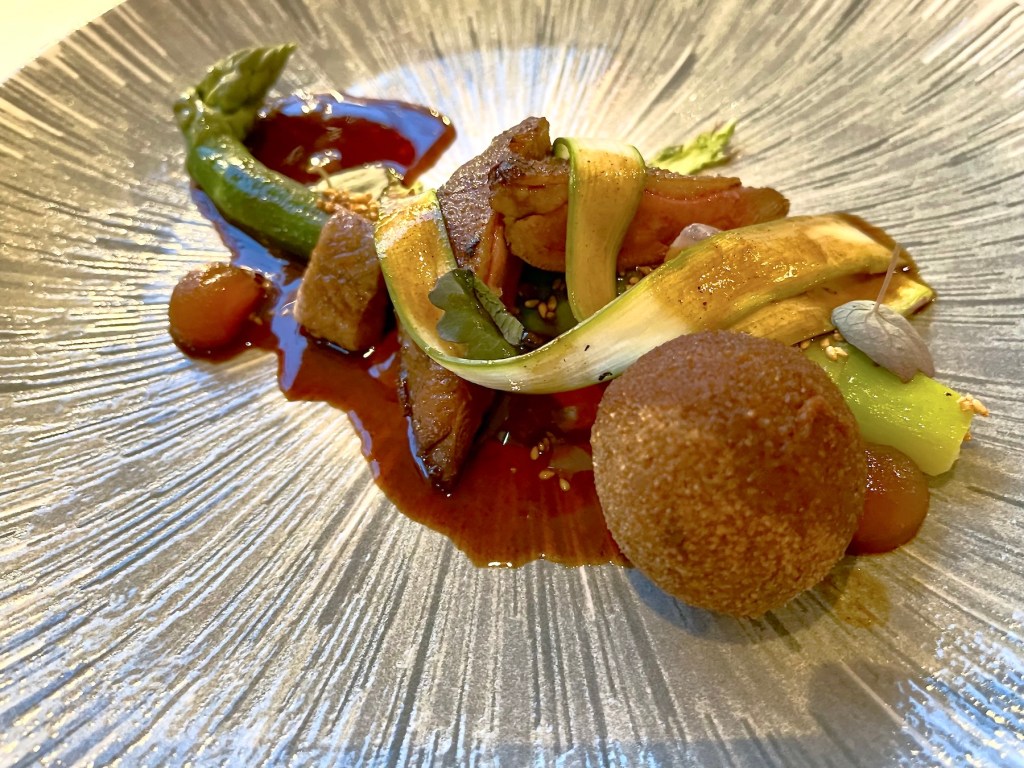


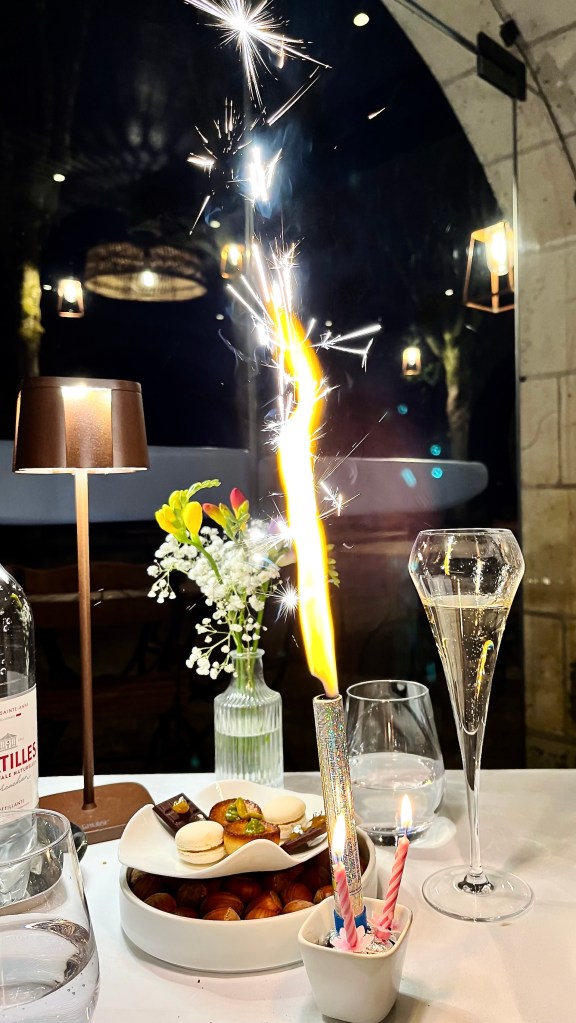
My birthday dinner was a delight from start to finish, the company, the food, the ambiance, the service, all of it fully deserving of the star rating. We had never before tasted pigeon and thoroughly enjoyed the experience. The meat is reminiscent of duck, but more subtle in flavour and delicate in texture. I loved the gyoza, as I really enjoy them, and potstickers, pretty much any kind of bao. This juicy gyoza may have been even better than some I have tasted in Hong Kong.
After a very good night’s sleep and a leisurely breakfast, it was time to drive home.

 NOT IN A STRAIGHT LINE by Photolera Claudinha
A belated Happy Birthday— and many thanks for taking us along!
LikeLike