
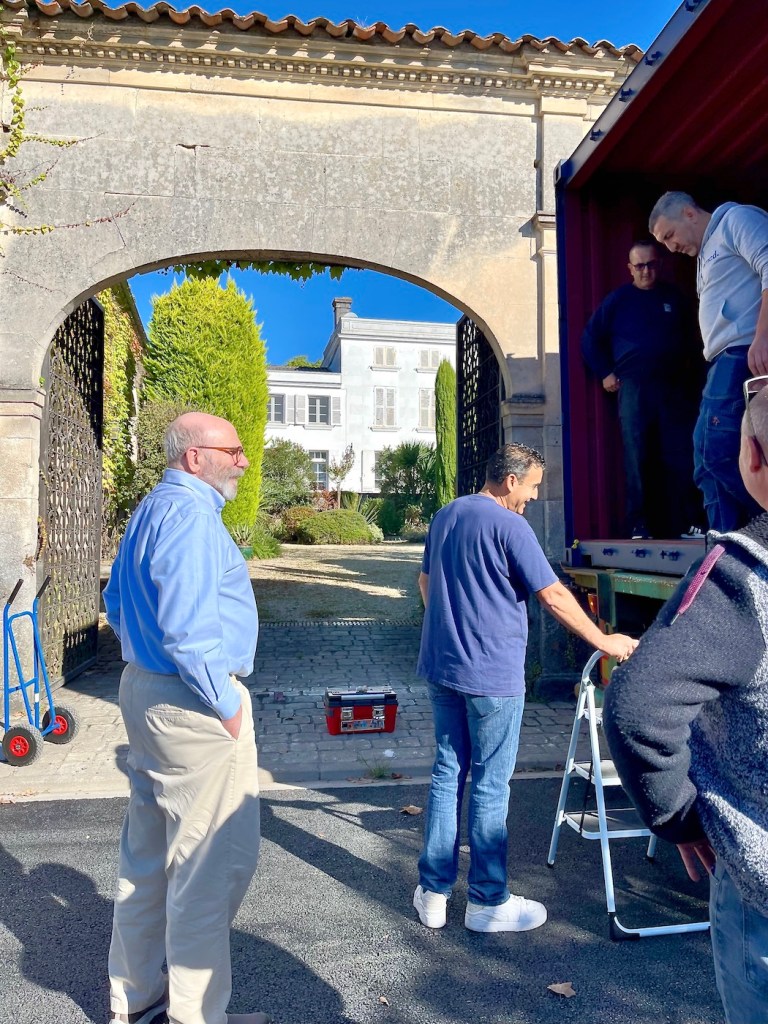
On September 30, 2024, we finalized the sale of our home in Cognac, Charente, France, and flew to Lisbon, Portugal where we arrived around midnight.
Why Lisbon, you ask? Well, selling up and leaving Europe for good, was a bit traumatic and very exhausting. After weeks of intense, two-fold preparations to leave France and return to the US, we were done in, plain and simple.
On one hand, there were the logistics of the sales process itself, and believe me, that alone can be overwhelming. France may no longer be ruled by an emperor, but the bureaucracy created through the Code Napoléon aka Code civil des Français is mind boggling. French real estate transactions follow detailed laws, rules, and regulation within specific, preset timeframes, all of which is overseen and choreographed by a specialized lawyer called a notaire. Our notary’s étude notariale, law office, constantly requested documentation from us that kept us hopping. Fortunately we were supported by the real estate agent, Monsieur Stéphane Thierry, who was instrumental in the quick sale of our property. Stéphane was an invaluable intermediary for us, not least for his willingness to act as my secretary in making calls to companies and utilities to request copies of past invoices and other documents the notary needed. I hate making phone calls in French … 💛 merci !
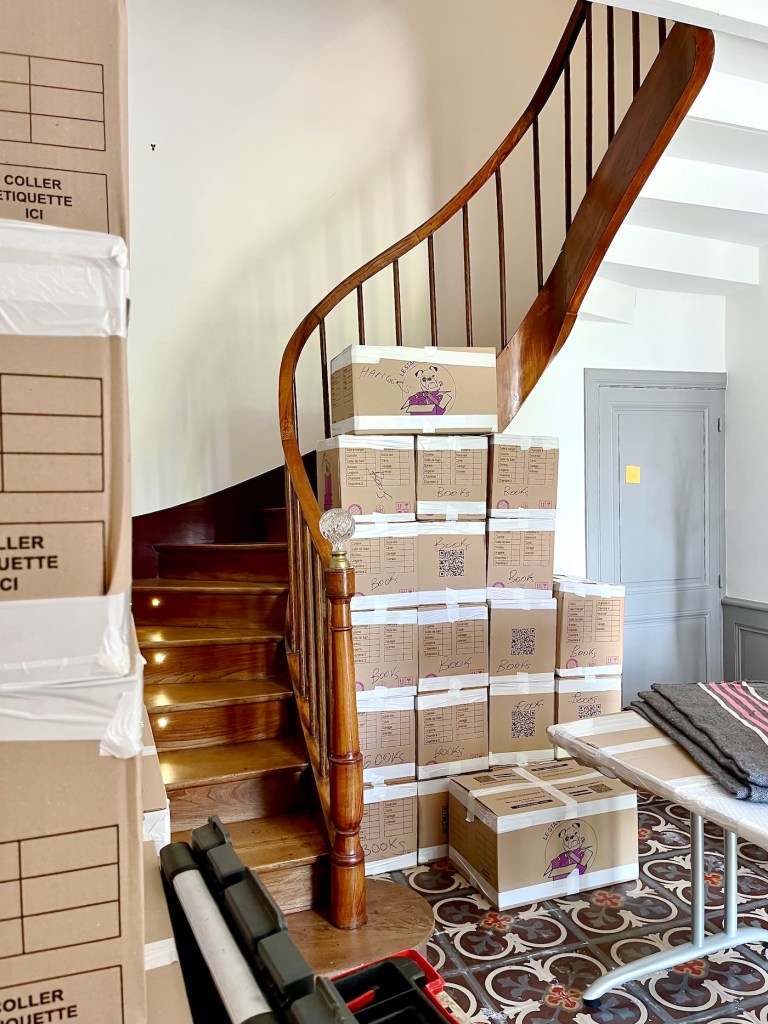
On the other hand, we had to deal with the distribution of worldly possessions that had either accumulated over the last decade, or we had brought with us to Europe in the first place. Everything in the house and the outbuildings had to be sorted into five categories, namely, to be shipped back, to be picked up by an auction house, to bring to the Emmaüs charity, and to cart to the déchetterie. Some of it was easy to determine. For example, anything with a plug had to stay, since US electricity isn’t compatible with Europe. But there were plenty of less obvious decisions to be made regarding furniture, household goods, clothing, and assorted tchotchkes. Going through my file cabinets alone was tedious and time consuming, which brings me to the last of our five categories: the stuff we had to bring back in our carry-on luggage for safety. That would be all those documents one hardly ever thinks about, like birth and marriage certificates, driver’s licenses, and other government issued IDs, plus prescriptions and important medical records. In my case, I also have a stack of irreplaceable documents pertaining to my dual citizenship. Then there are electronic devices, jewelry, and so forth. At times, it seemed like a nightmare of never ending chores. Without our housekeeper Melanie and her husband Kevin of “M & M Property Maintenance” we would still be driving loads of junk to the dump as I write this …
Let’s get back to the original question, though, why Lisbon? To relieve our exhaustion, of course! Instead of flying to Austin, we had booked a couple of berths, well, rather a luxury cabin on a 12 day Lisbon-to-Miami transatlantic cruise via the Azores, Nova Scotia, and NY City. Just like our foremothers and -fathers, we wanted to arrive on the American shores on a ship – only a whole lot posher than steerage! To bridge the time to departure, we spent a few days in Lisbon, where I had never been before.
At the Lisbon airport, we were picked up by Sam, who goes by the moniker of Batman, the driver we had hired to take us from the airport to our AirBnB. Sam was kind enough to help these rather tired travellers with their luggage upon arrival at our destination. The building had a lift, but only partway up … thank you, Sam!!
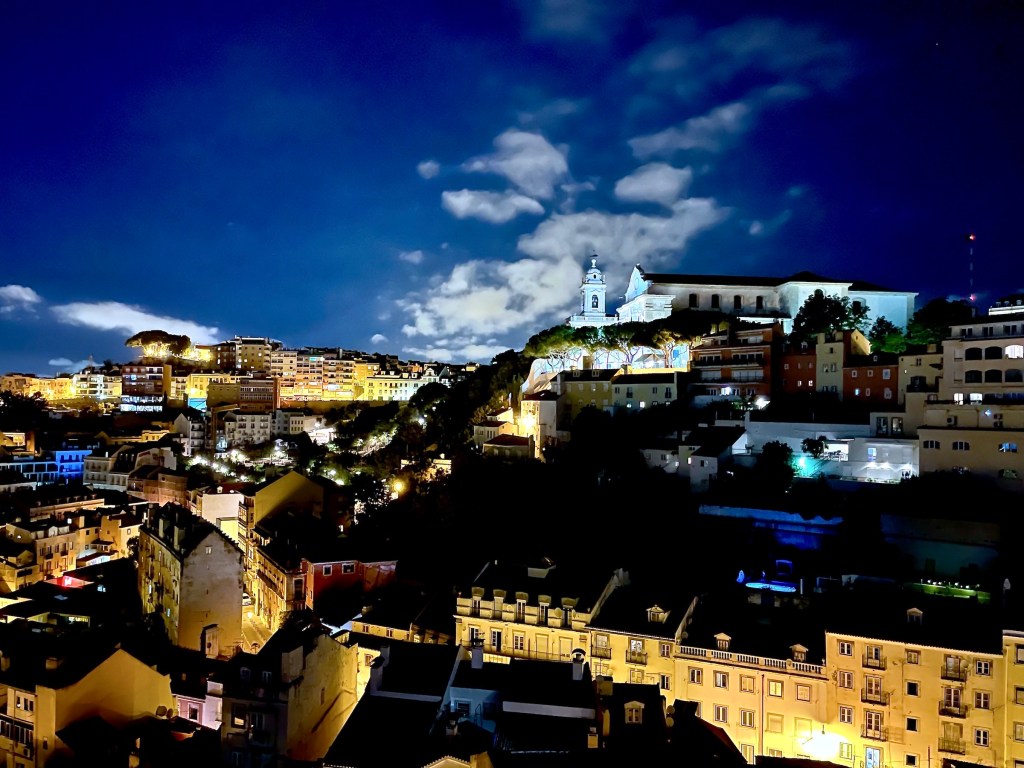
Our gobsmacking night view from the apartment
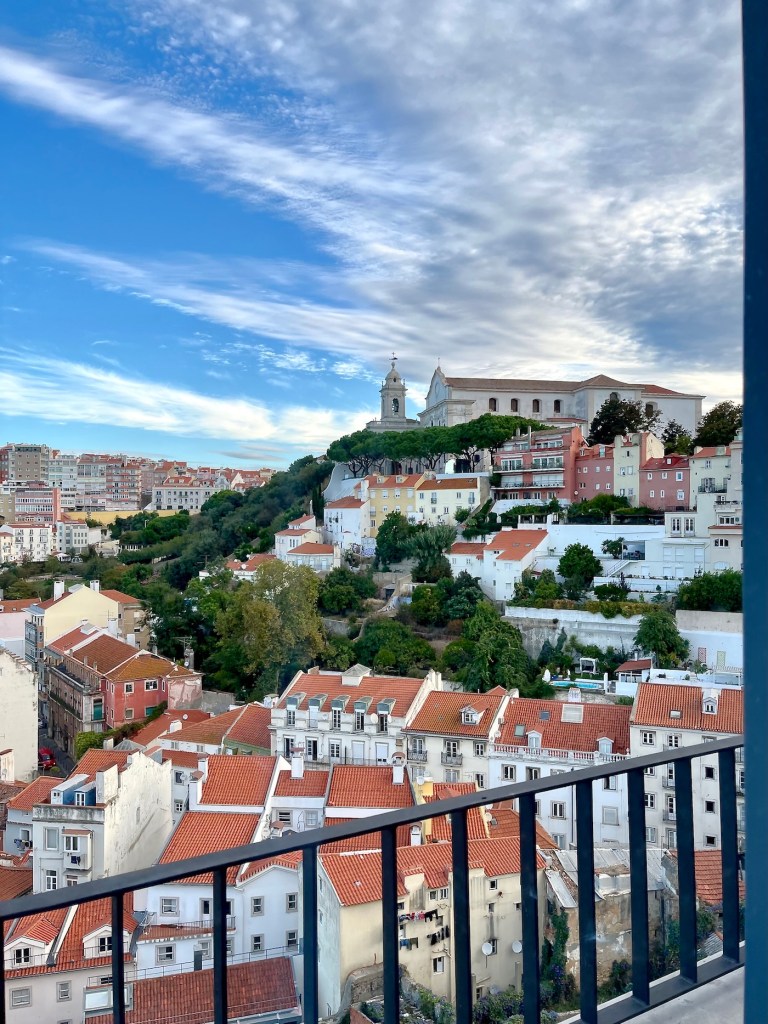
It still looked beautiful in the morning, when I started exploring our neighborhood
One little inconvenience became immediately obvious as I strolled along the steep and narrow lanes, namely uneven pavements. I mean, dangerously bumpy surfaces in serious need of repair, both on sidewalks and street surfaces. The sidewalks, when present, were largely made up of small pavers, the kind I believe are called calçada portuguesa. These typically Portuguese paving stones are as famous as they are problematic. Only skilled craftsmen are qualified to install them, and they require constant maintenance, something clearly not done in our neighborhood. Although most people around me didn’t seem to be bothered much, uneven surfaces are unfortunately troublesome for me because of a vision problem. I have pronounced vertical diplopia owing to a trochlear nerve palsy in my left eye. If I don’t look straight down through my prism-assisted glasses with my head bend forward, I can’t see diddly-squat in front of me, which makes me an unsteady walker, even with a walking stick helping with my balance. Gingerly placing one foot in front of the other like that turned me into a rather ineffectual tourist, watching my toes more closely than the scenery around me. In order to appreciate my surroundings, I stop every few steps to look up, always hoping not to have missed a once in a lifetime photo-op!
So, let’s see, what I did catch. The first set of pictures below, that’s our street in the freguesia (civil parish) of Santa Maria Maior, in Old Town Lisbon. The parish is named after the Cathedral of Santa Maria Maior de Lisboa.
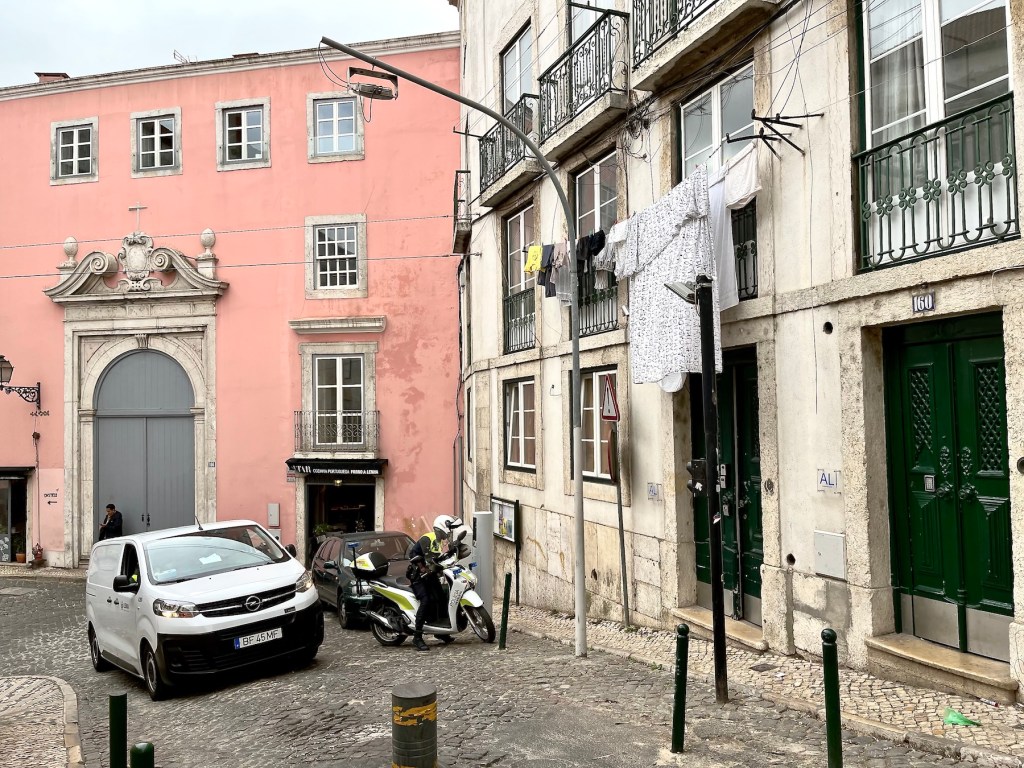

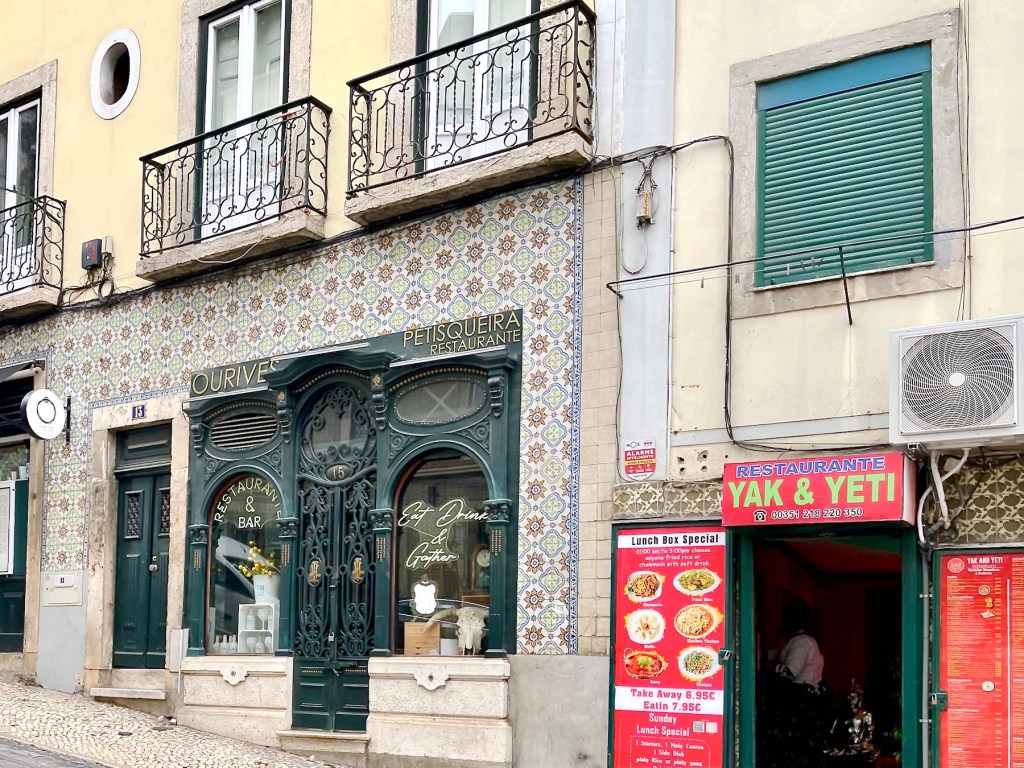
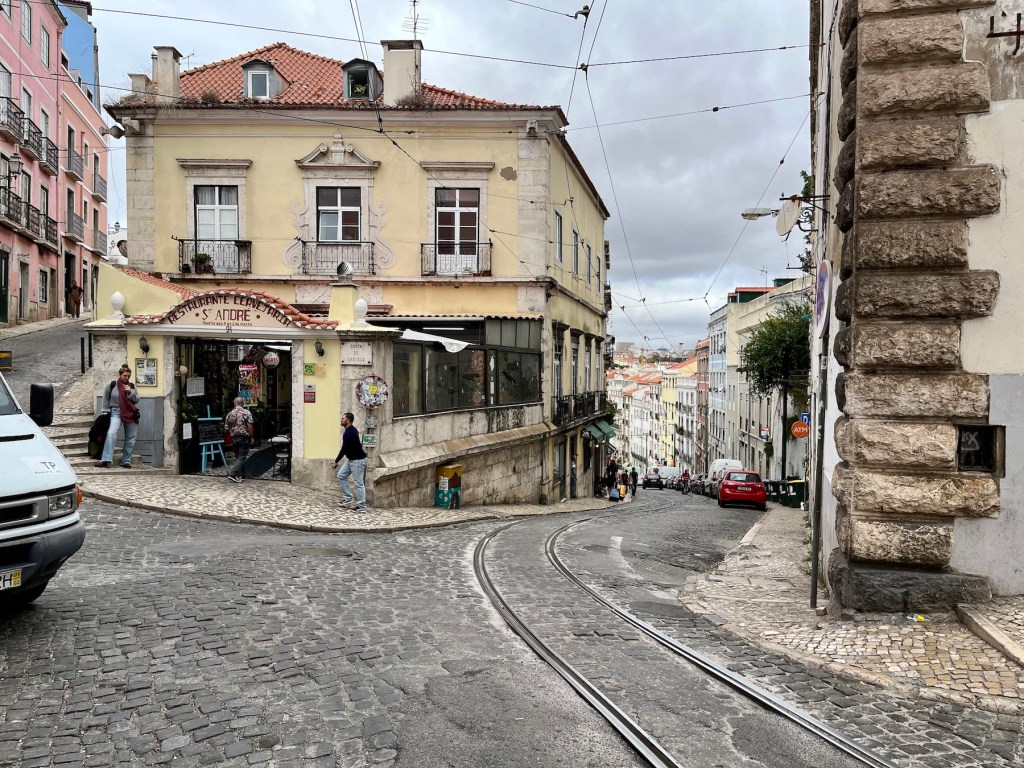
When you see pictures of famous places or attraction in guide books, they are often taken by professionals under the most favorable conditions, with ideal lighting and not a tour bus in sight. In real life, that’s usually quite different. For comparison, I grabbed the image of a famous local singer from Wikimedia Commons:

The mosaïc mural of Amália Rodrigues is made of calçada portuguesa pavers, set in a curved retaining wall. It was created by street artist Alexandre Manuel Dias Farto aka Vhils. Rain washing over the image is supposed to evoke the tears which the singer used to shed during her emotional performances.
And this is what I found when Sam took us around in his tuk-tuk:
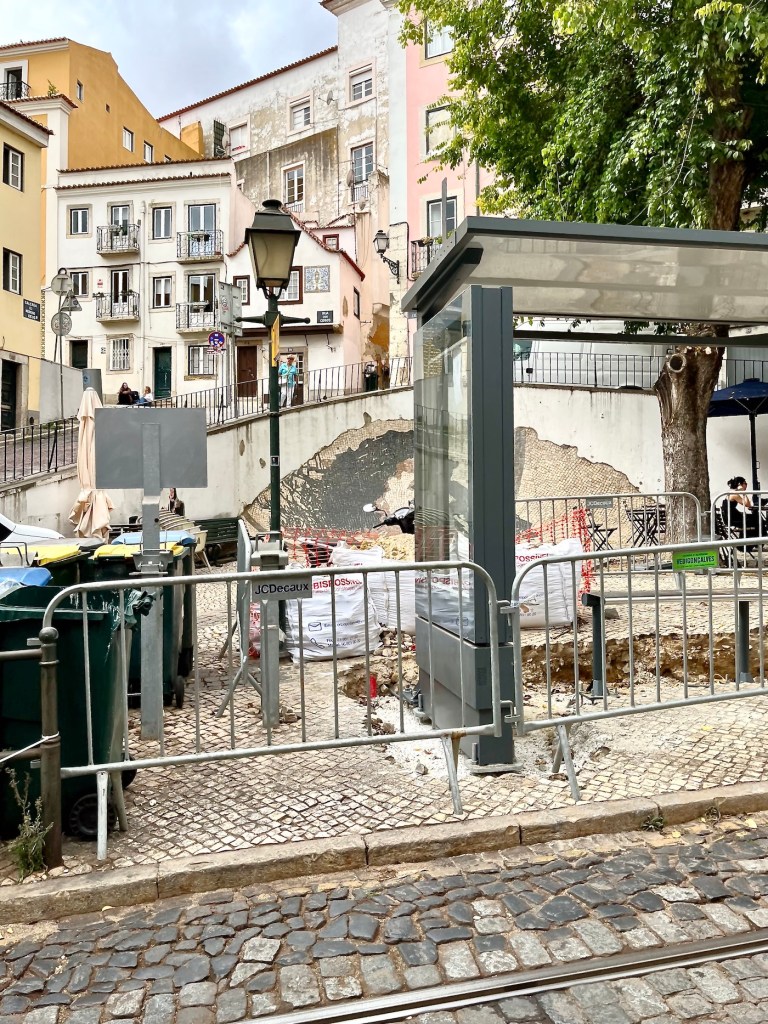
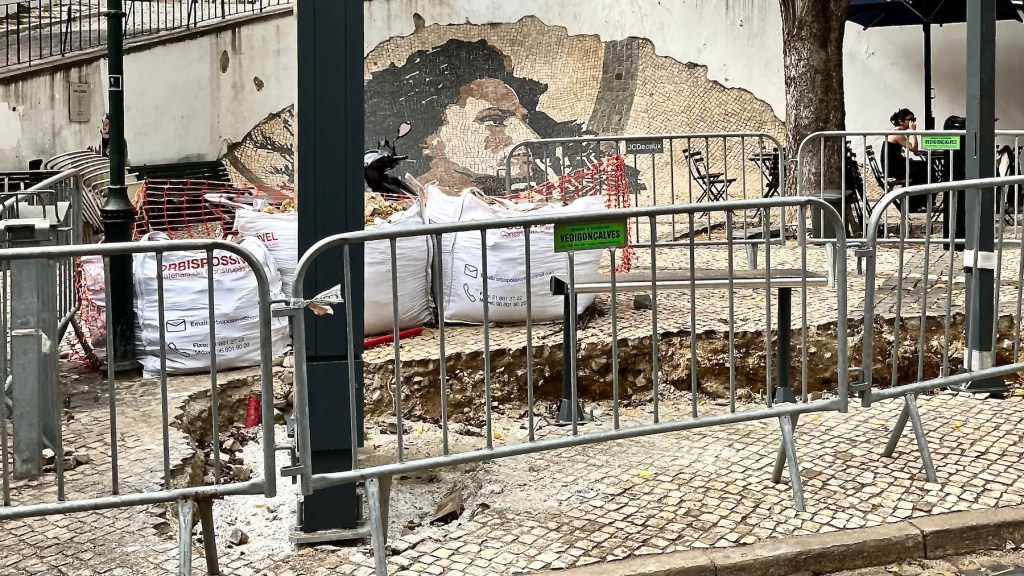
My lesson of the day for you, when sightseeing take it all with a grain of salt. Mentally remove the everyday detritus to enjoy the beauty presented right next to the garbage bins!
Also, the little house uphill behind the lady in the turquoise top and partially obscured by a streetlight (left pic above), is one of the oldest houses in Lisbon, as Sam told us. It survived wars and earthquakes when others crumbled, and became quite famous for its unusual resilience. My next shot turned out marginally better … just mentally remove the van, please.
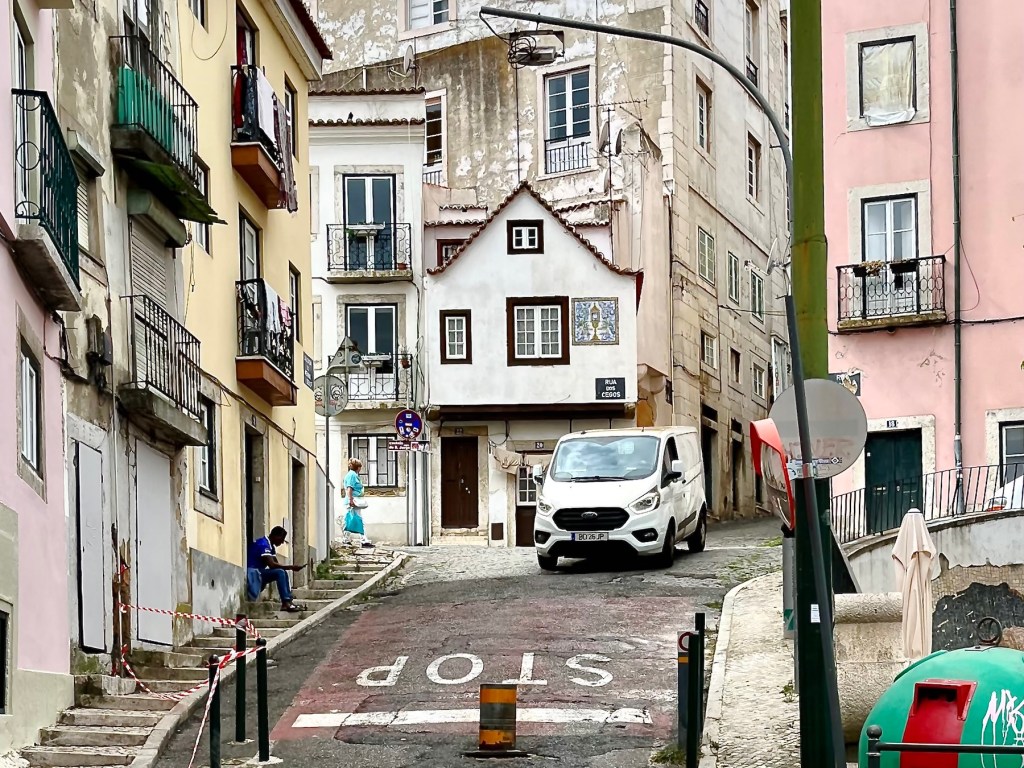
Below is another picture of the little house, taken a couple of days earlier when I hadn’t even heard about its story yet. But I had become quite intrigued by the ceramic tile image of a monstrance on an obviously secular building. Those are salt-glazed azulejos, the famous Portuguese tiles. I’ll show you a couple more examples later on, for now let’s stick with the ancient little house.

The 16th Century House, Nº 20 Street of the Blind
The following image of our casa quinhentista is quite a bit older than my photos. It is an etching by the well-known and highly regarded painter and graphic artist Alfredo Roque Gameiro (1864 – 1935). I stumbled across it in the public domain pages of Wikimedia, while searching for information on the little house. The lovely engraving is part of a set of one hundred watercolors and engravings created around 1910 by Roque Gameiro and published in the book “Lisboa Velha” (Old Lisbon) in 1925. It’s a collection of images representing the urban culture in one of the oldest established neighborhoods of Lisbon as seen through the eyes of a gifted artist, who was himself an integral part of that world.

Aside from altered door finishes, there is one tiny detail in Roque Gameiro’s etching of casa quinhentista that is no longer visible in my photos. It’s a low cross-bar in the left upstairs window. We had those dowel-like wooden bars in our windows in our first house in France that was of a similar age. I suppose, that’s why I noticed it here.
Still browsing the internet for images from the Lisboa Velha book, I found the blog of one Mário Marzagão, who calls himself alfacinha, a nickname for a true lisboeta. Mário’s blog contains dozens and dozens images from the book. In his blog, some of these works of art, actually historical documents of the Alfama neighborhood as it was 100+ years ago, were paired with current photos of identical views. It is amazing to see how well the character of this unique Lisbon quarter has been preserved. Scrolling through the images with great delight, I stopped at a water color and an etching of one particular corner. Wait a minute, I thought, I know that street. I know those columns. I deboned grilled sardines sitting right next to them! And checking with Google maps, I easily confirmed my supposition.
For my little story here, I stole pictures Nº46 and Nº82 from Mário’s blog. I tried to reach him and left a private message on Facebook asking permission, but he didn’t answer. I hope, having acknowledged ownership here, makes me less of a villainess 🦹🏼♀️
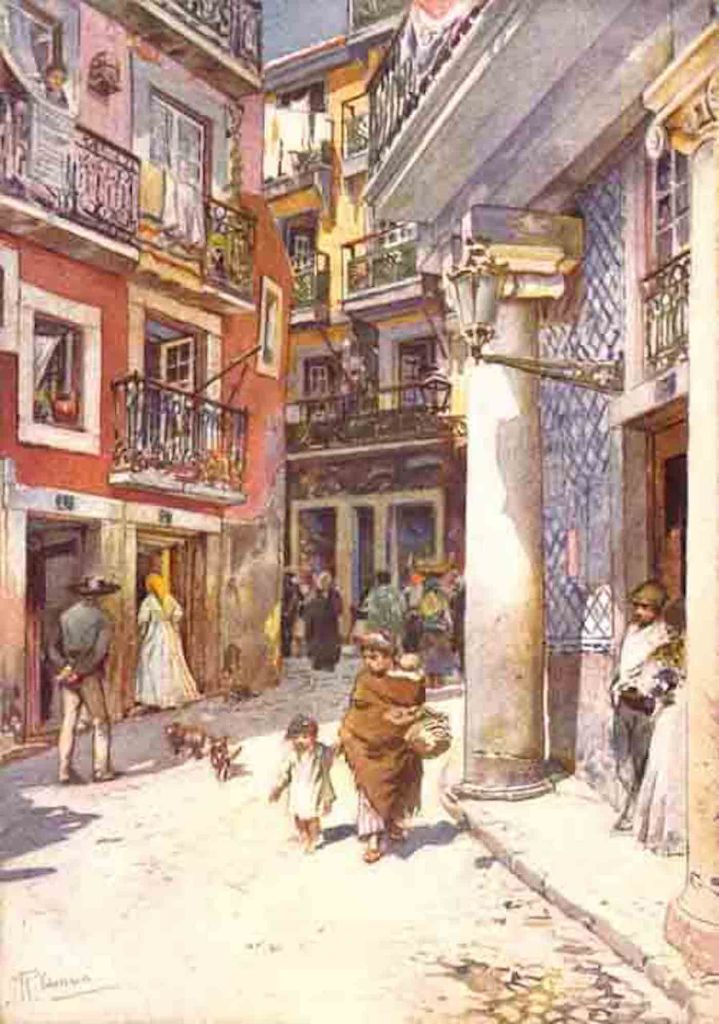

Rua de São Pedro no Largo do Chafariz de Dentro, our table was exactly where the mama with baby and toddler are walking in Roque Gameiro’s watercolor.
Just around the corner of Rua de São Pedro, as seen above, is Largo do Chafariz de Dentro, a large square that equally hasn’t changed significantly in a century.

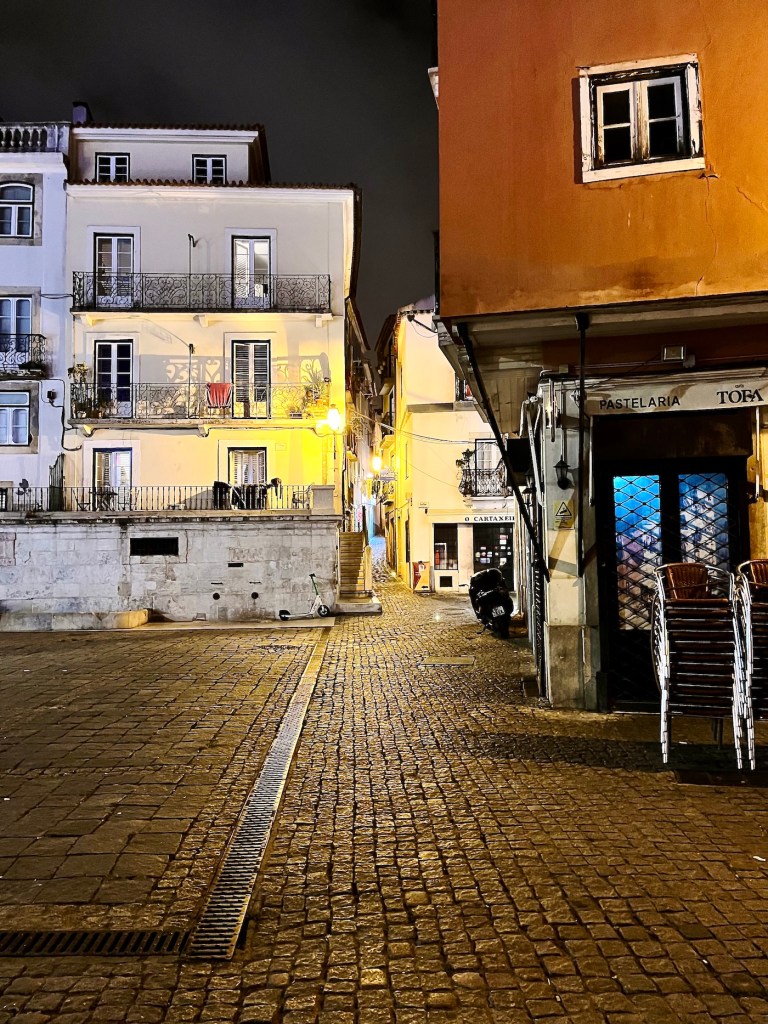
Click on the left picture above to enlarge it, then you’ll see the mouth of Rua São Pedro on the left. There is a man reading the restaurant menu posted in multiple languages – around that very corner are the columns I mentioned above. The public fountain, where two guys with mobile phones are sitting on its low wall, already appears on the far left in the Roque Gameiro etching below. Even the wrought-iron balcony railings are still the same!
On the right hand side of the square is an old, terracotta-colored building with a recessed ground floor (right pic above). It’s still serving the public as a pastelaria (pastry shop) and bar, and can clearly be seen in the center of Mr. Gameiro’s etching below.

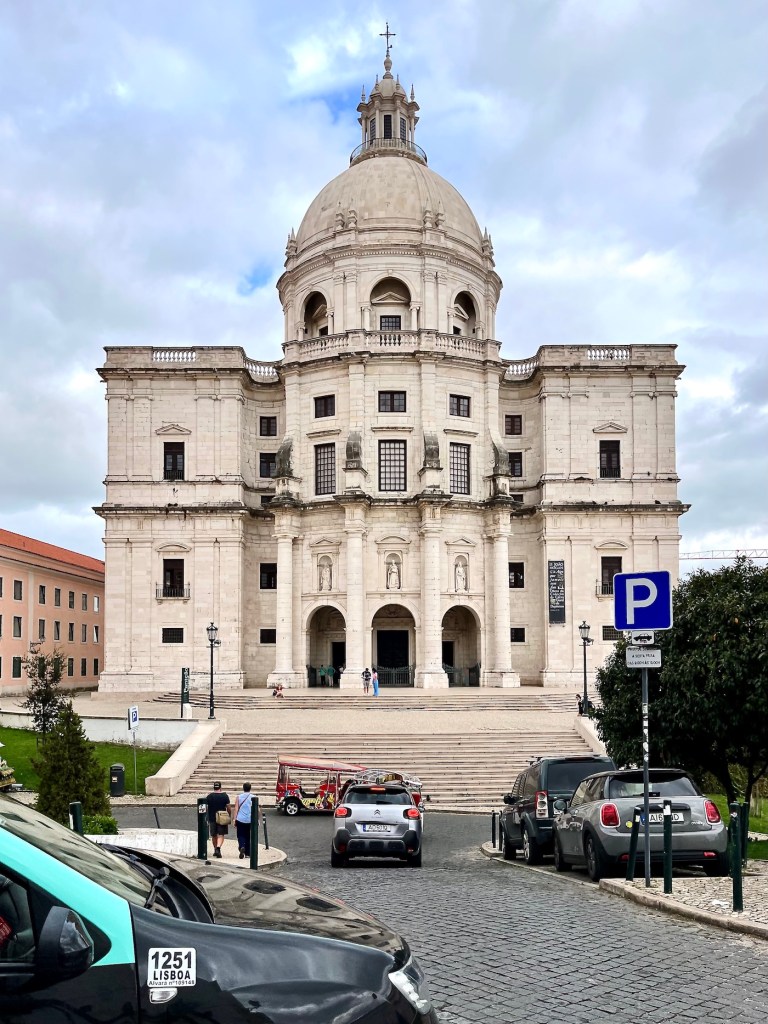
The only tour we took in Lisbon was a tuk-tuk ride around a few of the usual attraction. Sam insisted on showing us the baroque National Pantheon. It used to be a church before it was converted to serve as the final resting place for distinguished citizens, like the fadista Amália da Piedade Rebordão Rodrigues (1920 – 1999) whom we first encountered in the calçada mosaïc by Vhils.
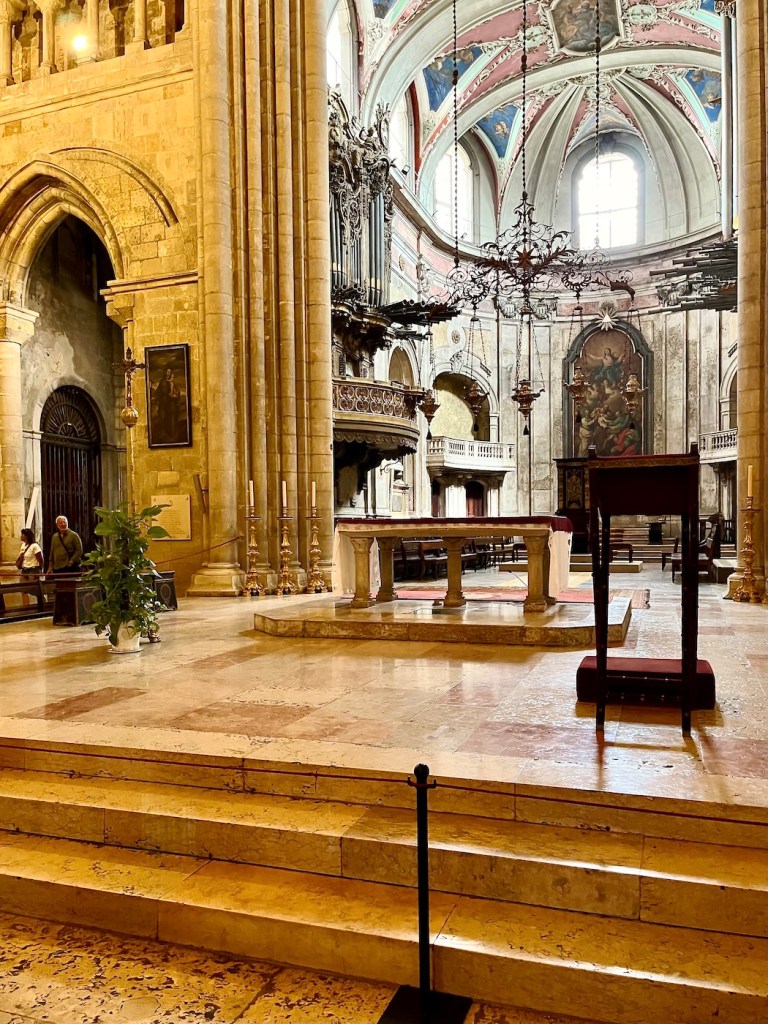
Another must see attraction Sam showed us, was the oldest church in Lisbon, the Cathedral of Santa Maria Maior, also called Sé de Lisboa, the Seat of the Patriarchate of Lisbon. The construction of the cathedral began in 1147 on the site of a major mosque, celebrating the Christian reconquest of Lisbon under the leadership of Afonso Henriques, later King Afonso I., with the assistance of nordic crusaders on their way to Jerusalem.
The poor cathedral is rather jammed in the middle of serious urban growths, as well as, naturally, a multitude of tourists, tour buses, tuk-tuks, and general traffic. One has to make an effort to actually notice it in all that mayhem.


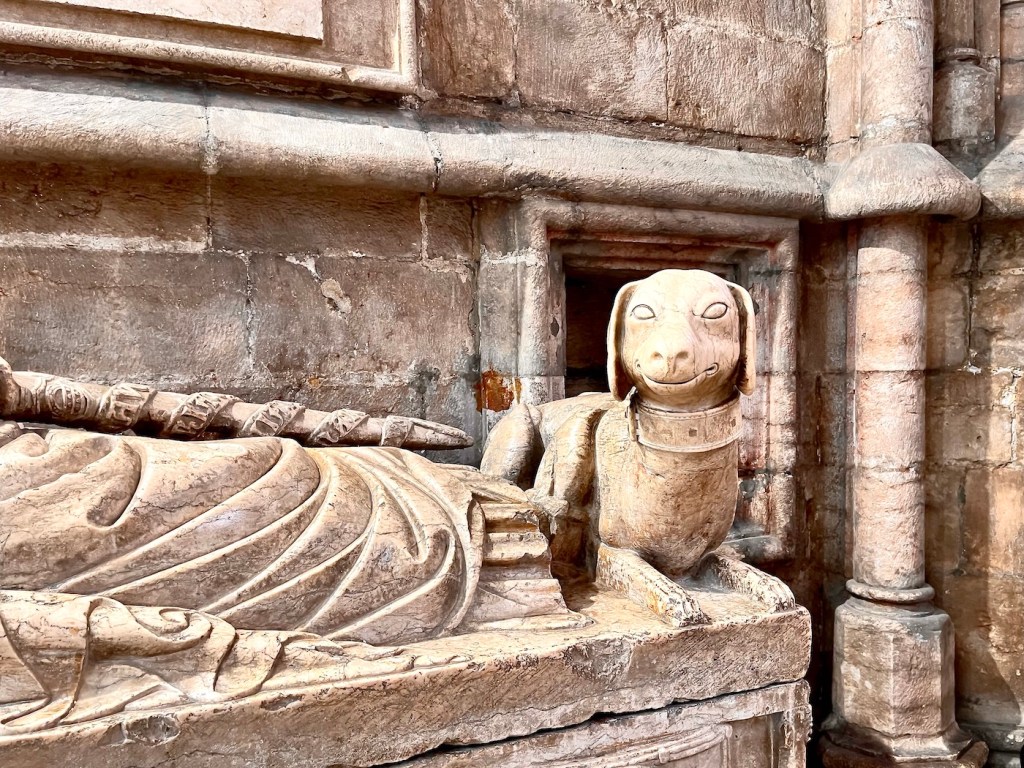
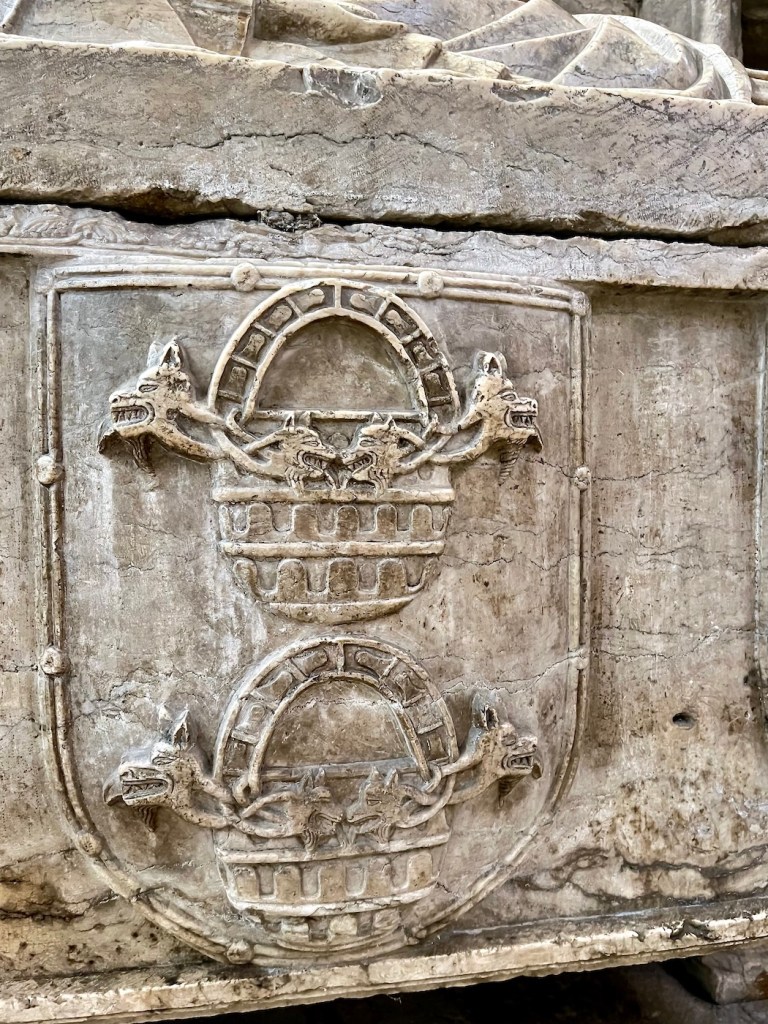
We were circling the main floor of the cathedral at a pretty good clip, when a smiling doggy stopped me in my tracks. The faithful medieval guardian is watching over his master in eternal devotion, forever laying at the feet of Lopo Fernandes Pachero, 1st Lord of Ferreira de Aves (1280 – 1349), himself a faithful and devoted vassal of King Afonso IV, whose sepulcher is displayed in the cathedral as well.
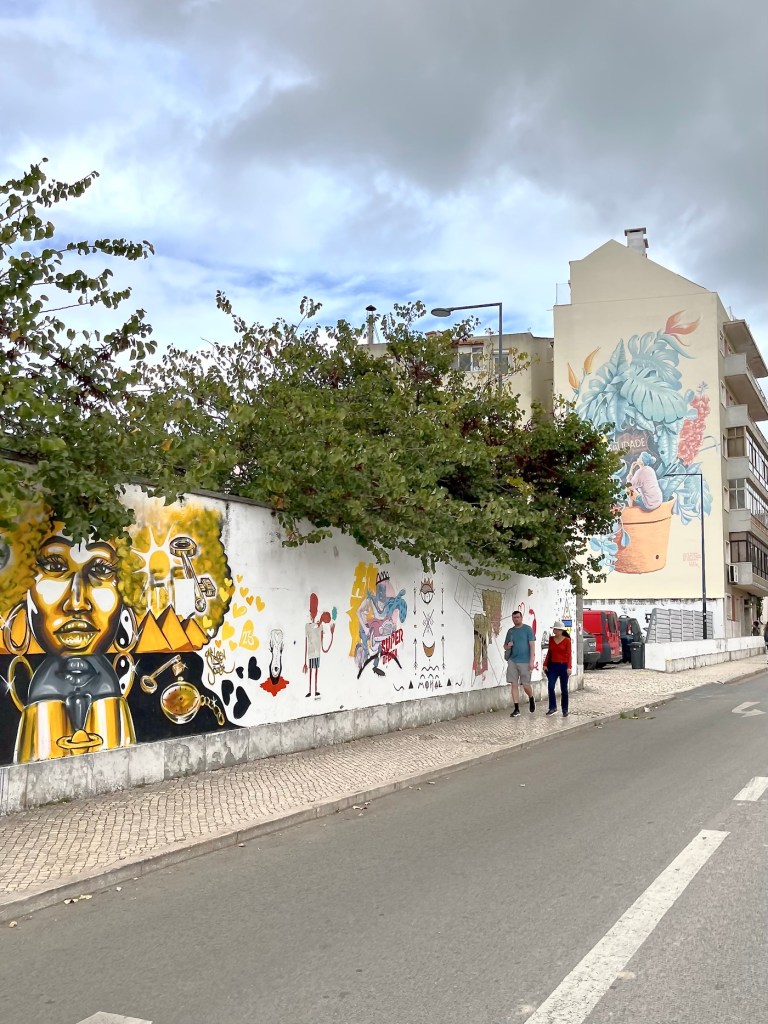
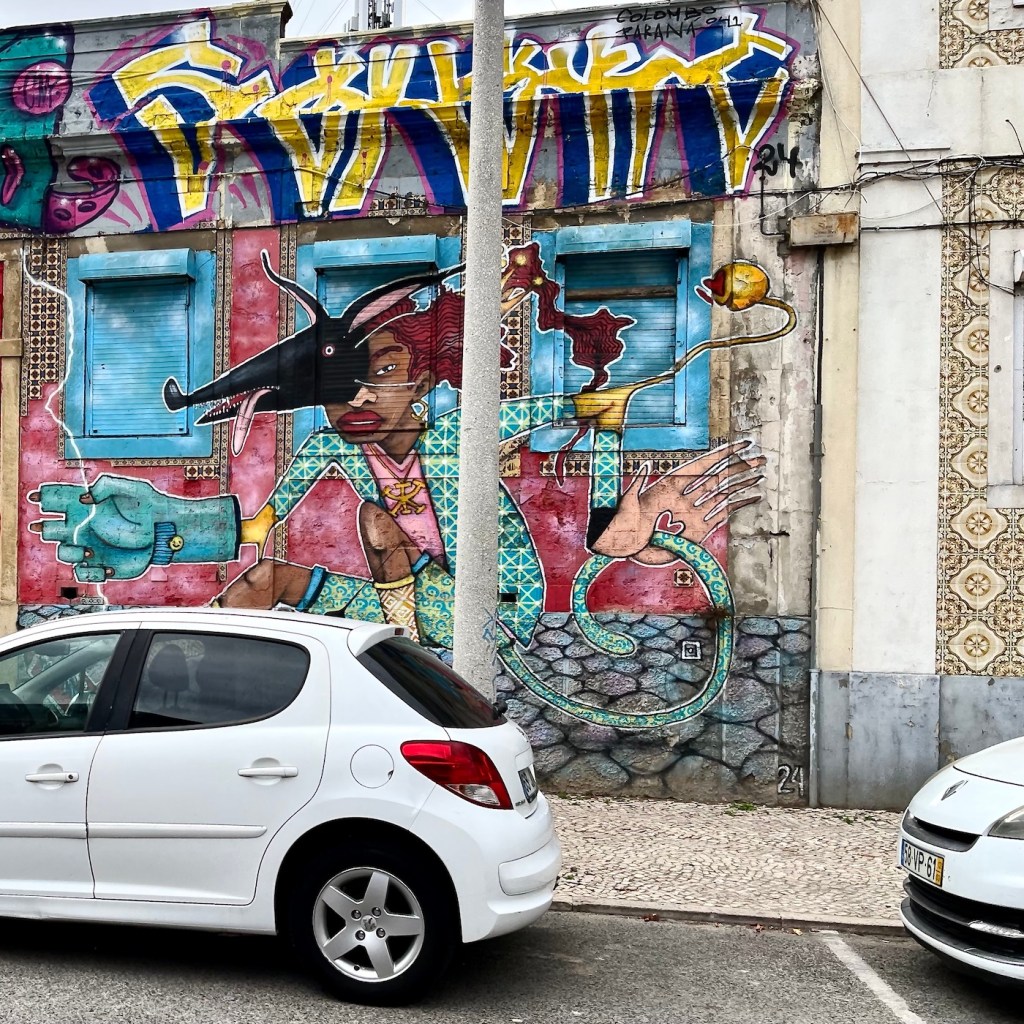
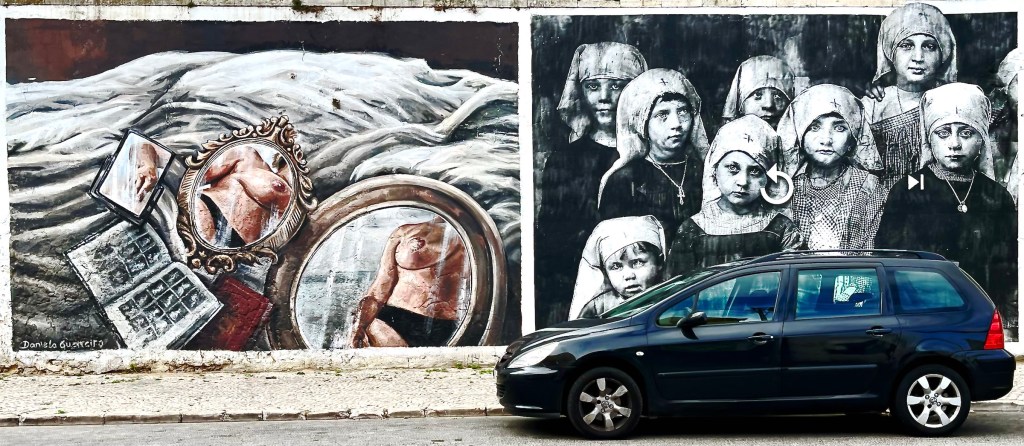
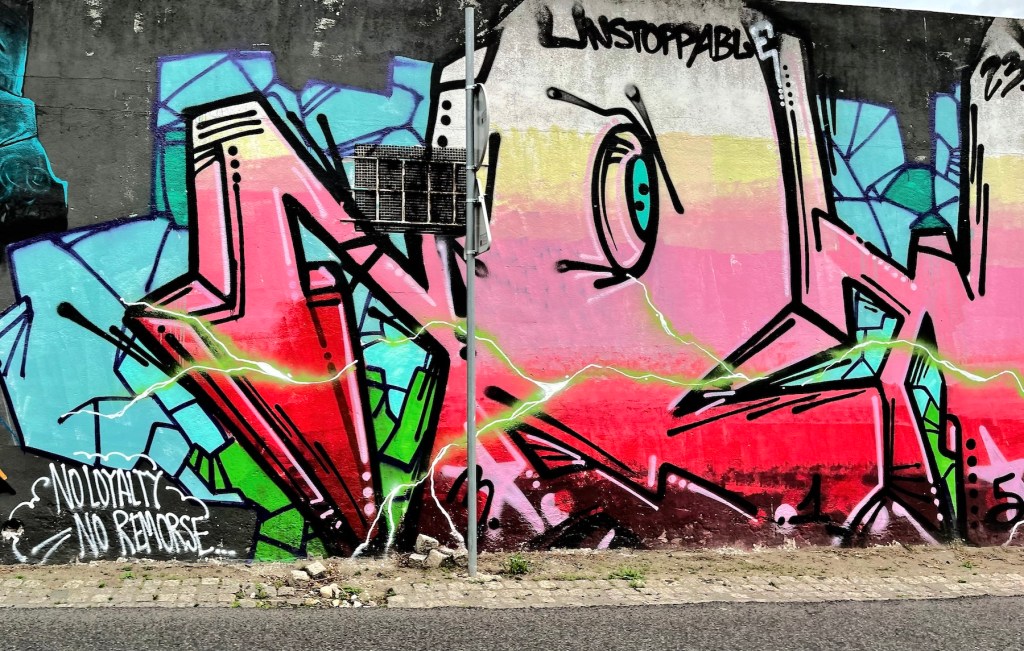
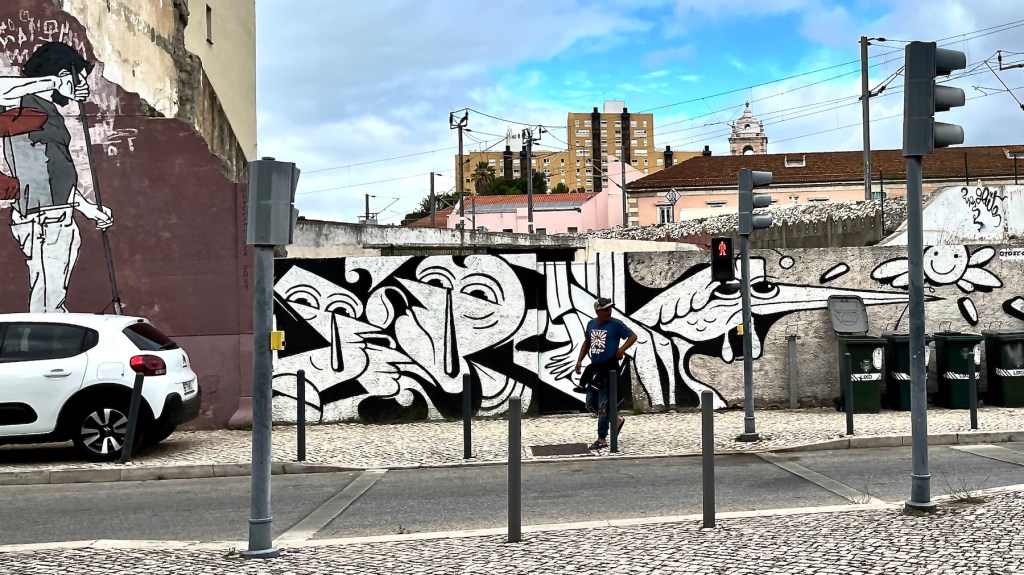
Finally, we came to the part of our tuk-tuk excursion we had strongly requested, street art! As those of you who have read my blog posts before may know, I love graffiti. When Sam drove us to our place late at night, we passed alongside a long stretch of graffiti that I wanted to see again.
We started off with a mural called “Saudade” created by Mario Belem in 2021 during the pandemic.
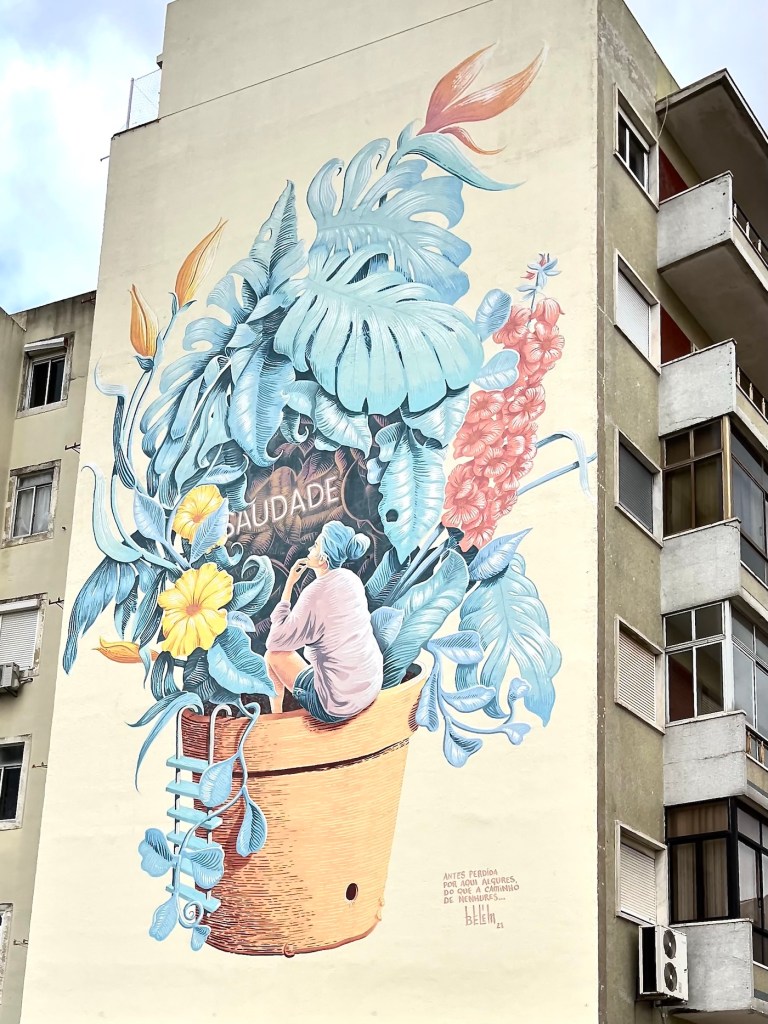
Artist statement: ” … At the time, the idea was to reflect on how we spend most of our time with our backs to the world, looking at our belly buttons, longing for past experiences, without giving ourselves space to live all the new thrills that are just waiting around the corner. Little did we know, that we’d have so much time for introspection during all these months…
With the second wave of confinement that we’ve all been enduring, this image takes on another symbolism, as a tribute to our current circumstances, hopefully a positive and colourful one, so that we never forget that better days are yet to come.”
Sam, who is Irish and doesn’t speak Portuguese yet, told us that saudade means hope. It doesn’t usually, but in this instance it certainly does!
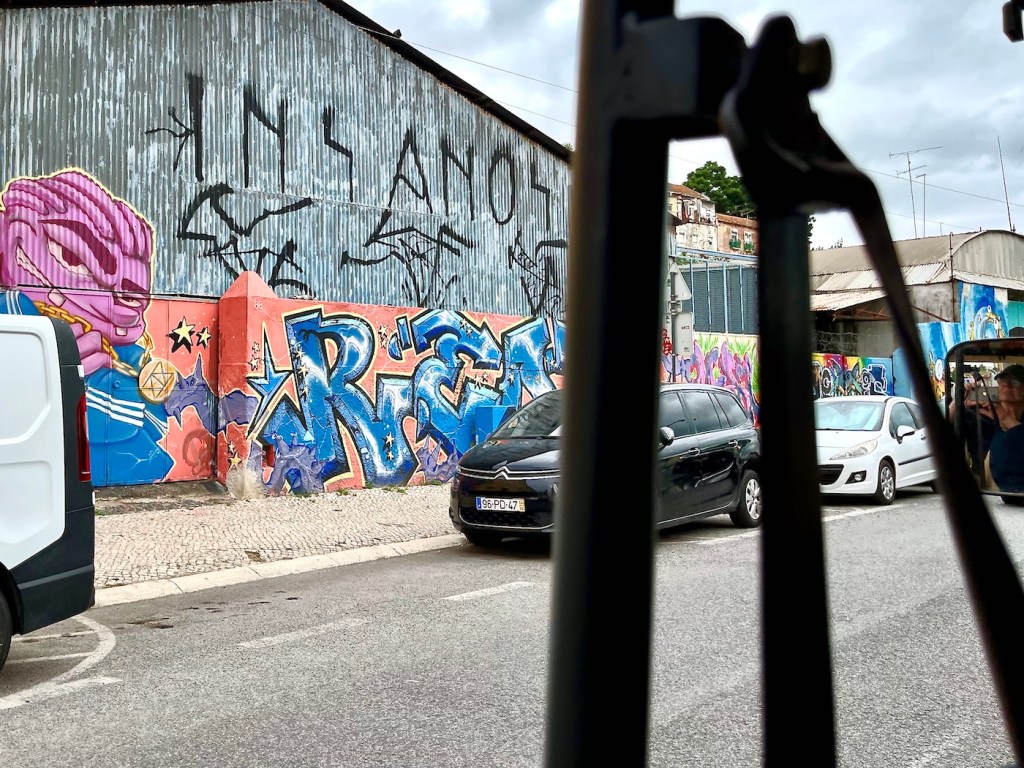
In regard to the many graffiti images I packed in this post, I hope you can understand that there is little provenance to be had. Sam drove us past the images once, without stopping. It was sheer luck when I could decipher initials or a logo later, or found a connection online.


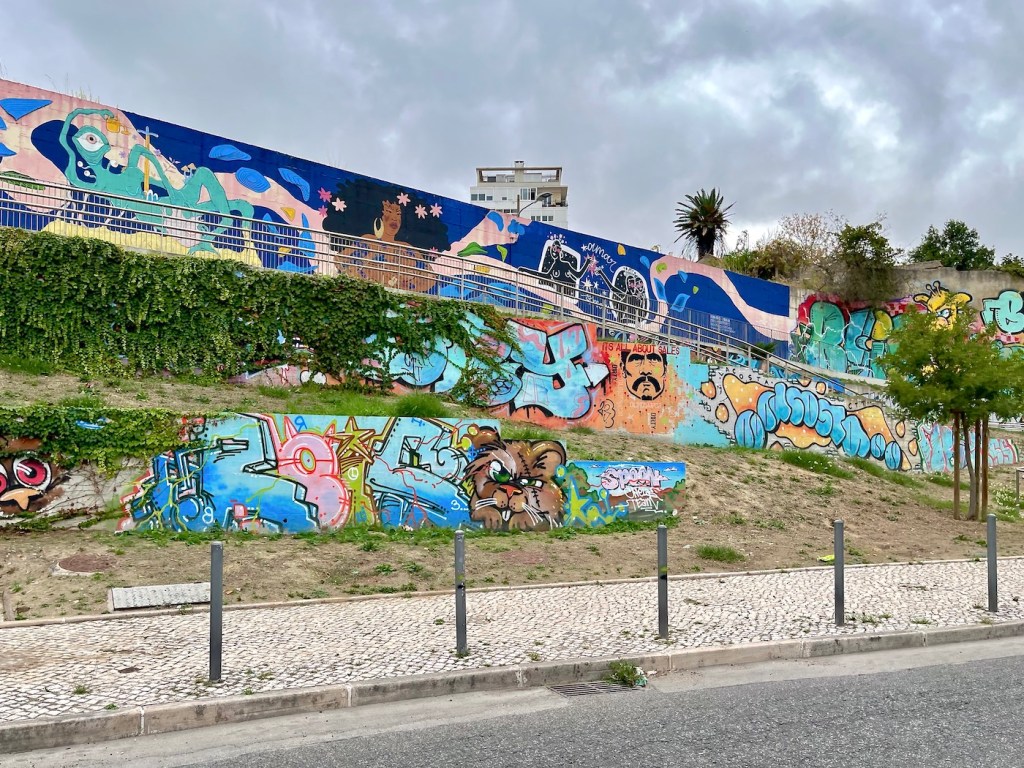
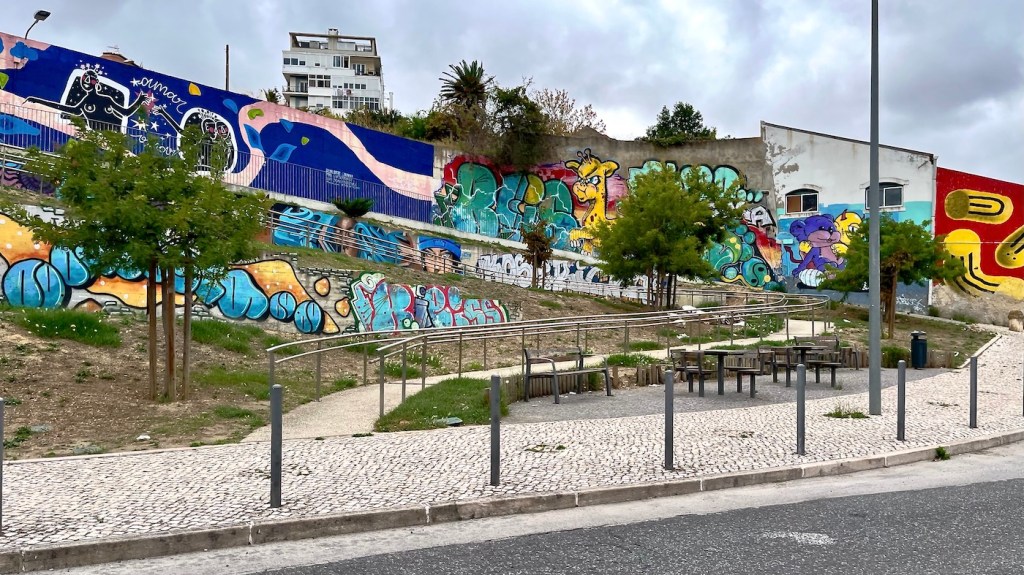
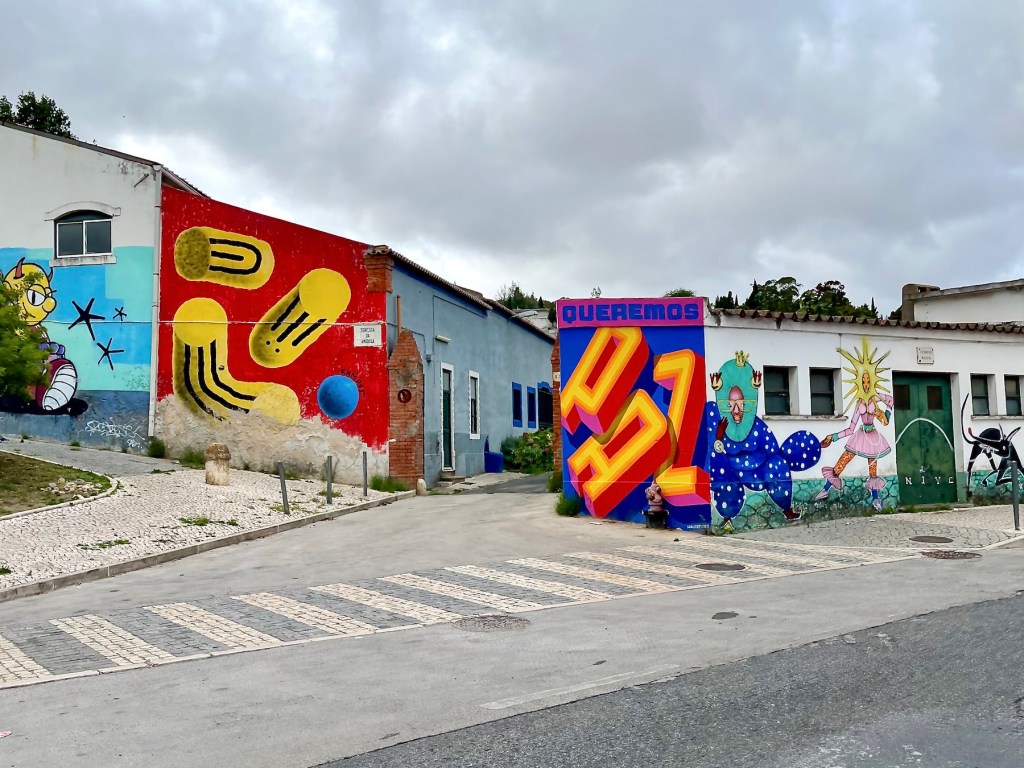

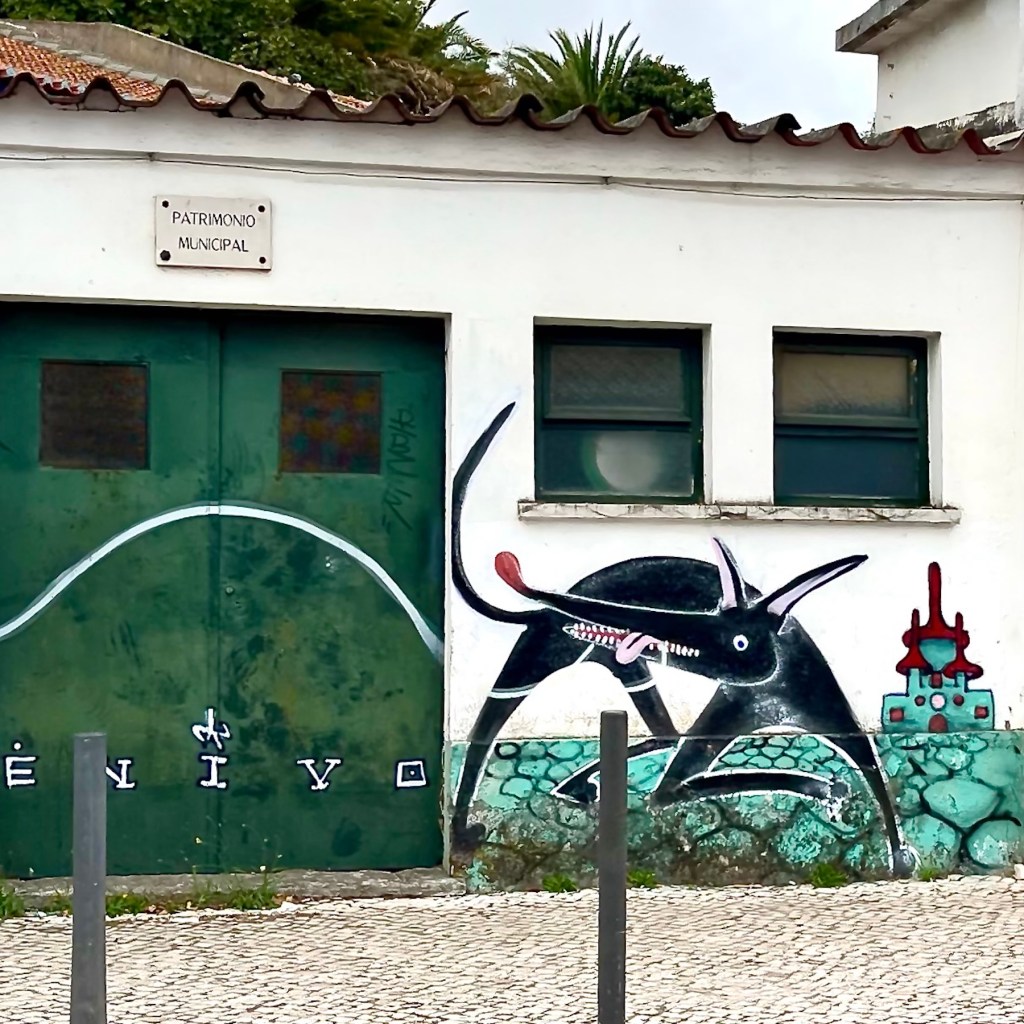
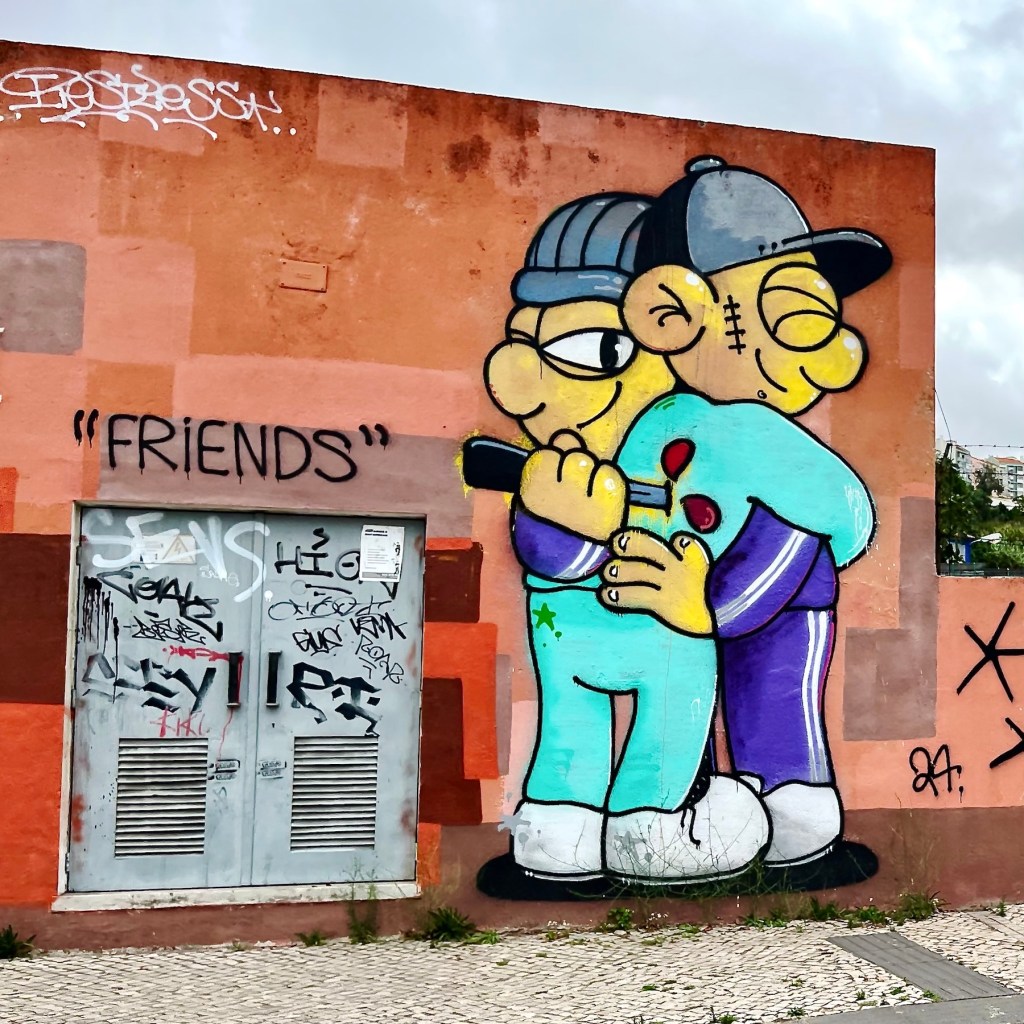
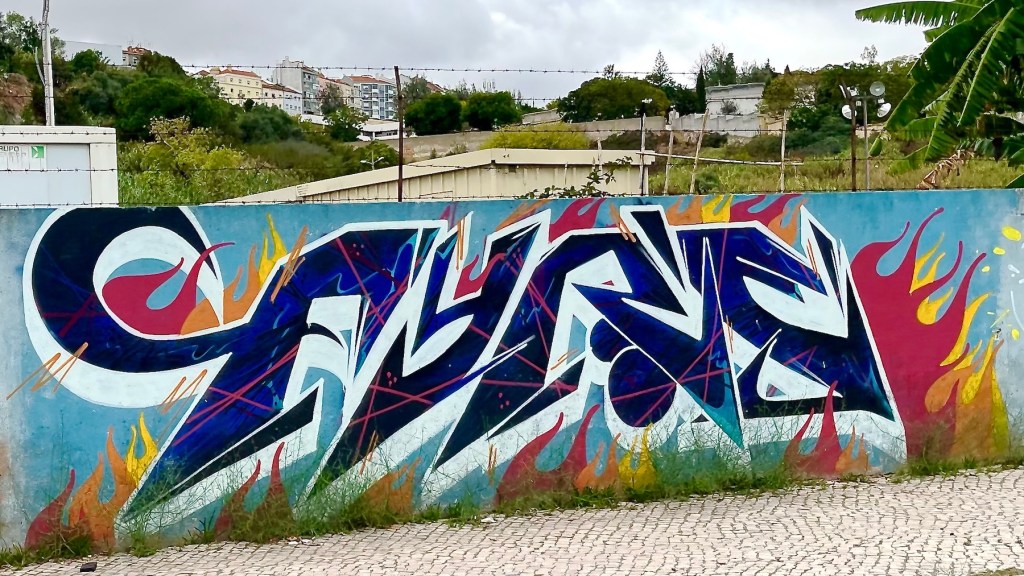


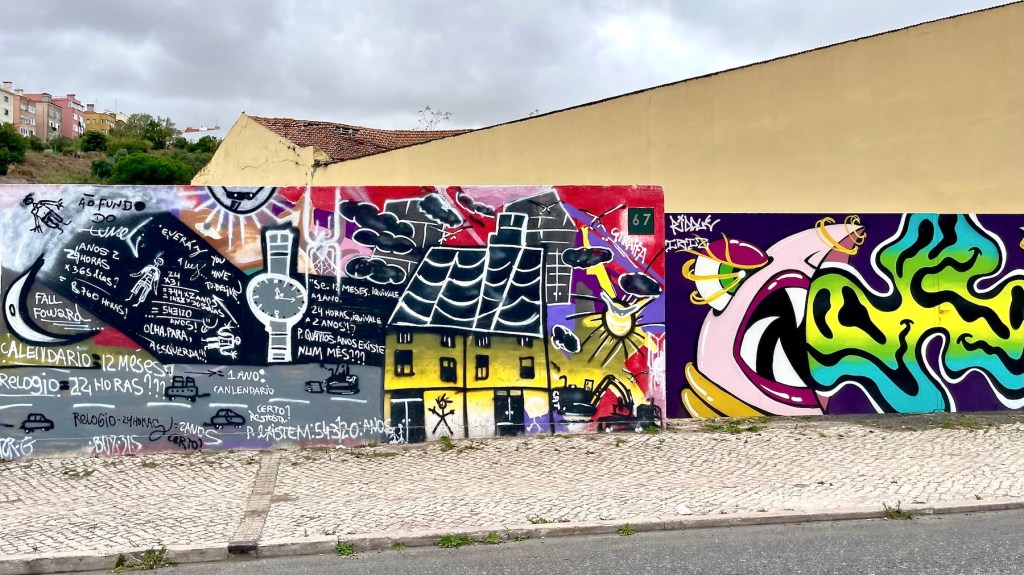
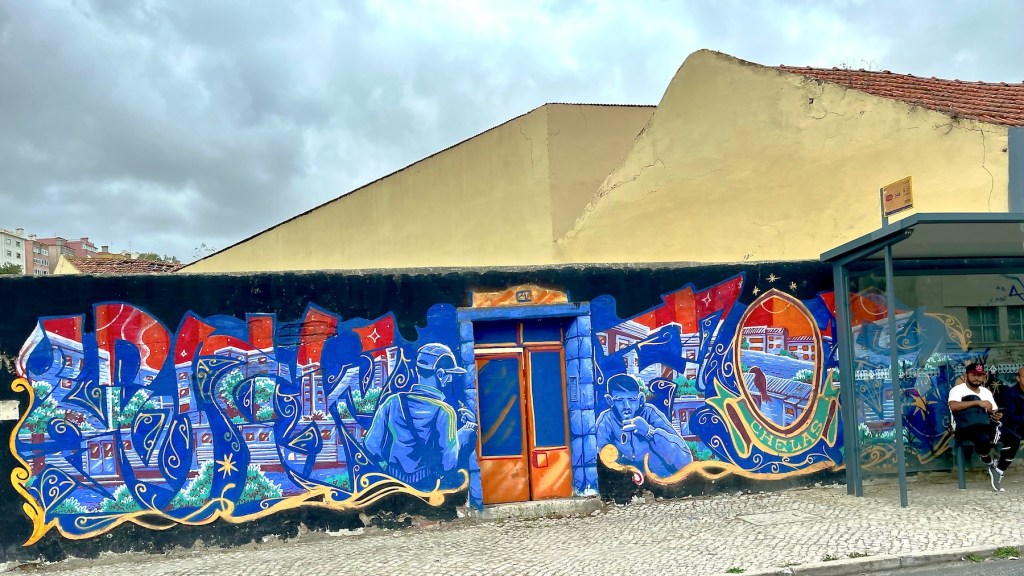

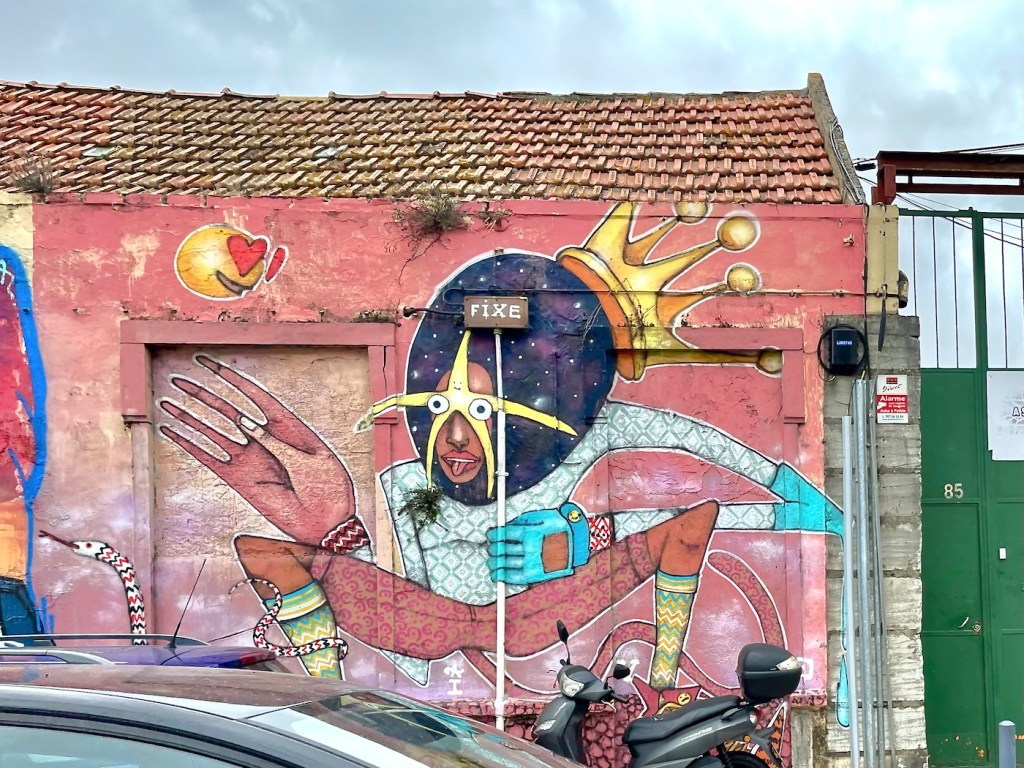


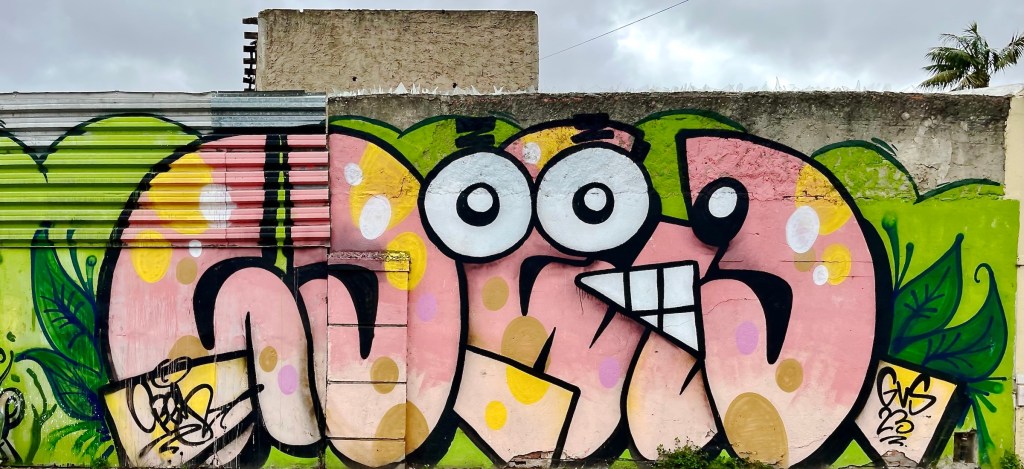
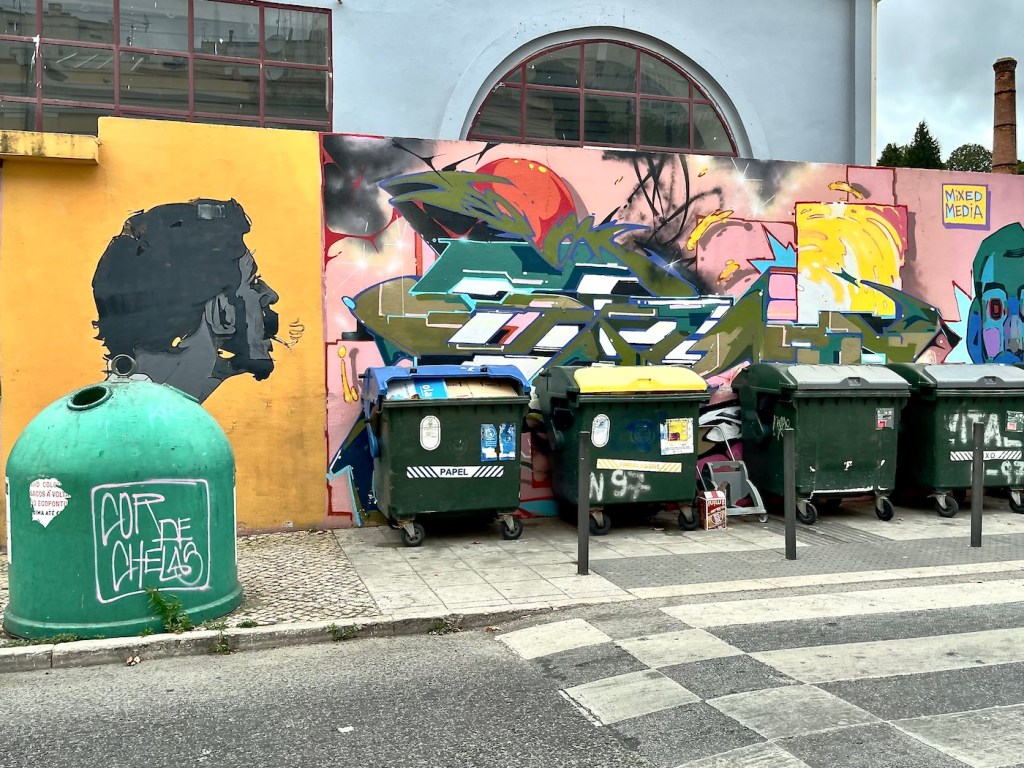
I keep complaining about the garbage bins, when in reality, they are super useful. Lisbon is a very clean city. I should just shut up … 😳🙃


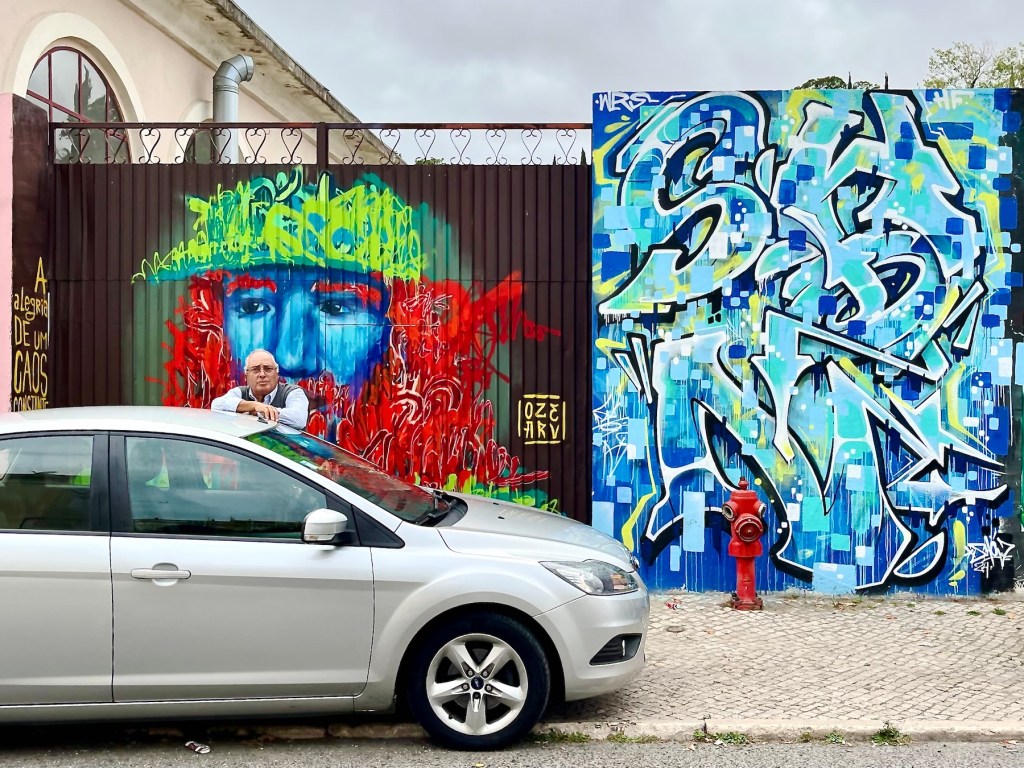

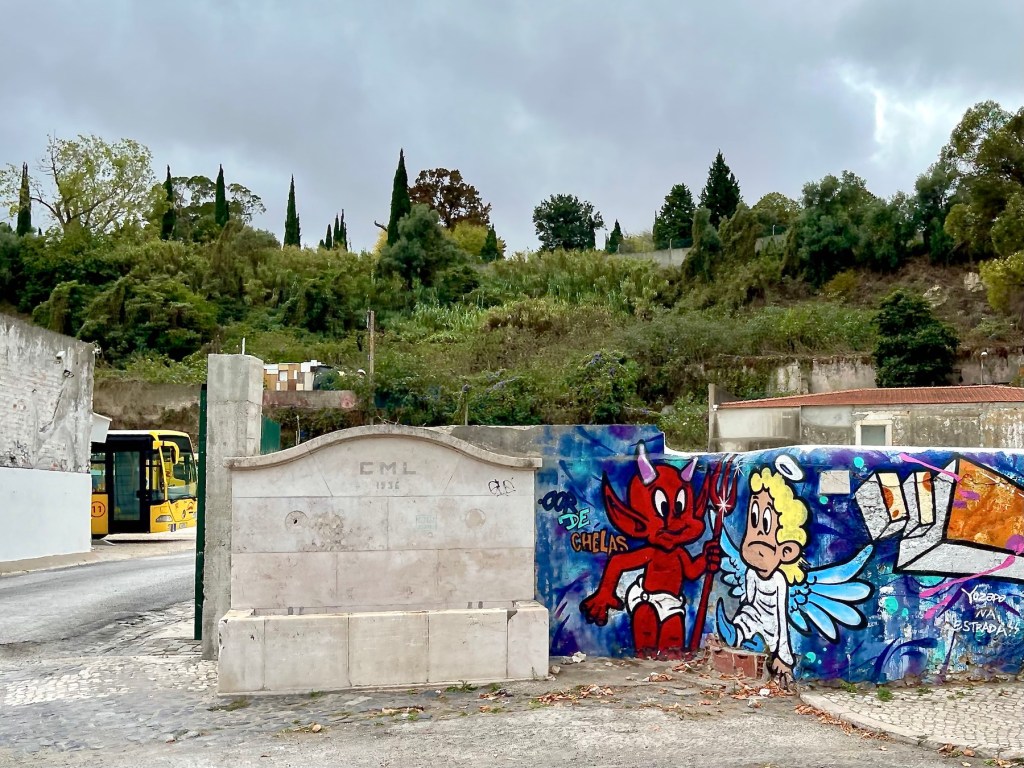
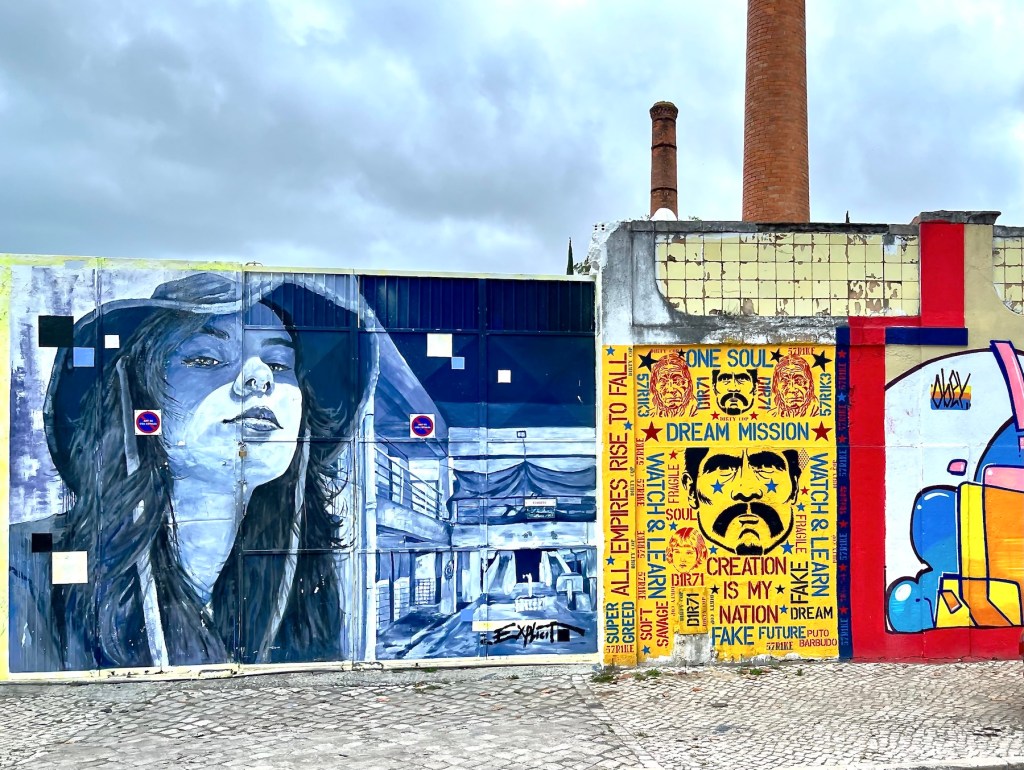
The graffiti by Explicit Citizen on the left covers a Garage door for the Festival Cor de Chelas, hence the two little no-parking signs 😆

Remnants of the azulejo façades still visible here and there …




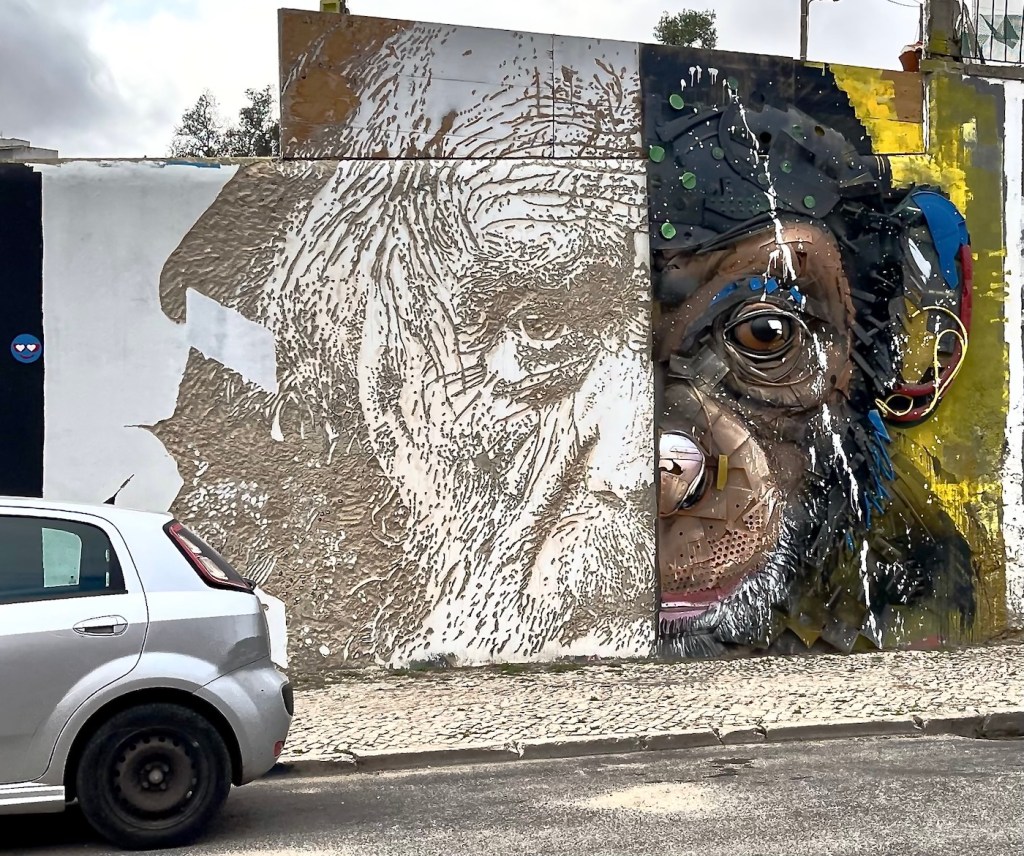
For the Festival de Cor de Chelas, the two most eminent Lisbon street artists VHILS and CORDALO II joined forces to create a unique tribute to Charles Darwin. I am glad, I had a chance to see it, however briefly.
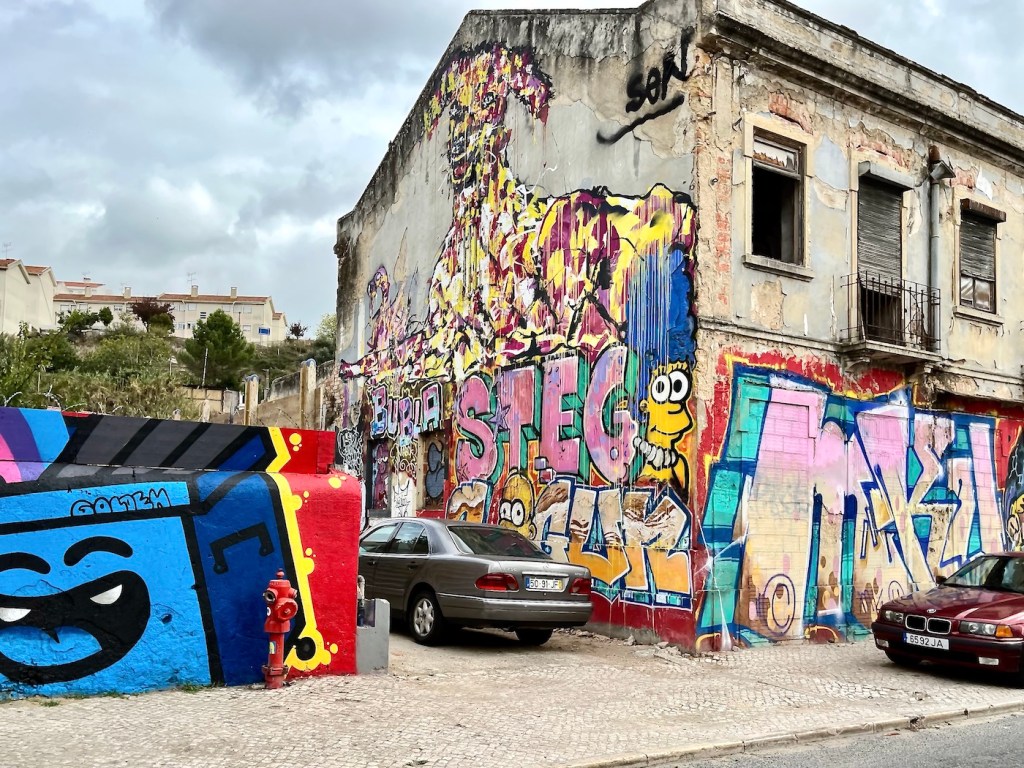
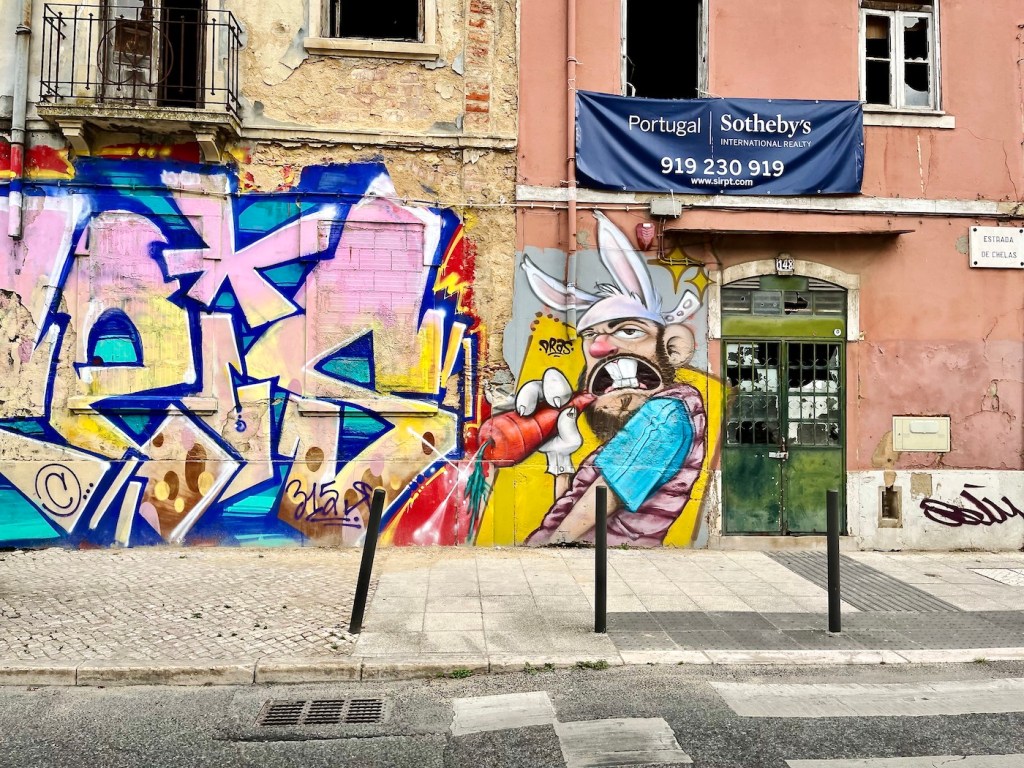

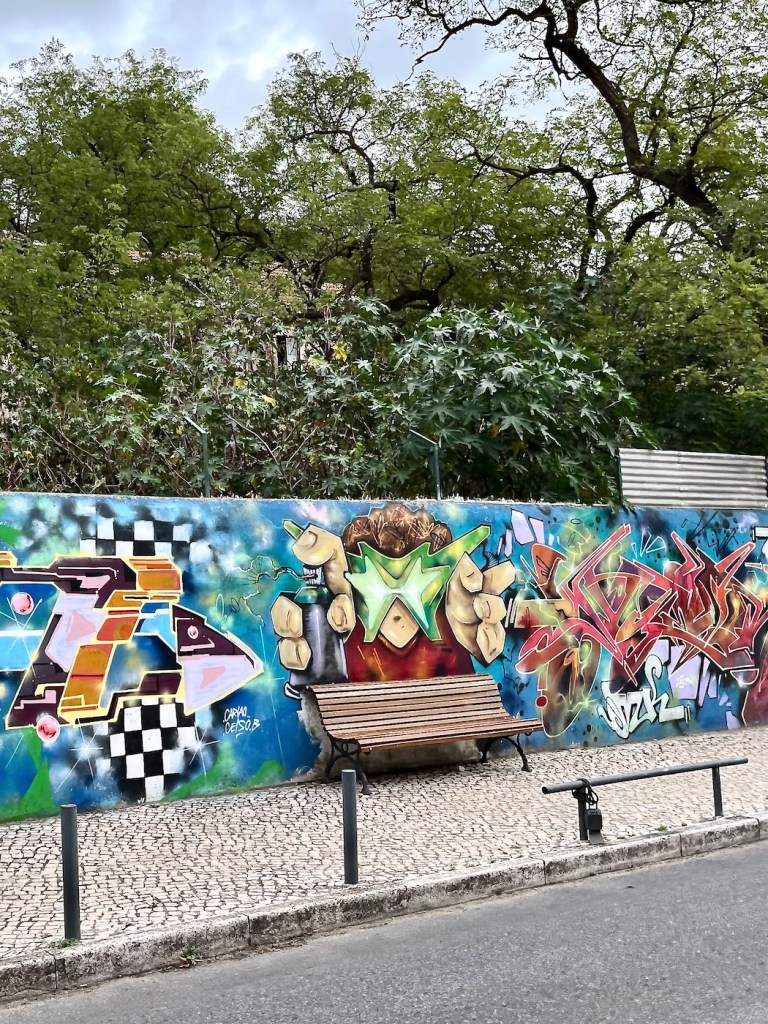


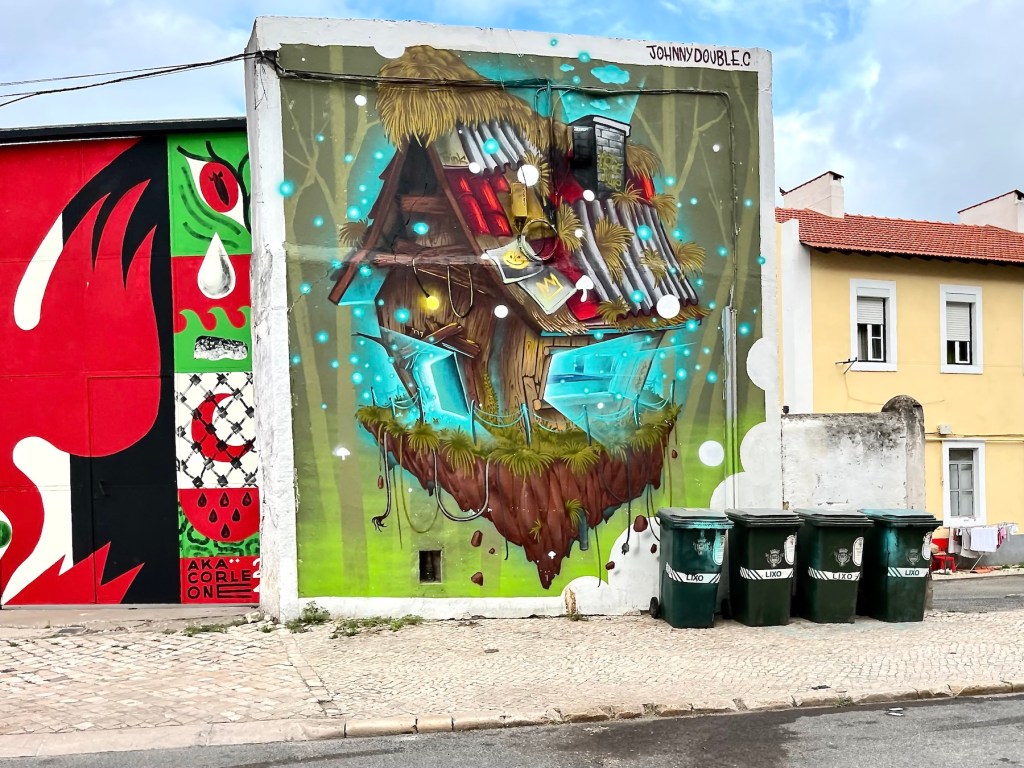
Lilli Marlit, a German street artist (naturally, since she chose la Dietrich as a moniker) created the two monochrome graffiti in my collection.


“Rip Akira Toriyama” by Flavius Augustus, homage à Akira Toriyama, manga artist and character designer (1955–2024)

“Poseidon” by PichiAvo, a unique artistic duo from Valencia, Spain, who have carved and painted themselves a highly respected position within the world of graphic arts. Poseidon was their first work executed in Lisbon, at the Santa Apolónia train station. The portrait faces the Tagus river, thus creating a link between the God and the water.
Since we’ve mentioned the word Fado a few times, I should maybe explain it briefly. Fado is one of the two music genre in Portugal that have been inscribed in the UNESCO Intangible Cultural Heritage – the other one is Cante Alentejano, a polyphonic singing style of which I saw a mesmerizing performance at the EXPO 2000 in Hannover, Germany.
Two Portuguese words have always been intertwined for me, fado and saudade. The mournful song, fado, expressing Weltschmerz, saudade. It essentially means something akin to a melancholic longing for an absent beloved. There is a wide spectrum of saudade related feelings, but they mostly fall into the realm of nostalgia, suffering, loss, and/or longing. I read somewhere that fado used to center around the hardship of maritime life with women longing for their absent, seafaring husbands, while those lonely husbands yearned for their families back home. Over time it became equally connected with poverty in general, including the privation of dockworkers, miners, and prostitutes, et al, or a mother’s heartbreak for her lost child.
Historically, two distinct styles of fado developed, one in Lisbon and the other one in Coimbra. However, the Lisbon fado is much better known, not least owing to the popularity of Amália Rodrigues, a rainha do fado. Down the street from our place in Lisbon, was a restaurant called ‘O Prego’ where we ate a couple of times, enjoying their traditional dishes, especially their tasty pica-pau (beef stew). One evening we listened to a Fado performance there. It was a nice experience, but a little underwhelming.

The Museu do Fado is worth checking out, if you’re interested in music. For history buffs, I bookmarked the history page in the Fado Museum website, very interesting!
In closing, I want to return briefly to the beautiful Portuguese tiles, the azulejos. It is a great pleasure to walk or über through the streets of Lisbon seeing one attractive tile design after another. In the older parts of town, most buildings, be they residential or commercial, are at least partially covered in tile cladding. It creates a very special and enjoyable atmosphere.
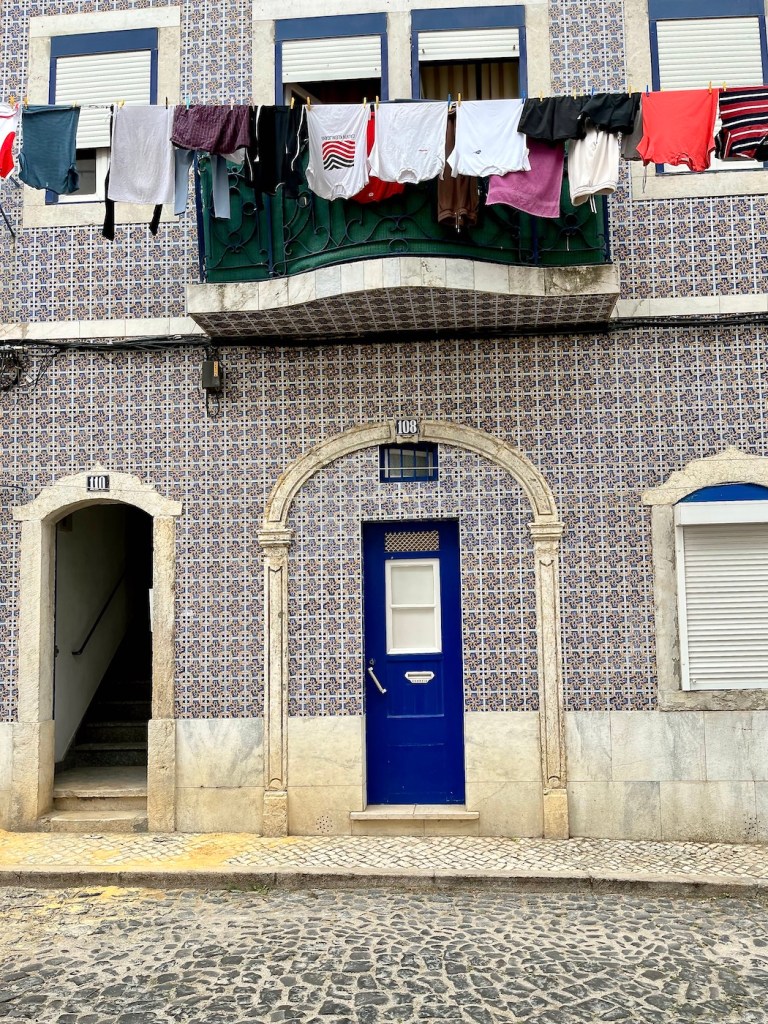
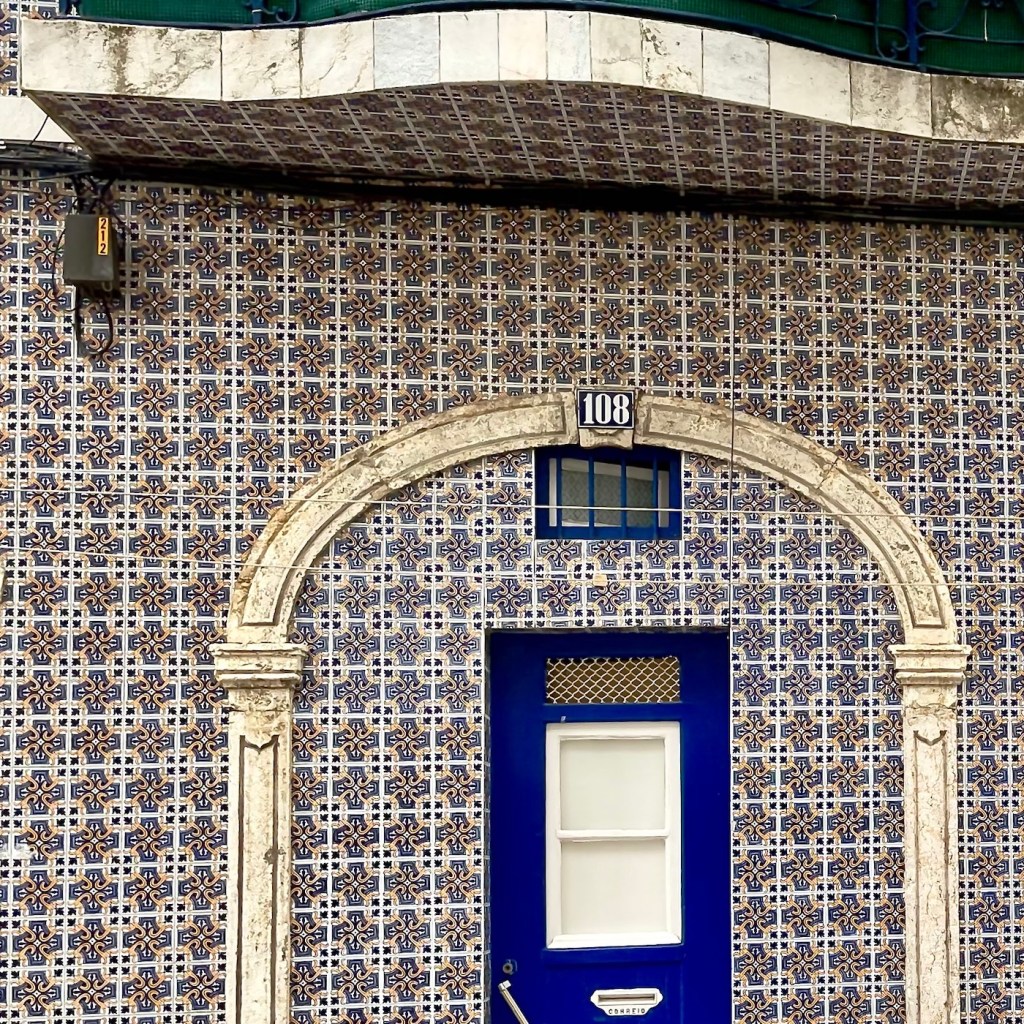
Above, the cute façade of the building across from our place. Below, detail of an azulejo covered wall in near pristine condition.

Sunday, October 6 was embarkation day for our transatlantic cruise. That turned out to be the day of the Lisbon Marathon, which made our approach to the cruise pier a little awkward. More of that in my next post!


 NOT IN A STRAIGHT LINE by Photolera Claudinha