As you know by now, I do enjoy pontificating about artsy or historical stuff. Therefore, writing a new post means I’ve visited another museum, and you have to suffer the consequences.
Our destination was a revisit to the New Mexico Museum of Art in Santa Fe. This quintessential Pueblo Revival-style building in the historical center is a pure delight in itself. Even if it were just an empty shell, one could spend oodles of time chasing the ever-changing shadow patterns across its soft adobe walls. When I was last here, twelve years ago, I was on my own, and it was cooler than it is now, so I spent more time exploring the additional areas around the museum building. I would be delighted if you opened the blog post of that visit to look at those pictures as well:
https://photoleraclaudinha.com/2013/03/30/santa-fe-the-museum-carousel/
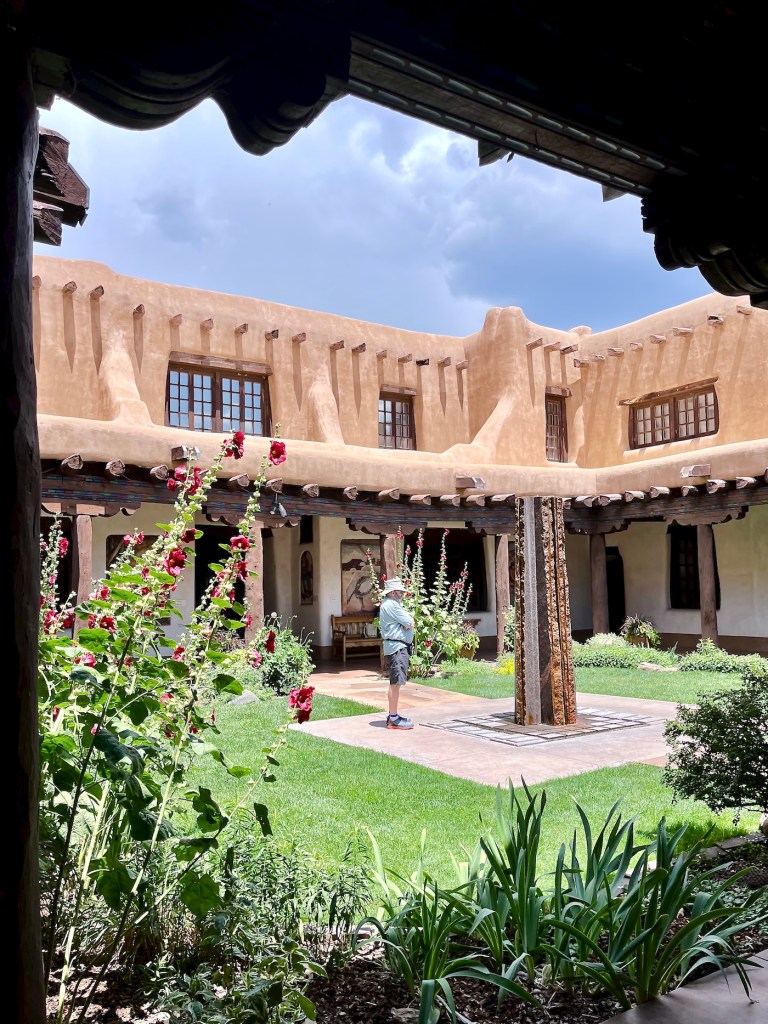
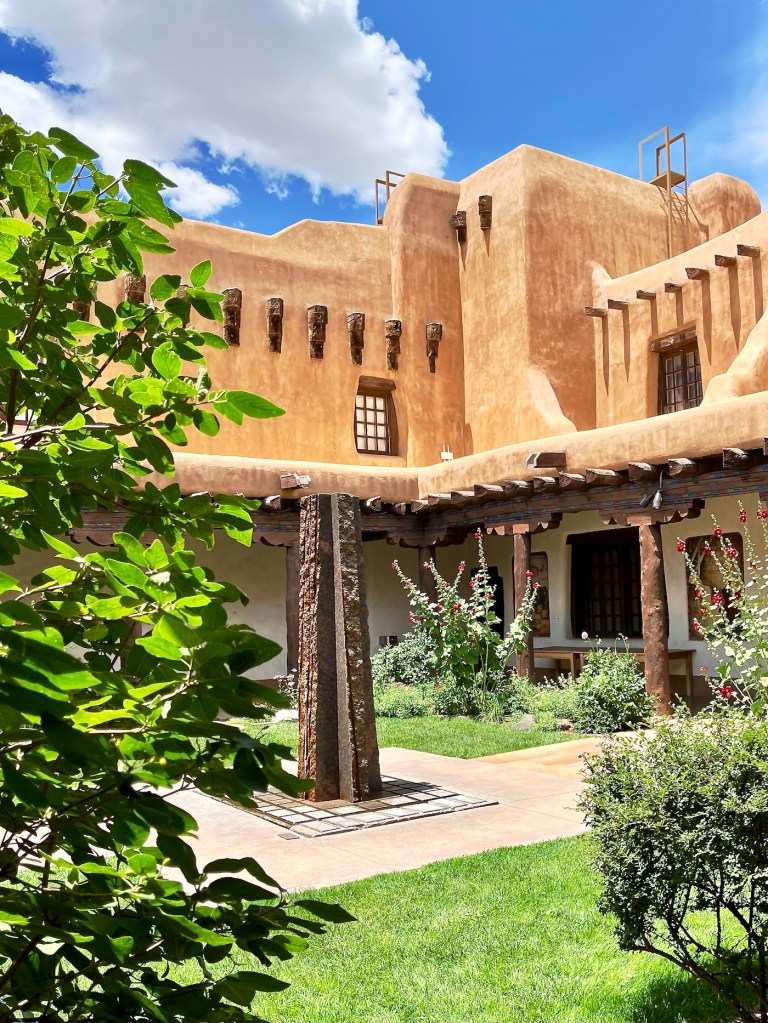
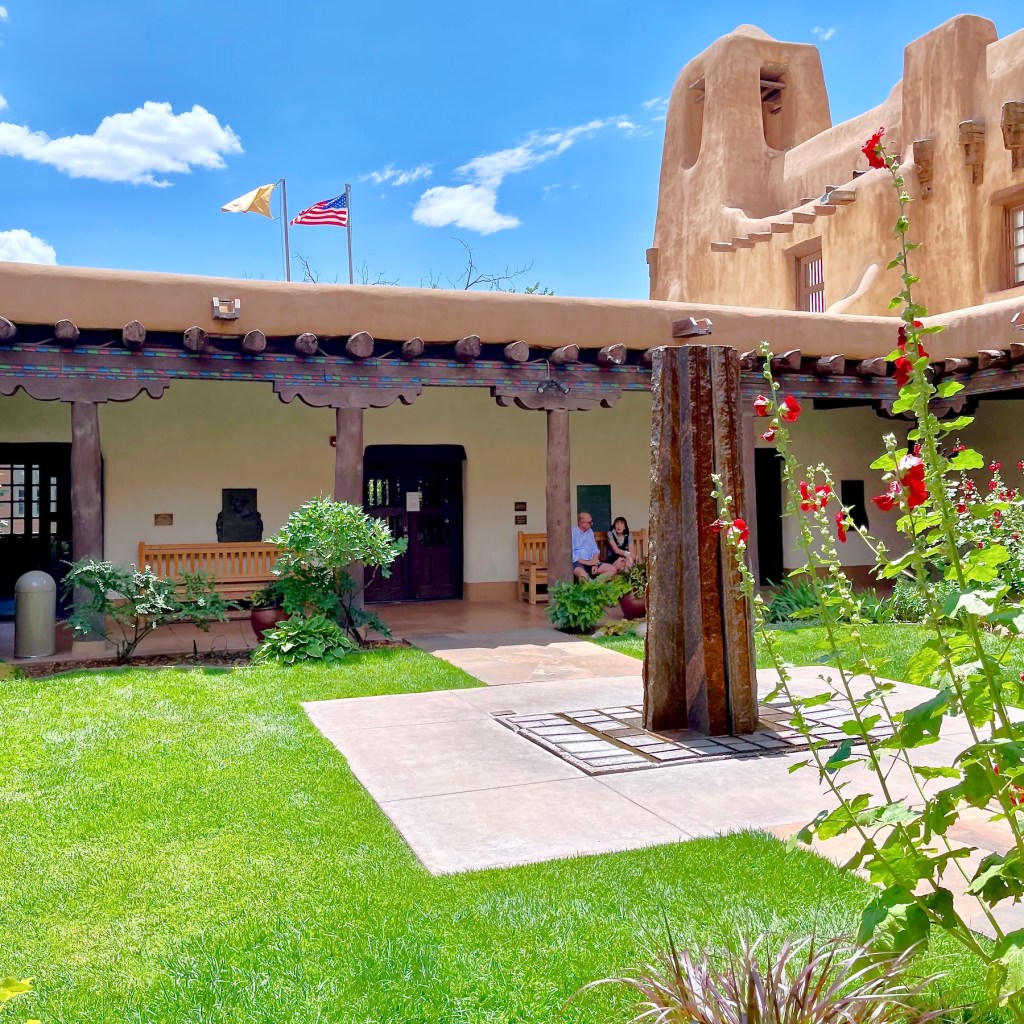
In the central courtyard of the museum, I was anxious to see if an installation by Charles Simonds, *1945, was still there. I had fallen in love with his miniature cliff dwelling of an imaginary civilization at my last visit, and I was curious about its condition a decade+ later. You’ll understand better when you read the plaque next to the installation, and also review the older post.
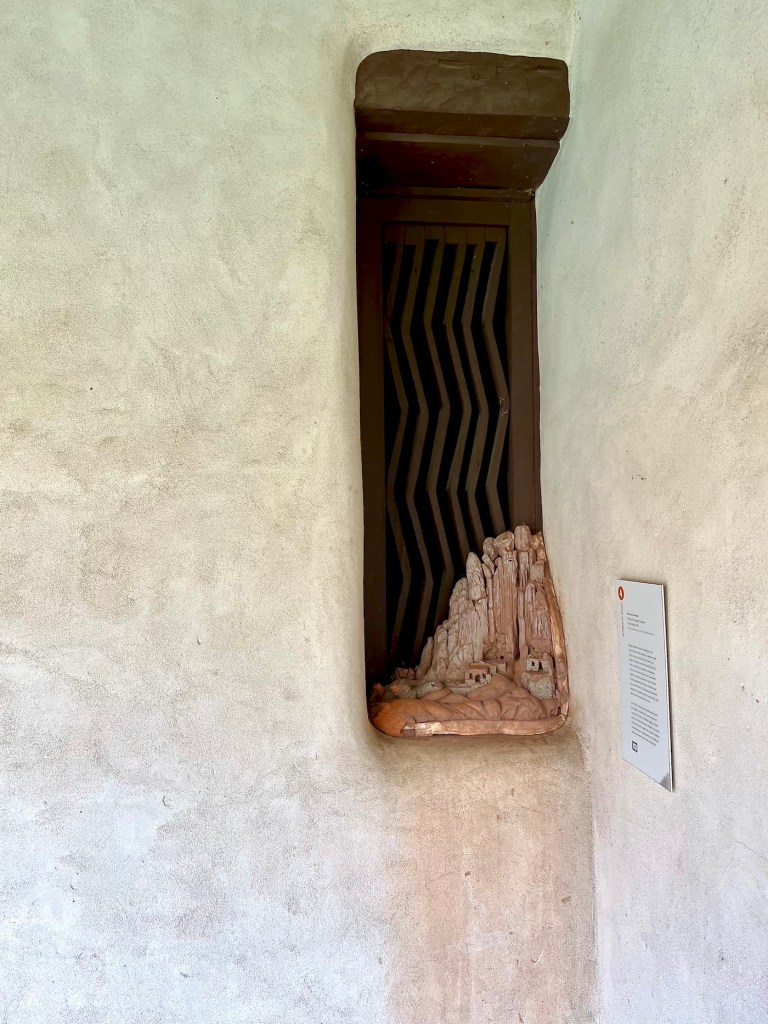

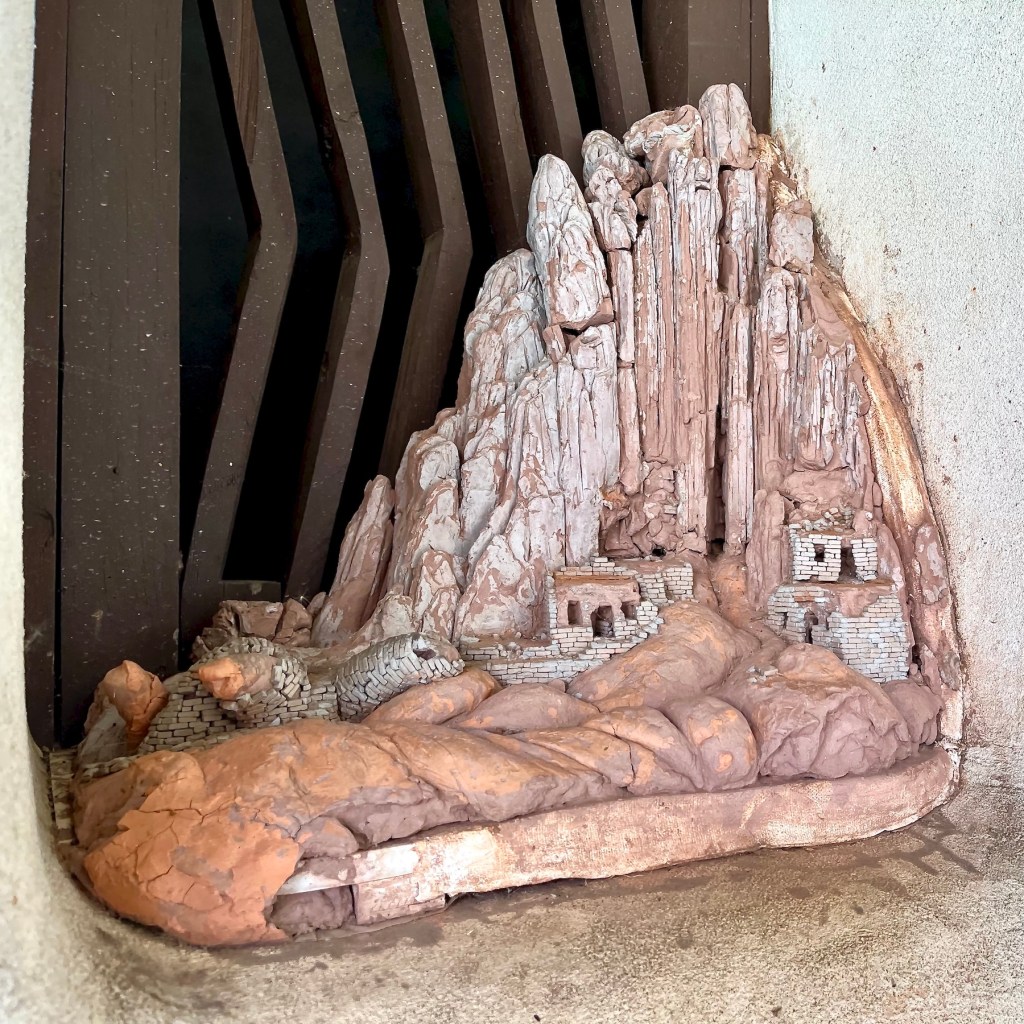
I was happy to see that Simonds’ cliff dwelling held up pretty well.
Inside the museum, I didn’t have as much fun as last time. It began innocently enough with a few galleries showcasing beautiful, traditional Pueblo art in tranquil displays.
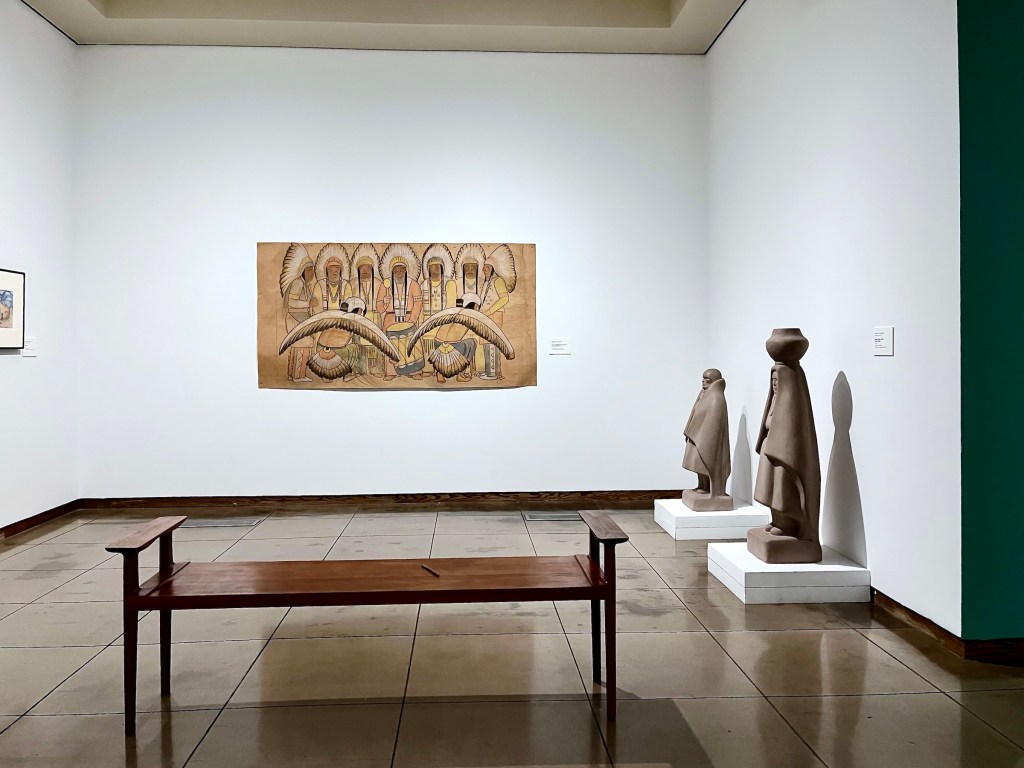
However, the majority of the space at ground level was given over to a temporary exhibition of works related to, but not necessarily created by, the American modernist sculptor and painter Eugenie F. Shonnard (1886-1978), who is quite highly regarded, I believe. While she lived in France, she studied under Alphonse Mucha and Auguste Rodin. The curator of the Shonnard exhibit included several of the famous Mucha posters in his over-the-top Jugendstil, as well as some Rodin pieces, and a few works by other artists somehow related to Shonnard. Oddly, it appeared like a group show without a common thread. Shonnard’s own work, both in France and here, embodies largely religious art and community-related statuary, none of which spoke to me. What I found intriguing, though, was something Shonnard developed and called Keenstone:


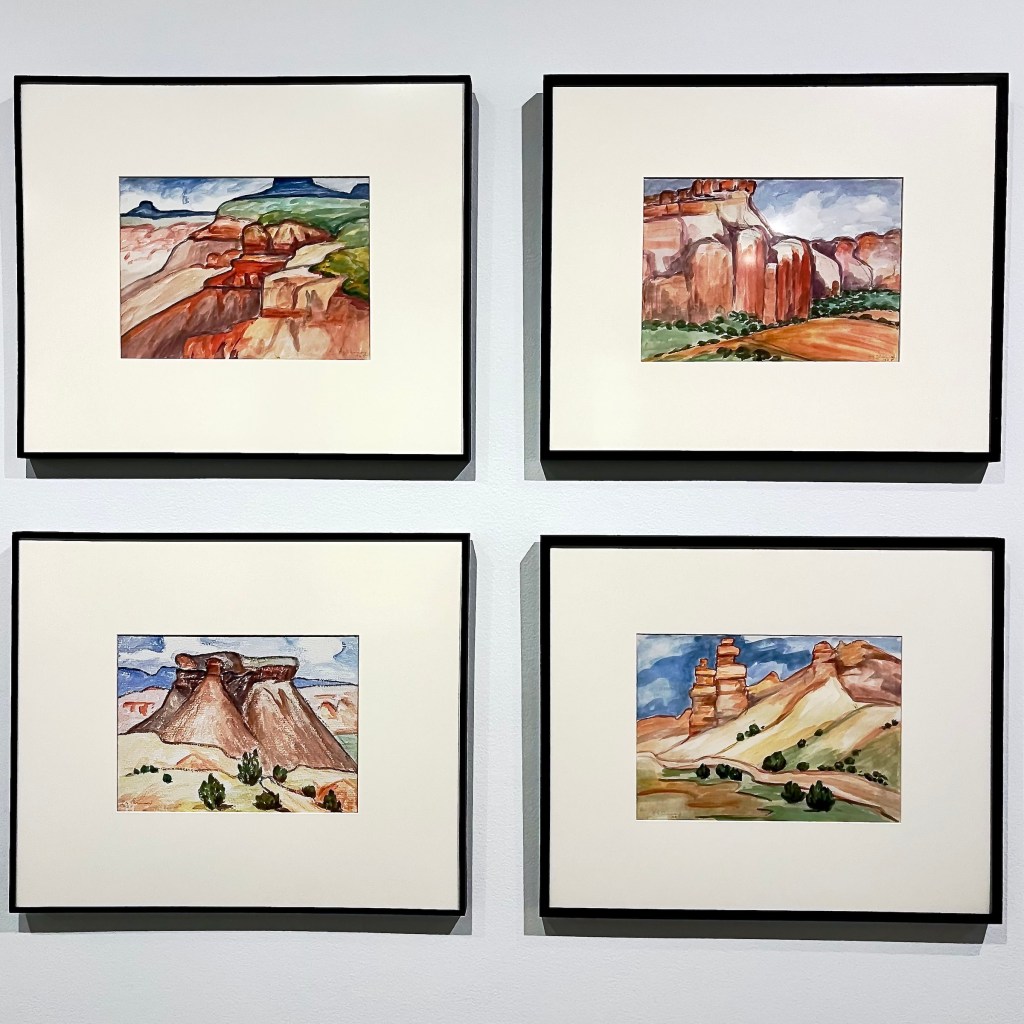
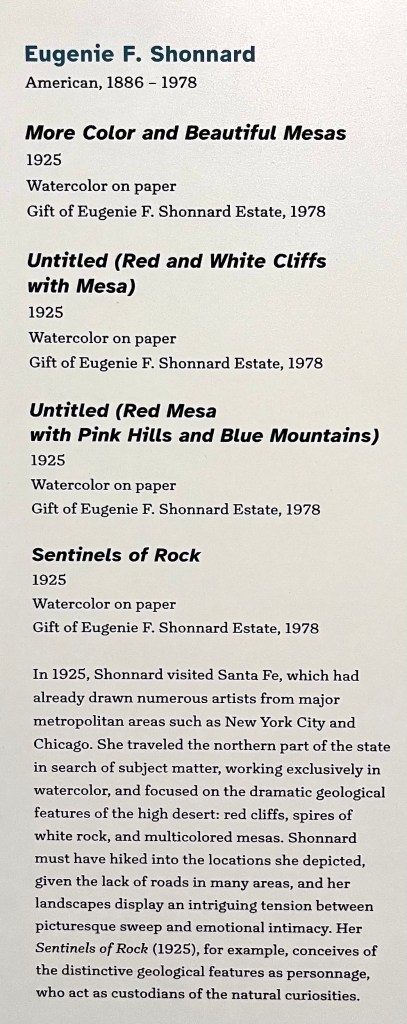
Upstairs, my slight disappointment continued, not because of the art that was there but the art that wasn’t there anymore. The museum’s inside spaces are as exceptional as its outside appearance. Here, the Pueblo Revival architecture displays the typical New Mexican vigas (beams) and latillas (laths) ceilings, accentuated by carved corbels, lintels, and other doodads. The overall effect of this large museum complex with its colonnaded courtyards and highly decorated rooms is clearly reminiscent of the colonial might of the Viceroyalty of New Spain, when Governor Pedro de Peralta renamed the settlement La Villa Real de la Santa Fé de San Francisco de Asís, or the Royal Town of the Holy Faith of Saint Francis of Assisi.
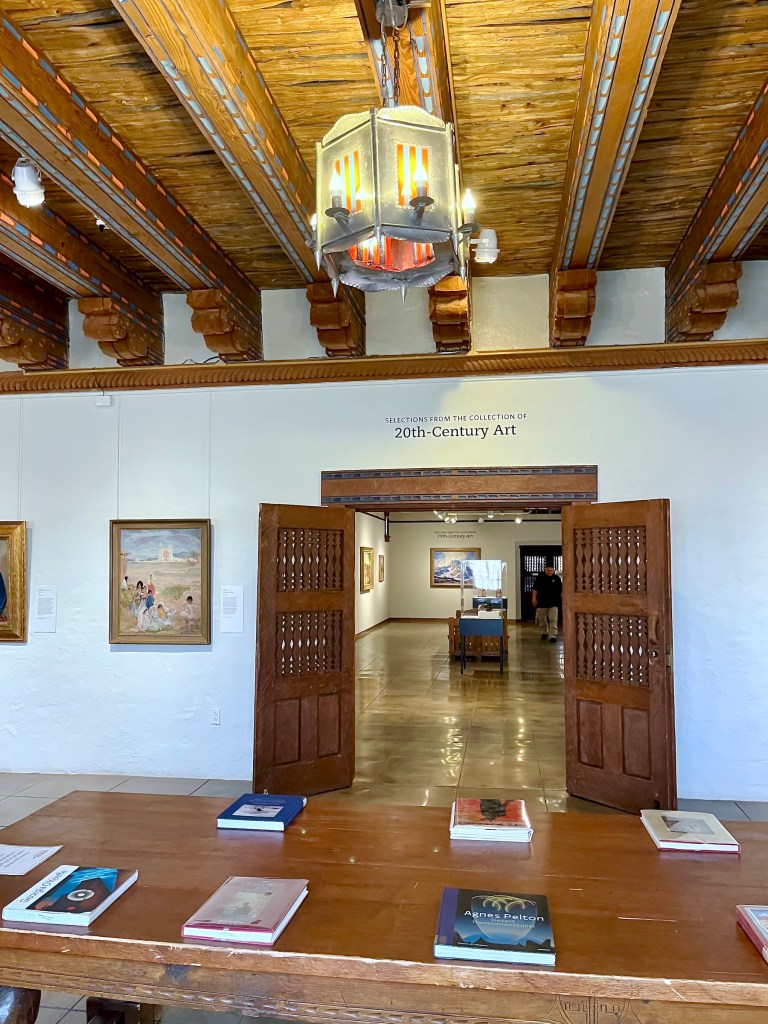

During my previous visit, I enjoyed the juxtaposition of strikingly contemporary artworks set against this history, which was such a cool experience. But a couple of years ago, the Vladem Contemporary Annex of the New Mexico Museum of Art opened in the hip Railyard neighborhood. So, no more fun surprises behind these traditional walls.
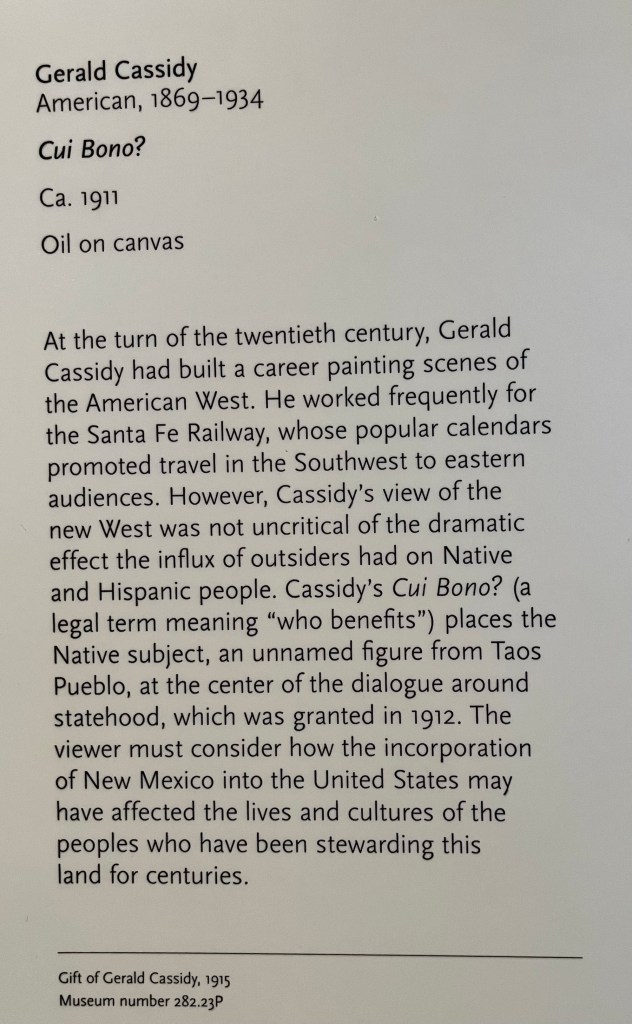
Some old friends are still on display, though. Above all, one of the most important political paintings of its time, “Cui Bono” by Gerald Cassidy, 1869-1934.
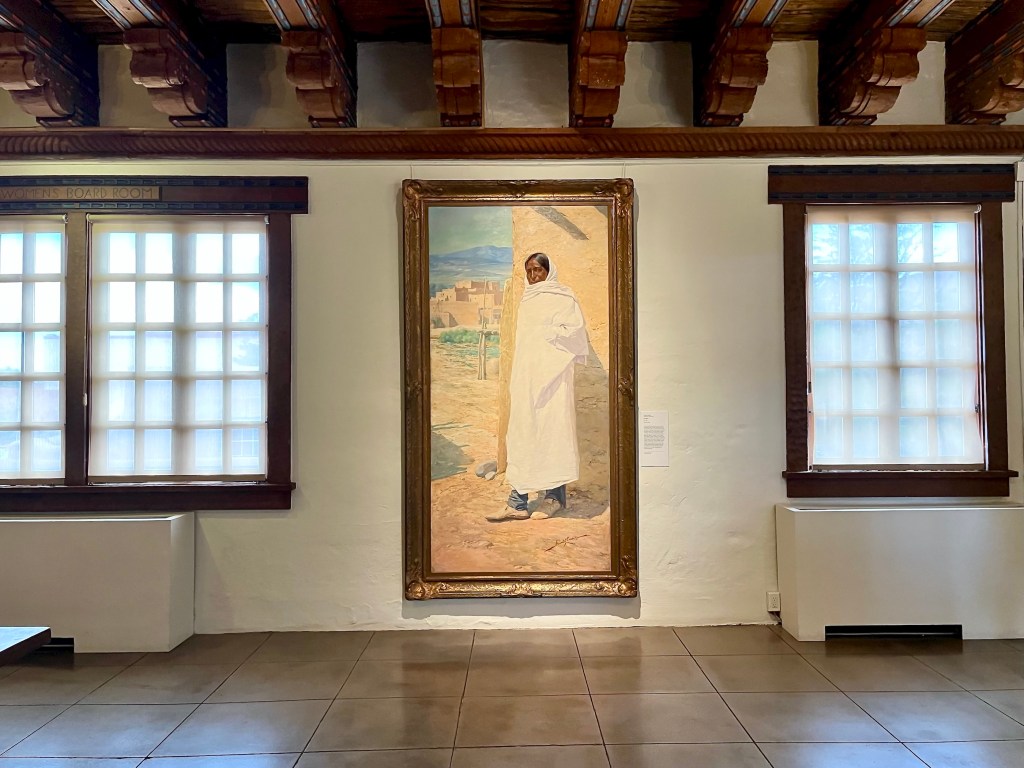
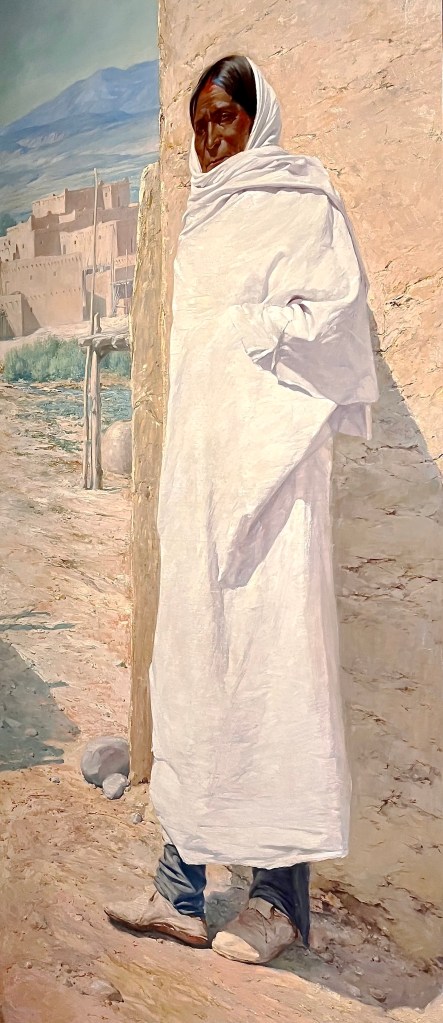
You can read some of my thoughts on the horrible idea of Manifest Destiny in the older post linked above.
It was a delight to study a selection of the Museum’s Collection of 20th Century Art. The curators did a fabulous job of including a mini-lecture with each artwork that explained the artist’s motivation or intent, plus the usual technical data. I’ve set the images I wanted to show you side by side with these statements.
Please remember, except for the single images, the paired or grouped images are clickable for enlargement!

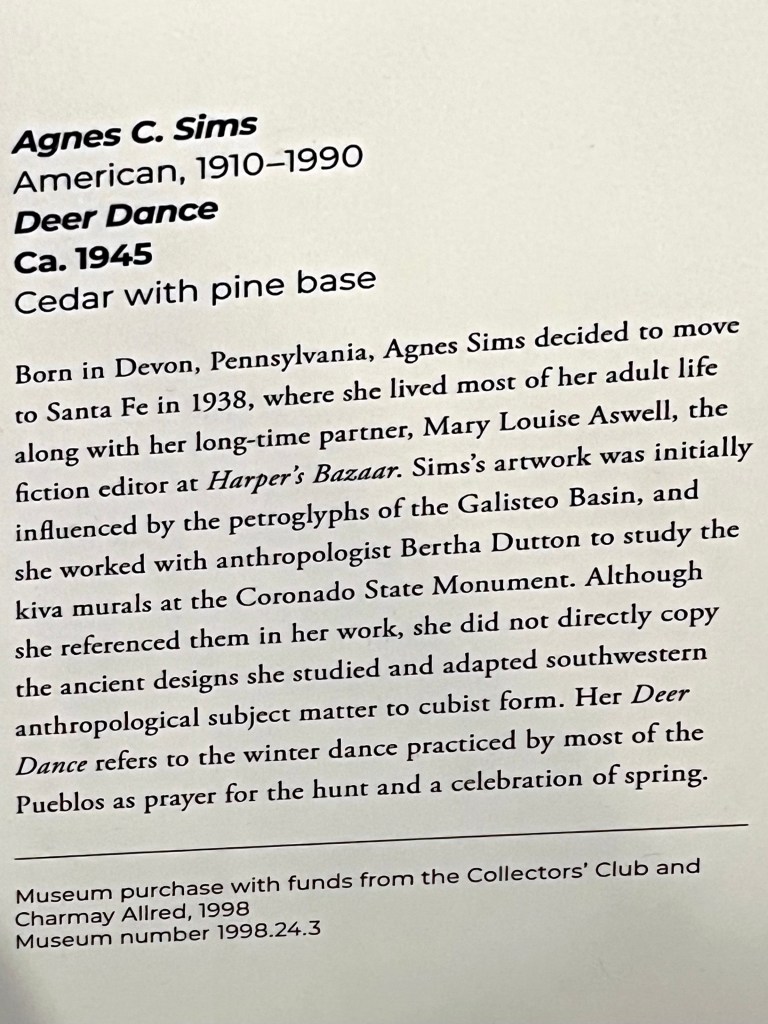
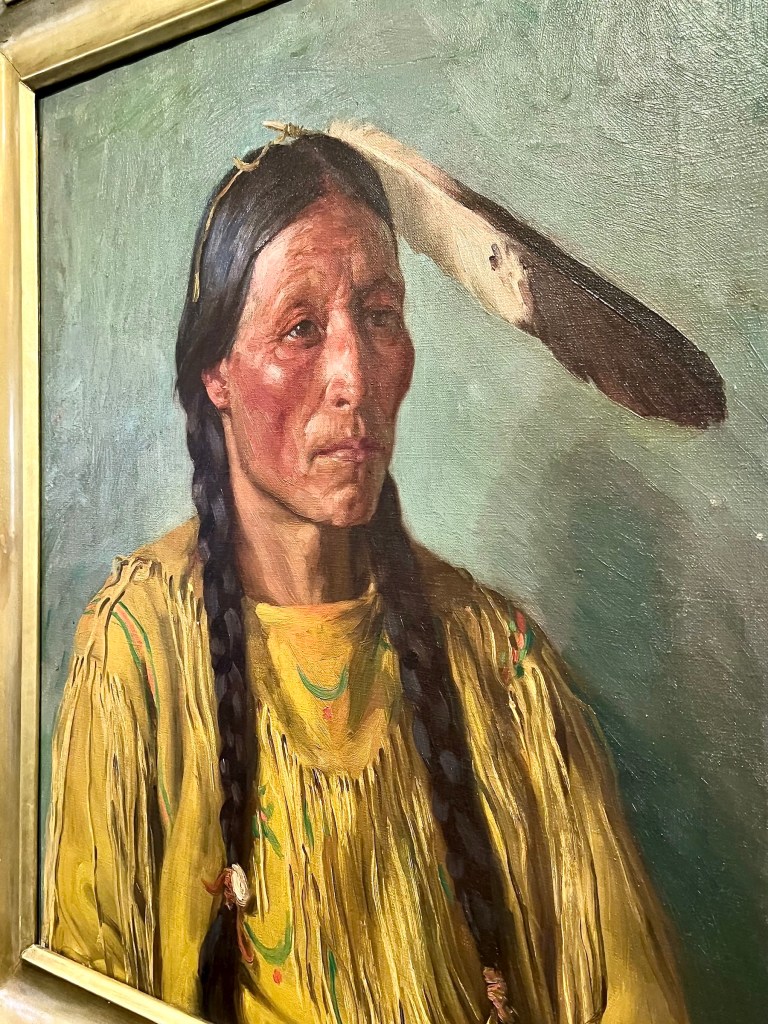

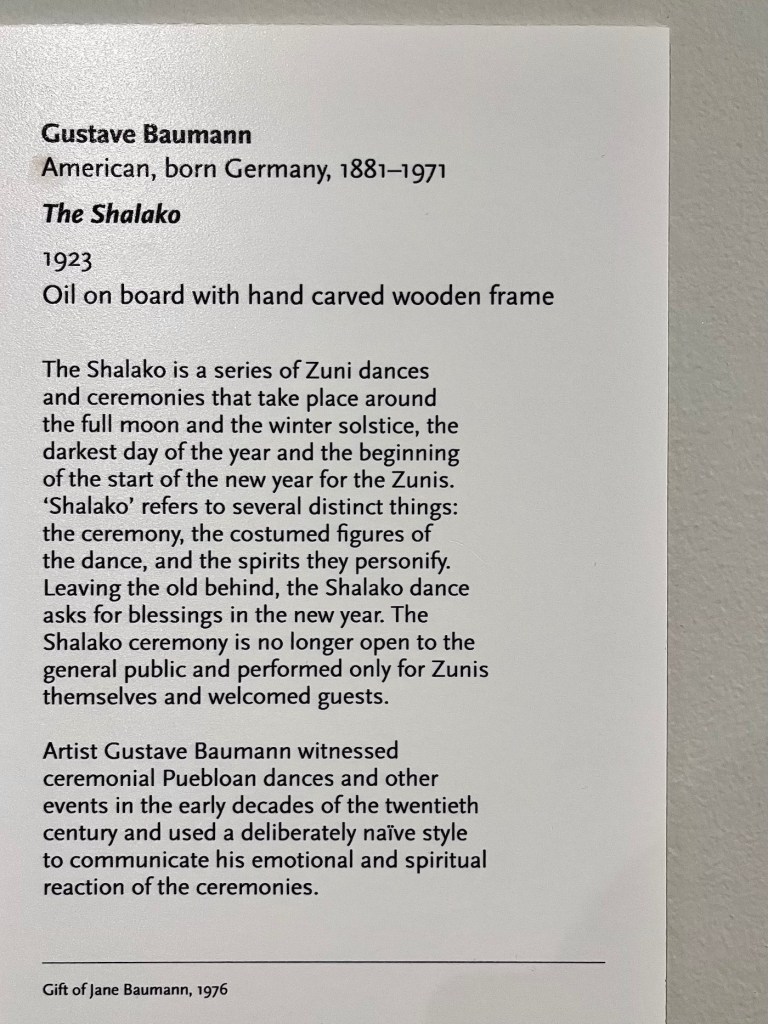
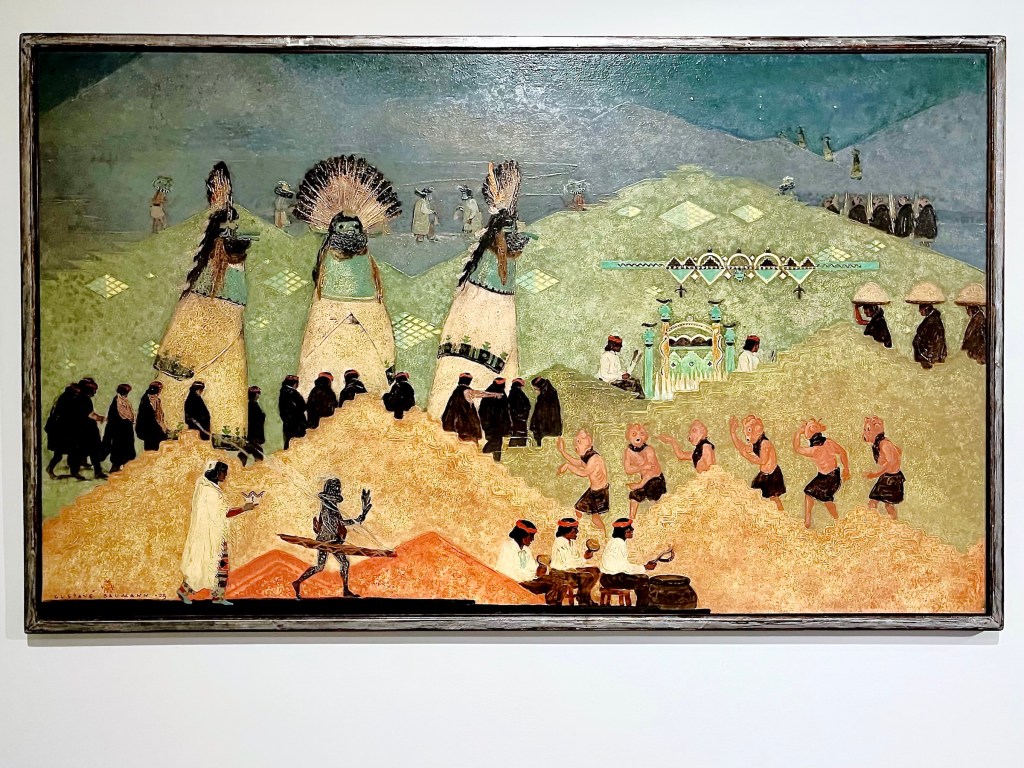


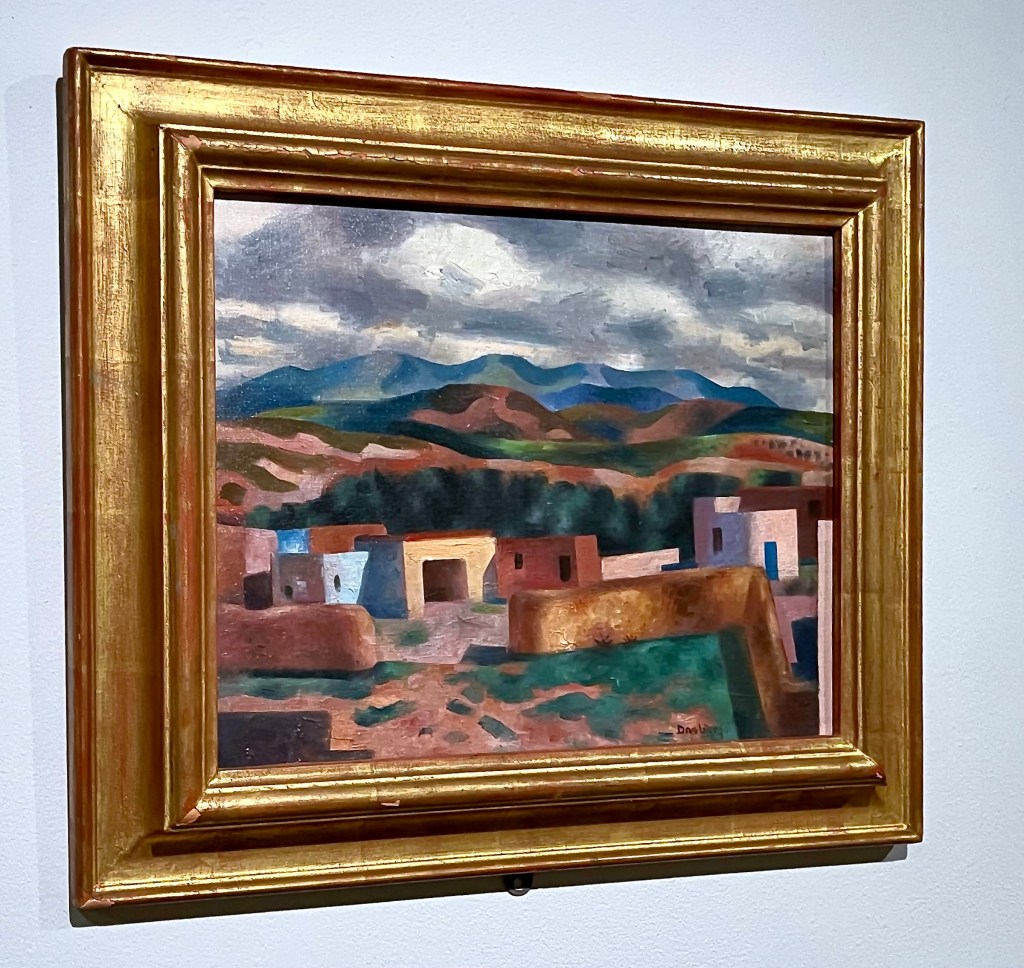
And lastly, my expressionistic surprise, “Gray Day in the Mountains” by Sven Birger Sandzén, 1871-1954, sometimes called The American van Gogh, of whom I had never ever heard, not even a whisper. https://en.wikipedia.org/wiki/Birger_Sandzén
My appreciation of the strong, almost sculptural brushstrokes often associated with expressionism came fairly late to me. The initial flame was ignited during a special exhibition in Chicago, which paired van Gogh and Gauguin paintings. I remember the show was very popular, making timed tickets necessary. It was winter, and the Art Institute was overheated and stuffy, with patrons in heavy overcoats crammed into the galleries like commuters into subway cars during rush hour, despite the staggered entries. But when Vincent van Gogh’s late paintings came into my view, none of these trifling discomforts mattered anymore. All negativity was replaced by slack-jawed amazement, by pure admiration. Birger Sandzén’s Gray Day didn’t have quite the same impact on me, but it was a great pleasure to get to know his painting.


And just for the fun of it, I’m adding this photo. Simply because I like the multiple reflections.

By now, it was high time for a lunch break. Here’s the view from our table at the Palacio Restaurant. I enjoyed their unusual Cuban Reuben Sandwich, loaded with both Cubano and Reuben ingredients on panini-grilled Jewish rye, delicious!


 NOT IN A STRAIGHT LINE by Photolera Claudinha
Very nicely done, as usual.
Dr. Barry N. Leon
707 Cardinal Lane, #A1 Austin, TX 78704
USA
On Fri, Jul 18, 2025 at 4:39 PM NOT IN A STRAIGHT LINE by Photolera
LikeLike