Before we delve into Kyoto’s temples, shrines, castles, sakura, and other assorted highlights, I want to record an incident that happened the day we arrived at the Kyoyado Usagi, the Rabbit Inn in Kyoto, our home away from home for the next two weeks.
My husband has been wearing hearing aids for a while. While we were still in Arima Onsen, the silicone dome of his left device slipped off its mooring and remained lodged in his outer ear canal. I tried to fish it out, but it wouldn’t budge. This has happened once or twice before. However, back then, his original technician fixed it for him. But that was in France, not in Japan, where we didn’t know anyone. The rental manager suggested a nearby emergency clinic, but it turned out to be closed. So we contacted the only other person we could think of, our future tour guide. A person we had never even met yet.
Now I must backtrack a little bit. Long before embarking on this trip to Japan, we had made arrangements for private guided tours with volunteer guides through an organisation called Systematized Goodwill Guides (SGG), affiliated with the Japan National Tourism Organisation (JNTO). We had registered with the Kyoto SGG Club and were scheduled to meet with two different guides to see specific sights in the city. These guides are (usually) retired professionals who enjoy interacting with foreign tourists to enlighten them about the culture, history, and traditions of Japan. The organisation matches guests with guides, and a safe conversation ensues through their website. We were booked to meet our first guide, Nakajima-san, a couple of days hence.
My husband sent her a message asking if she might know whom we should contact for this problem. Nakajima-san, in turn, called one of her friends, Shindo-san, whose husband is a patient at the Kuriyama Ear, Nose & Throat Clinic, which is located in our neighborhood of Kyoto. Shindo-san took over and saved the day.
We were supposed to meet Shindo-san at the north gate of Shinsen-en, a little after 6 PM. By then, it was already dark. Did I mention that it rained like hell that day? We tried to hail a cab, but as it is in every town the world over, when it rains, you can’t get a taxi, period. So we hoofed it through the pouring rain for about 1.3 clicks North. You have to picture this in your mind. Three elderly figures moving through the rainy night. The shortest and most lithe one in the lead, legs pumping at a rapid pace, followed by the tallest, holding up a totally ineffective umbrella. The rear was formed by the limping one with a metallic blue walking stick. All three of us hurriedly hobbling alongside the moat of Nijo Castle while the blinding headlights of oncoming traffic reflected in the deep puddles we sloshed through in our haste, arriving at the doctor’s surgery drenched to the skin, where we experienced a new facet of everyday Japanese life.
As you arrive at a place of business like this, you take your street shoes off and don the provided slippers before entering, in this case, the waiting room. Should you need to use the bathroom, you leave your slippers just outside the toilet door and slip on the “toilet slippers” waiting inside. One never ever uses the same slippers in a toilet that are used all over the floors of a home or office. Lesson learned!
Shindo-san didn’t leave us there, no, she waited with us, till the pesky silicon dome had been extracted. Then she actually walked back with us to get us home safely. We were strangers from a faraway country, yet she selflessly, and dripping wet, took care of us.
And the story doesn’t end here.
Shindo-san, who meanwhile had become Masako-san, told her husband Yohji-san about us. Yohji-san, himself a retired professor of chemistry at Kyoto University, then mentioned us to his friend and colleague, Prof. Emeritus Yoshiya Iwai, the former head of the forestry department, whose family owns a forest of Kitayama cedars in the fourth generation. In the Iwai Forest, they specialize in the art of daisugi. Iwai-sensei agreed to Yohji-san’s proposal to take us out to the Iwai Forest, and he very kindly invited us for a visit to his operation in Nakagawa village, just north of the city.
We were delighted and felt honored by this invitation. Simply put, we couldn’t believe our good fortune to be asked to spend time with such remarkable persons. Naturally, such an invitation also opened the pressing question: What do we bring? One wants to give something related to home, but the things we did bring were for specific guides, like Nagajima-san and her colleagues. Oy vey, what to do?
Trying to find something American, we carefully checked our gigantic LIFE supermarket around the corner, where we purchased two bottles of Maker’s Mark® Kentucky Straight Bourbon. It’s genuinly US made, highly rated, and the bottles are capped with a very distinctive red wax seal that’s not sported by any other liquor bottle. That was the first step. Next, we looked for furoshiki cloths to wrap the bottles, which is the traditional way of wrapping presents in Japan. At the Kyoto Handicrafts Center shop, we stumbled across the cutest samurai-trousers-bottle-wrappers. Perfect, wouldn’t you agree?!

On the day of our forest adventure, Masako-san and Yohji-san picked us up, and the four of us walked to the bus station, carrying our backpacks and a large tote bag with lunch supplies that the Shindos were providing. When the regional bus arrived at the bus stop, it was full. Full beyond capacity. Do you recall those pictures of Japanese rush-hour trains where attendants in white gloves push additional passengers into the train? Like that. Our bus driver was very patient and kept urging passengers to pack into the rear of the bus to make room up front. Masako-san said that most drivers would just close the doors and drive away. Since this was the only bus that morning, and there was a major festival in one of the temples on our route, I guess he tried to get everyone to their destination. Piling backpacks on some ledge and smashing ourselves against neighboring bodies, we eventually got going. At each stop, the cluster of passengers closest to the doors had to get off to let departing passengers through, and then board again quickly to continue their journey. It was, to say the least, not especially comfortable. By and by, more people exited the bus than boarded, so we could sit down to enjoy the ride into the countryside.
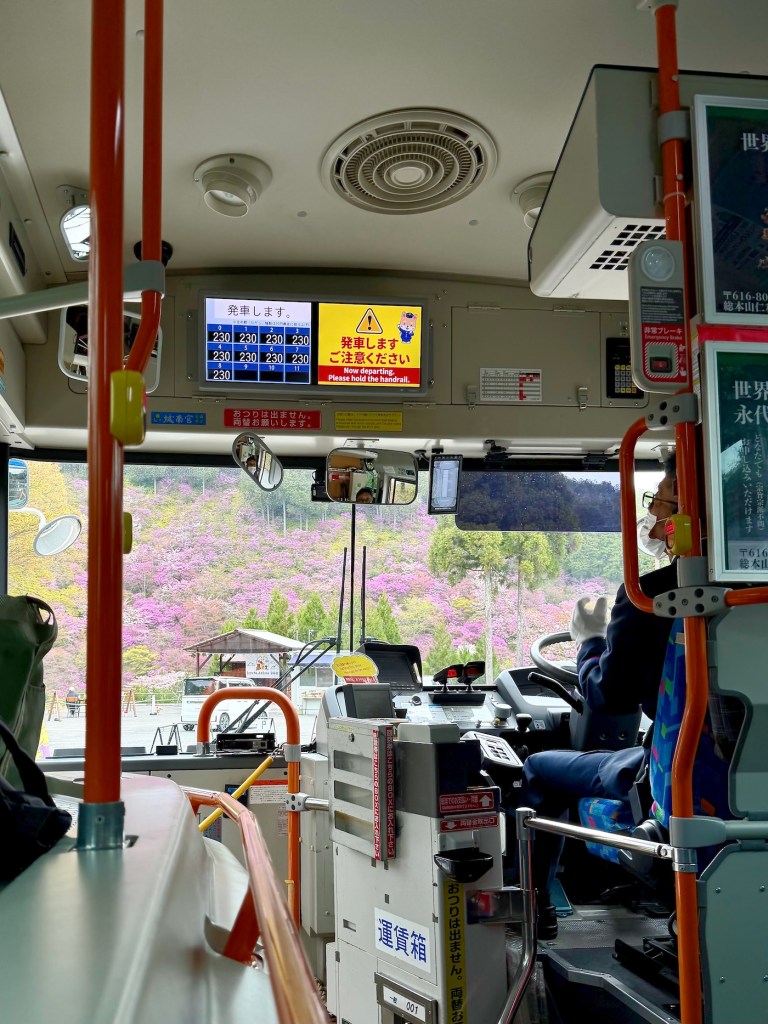
Along the way, “Mother” Masako-san collected another stray and invited him into the fold. He was a solo traveller, an architect from Napoli, Italy. Salvatore joined us happily, glad for the opportunity to see the cedar forests.
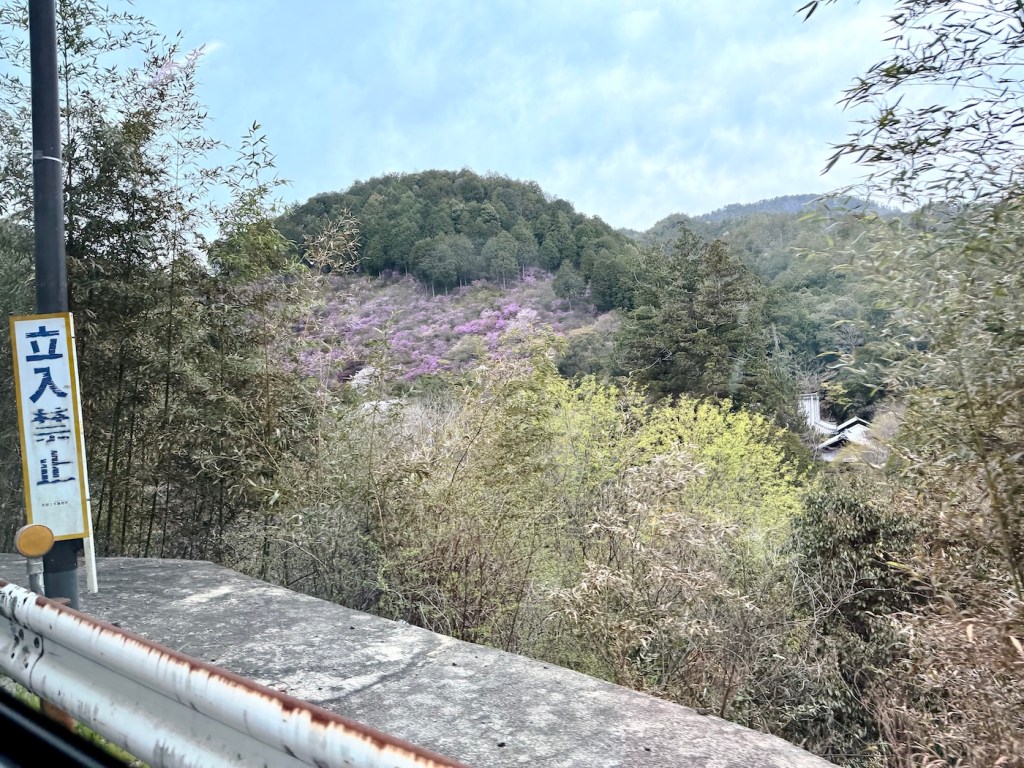
The bus let us off in the village of Nakagawa, in fact, right opposite Iwai-sensei’s home. He welcomed us and asked us to join him inside. Since Iwai-sensei’s wife had already passed on, his two adult daughters were there to assist their father in hosting us. We all sat down around a large coffee table in the reception room. The family very thoughtfully had provided two western chairs for us, so we were spared the embarrassment of trying to sit like proper Japanese persons. The daughters served mochi-type Spring-themed cookies and green tea, while we chatted about this and that, before delving into more serious conservation issues. Owing to several factors, the Japanese forestry industry is in decline. In particular, the continued production of Kitayama Cedars. These cedar logs have traditionally provided the cornerstone lumber for temples, tea houses, theaters, and the prayer niches in traditional houses. The demand for these, on average, 50-year-old, arrow-straight, hand-polished poles has sharply declined.
After tea, we all moved on for a lesson in forestry, in particular, the daisugi growth practices of Kitayama cedar. Daisugi (台杉) relates to cedar trees forming large stumps as foundations for new shoots that grow straight up. The key point is sustainability, because any given foundation or platform tree can grow multiple poles during its lifetime.
Here’s the gang in front of an ancient daisugi foundation tree:
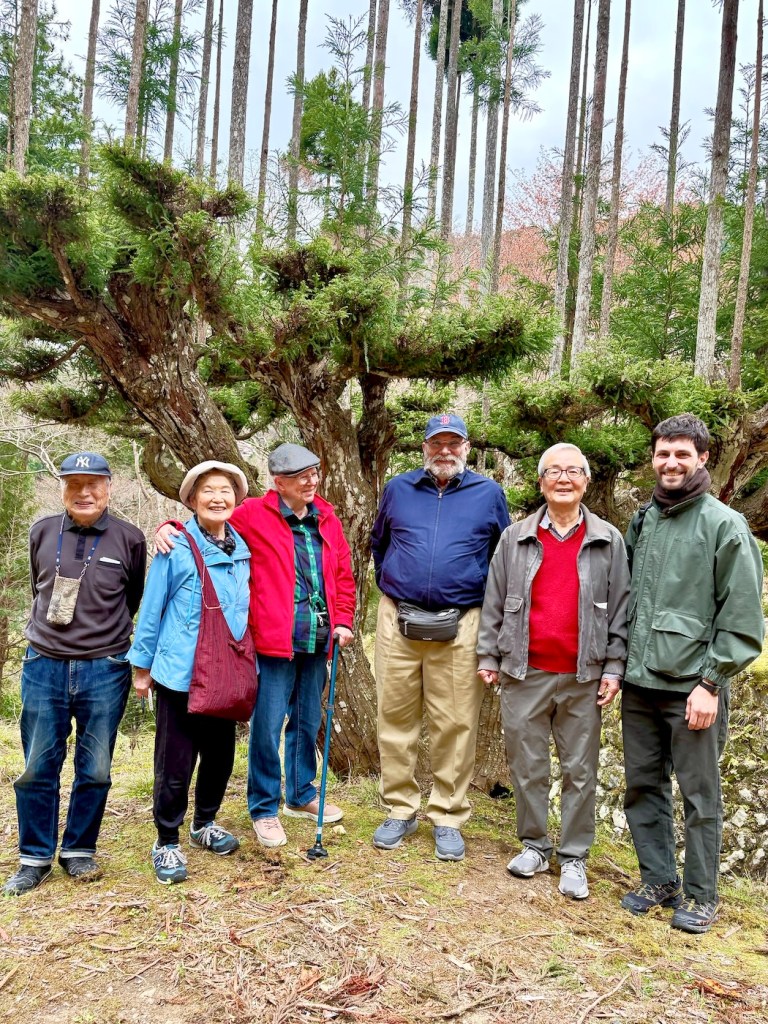
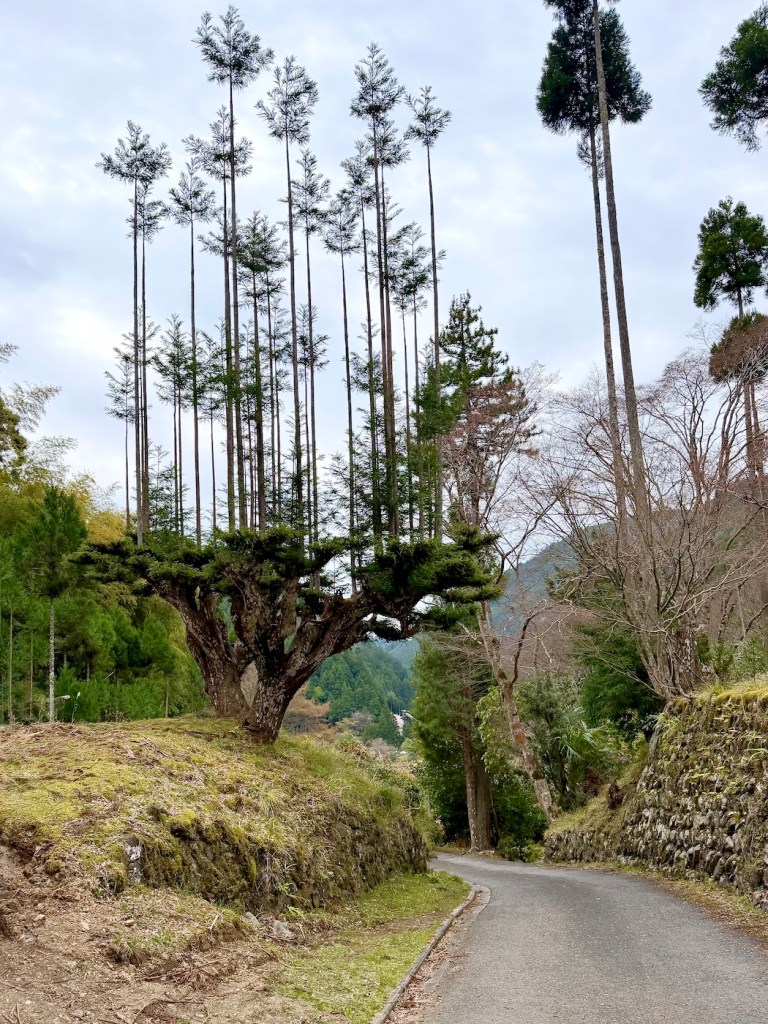
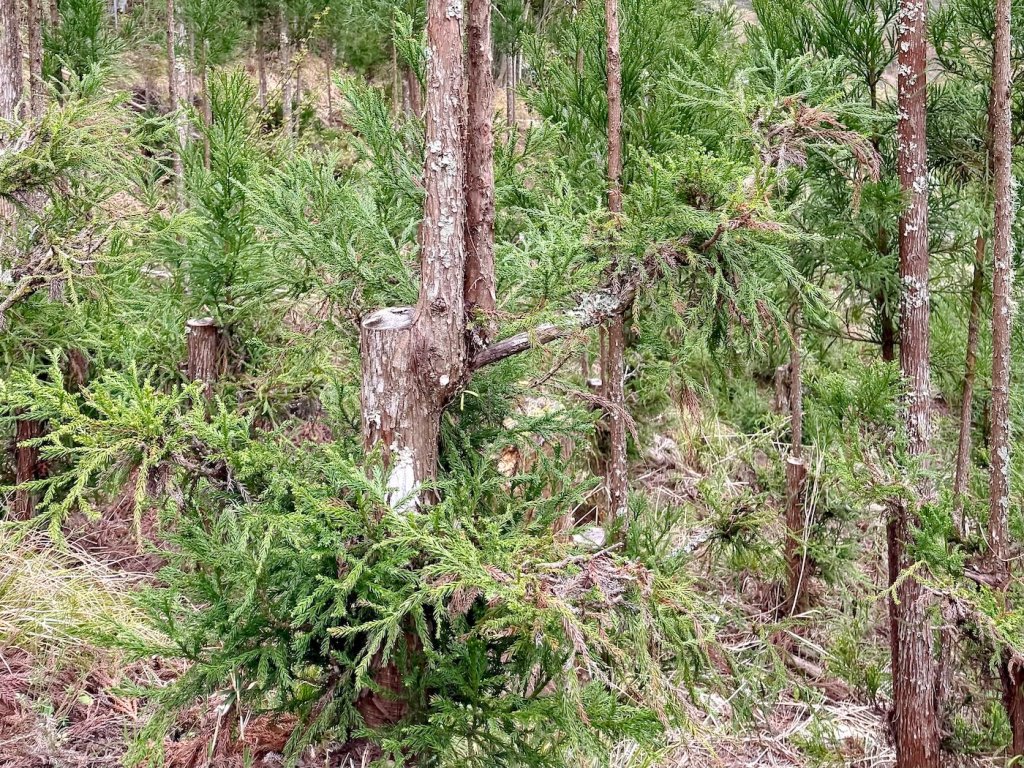
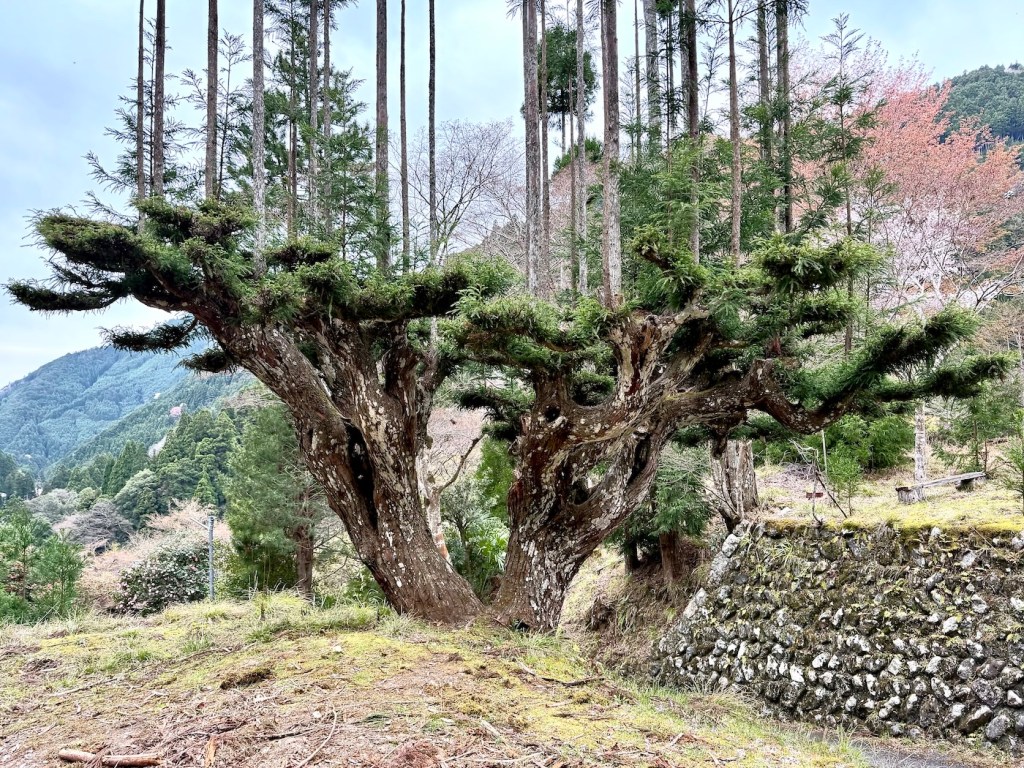
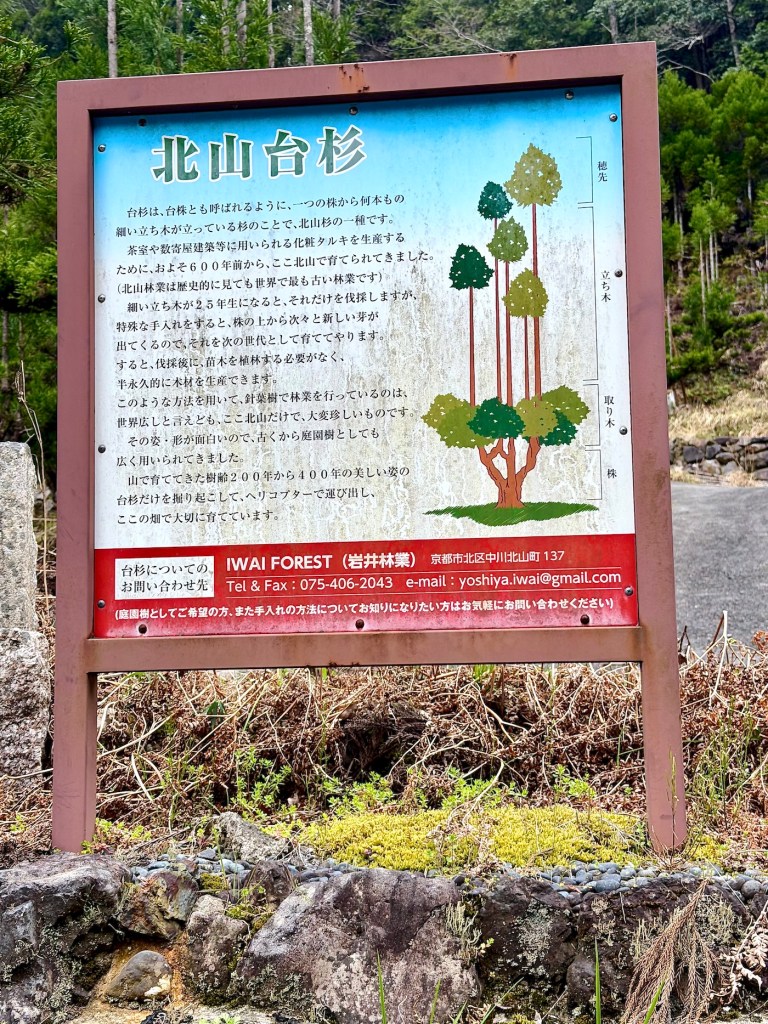
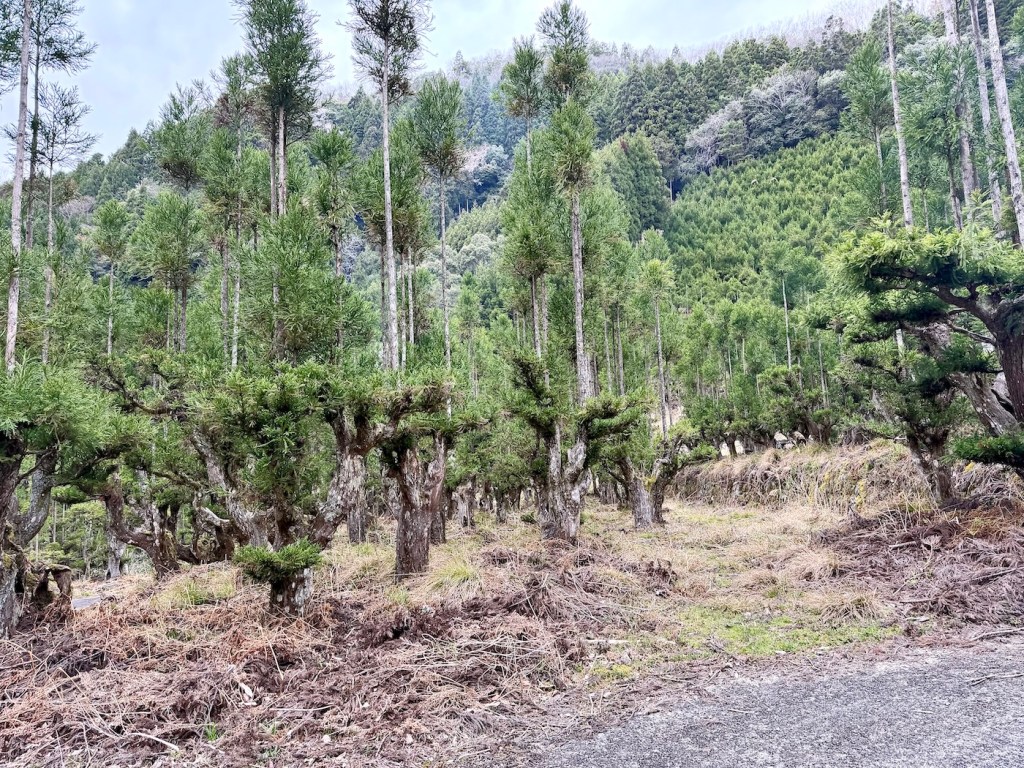
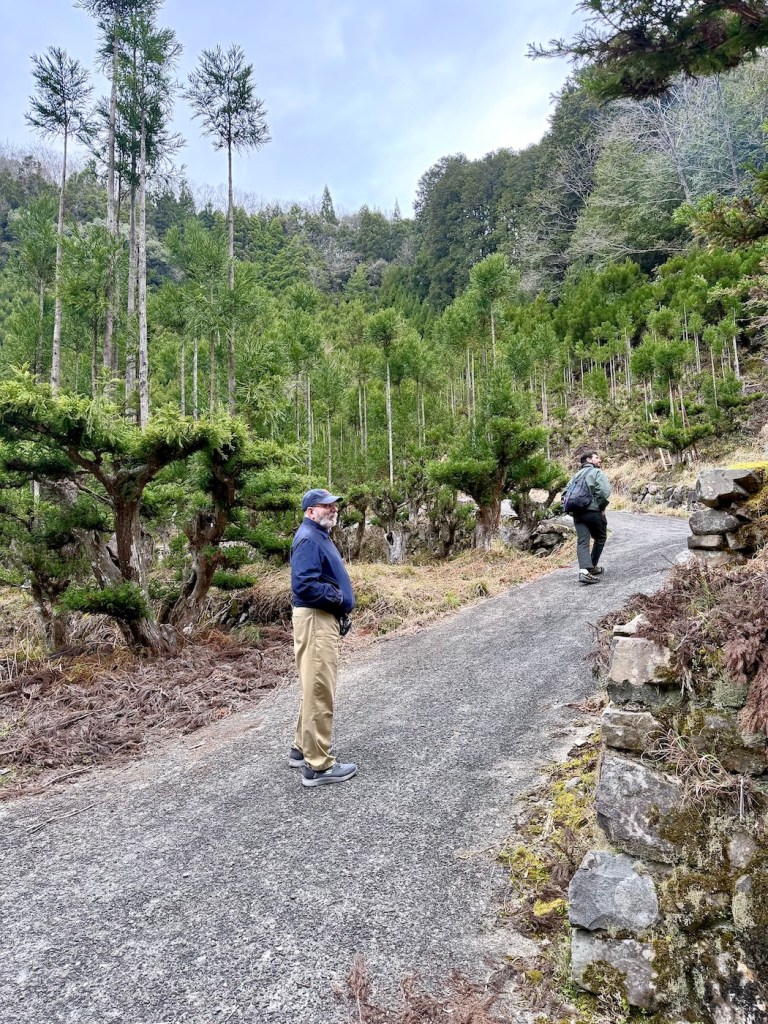
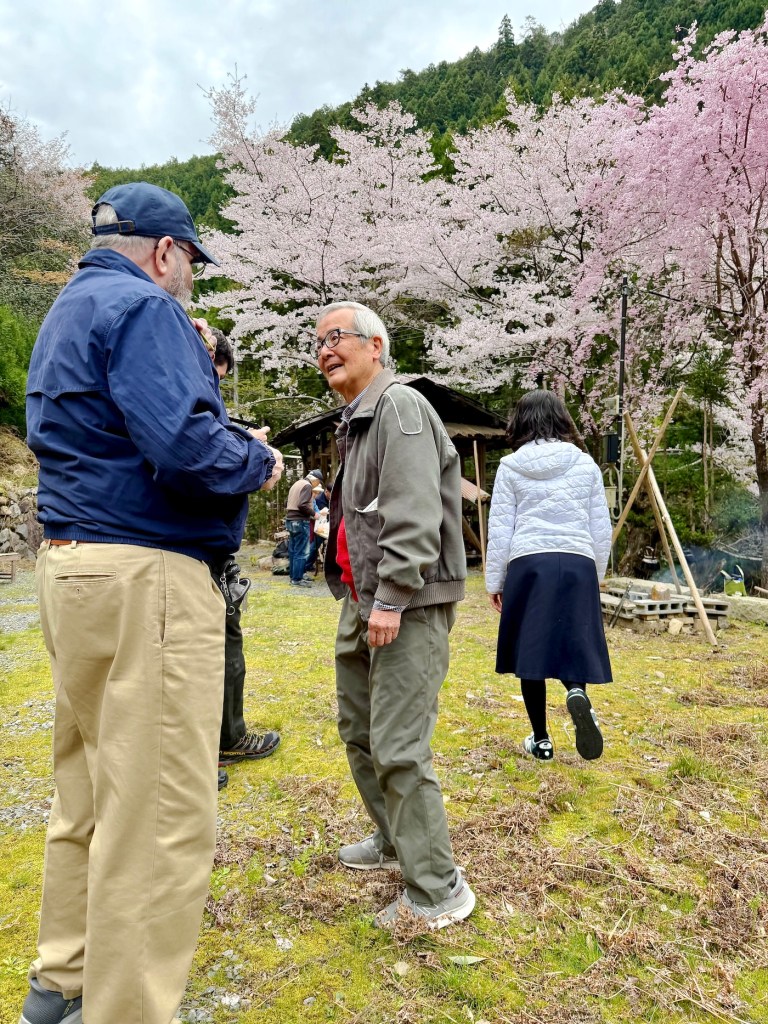
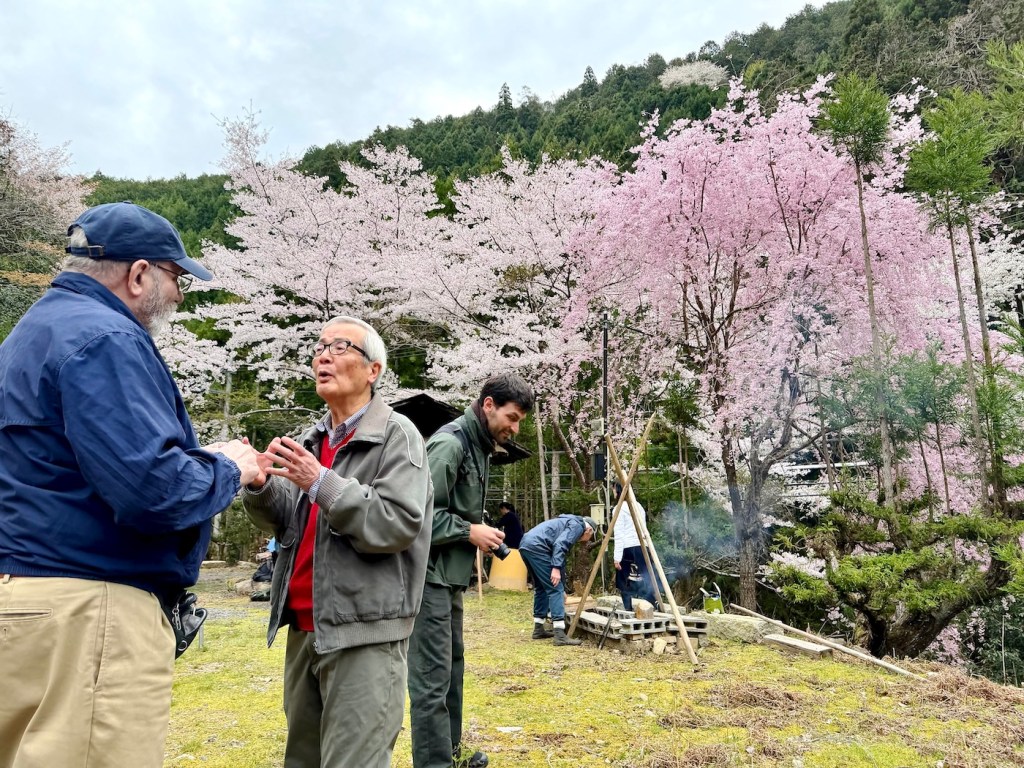
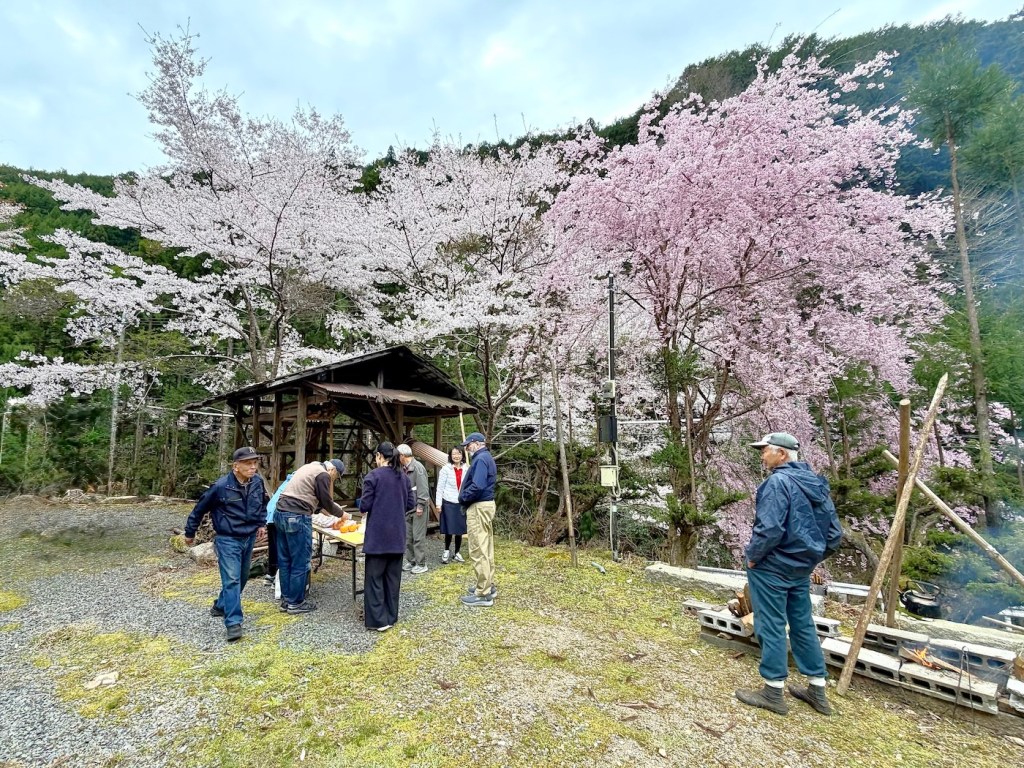
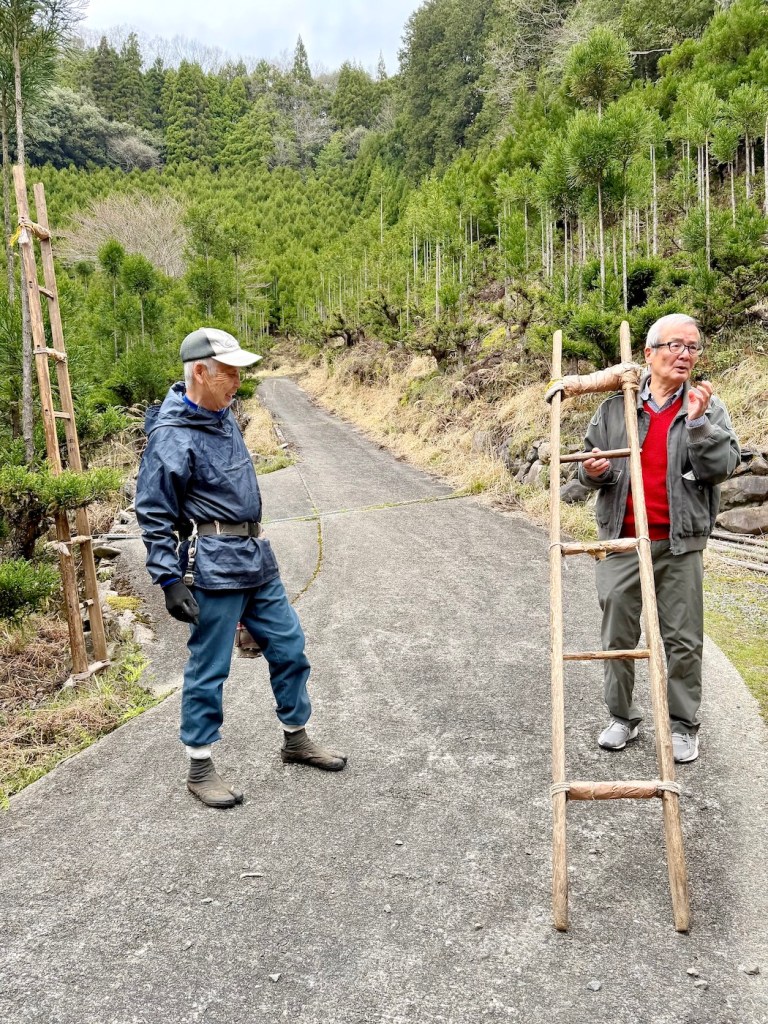
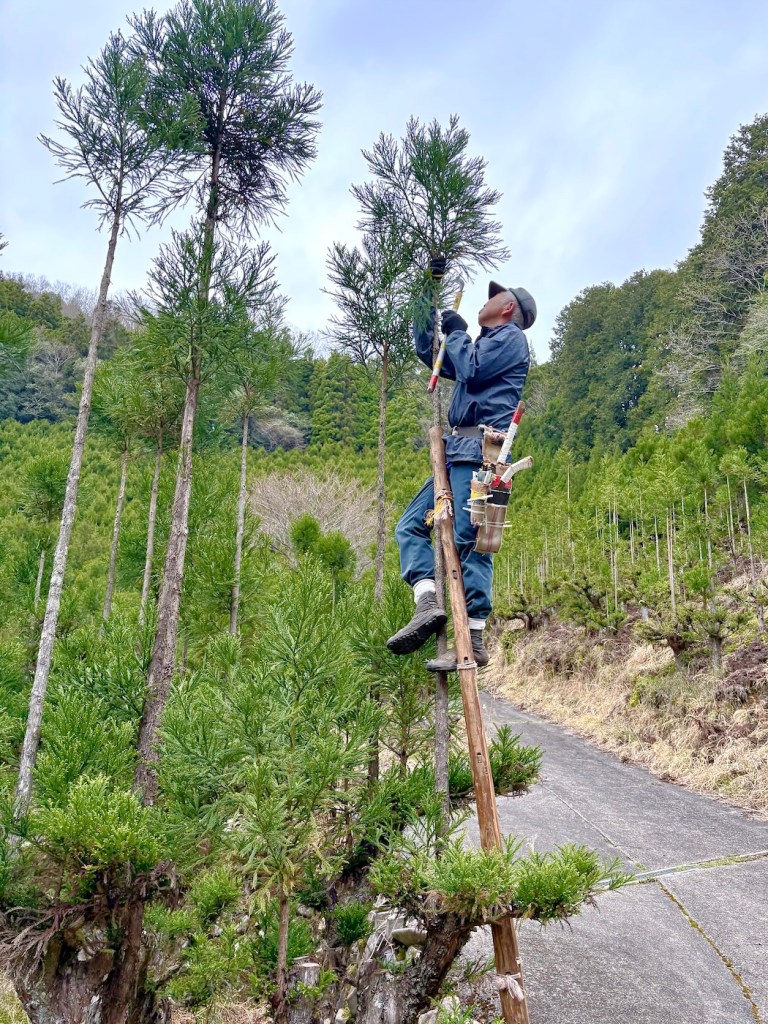
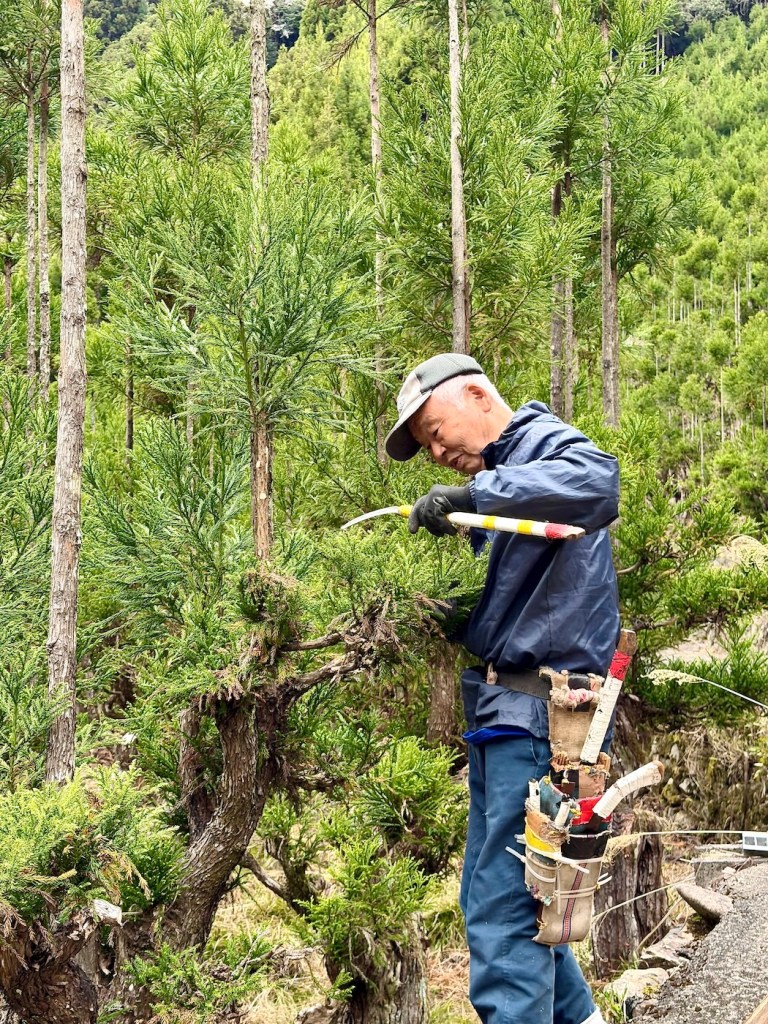
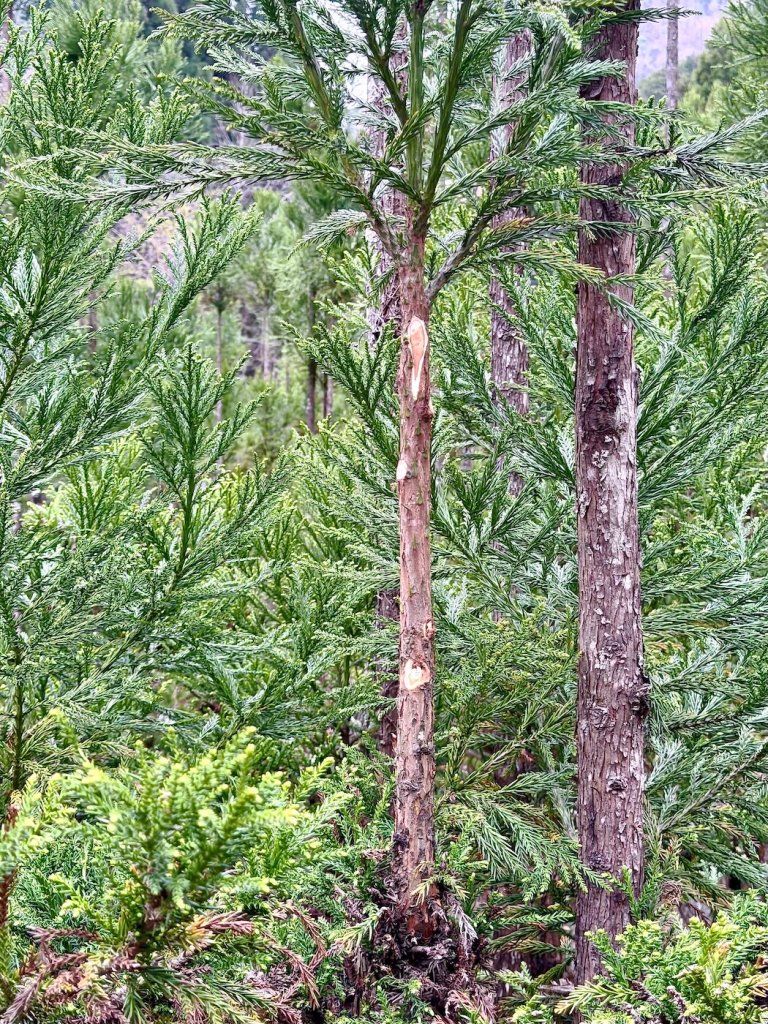
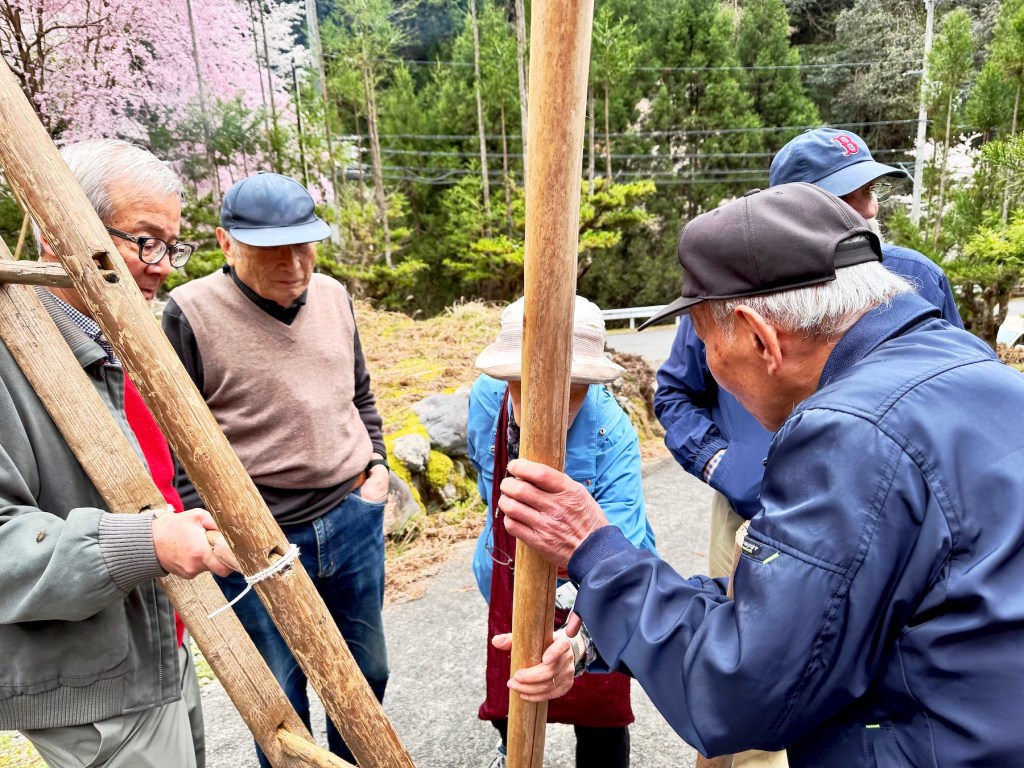
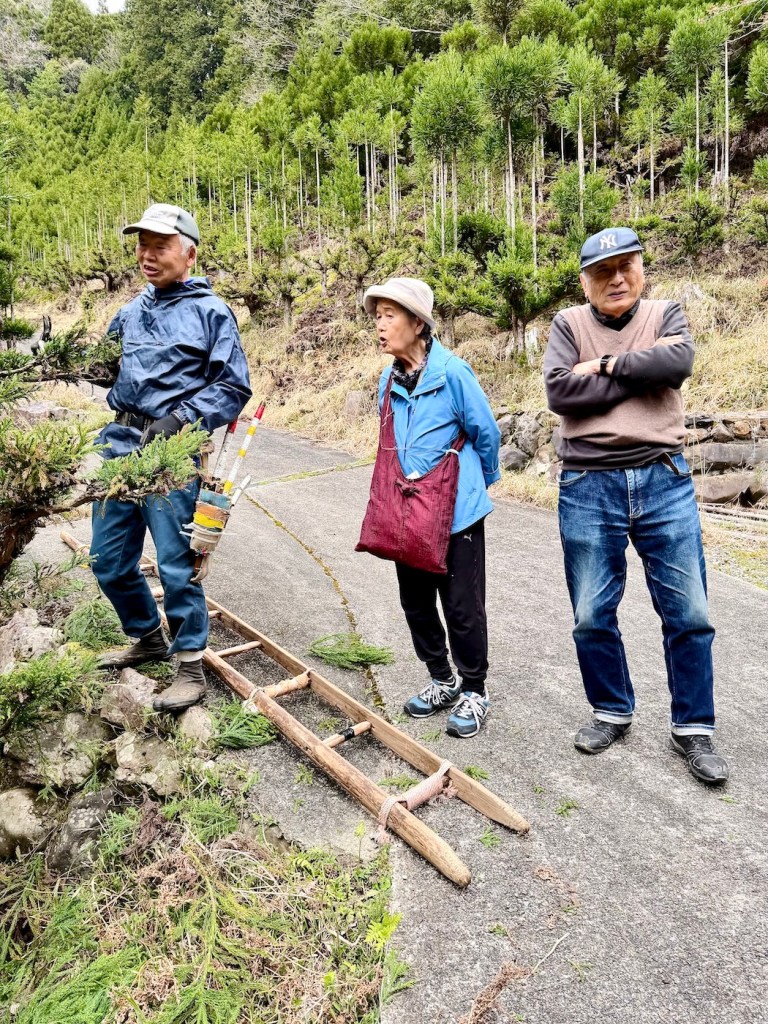
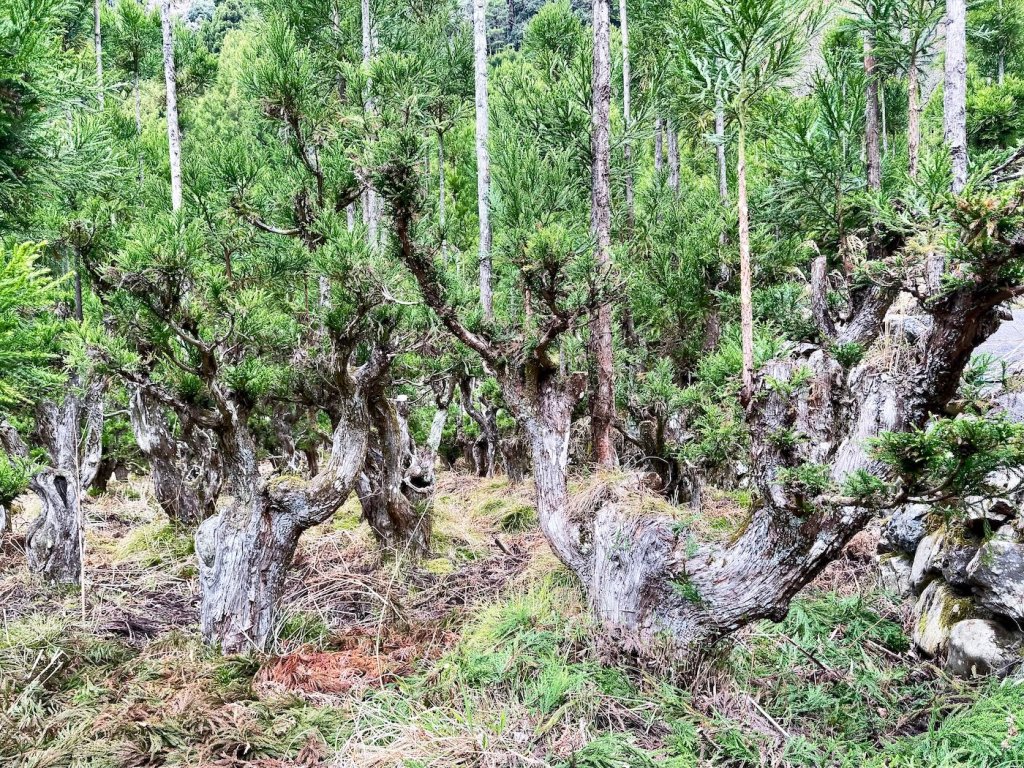
I’ll list a few links below for anyone who is interested in learning about daisugi in more detail. Let me just mention here that the shoots/trees have to be trimmed every 2 to 4 years to ensure straight growth. All the trees, all thousands and thousands of them, by hand. All in all, it takes at least 20 years to harvest fairly skinny poles. For a respectable temple-worthy pole, you have to be patient and care diligently for the tree for around 50 years.
FORESTRY & THE FOREST INDUSTRY IN JAPAN, edited by Iwai Yoshiya

 NOT IN A STRAIGHT LINE by Photolera Claudinha
what a great opportunity you been very fortunate
LikeLike
I don’t know what to admire more: the kindness and hospitality of these wonderfully helpful Japanese “hosts”. The art of shaping nature, as only the patient experts in Japan understand. Or your courage to voluntarily, inquisitively, and patiently defy the events in a completely different world. What an extraordinary, truly special adventure – as always, impressively told. Thank you for these extraordinary travel impressions.
LikeLike