Talking to you about temples and shrines, and their significant place in Japanese everyday life, is a little daunting, since the subject matter is quite complicated. How deeply do I plunge into the unknown of a culture about which I know so little myself? I think I’m just going to mention a few basics that I learned recently from our guides in Japan, and when I get stuck and frazzled, I’m going to shut up and post some pictures. Deal?
Japanese temples are associated with Buddhism. They usually have an impressive gatehouse with two ferocious-looking guardian creatures on the right and left of the entrance opening, and nicely curved rooflines. A temple has a main prayer hall called 本堂 hondō and assorted outbuildings with various functions. The temple campus may be squeezed into a small lot next to a noisy city intersection or encompass vast and tranquil gardens.
Japanese shrines belong to Shintoism. Since the late 7th century, entrances to shrines have been marked by gates called 鳥居 torii. Most torii are lacquered bright red and consist of simple upright posts with an often curved crossbeam. Like their more elaborate counterparts, the temple gatehouses, torii mark the border between the Earthly and the Spiritual. When you enter a shrine through a torii, you cross underneath the gate either on the right or the left side, never in the middle. The center is reserved for 神 Kami, the deities that are at home at this shrine. Foreign tourists have been accused of using torii as gym equipment while taking selfies, so one has to remember that they are sacred sites and behave accordingly!
Both Buddhism and Shintoism are part of Japanese culture, and are practiced simultaneously by many people. Funeral rites are almost always based on Buddhist rules, while everyday concerns, like anxiety over the outcome of an exam, might be more likely presented to a favorite Kami at a neighborhood shrine. A Kami is an ever-present Spirit-Being. Everything in nature is/has Kami, rocks included.
Shintoism goes back to diverse indigenous Japanese practices, and can be documented as early as 300 BCE. It is most often considered a nature religion that was well established across Japan when Mahayana Buddhism was exported to Japan via China and Korea around the 6th century CE. The Japanese emperors at the time and the more highly educated people quite liked this new belief from India, but it wasn’t embraced by the general public because of its complex philosophy, and, well, everything was written in Sanskrit. It took a few centuries and a bunch of monks to rewrite the rules to be a little more user-friendly before Buddhism was generally accepted in Japan. Gradually, Shintoism and Buddhism became peacefully intertwined and have been practiced side by side ever since, despite some periods of conflict.
Now, let’s return to our two very different temples, shall we?
Visiting 京都の三十三間堂 Kyōto no sanjusangen-do, a very popular temple in the eastern section of the city, and its neighbor, the very quiet and hidden 京都の養源院 Kyōto no yōgen’in, Kyoto’s Yogen-in temple, was our first outing with a guide provided by the SGG Club of Kyoto. Our guide was Nakajima-san, the lady who had kindly put us in touch with Shindo-san, as I mentioned in my previous post.
We met up with her at the northern entrance to Shinsen-en Garden near our place. From there, we took public transportation to the temples, and Nakajima-san explained how to buy an ICOCA card for all public transportation, reload it, find the right platform, and change trains in the Kyoto subway system. After arriving in the eastern mountain district, we then walked 15 minutes to reach the first temple.
Everybody calls this very large and very busy temple 三十三間堂 sanjusangen-do, Temple of the 33 Bays, even though its real name is 蓮華王院 or rengeō-in, Lotus King Hall. The more popular name, 三十三 = 3[san] x 10[ju] + 3[san] 間堂 = “33-interval hall”, refers to an ancient Japanese measurement for wooden buildings, namely the distance between its structural support posts. In this case, the 33 intervals translate to 120 m, or nearly 400 feet. That makes the prayer hall the longest wooden building in all of Japan. Adding to the weight-bearing structural elements is the double height of the hall and its beautifully extended roof, which also covers the two full-length verandas. But what is inside this remarkable building is truly mind-boggling.
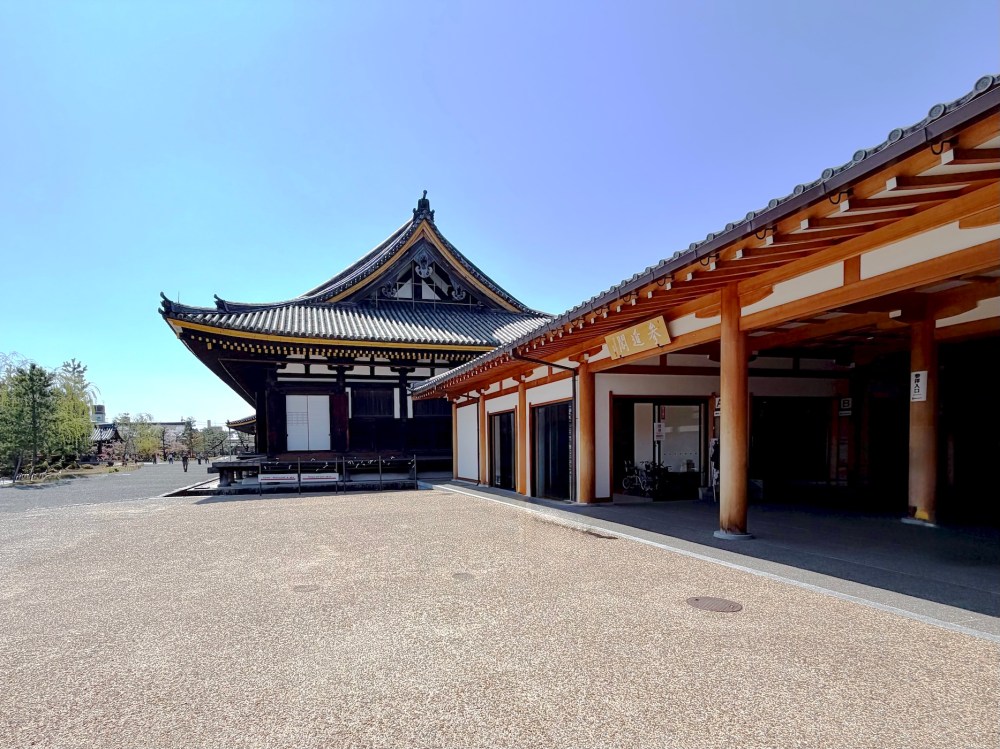
After taking off our shoes, we entered the prayer hall from the north side and followed the flow of worshipers and tourists along the designated path inside the building. This is where one is confronted by an army of 1001 nearly identical statues of the most popular bodhisattva in Japan, the revered deity of compassion and mercy, 漢音 菩薩 Kannon Bosatsu or Kannon Bodhisattva in English. If you are now thinking that a thousand statuettes in such a big barn of a building is no big deal, you’re quite mistaken. Imagine instead one thousand (1000!) human-sized statues flanking a central, seated figure that is over 3 m or about 10 ft. tall. Additionally, there are 28 full-sized guardian statues, a couple of further deities, altars, devotional stations, and so forth. To my chagrin, I can not show you any of it, because in Japan it is strictly forbidden to take pictures inside temples and shrines.
As we slowly progressed through the temple, Nakajima-san tried to explain the wonders we saw, many of which needed some further study on the computer later. The bare facts around Kannon Bosatsu show us a Bodhisattva, an enlightened being, who chose to forego entering the state of nirvana to try to stop the suffering of humanity. [I’ve added a short explanation of this important deity in Japanese culture by historian Gregory H. Wright below]
Meanwhile, in the temple, I discovered an open door to the east veranda behind a loose curtain. Naturally, I stepped outside to take a few pictures of the outside of this hondō, which reopened in 1266 after the original building had burned down fifteen years earlier.
Japan is part of the Pacific Rim of Fire with nearly daily earthquake events. And its building material has traditionally been wood, even for large structures like temples, castles, and pagodas. Combining this with frequent thunderstorms in some areas, it is not surprising that so many major buildings, and even entire neighborhoods in towns or villages, burned down – sometimes more than once! Even today, when contemporary housing utilizes older, wooden buildings, as we had in our rental, for example, smoking and any kind of open fire, be it only a single match, is absolutely and utterly forbidden. We had fire extinguishers and fire alarm buttons on both floors, plus speed dials to the nearest fire station. The fear of fire is a deep-seated, atavistic dread in Japan.
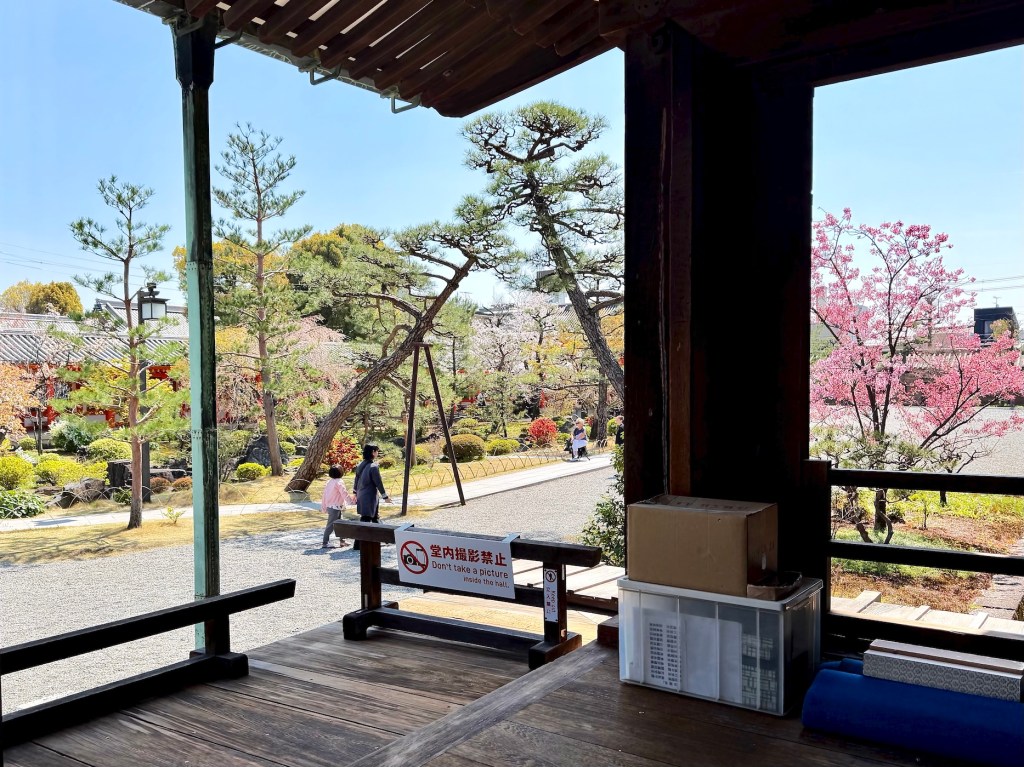
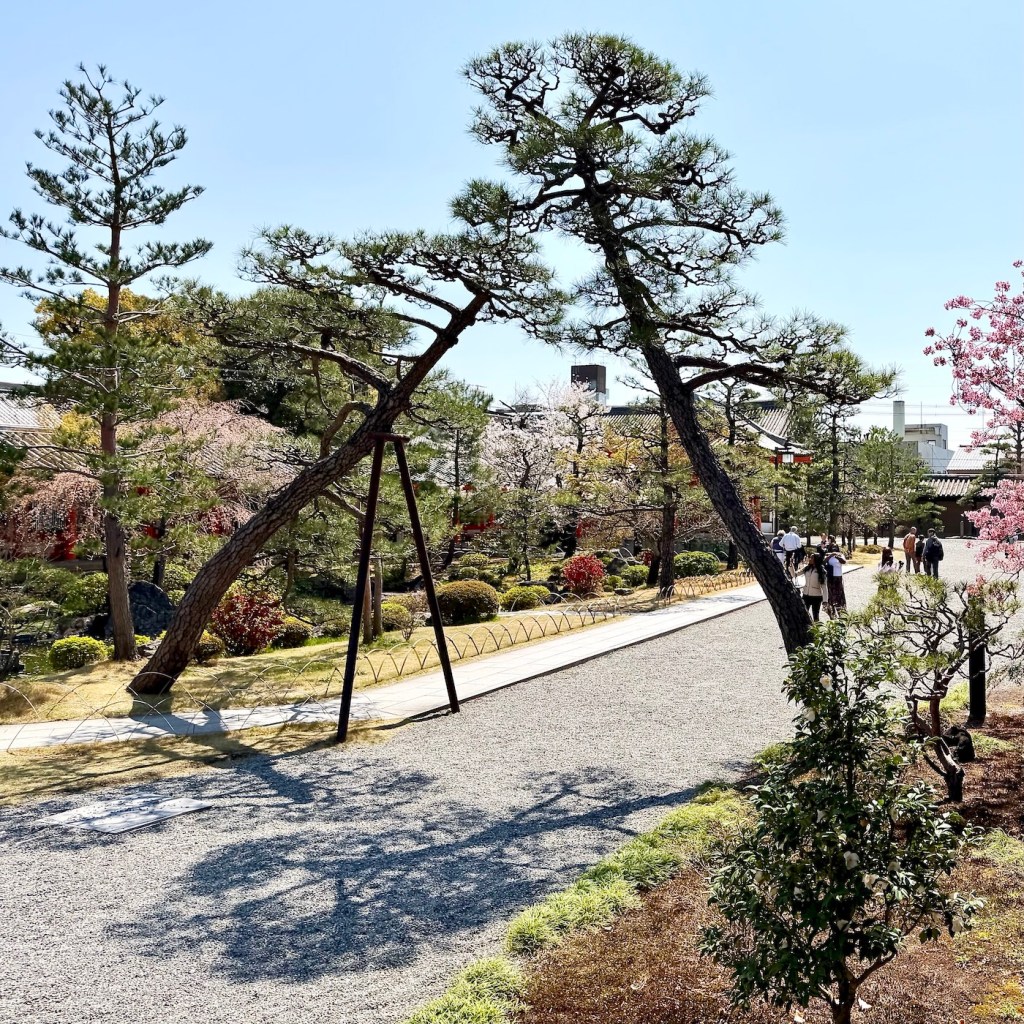
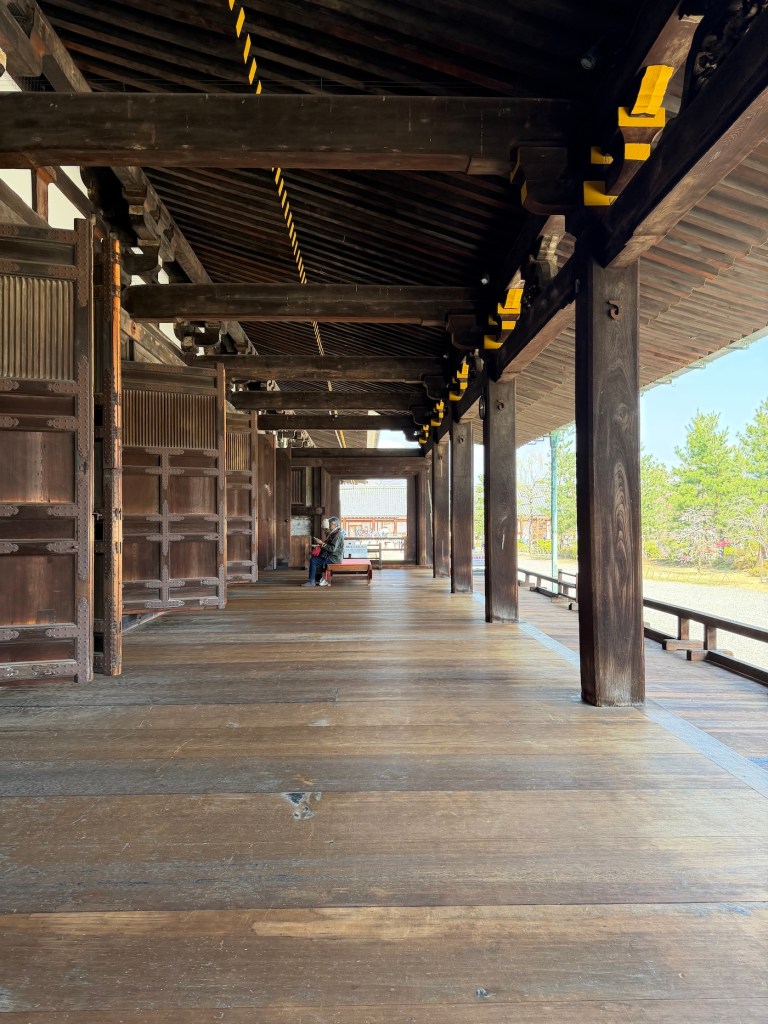
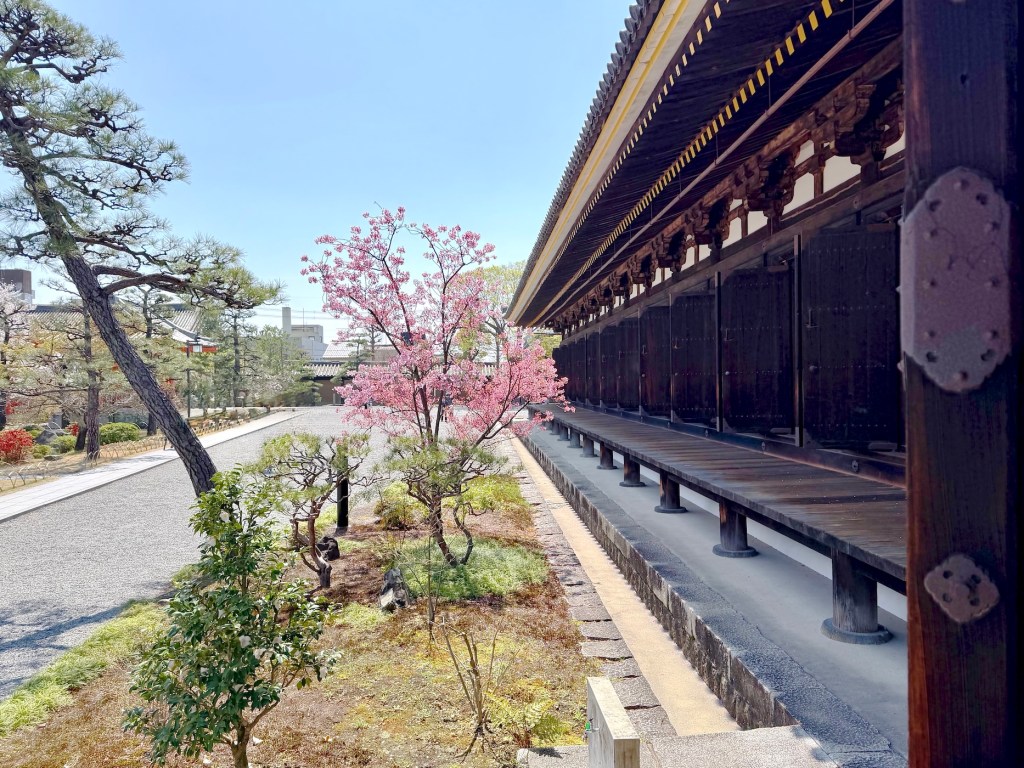
The western veranda of the temple is famous for the archery competitions that have been conducted there since 1606.
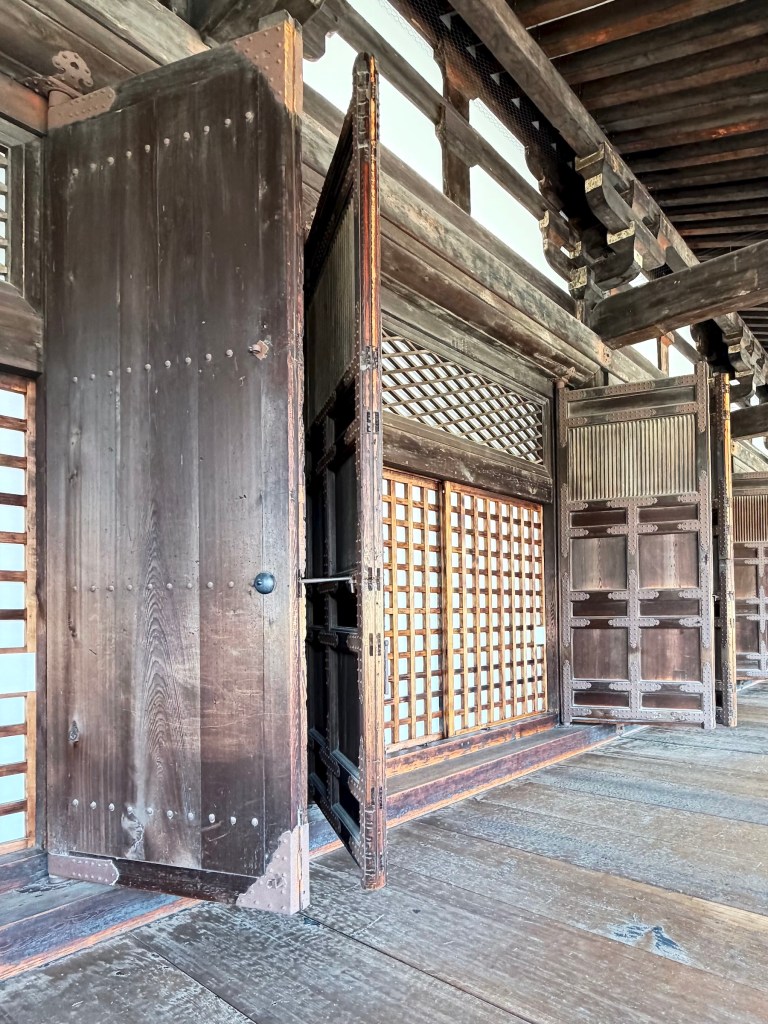
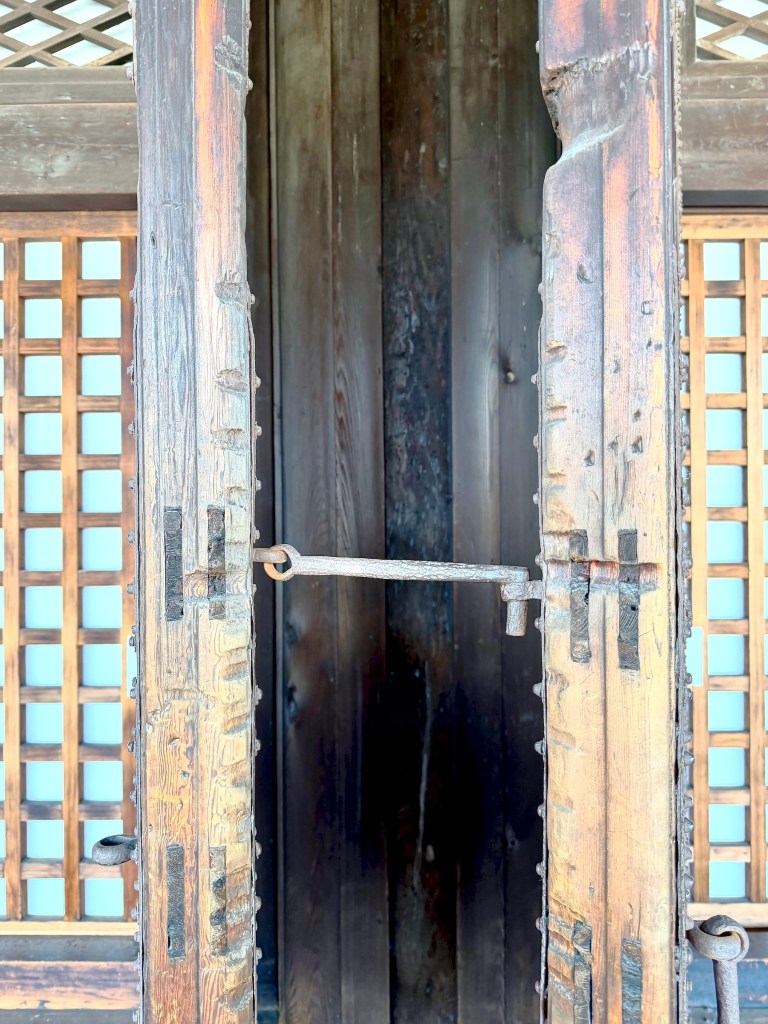
The history of Sanjusangen-do is quite fascinating, as it is the manifestation of two extraordinary men with great ambitions and far-reaching visions for themselves, their Houses, and Japan. One was an emperor, the other a samurai, a warrior.
The 77th emperor of Japan was 後白河天皇 Go-Shirakawa-tennō or Emperor Go-Shirakawa (1127-1192). He is usually referred to as a “cloistered” emperor. What seems a little confusing at first -was he a monk or was he an emperor?- turns out to be a fairly common way of governing during the later Heian Period, when the aristocracy still held political power, and an emperor had to try to balance the power between the aristocracy and the military. Emperor Go-Shirakawa’s de jure rule had lasted only three years when he “retired” and moved to a monastery. De facto, he continued to manipulate the Japanese administration by ruling as the acknowledged éminence grise alongside his son and even his grandson, and so forth, all the way to the reign of the 82nd emperor, Go-Toba.
The other important gentleman was 平 清盛 Taira no Kiyomori (1118-1181), a samurai and fierce military leader. It is generally considered that he was the true ruler of Japan from 1167 onward. He established the first samurai-dominated government in the history of Japan, marking the transition from the Heian Period (794-1185) to the Kamakura Period (1185-1333), thus from imperial power to military rule.
Thanks to the media, we all know the title 将軍 shōgun, meaning “army commander”. The full title is actually 征夷大将軍 sei-i taishōgun, literally “Commander-in-Chief of the Expeditionary Force Against the Barbarians”. Sounds pretty tough, doesn’t it! Taira no Kiyomori, the undisputed leader of the warrior class in the second half of the 12th century, never assumed the Shogun title for himself. Instead, through his superb power plays, he aimed for a much different office. First, he gained the position of 太政大臣 daijo-daijin, Chancellor of the Realm. Then, he declared himself 関白 kampaku, Imperial Regent, effectively becoming the Boss of Bosses, combining his military leadership with the administrative powers over the entire country. Until Kiyomori-sama boldly usurped the two highest positions in the imperial court, these offices had been exclusively reserved for the aristocratic class, most commonly members of the imperial family.
And what do these political shenanigans have to do with a Buddhist temple? Well, Sanjusangen-do is the calculated beginning of Kiyomori-sama’s grand plan. He built this temple as a present for Emperor Go-Shirakawa in 1164. It was a huge compound with many buildings, including a five-story pagoda, and it served as the emperor’s home till he died, when he was buried in the Hall of the Lotus Sutra in the northern estate. Taira no Kiyomori’s gift to the Imperial House was the foundation for the rise of a samurai to become the ranking administrator of the empire, and his legacy would be relevant for centuries.
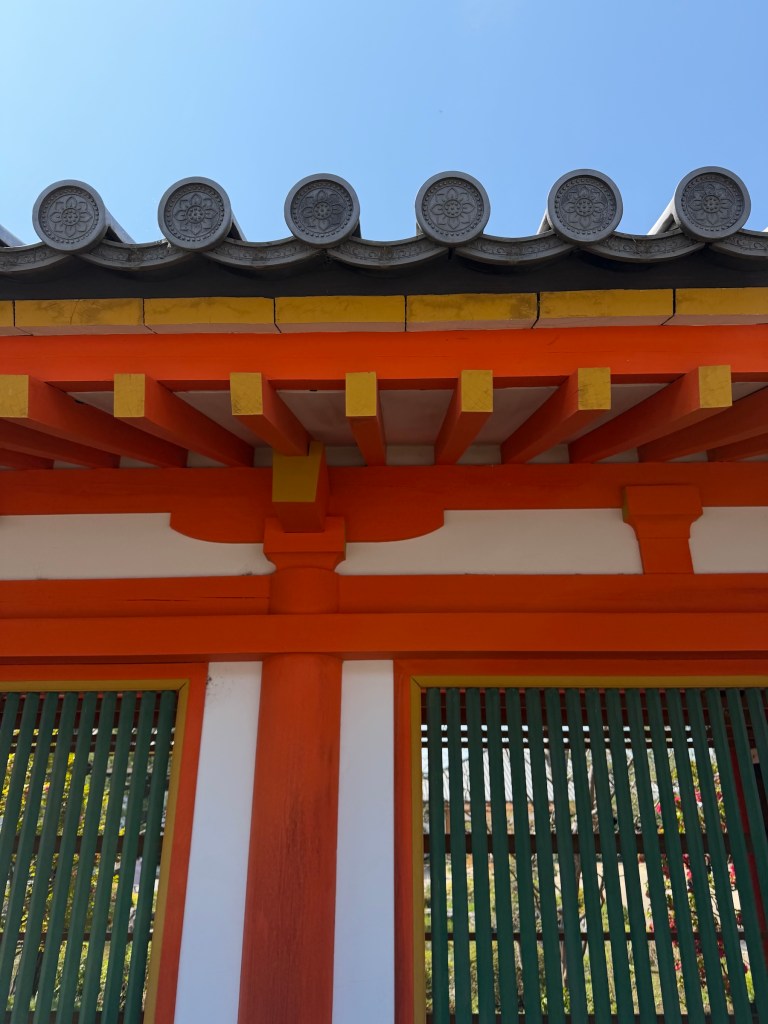
Before we move on to our second temple, I have to share something Nakajima-san told me about the 1000 Kannon Bosatsu statues. When the temple burned down in 1249, only 124 of the Kannon sculptures could be saved. Two years later, the then-emperor ordered the temple to be rebuilt and the statues replaced. The statues were carved from Japanese cypress wood, which is dense but lightweight. The finished statues were covered in gold leaf to make them a little more fire-resistant. All of this is common knowledge, however, Nakajima-san added specific details. The statues are hollow, making them even lighter, so that they can be quickly moved to safety in a fire emergency. Their center of gravity was lowered, and the statues’ feet were mounted on a heavy base with a quick-release gyroscopic-style fastening, so that they can wobble and right themselves during earthquakes. And here, my friends, is the kicker. Nakajima-san said this technology was already implemented in the design of the statues in the 13th century. Amazing, isn’t it?
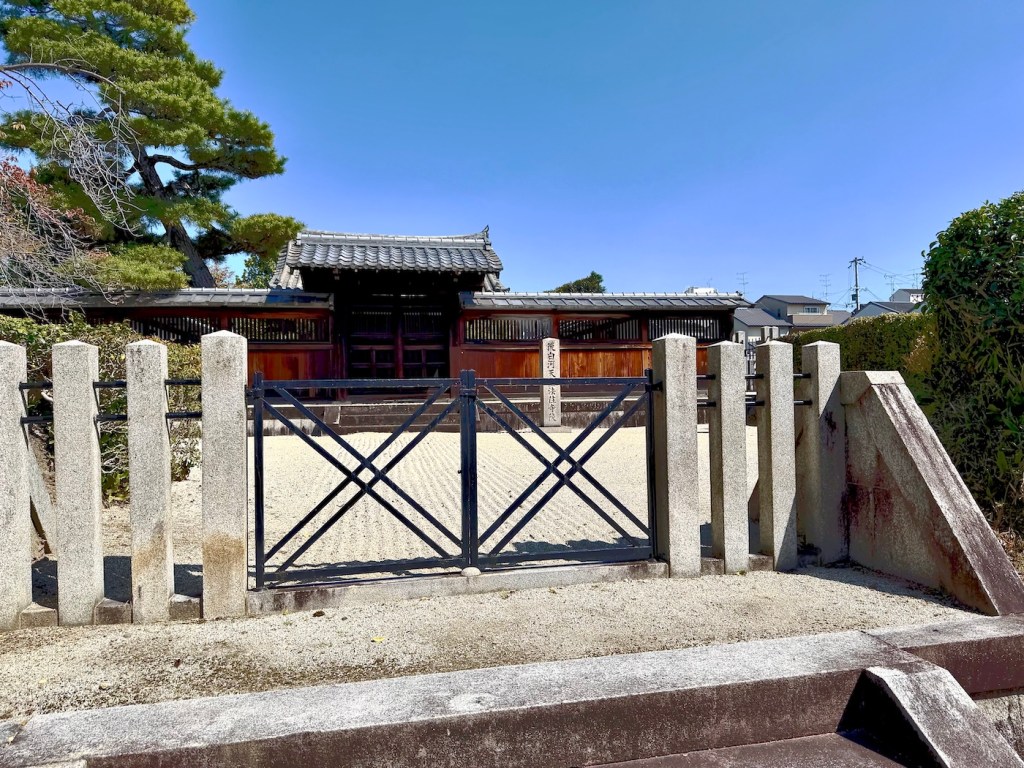
After our visit to 三十三間堂, we walked a short distance to the gate of our second temple. This rather petite, almost private temple is rarely visited by foreign tourists, even though it is in close proximity to several other quite popular temples in East Kyoto. The 養源院 yōgen’in temple had been on top of my “must-see list in Kyoto” for a very long time, specifically, ever since I heard of Blood Ceilings. Intrigued?
In 1594, Toyotomi Hideyoshi, Kampaku, the most powerful man in the country, granted his last concubine, Yodo-dono (1569-1615), her wish to build a family temple to commemorate the 21st anniversary of the deaths by seppuku of her father and grandfather. The temple was named Yogen-in after her father’s posthumous Buddhist name. Seppuku should remain the catchword for this temple.
Entering the compound through a small gate, we followed …
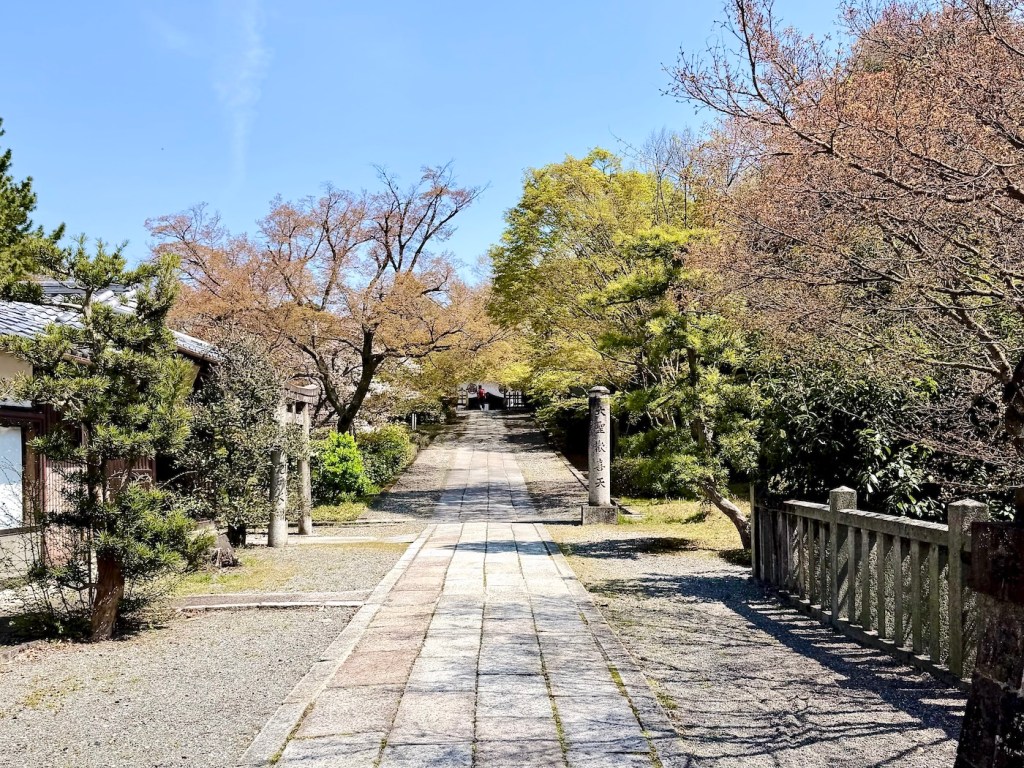
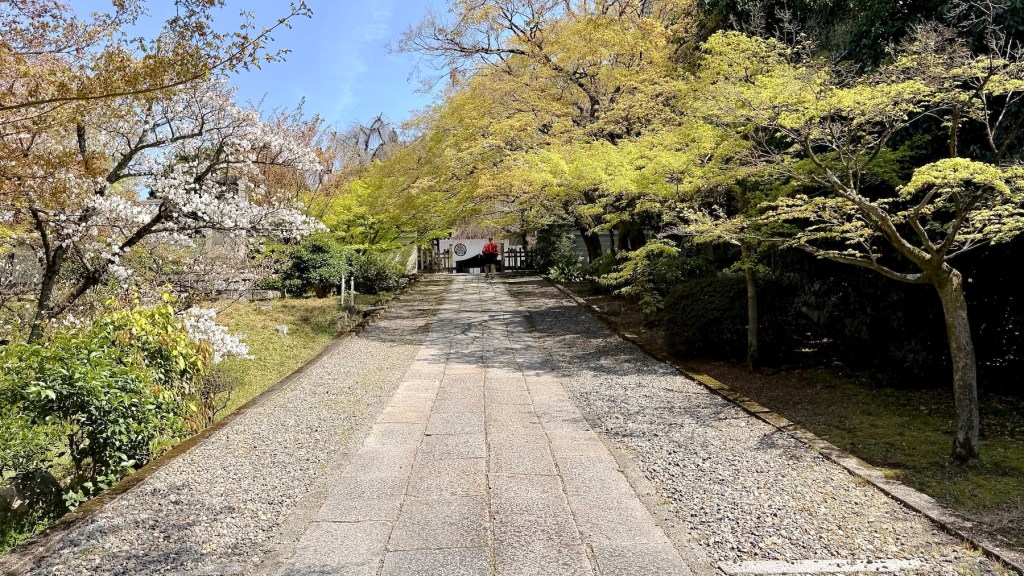
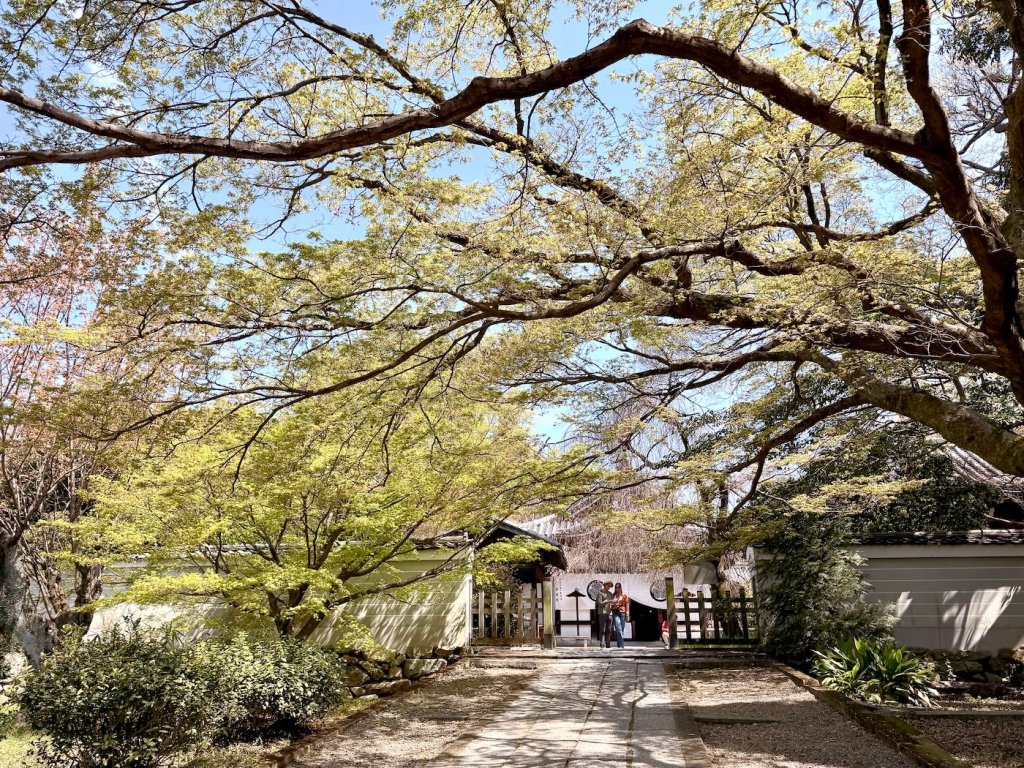
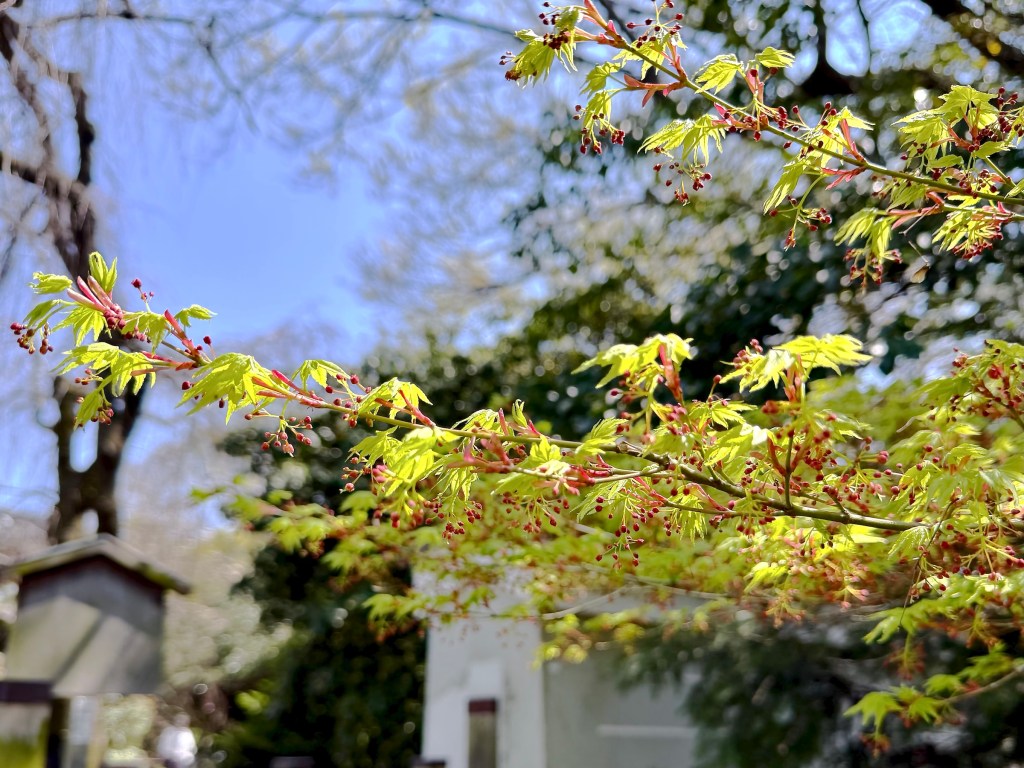
Shortly after Yodo-dono’s death, the temple burned down. Whereupon her sister Ogo started a campaign to rebuild the monument to their father. She had married into the Tokugawa clan. As it happened, during the past decade of warfare across the country, culminating in the Great Battle of Sekigahara, the Tokugawa clan had become a bitter enemy of the Toyotomi clan, Yodo-dono’s in-laws, and it took Ogo six years to convince the shogun to grant her wish and rebuild Yogen-in, albeit as a mortuary temple for the Tokugawa clan.
During the 15th and 16th centuries, Japan was torn by constant civil unrest and warfare between regional lords. Three leaders stand out as the Great Unifiers of the country, culminating in long-lasting peace during the Edo Period from 1603 to 1868. The initial unifier is considered to be Oda Nobunaga (1534-1582), paving the way for his two retainers, Toyotomi Hideyoshi (1536-1598), who completed a preliminary unification, initiated social reforms, and was a cultural patron, while Tokugawa Ieyasu (1543-1616) fought the final and decisive war, the Great Battle of Sekigahara, to complete the job. Ieyasu was named shogun by the emperor in 1603, establishing the hereditary Tokugawa Shogunate for the next 260+ years, which brought internal peace, political stability, and economic growth in Japan. These policies also enforced isolationist practices that significantly shaped Japan’s future interactions with the world.
A precursor of the Sekigahara Campaign was the Siege of Fushimi Castle, one of Tokugawa Ieyasu’s residences. The castle controlled access to Kyoto, and as such, it became a prime target. Ieyasu needed time to assemble his troops, so the castle guardian, Torii Mototada, offered to keep the enemy occupied with a futile fight to defend the doomed castle and free Ieyasu to gather his army.
40,000 enemy troops besieged Fushimi Castle and its 2000 defenders, who repulsed attacks for nearly two weeks. Finally, the inevitable happened. The keep was set on fire, and the garrison was slaughtered in fierce hand-to-hand combat. Commander Torii Mototada, his family, and the remaining ten soldiers then committed seppuku, ritual suicide. This is considered to be the greatest and most noble accomplishment in all of samurai history. Despite the insurmountable odds that Torii Mototada & his men faced, they defended Fushimi Castle for 12 days, killing several thousand of the enemy army before dying with honor.
After he became shogun, Ieyasu ordered the blood-soaked floorboards from the fateful siege of Fushimi Castle to be preserved and brought to Kyoto. Eventually, the boards would be used in the ceilings of five temples, among them Yogen-in, when it was finally rebuilt. This was a way of honoring the sacrifice of these samurai, and the hope that their spirits might be consoled in the tranquility of these sacred temples.
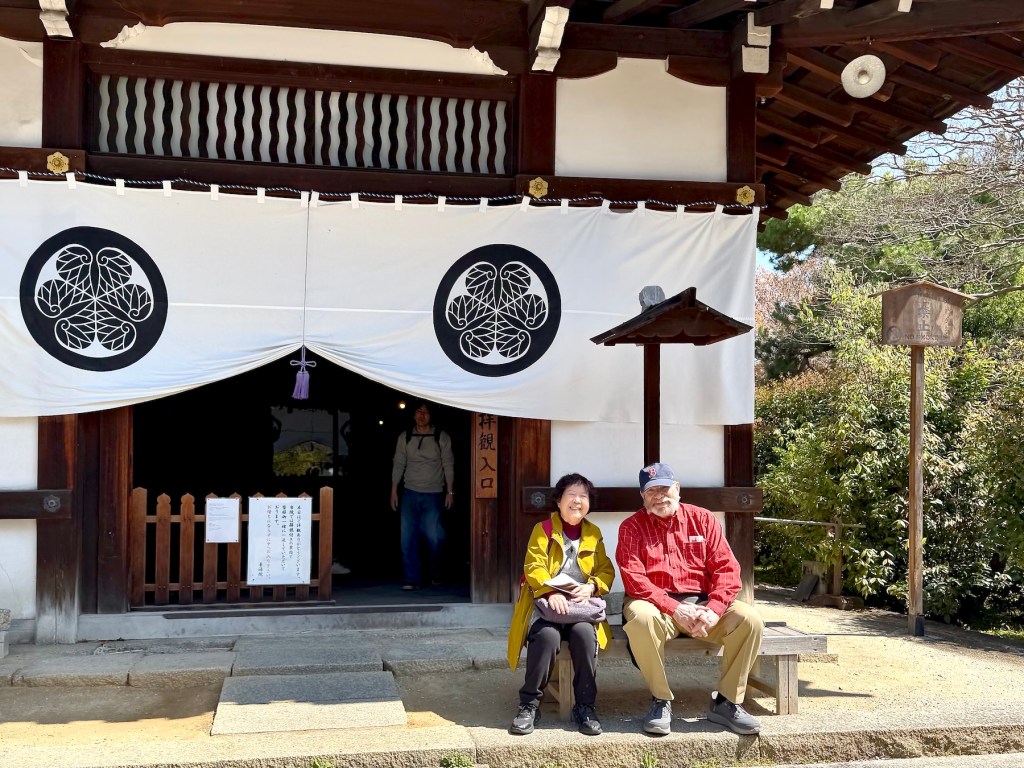
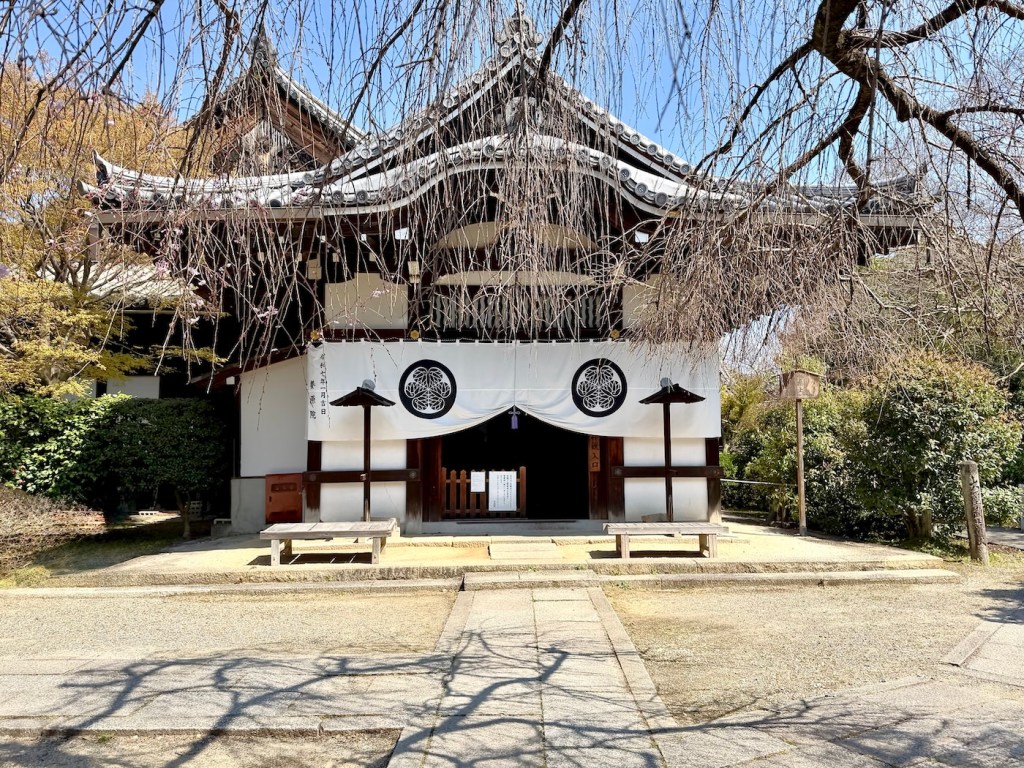
Nakajima-san & Barry-san, my husband, are resting in front of Yogen-in. On the awning behind them, one can see two large Kamon, the family emblem of the Tokugawa clan, three hollyhock leaves in a circle.
Viewing the 血天井 chi tenjō Blood Ceiling was more emotional than I expected. The ceiling was very high, and the room was rather dim. At first, there wasn’t much more to see than darkish discolorations on old boards. But after a while, a nun entered the room and picked up a long bamboo pointer. She started to speak, presumably retelling the story of the Siege of Fushimi Castle. Since I only understand individual words in Japanese, I’m guessing. When the nun began to point out specific blotches on the ceiling, I could understand just a tiny bit more. So, I repeated some of what she said in the form of a question, which she either confirmed or corrected. Like “yes, right hand”, “face, not foot”, and so forth. Some of the younger Japanese visitors started to chime in and helped to translate her narrative. The longer we all stared at the ceiling, the clearer the outlines of the stains became. This, together with the nun’s murmured words and the perceived sadness of an event that happened so long ago yet was present in that room with us, created a unique atmosphere, including a kind of bond between the living.
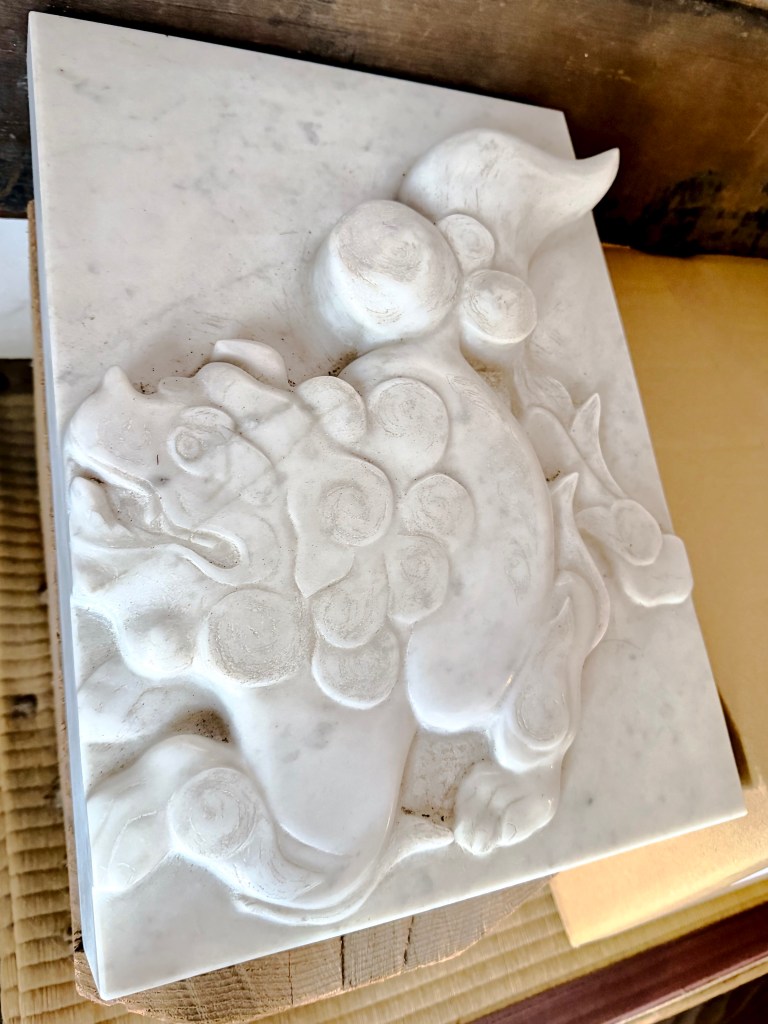
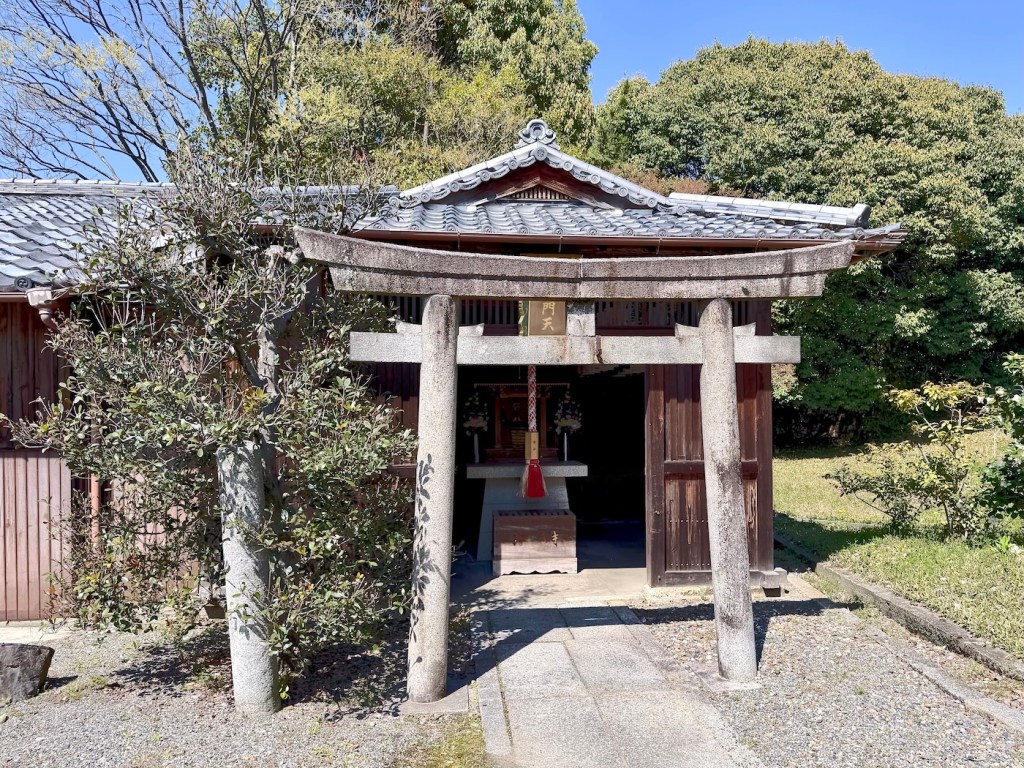
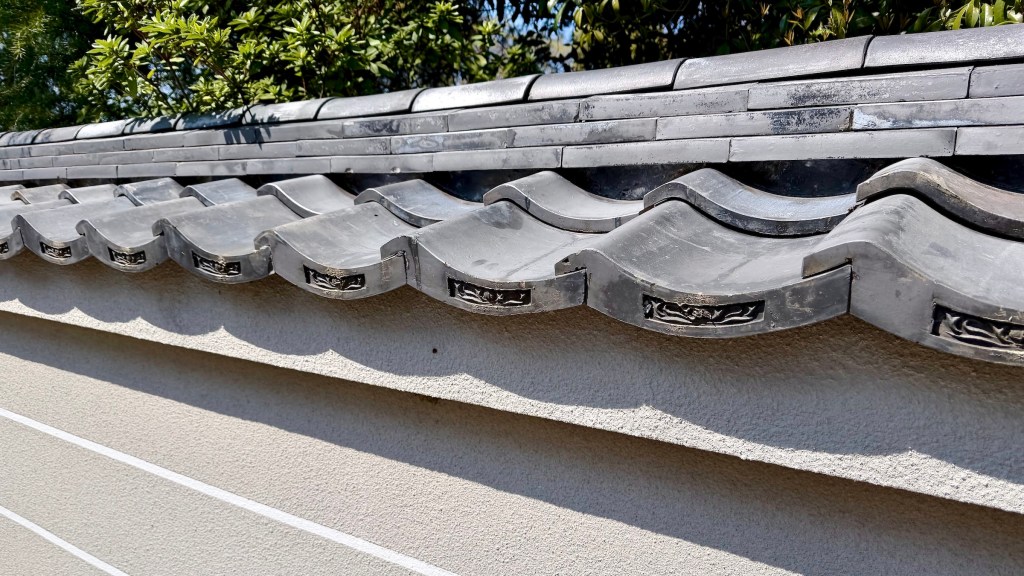
A rather more lighthearted experience was walking on the nightingale floors in the temple’s corridors. Although I had heard of such floors, it still took me a while to realize that the chirping of birds didn’t come from the gardens, but was actually created by the floorboards. The uguisu-bari, or nightingale floors in English, refer to especially prepared floorboards that make a pretty loud chirping sound when walked upon. 鶯 uguisu refers to the Japanese bush warbler (Horornis diphone, Cettiidae), 張りbari means to stretch, to apply tension. These floors were used as an early warning system against intruders. A famous location for uguisu-bari is Nijō Castle, across the street from us in Kyoto.
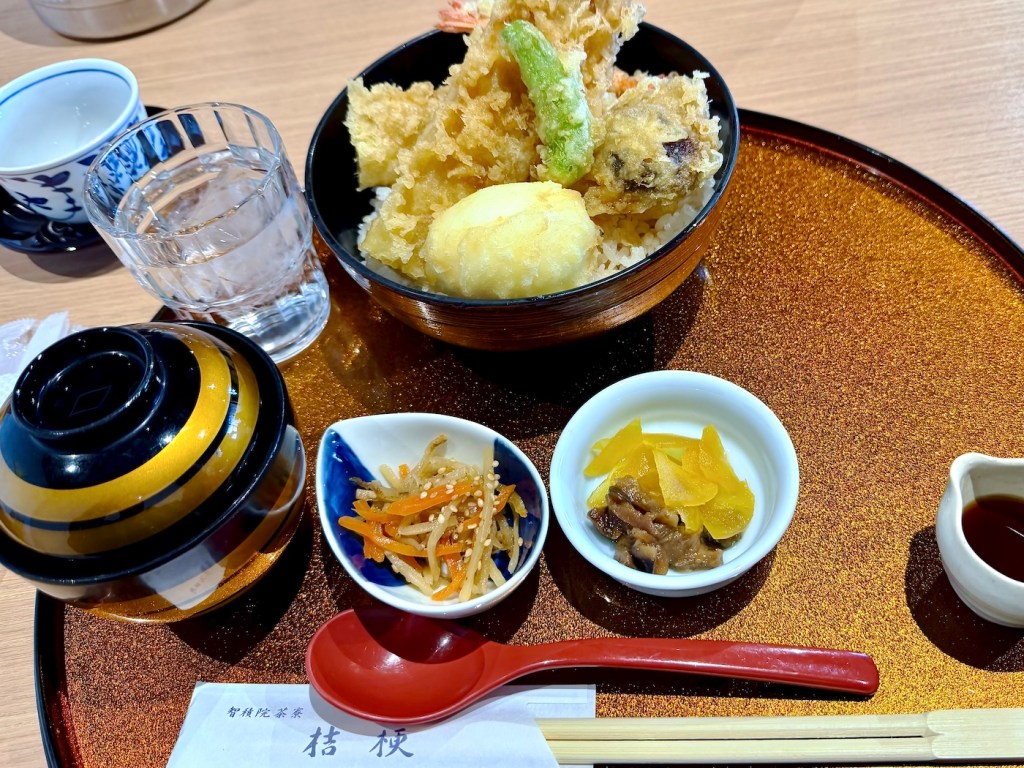
After learning about the cloistered emperor, who retired from the job but couldn’t stop meddling with affairs of state and people’s lives, we repaired for a late lunch at a neighborhood restaurant. All three of us chose that day’s special. It consisted of several pieces of tempura, including a prawn, a piece of fish, vegetables, and an egg, accompanied by miso soup, a small salad, pickles, condiments, and hot tea. A deep-fried boiled egg seemed weird, and even Nakajima-san said she had never seen that before.
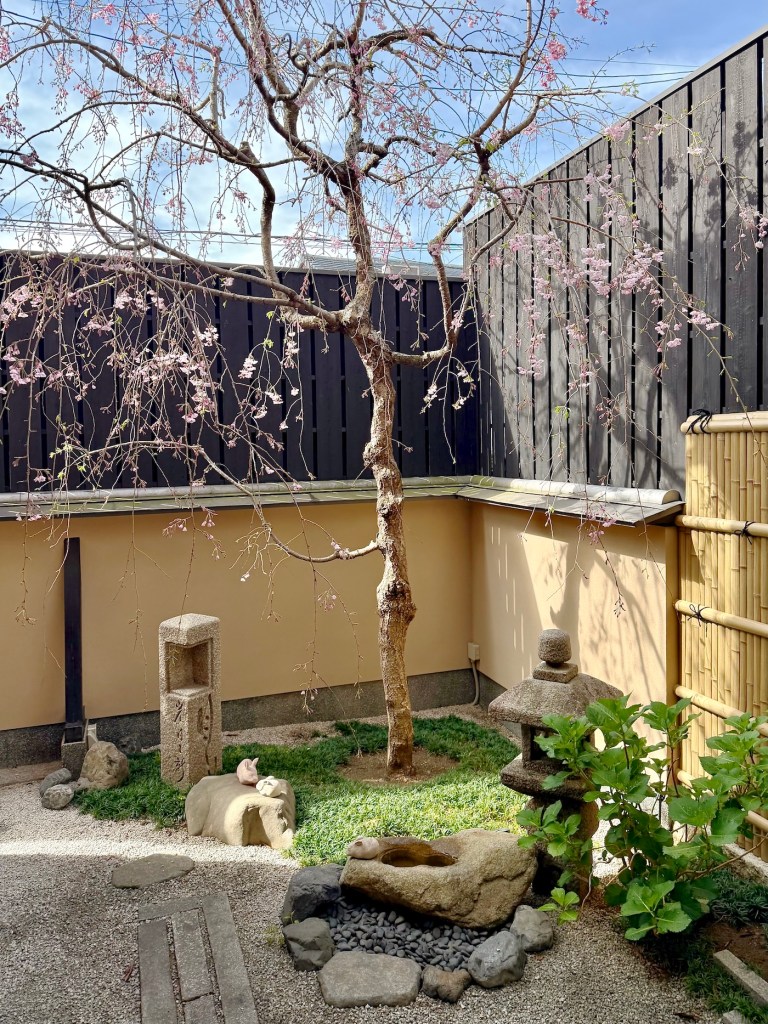
Back home, our little cherry tree delighted us with its maturing blossoms.
Sanjusangen-do video This is a long, almost 17 min video in Japanese with partial English subtitles, showing details of the entire temple complex. At ~ 5:35 min, it moves inside the prayer hall, showing the Kannon statues and her attendants. If you have the patience, it’s worthwhile watching.
Addendum: In the video, the Kannon Bosatsu statues are described as “1000-armed” and having 11 faces/heads. I didn’t mention that in my report because it is part of the Buddhist belief system and quite difficult to relate to if you’re not a trained follower of Buddhism. Very, very much simplified, Kannon Bosatsu, the deity of compassion and mercy, has many heads to better hear the cries of distress of humanity, and she has a thousand arms to help us overcome our trials and tribulations. The actual statues in the hall have 42 arms, composed of the two natural arms of a person, plus 40 sacred arms. If you multiply 40 by 25 levels of enlightenment, it makes 1000 arms. Kannon Bosatsu can also manifest in 33 different forms to reach out to aid humans. I told you, it’s complicated and I don’t know how it works!
Kannon Bosatsu the Bodhisattva of Compassion and Mercy: explained by Greg Wright
Some beautiful photos of Yogen-in in this website


Great Job !!!
Dr. Barry N. Leon
707 Cardinal Lane, #A1 Austin, TX 78704
USA
On Fri, May 29, 2026 at 8:12 PM NOT IN A STRAIGHT LINE by Photolera
LikeLike
Dear Mike, I think of my Japan posts as presents for you and Joanie 💝
LikeLike
Thank you for the fantastic insights and wonderful memories of our six-year life in that wonderful country!
LikeLike