As I’ve mentioned here or there, in Kyoto, we stayed at the 京宿 うさぎ or kyo yado usagi or Kyoto Rabbit Inn.
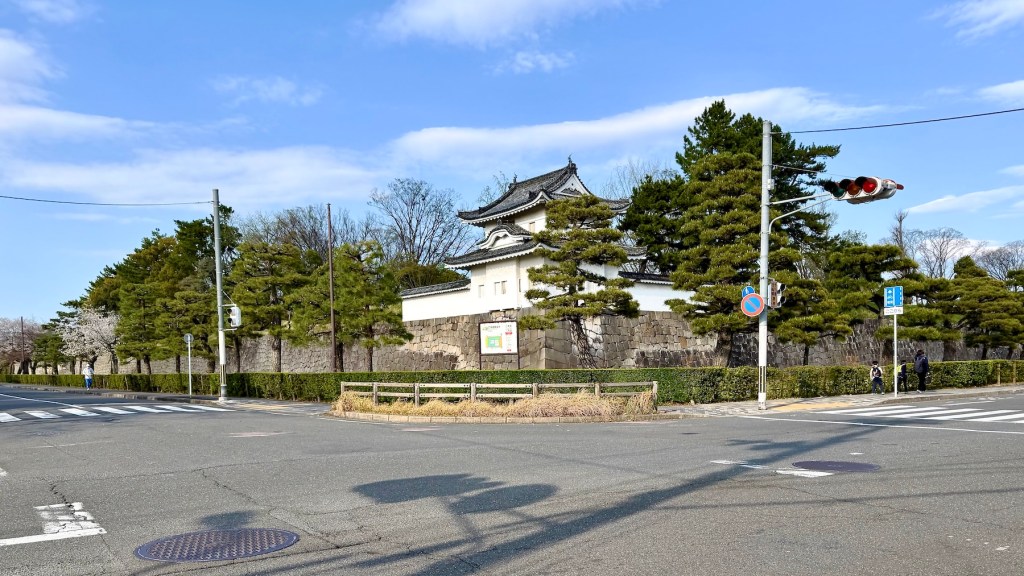
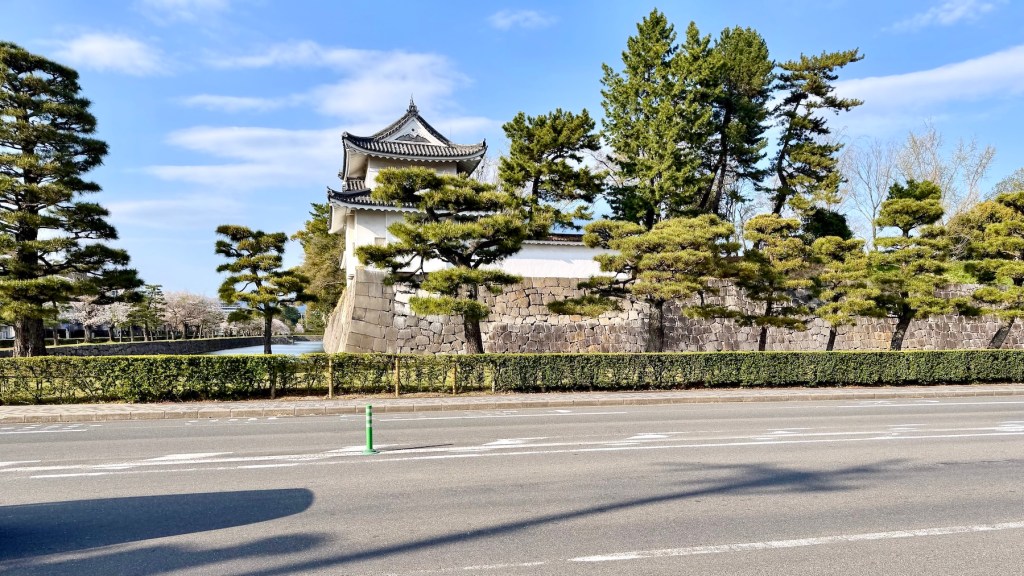
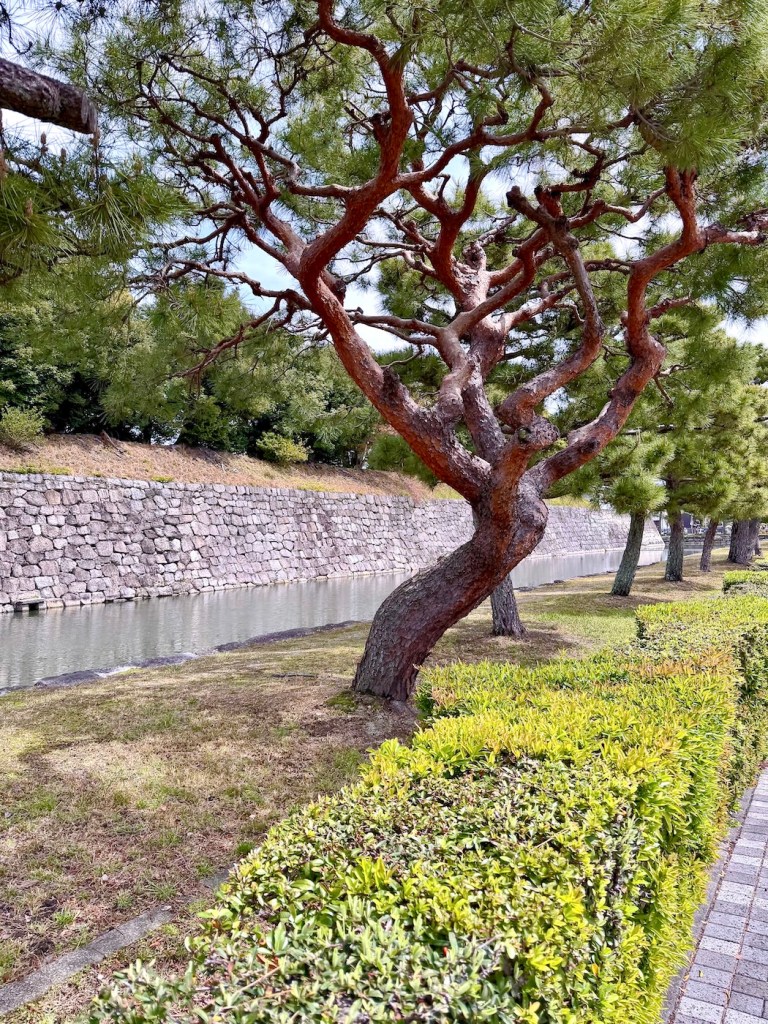
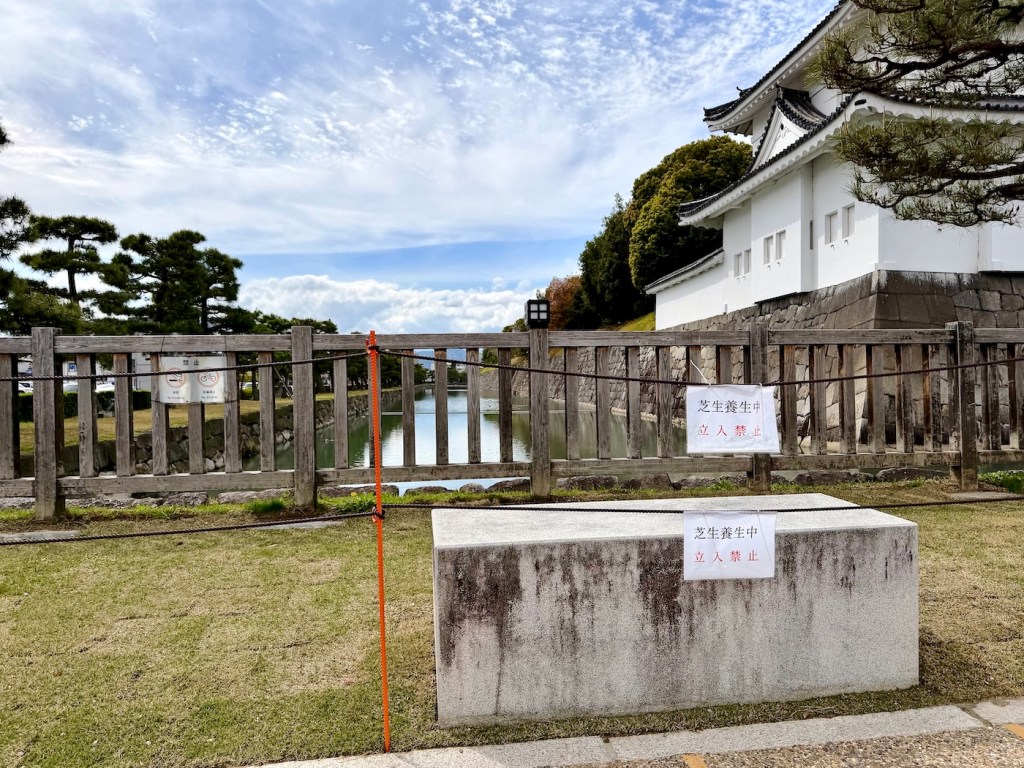
Diagonally across the street from our rabbit warren was Nijō-jō, or Nijo Castle, Shogun Ieyasu Tokugawa’s humble homestead in Kyoto. Of course, we couldn’t see the actual castle, or even the castle grounds, just the 外堀 sotobori, the outer moat, and the 西南 隅櫓 seinan sumi yagura, the southwestern watchtower, which dates to 1603. As you can see in these pictures, contemporary infrastructure surrounds the architectural witnesses of Japan’s resplendent past, thus blending history with everyday modern life.
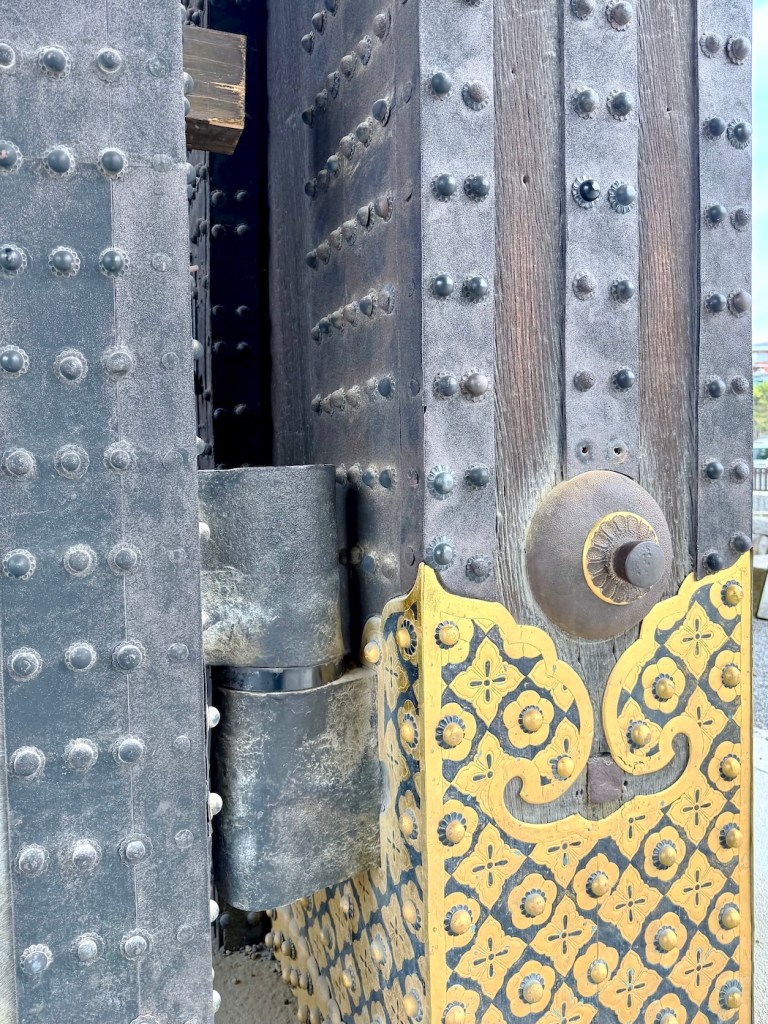
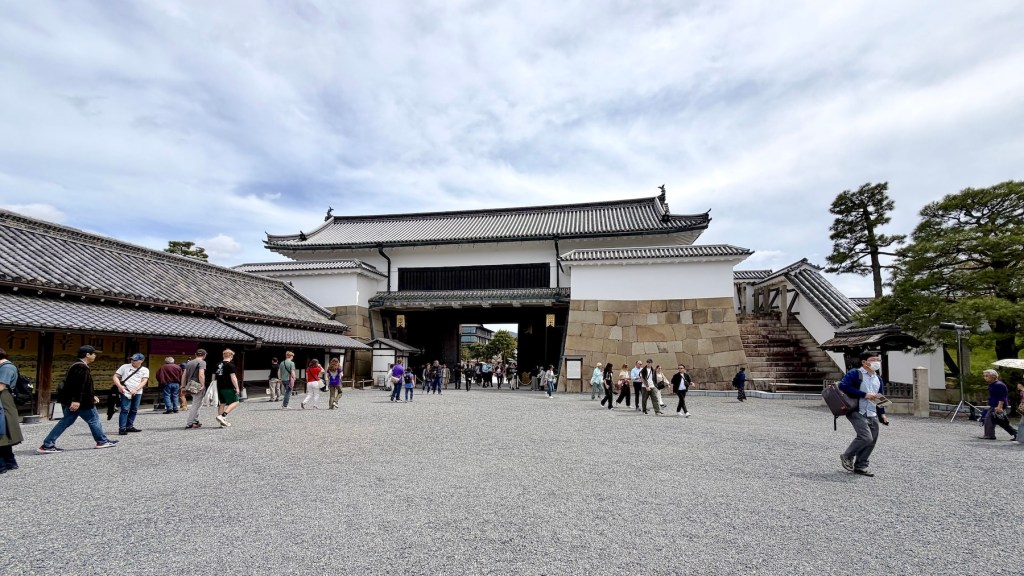
The main entrance to the Nijō-jō compound, Higashi Ote-mon, the Main Gate in the East, is a two-story gate, believed to date to 1662. The original two-story gate was altered in 1624 during a large-scale renovation of Nijō-jō in preparation for a five-day state visit by Emperor Go-Mizuno-o, also known as Go-Minoo, Go-Seiwa, Hirohito, and Kotohito, who was the 108th Emperor of Japan. The gate had to be reduced in height for the imperial visit because it was and is taboo to look down on an emperor from above.
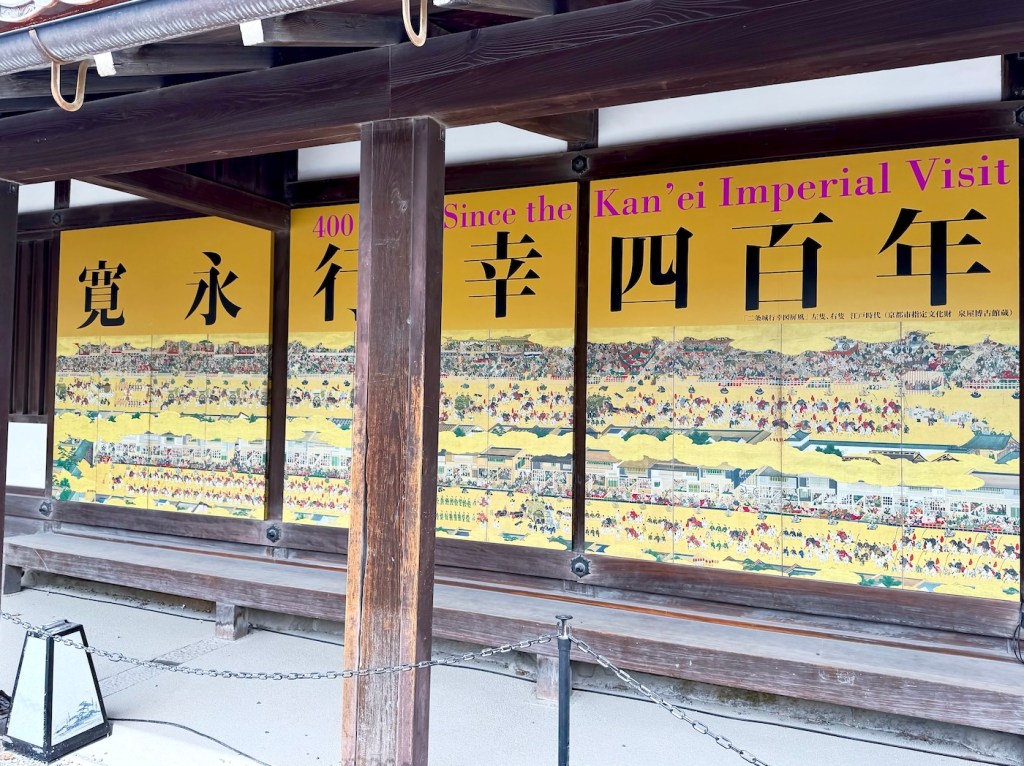
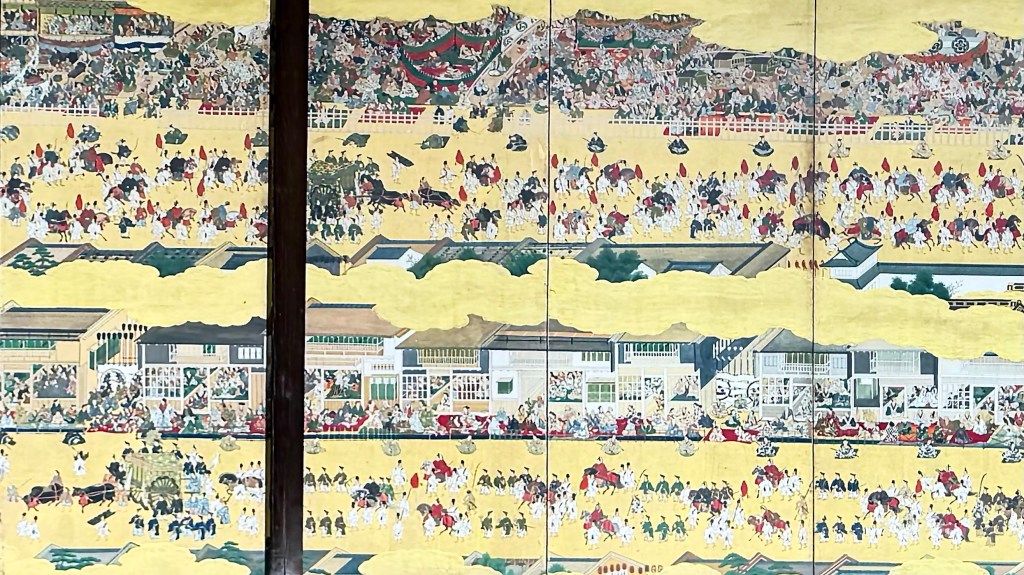
In September of 1626, something remarkable and unique happened in Kyoto. The Emperor and Empress, and their households, undertook a formal procession from the Imperial Palace to Nijō-jō for an official visit with the Shogun. This event is called the Kan’ei Gyoko, the Imperial Visit. Not an Imperial Visit, but the Imperial Visit. This coming September 2026, Kyoto will celebrate the 400th anniversary of the Kan’ei Gyoko with a commemorative festival. I would like to encourage you to read both of these links about the background and meaning of the Imperial Visit in 1626.
We followed the prescribed route toward the Kara-mon, the colorful gate, the entrance to the Ninomaru-goten, the Second Bailey Palace. The palace was built from 1601 to 1603 by order of Tokugawa Ieyasu, the founder and first Shogun of the Tokugawa Shogunate, as his spacious and elegant residence in Kyoto. The palace consists of six buildings enfilade, as we say in French, meaning the six buildings follow each other like pearls on a string.
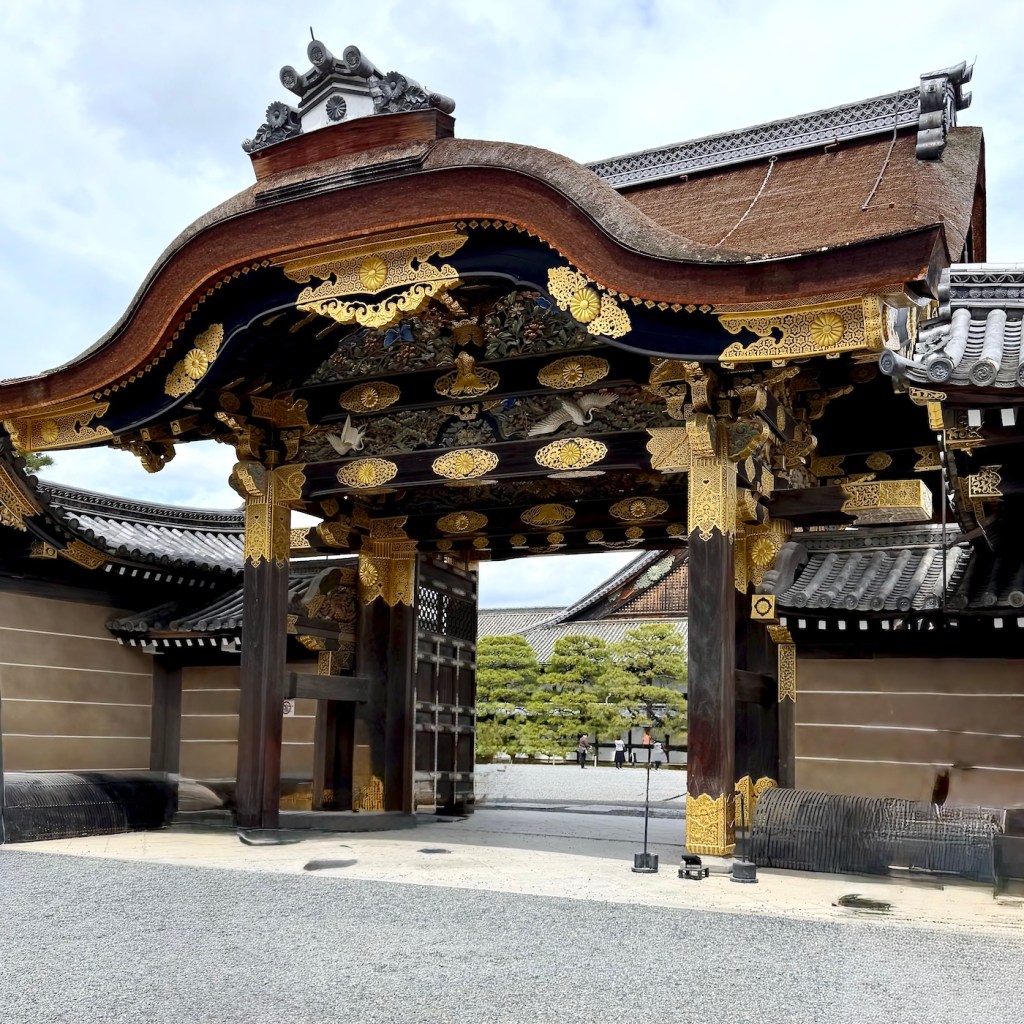
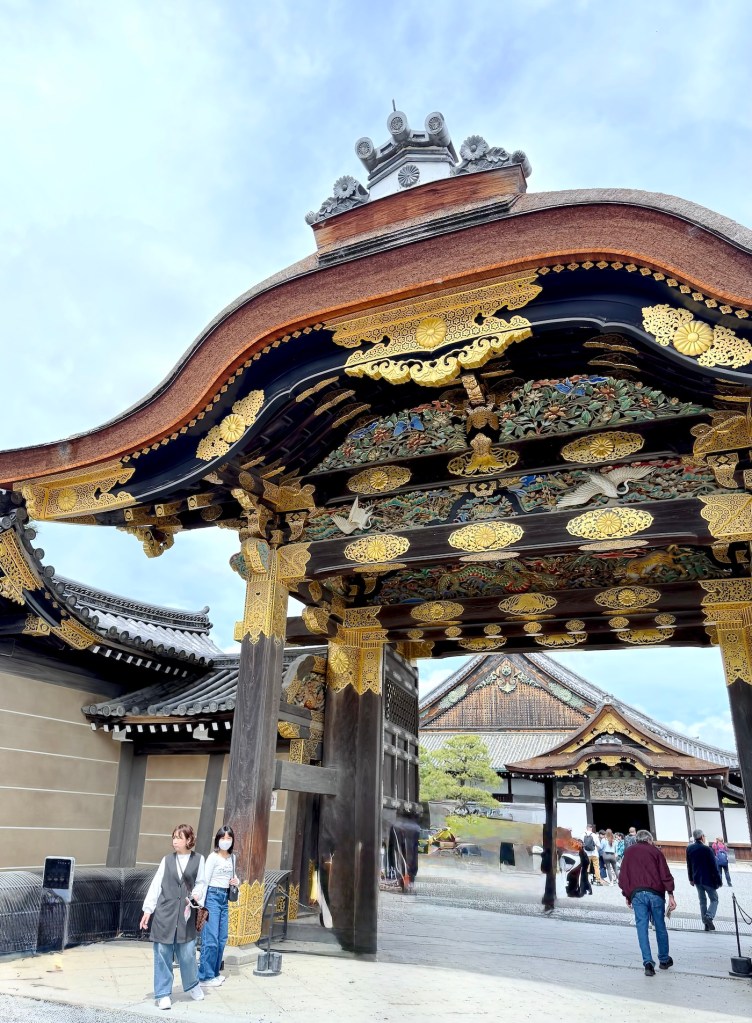
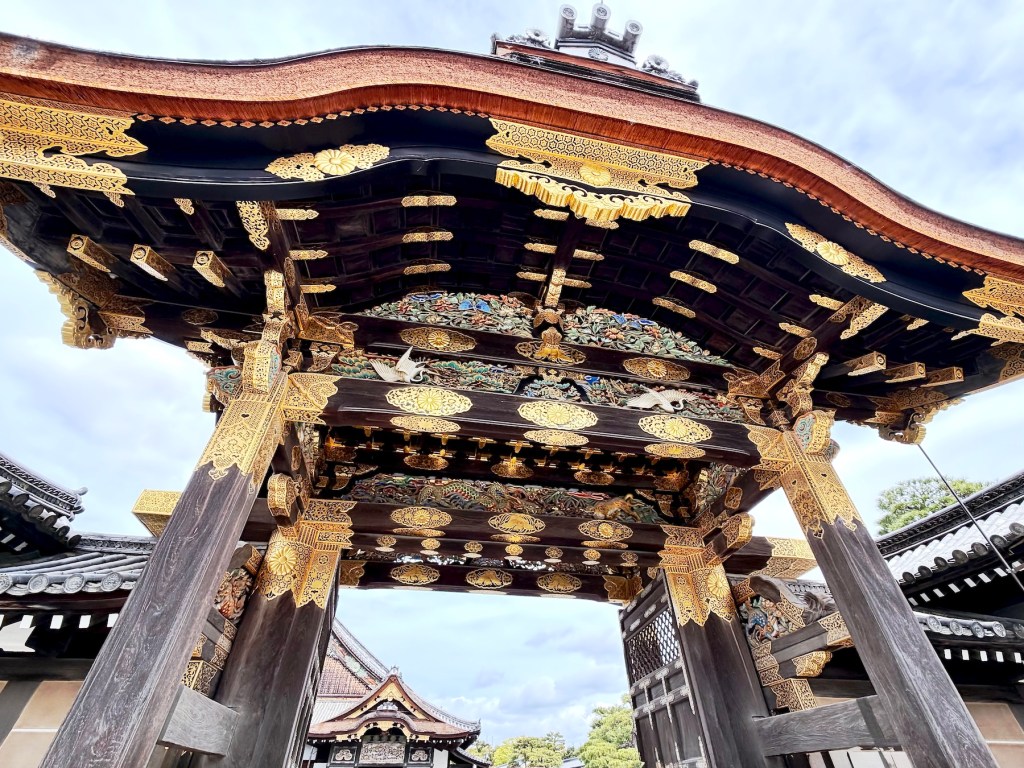
As I mentioned in a previous post, I can’t show you any pictures of the interior because it is strictly forbidden to take photos in temples, shrines, castles, and most museums. It’s really a shame, because many of the reception rooms are decorated with beautiful artworks of the Kanō School of Painting to emphasize the shogun’s might. Including family quarters, the palace has 33 rooms or more than 800 tatami mats, so you can imagine the splendor.
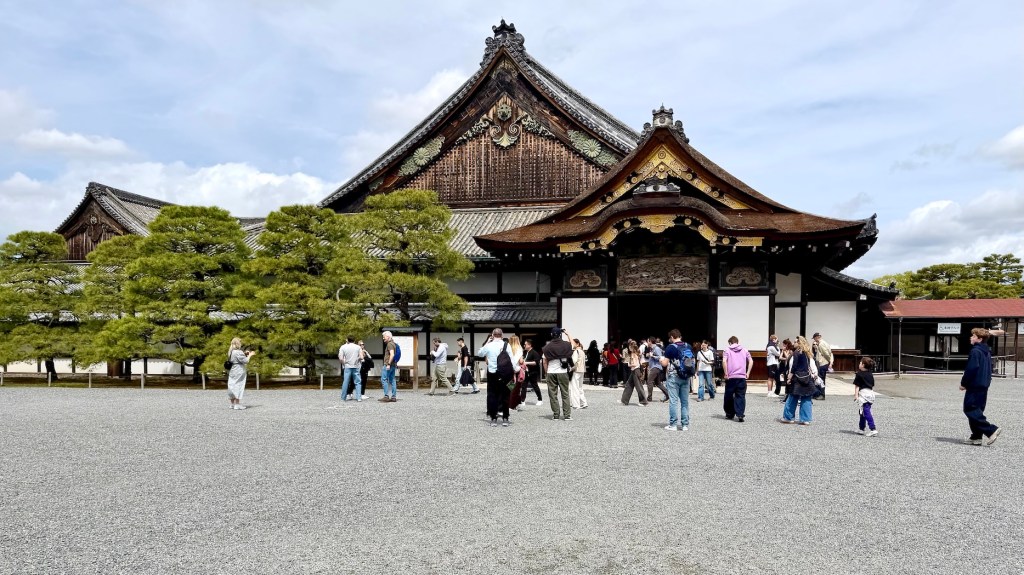
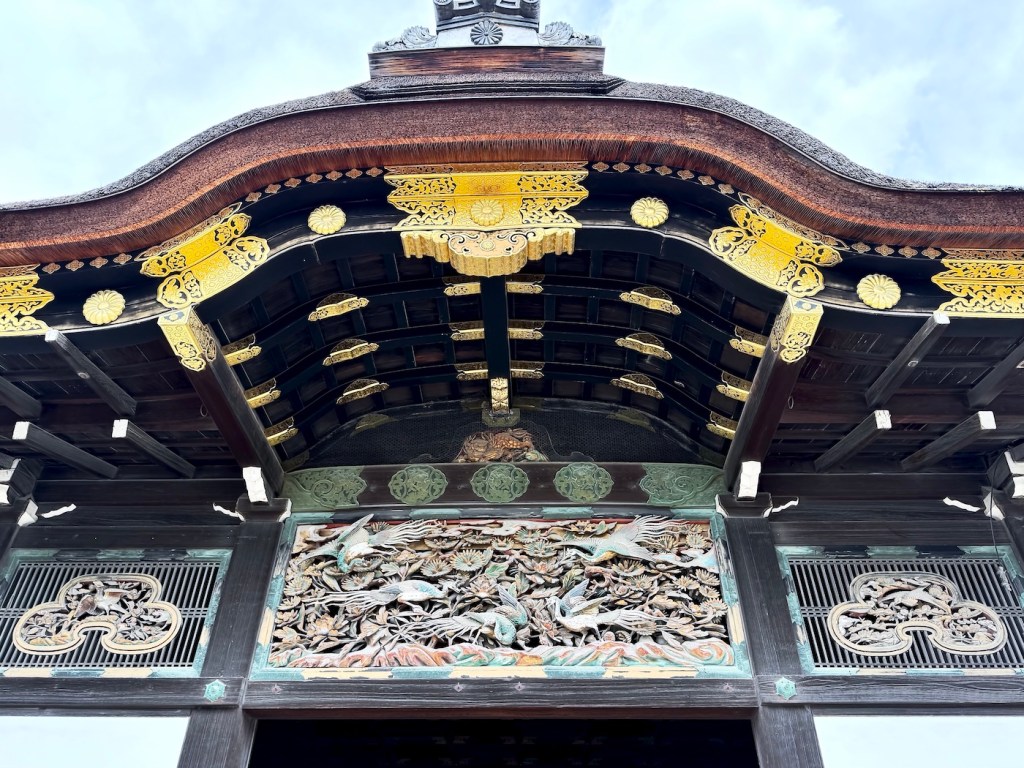
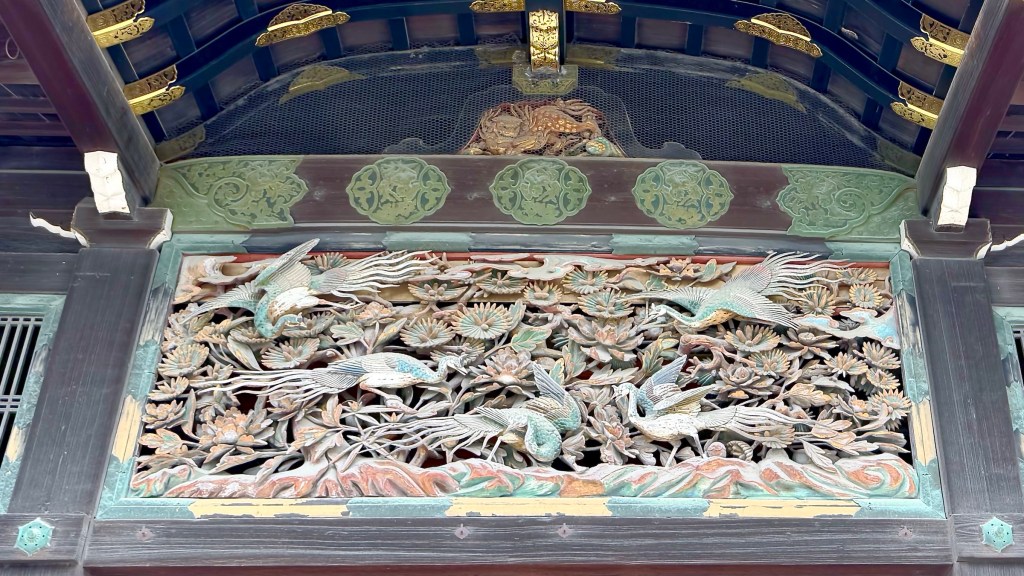
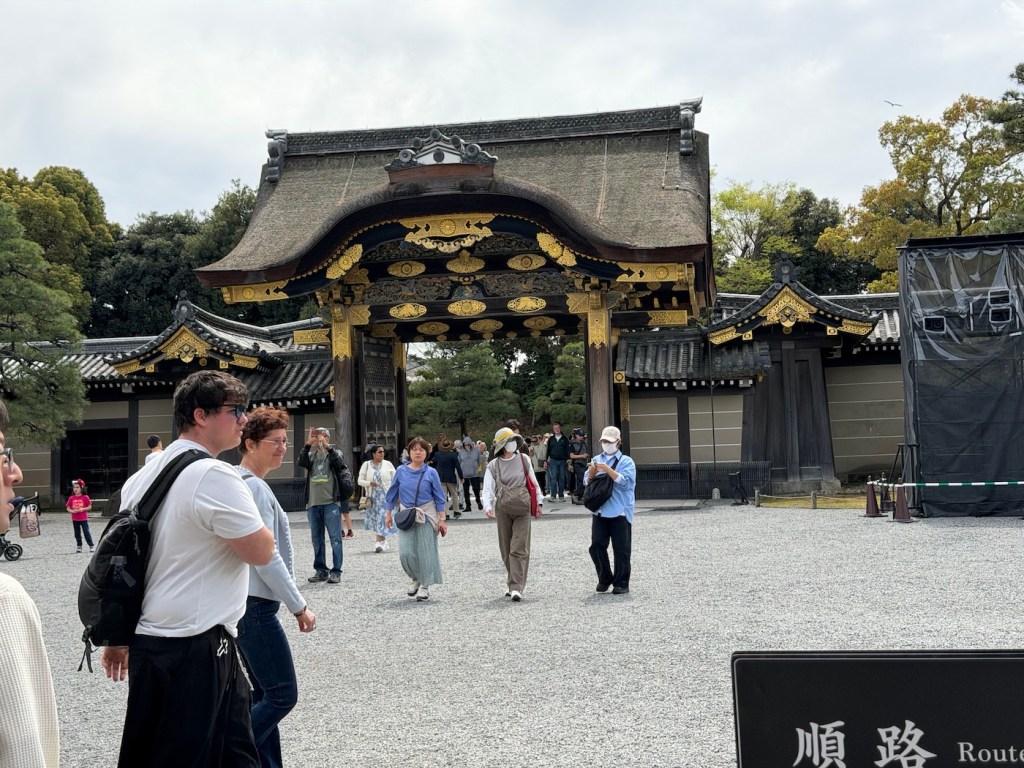
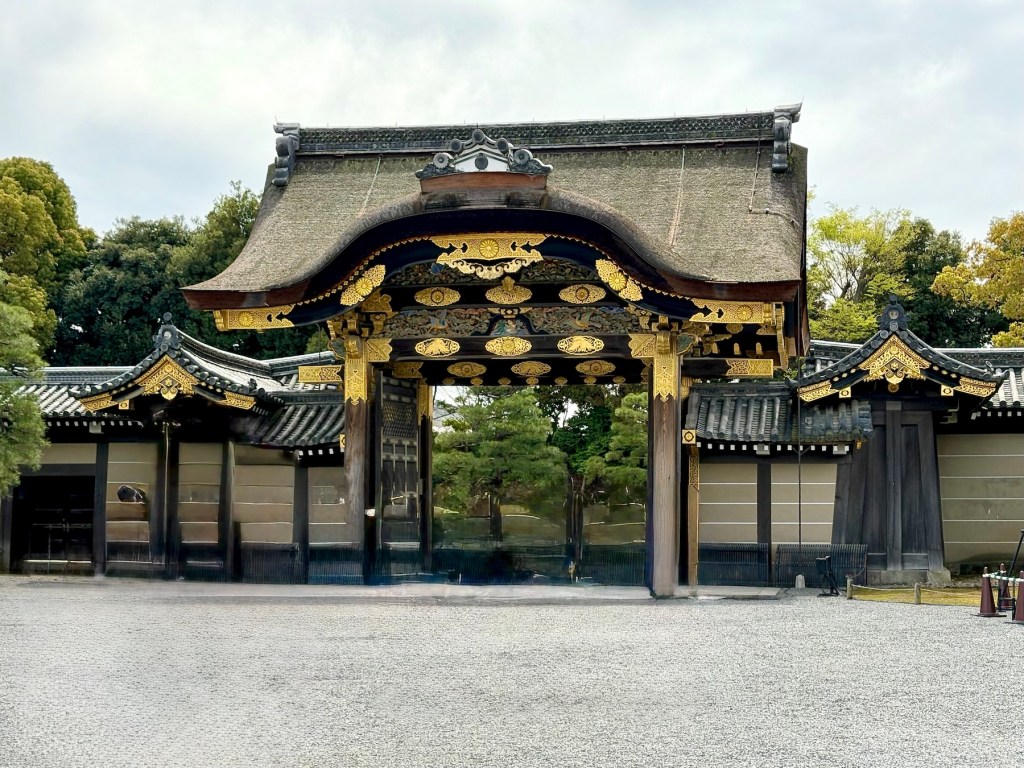
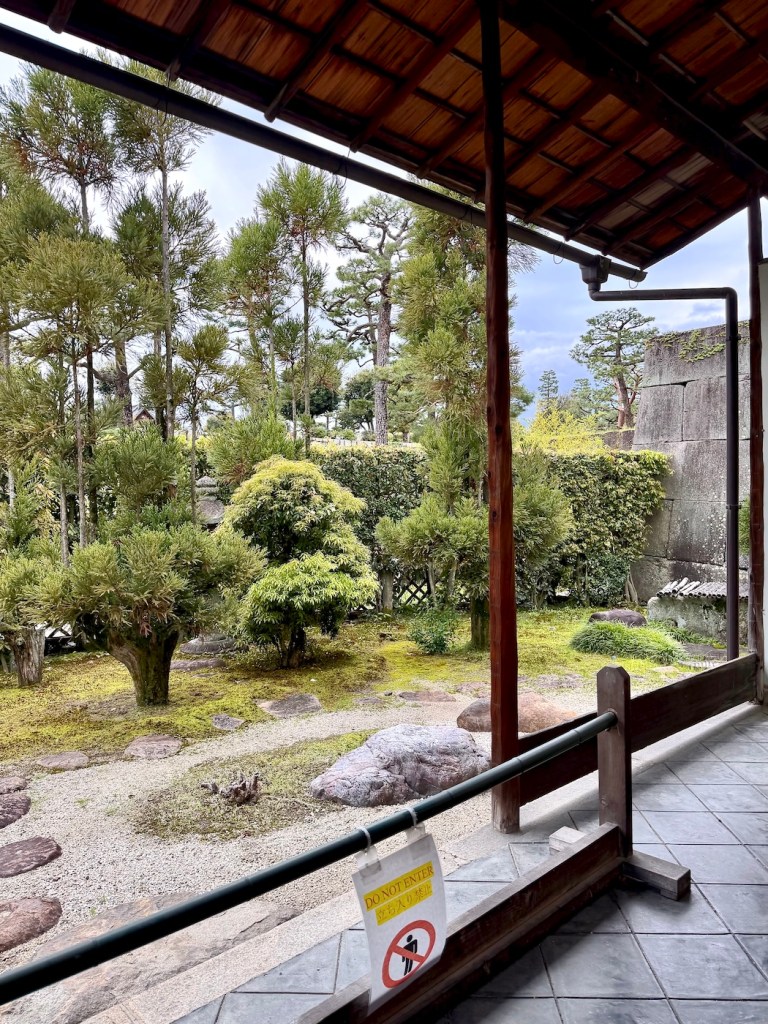
It was so crowded in many locations that one could barely see the structures or garden features. I removed some of the distractions, although it left wonky-looking bits. Sorry.
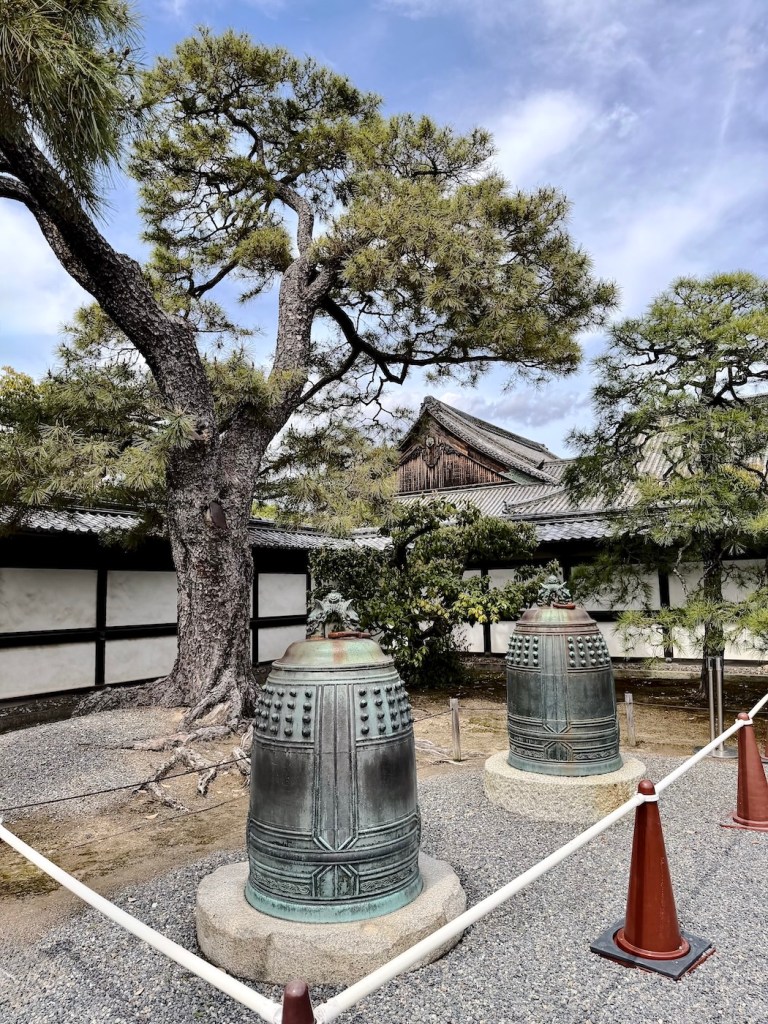
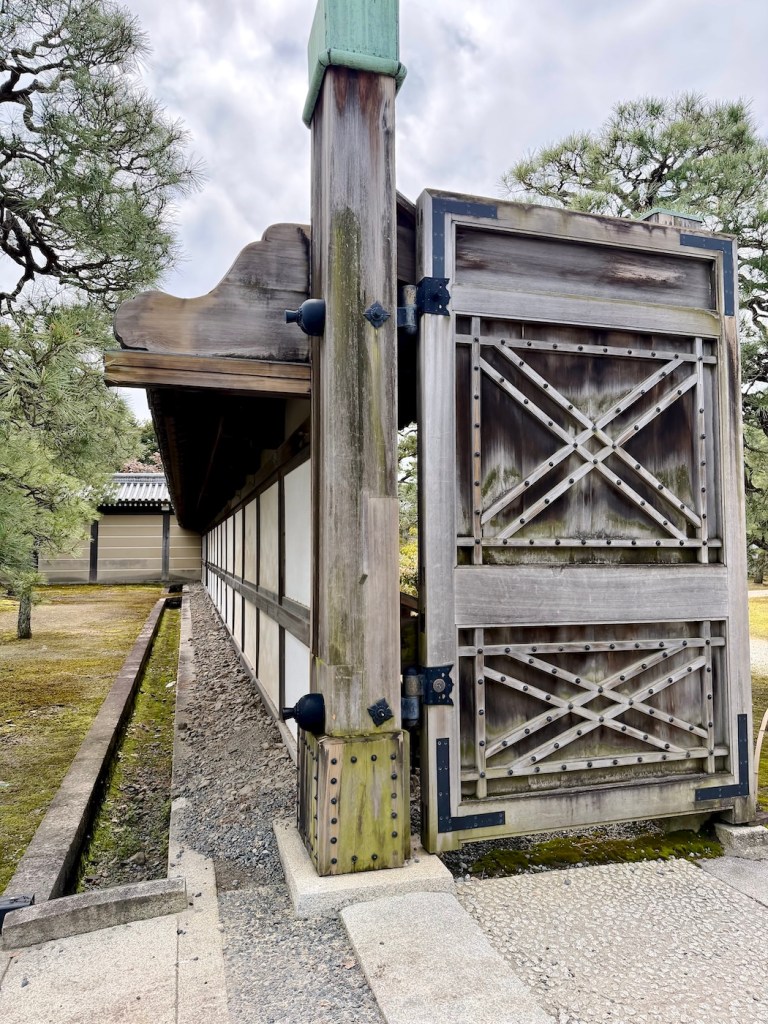
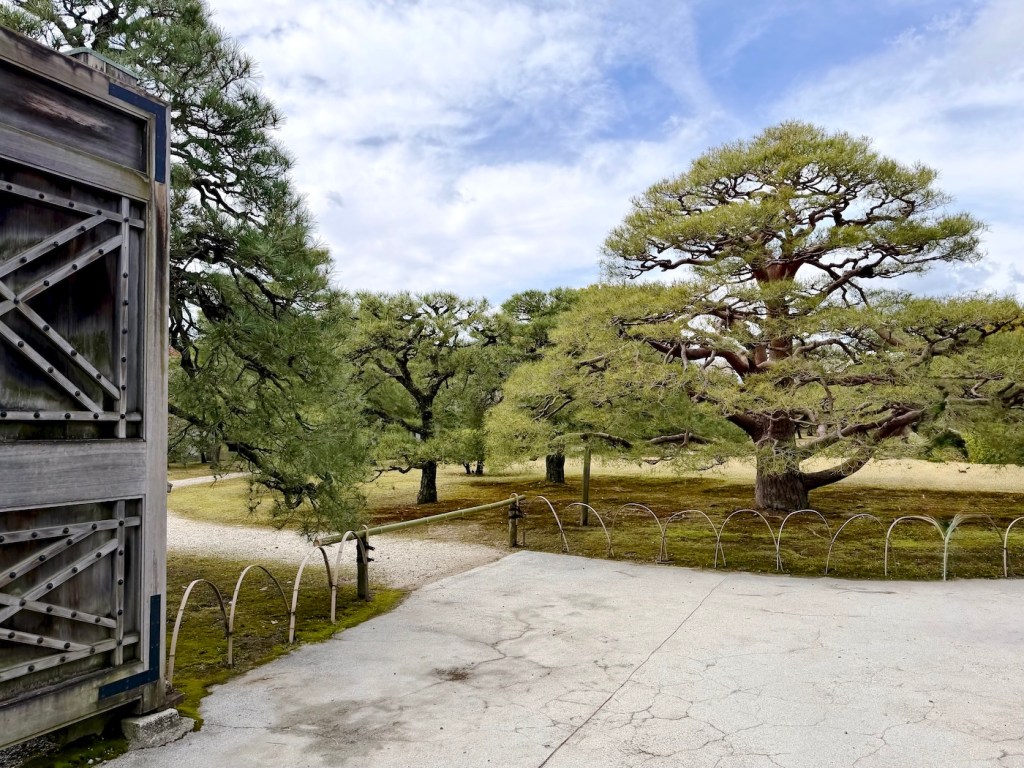
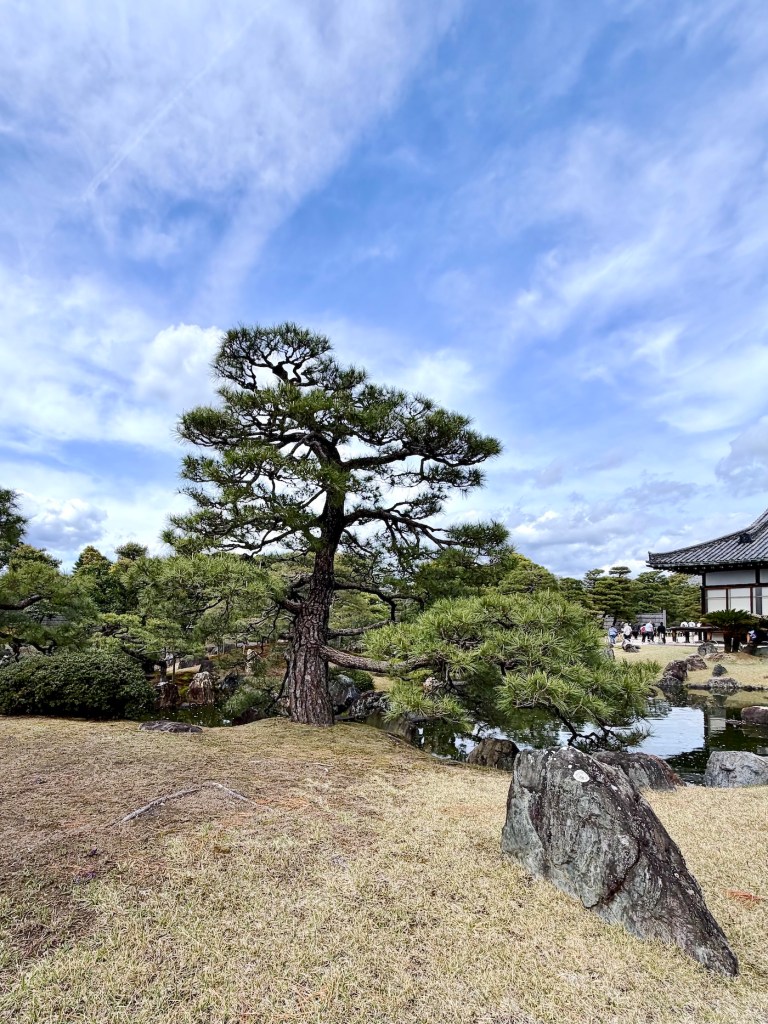
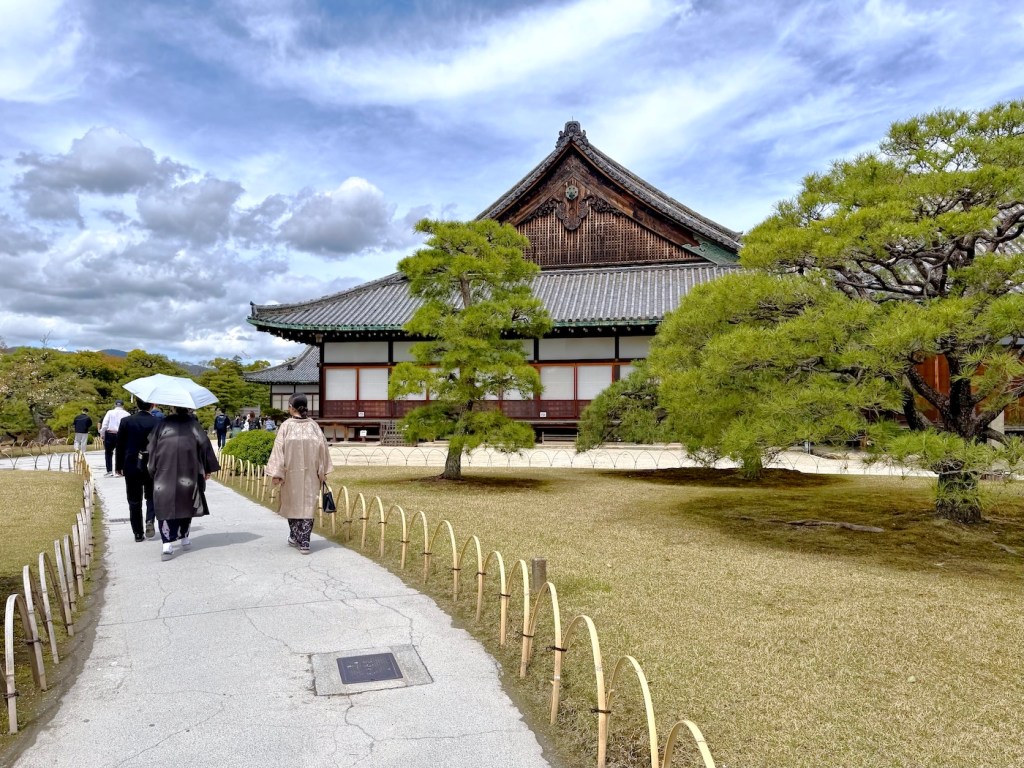
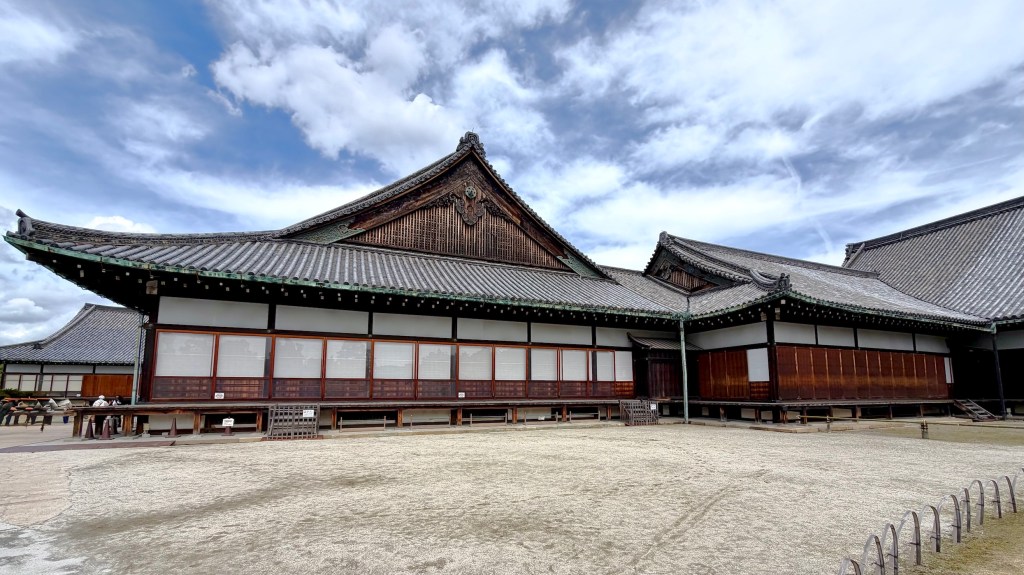
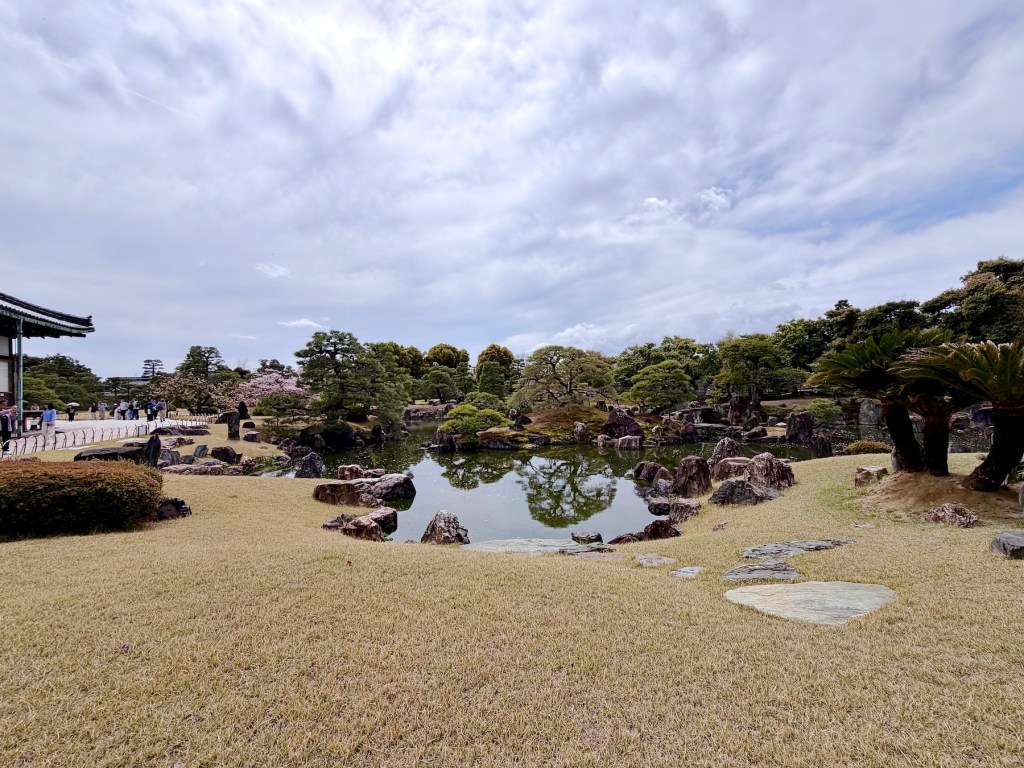
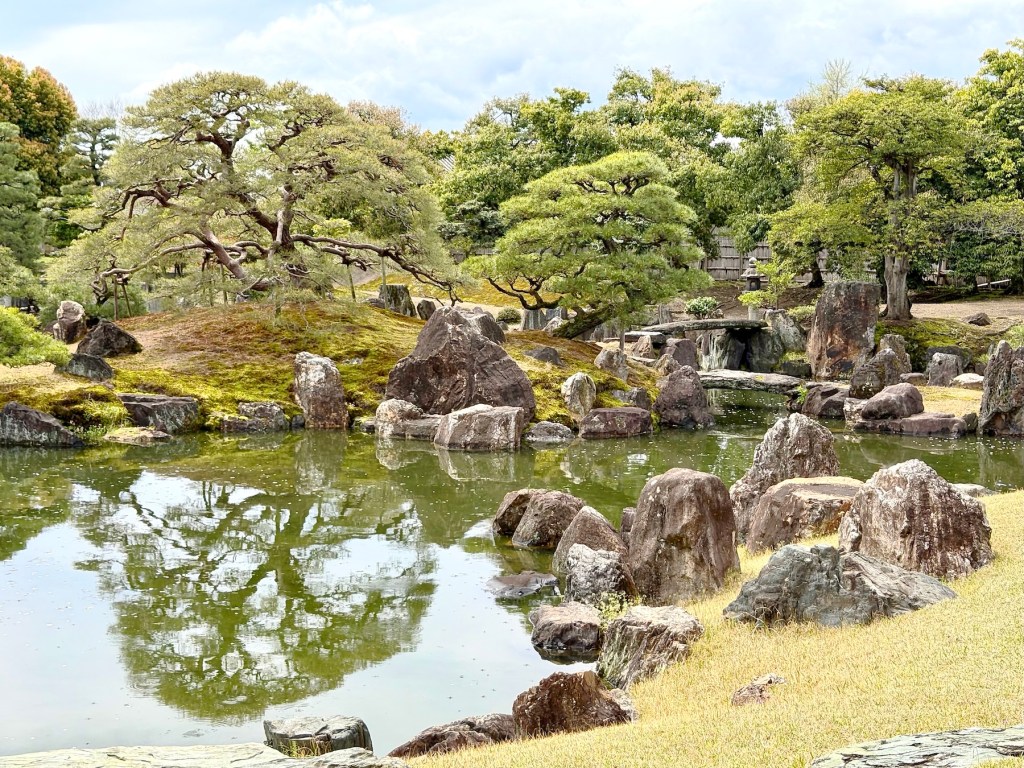
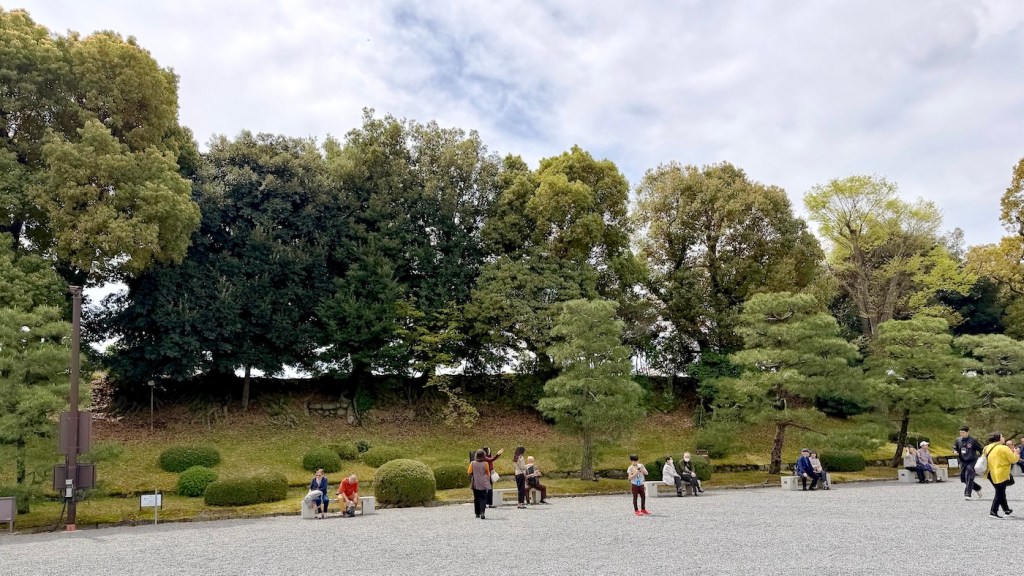
In preparation for the Kan’ei Gyoko in 1626, Ninomaru Garden was redesigned by Kobori Enshu to complement the classic Shoin-zukuri style of architecture of the palace.
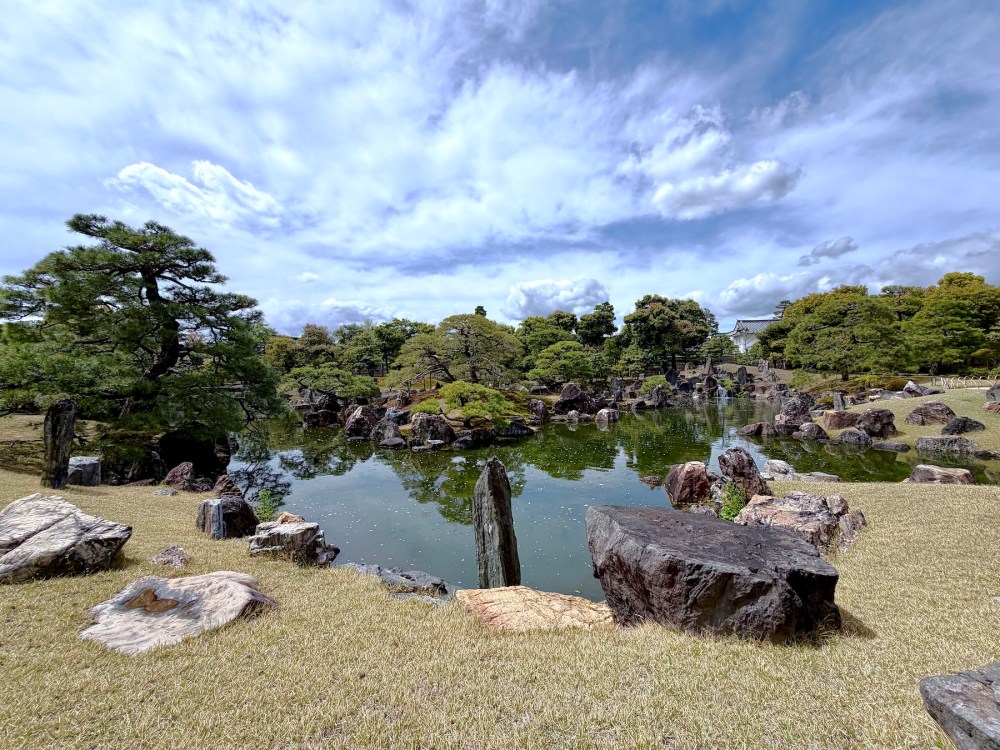
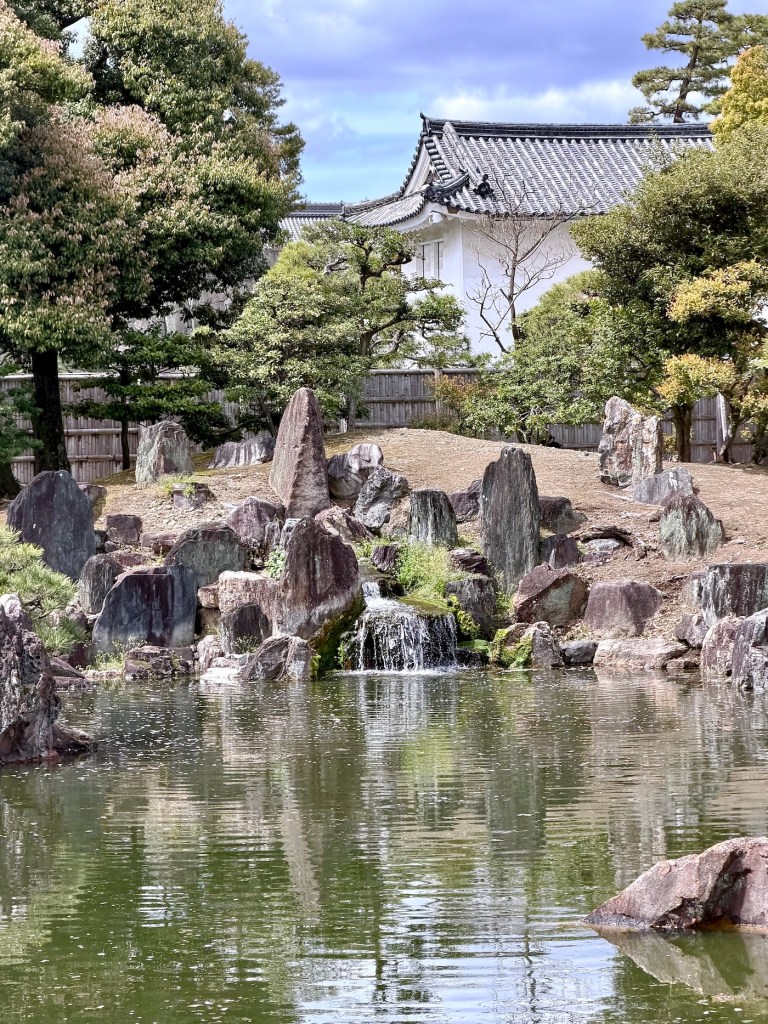
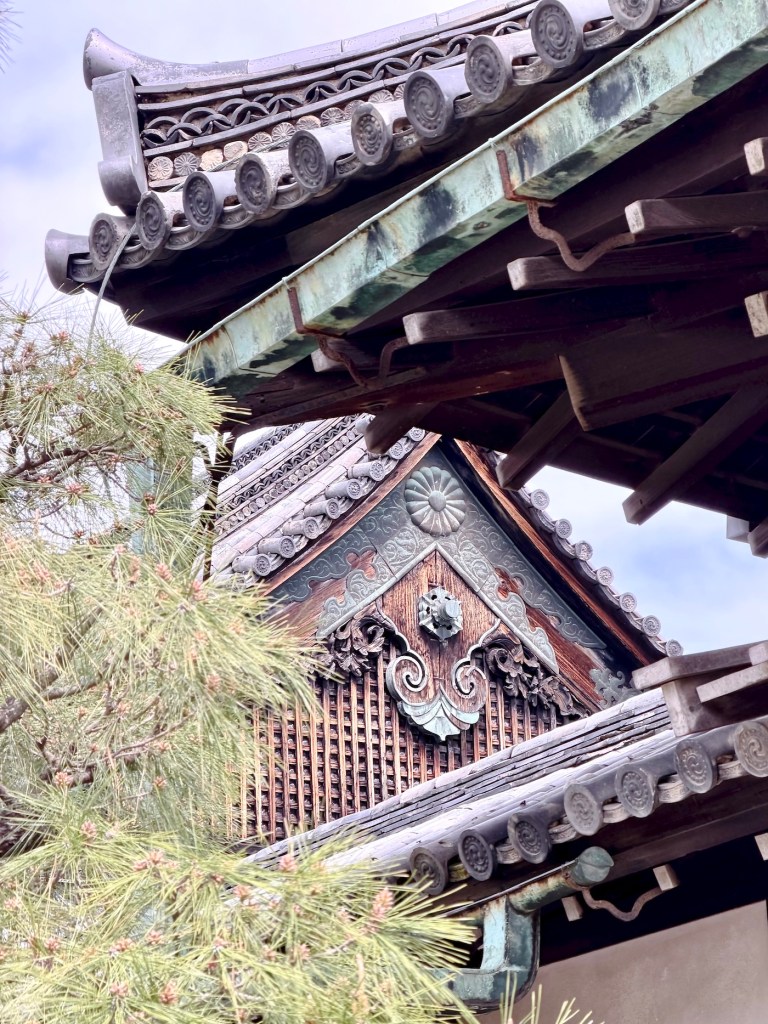
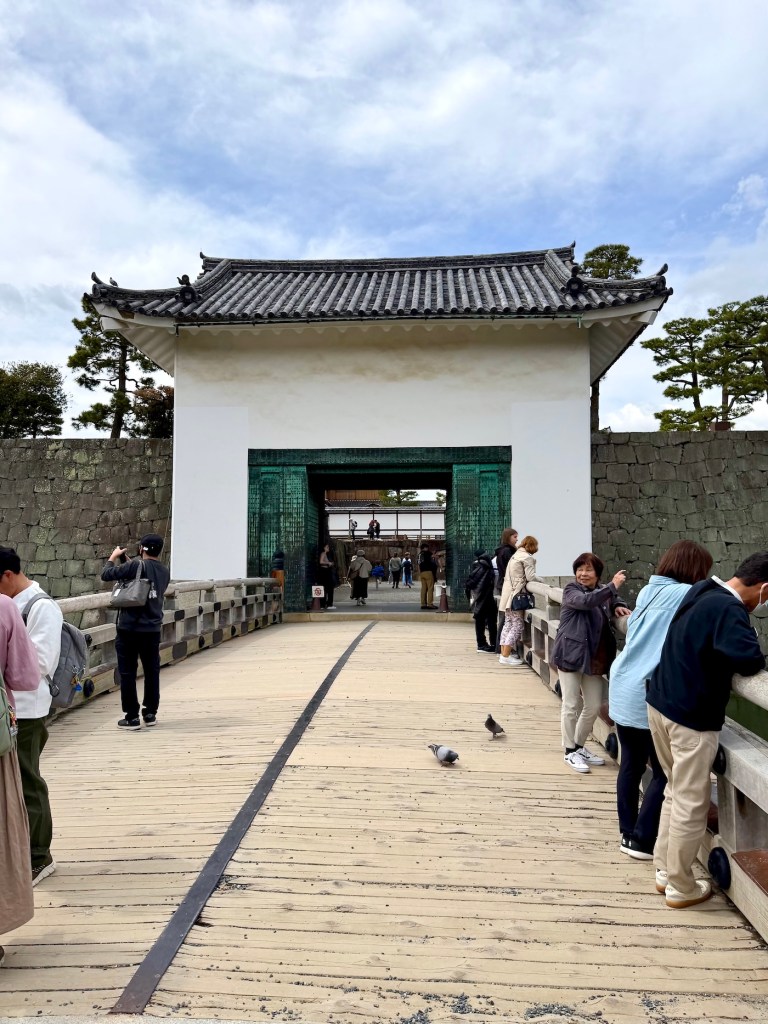

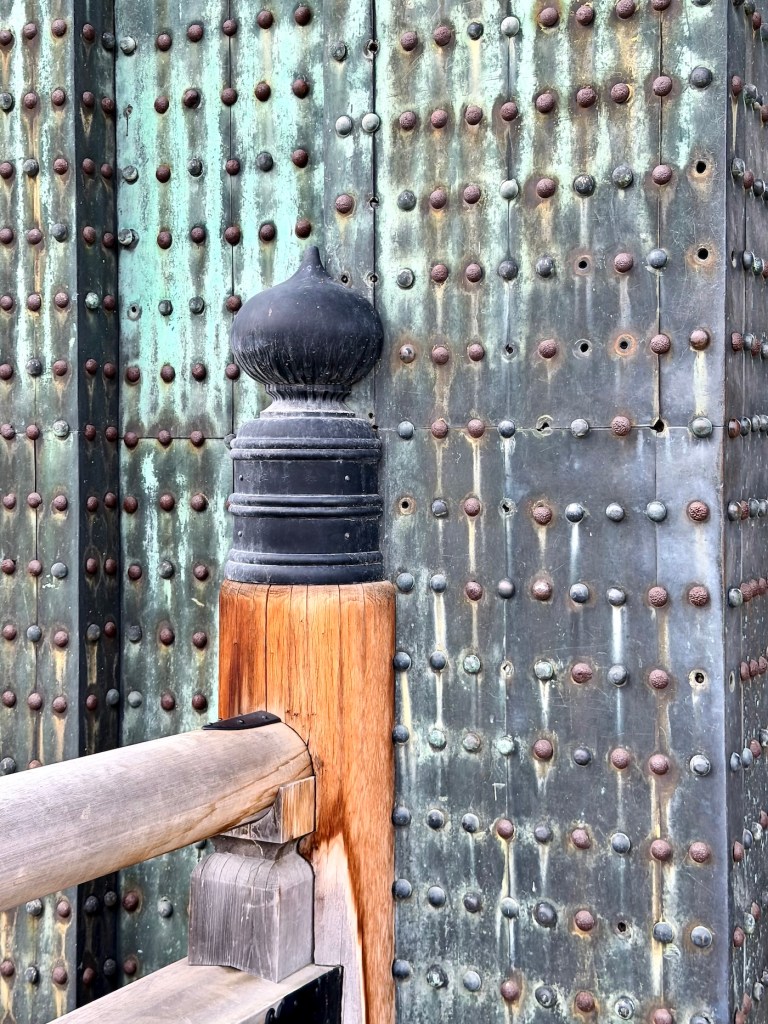
This is the Honmaru Yagura-mon, the eastern gate of the Honmaru-goten, the Honmaru Palace. Because, wouldn’t you know it, Nijō-jō gives you not one but two palaces!
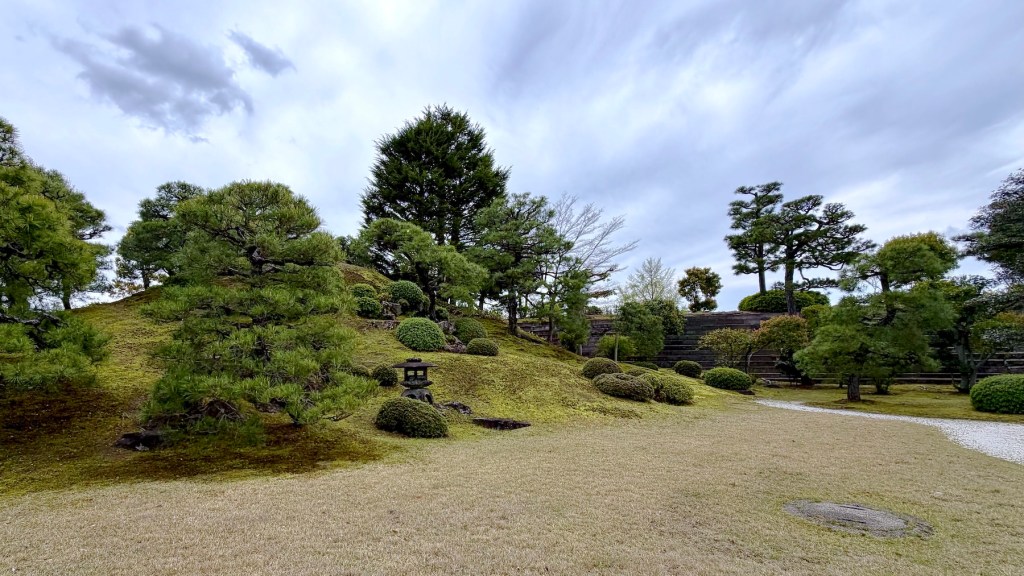
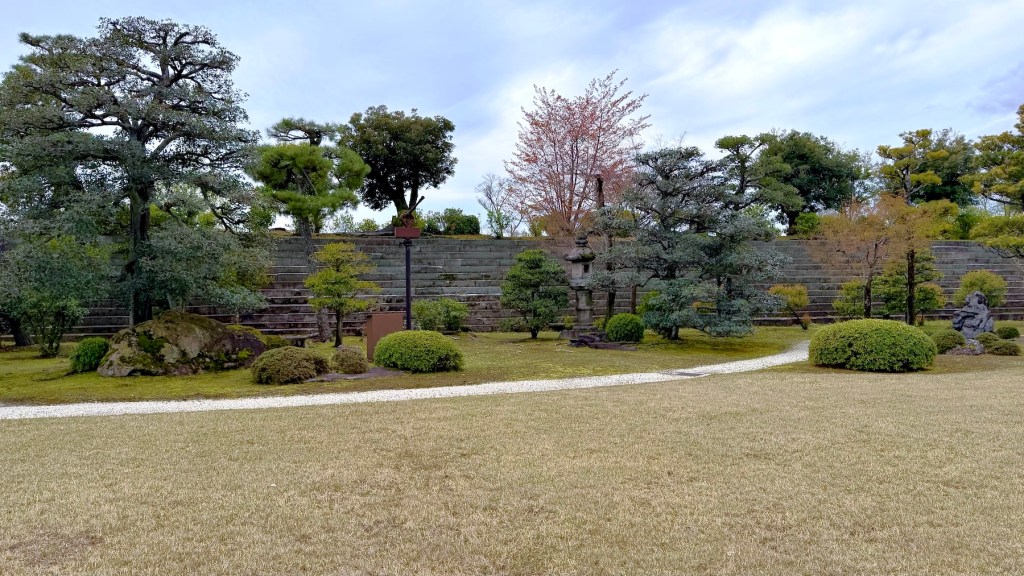
Honmaru Garden was planted for a visit by Emperor Meiji in the late 19th century. It was redesigned later on. In my opinion, it presents a striking contrast to the Ninomaru Garden.
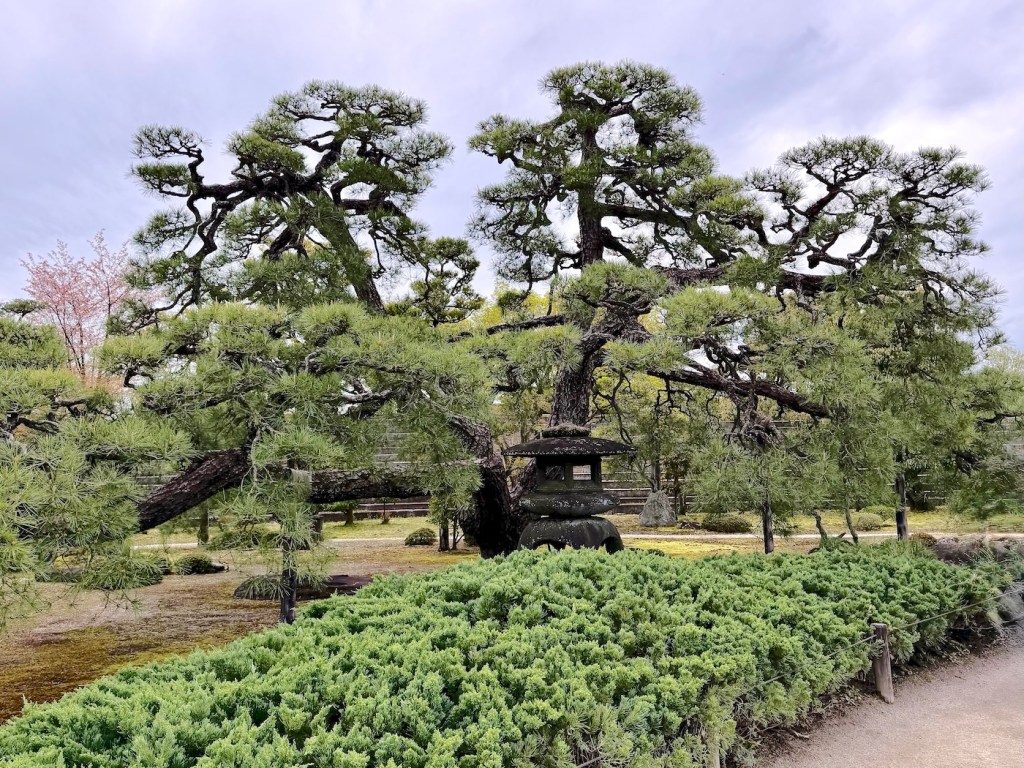
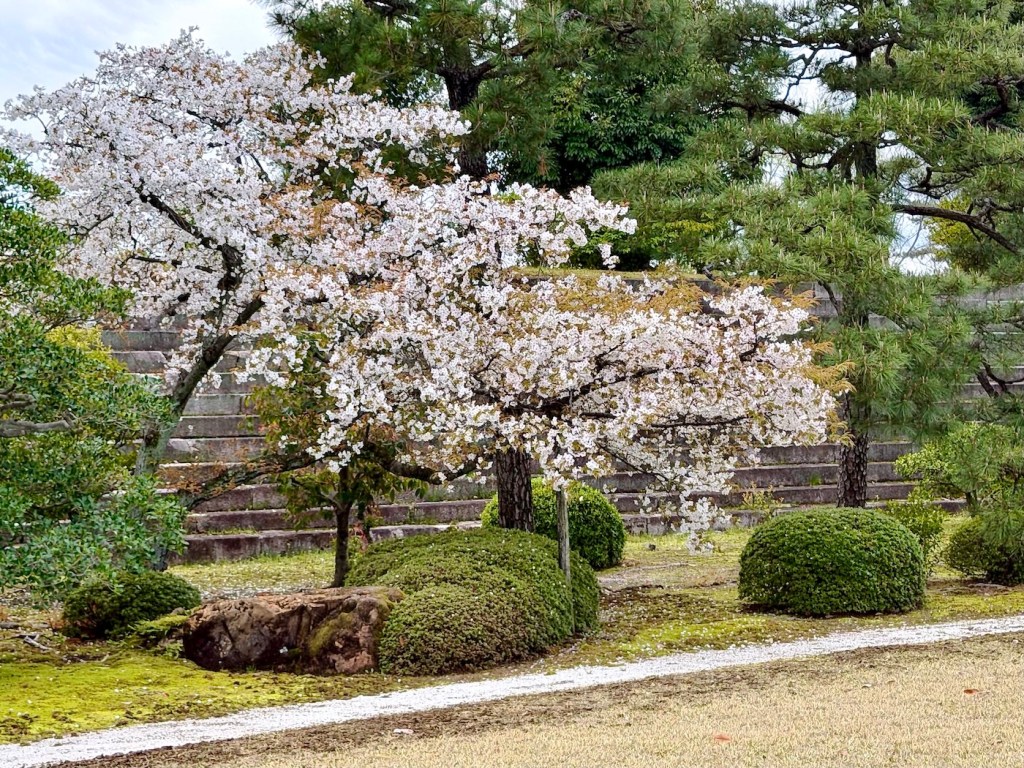
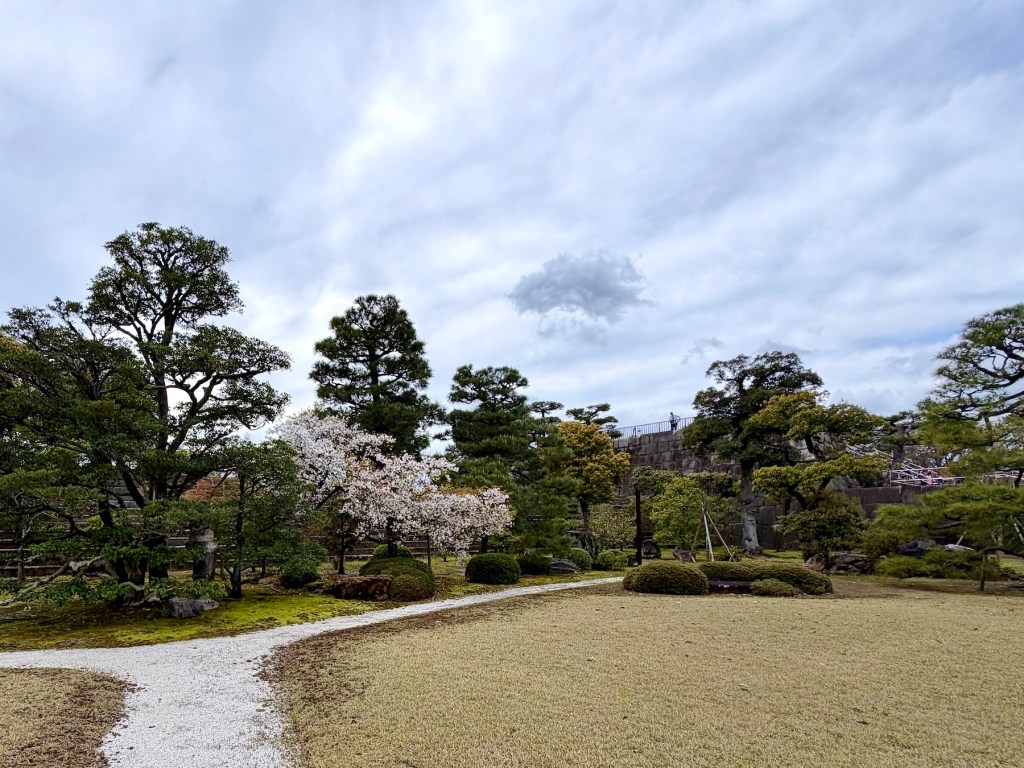
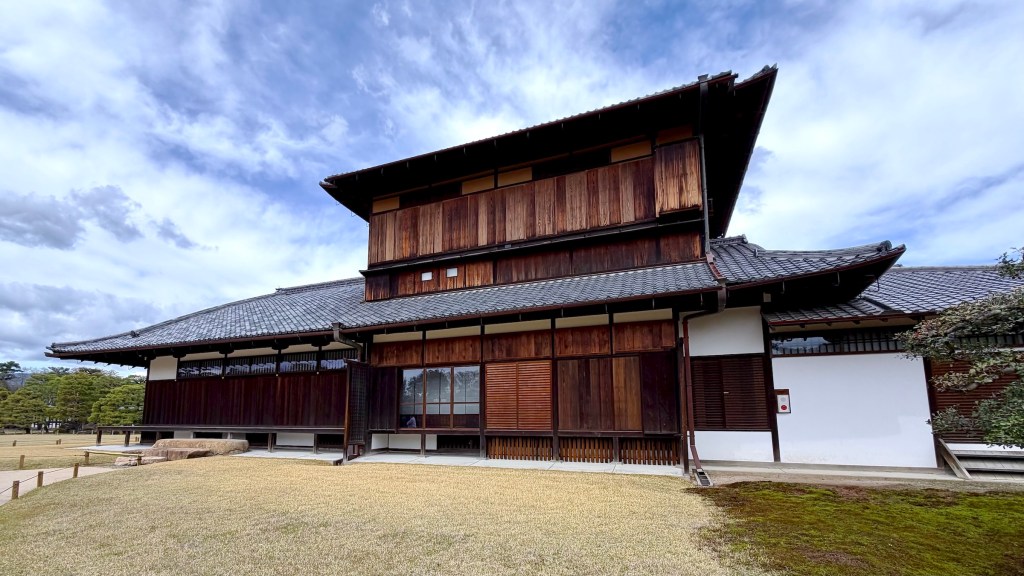
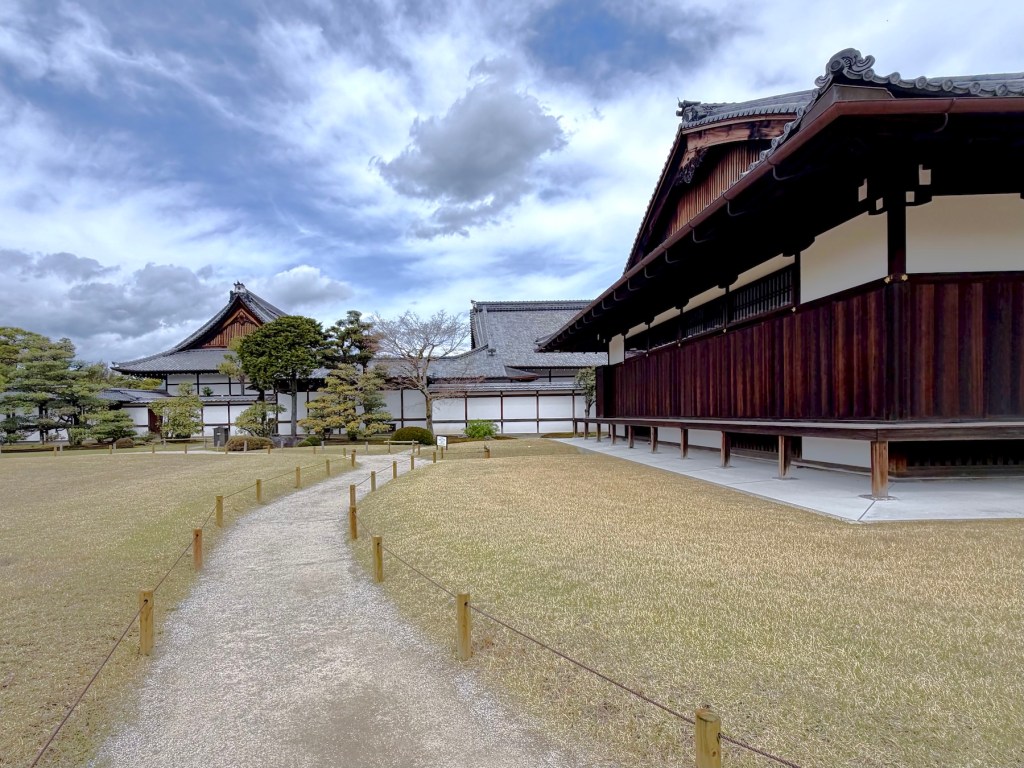
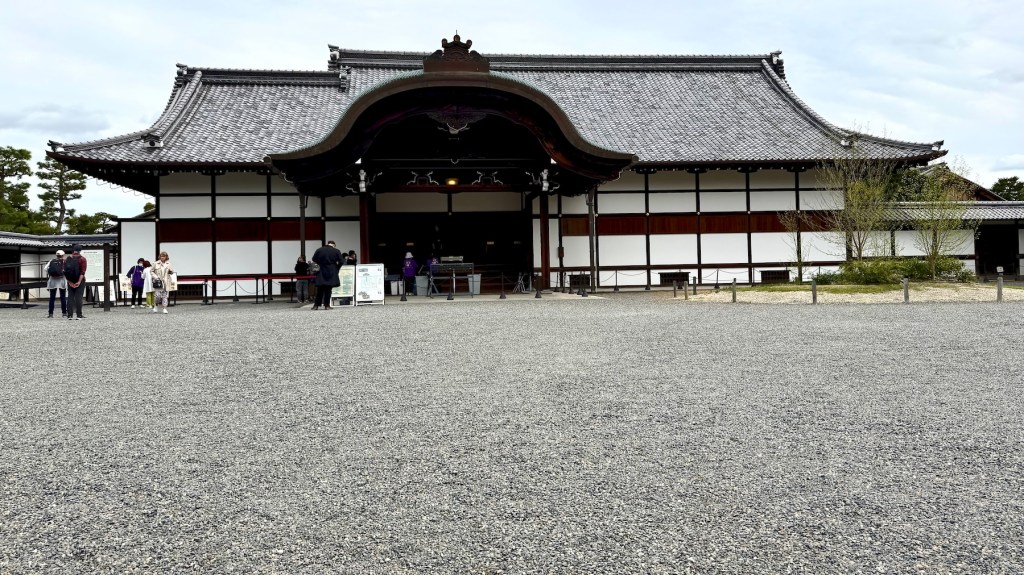
The Honmaru Palace is a rare example of an imperial princely palace. It was moved here from the Imperial Palace compound in 1893.
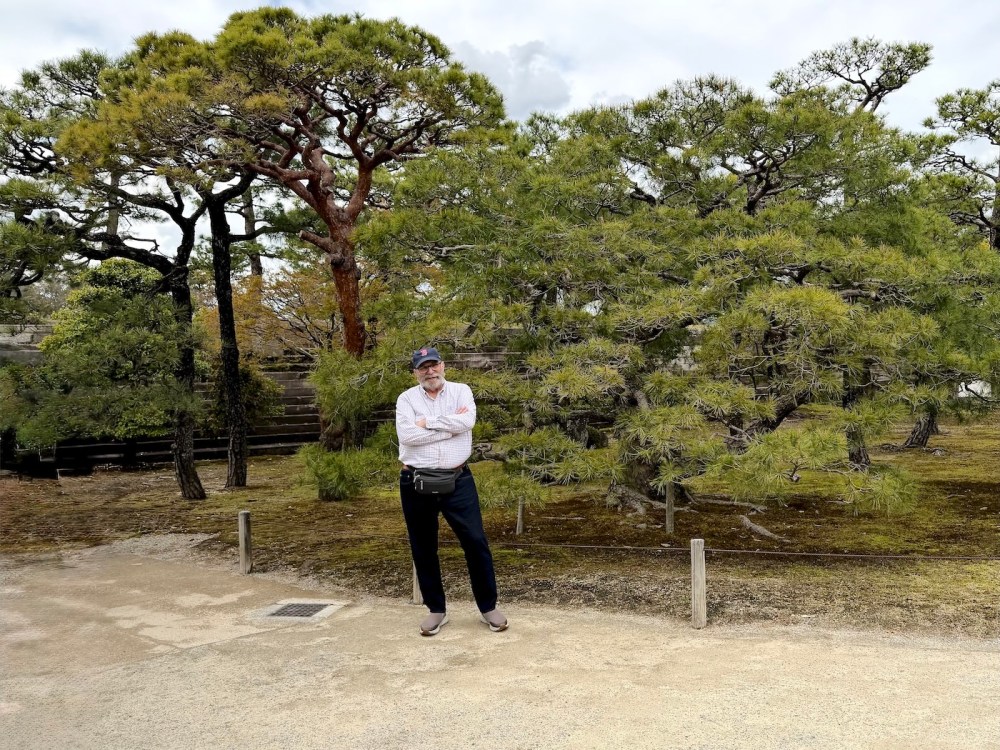
… especially because we were lost and would have loved to find an exit.
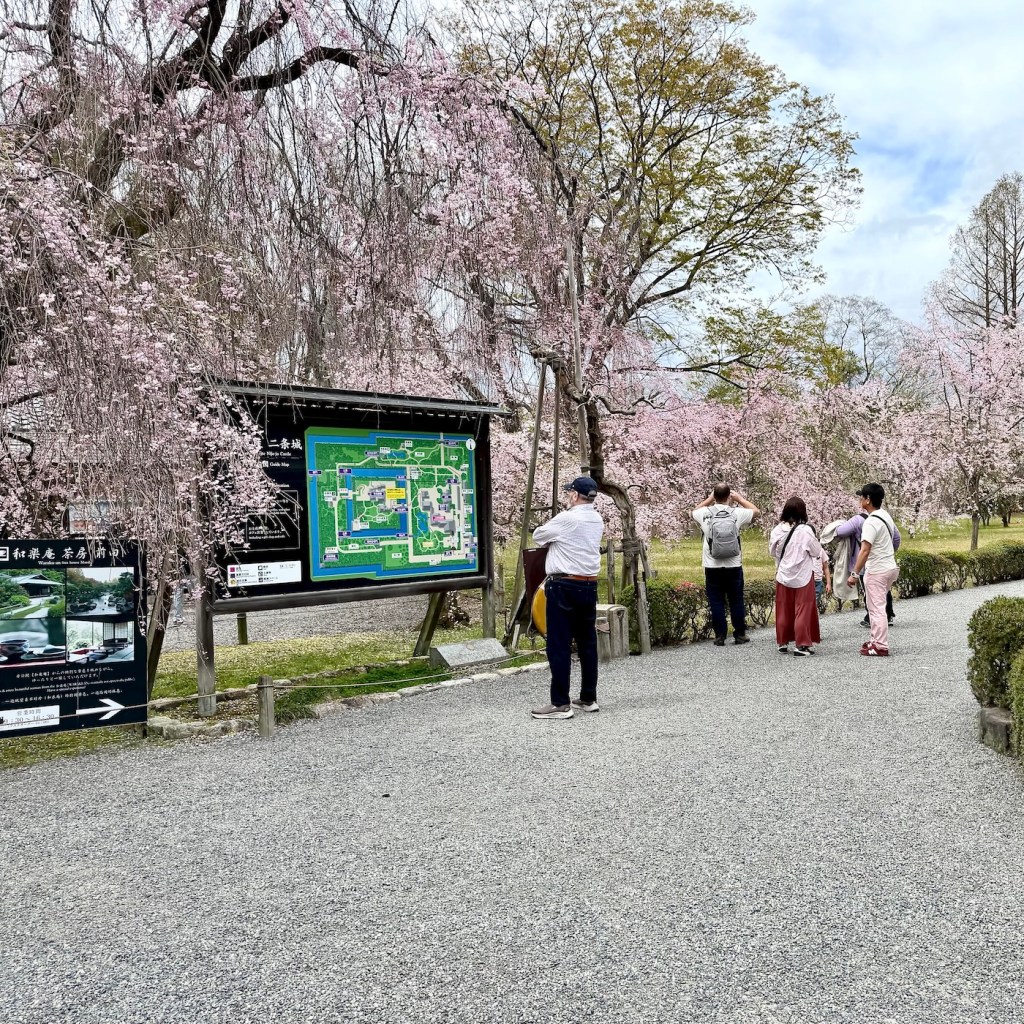
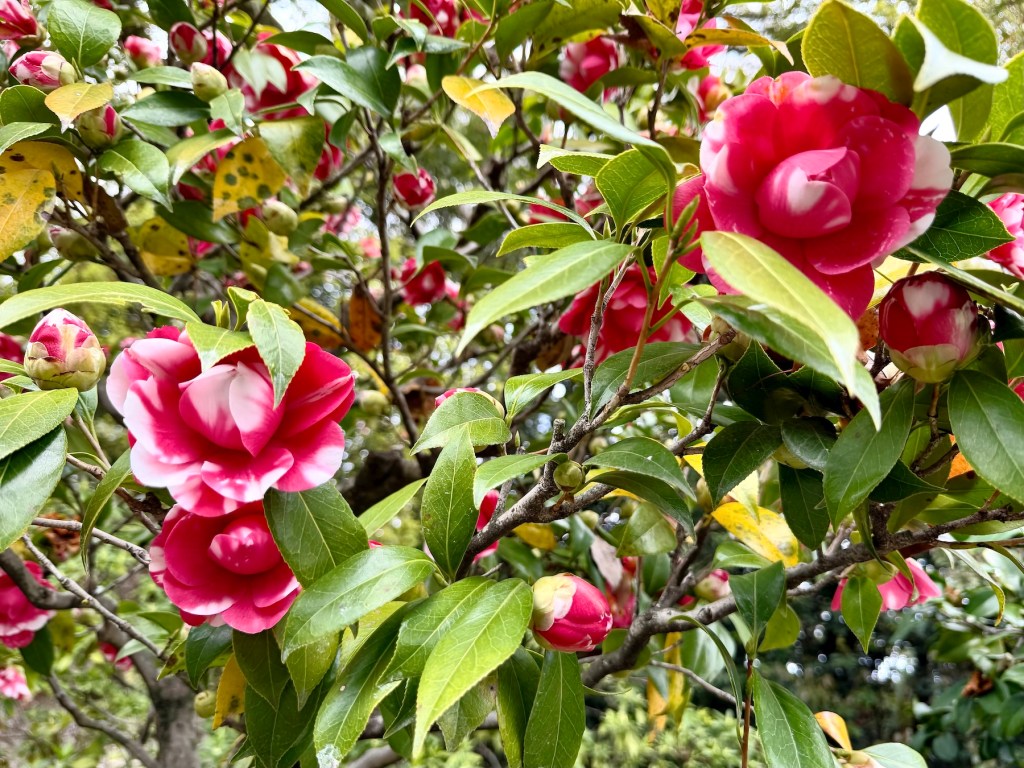
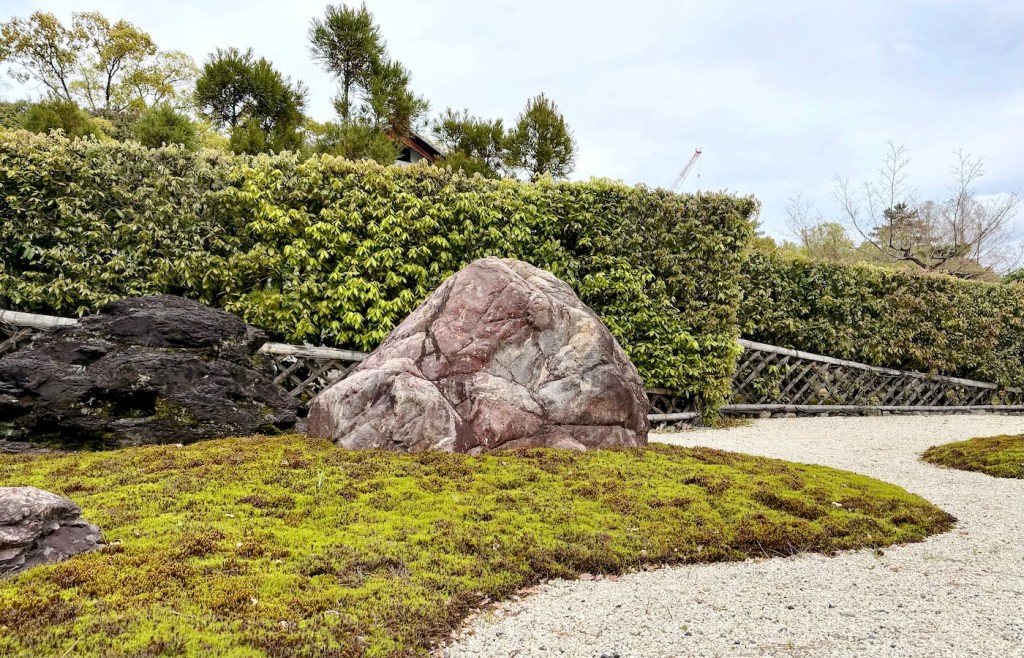
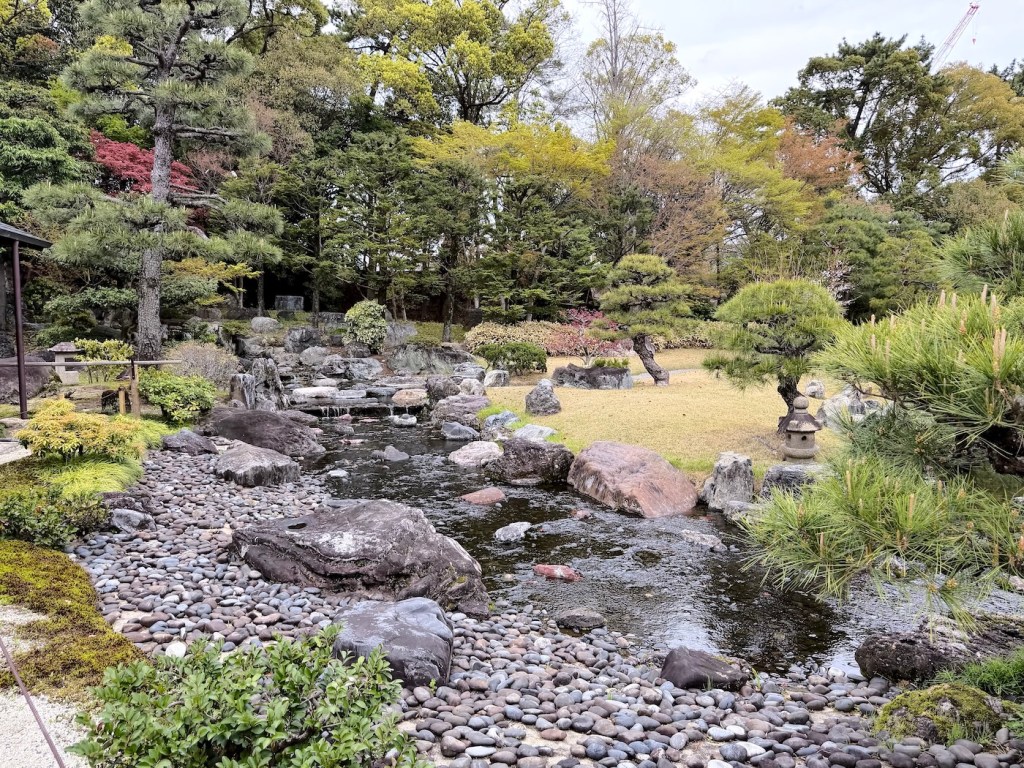
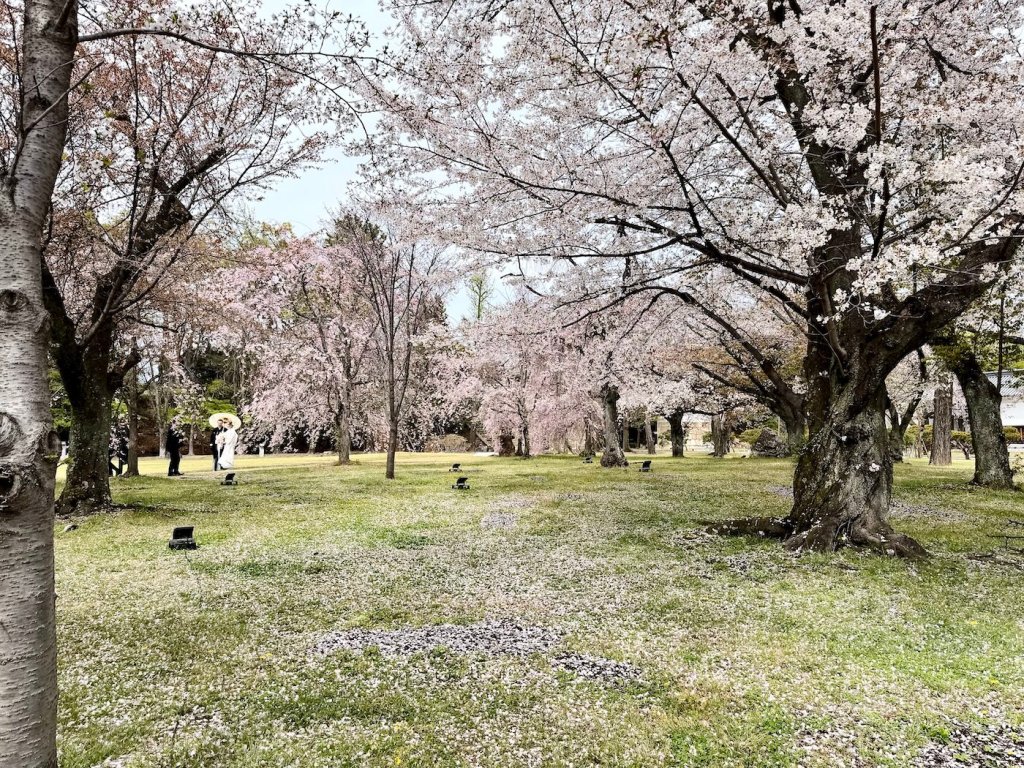
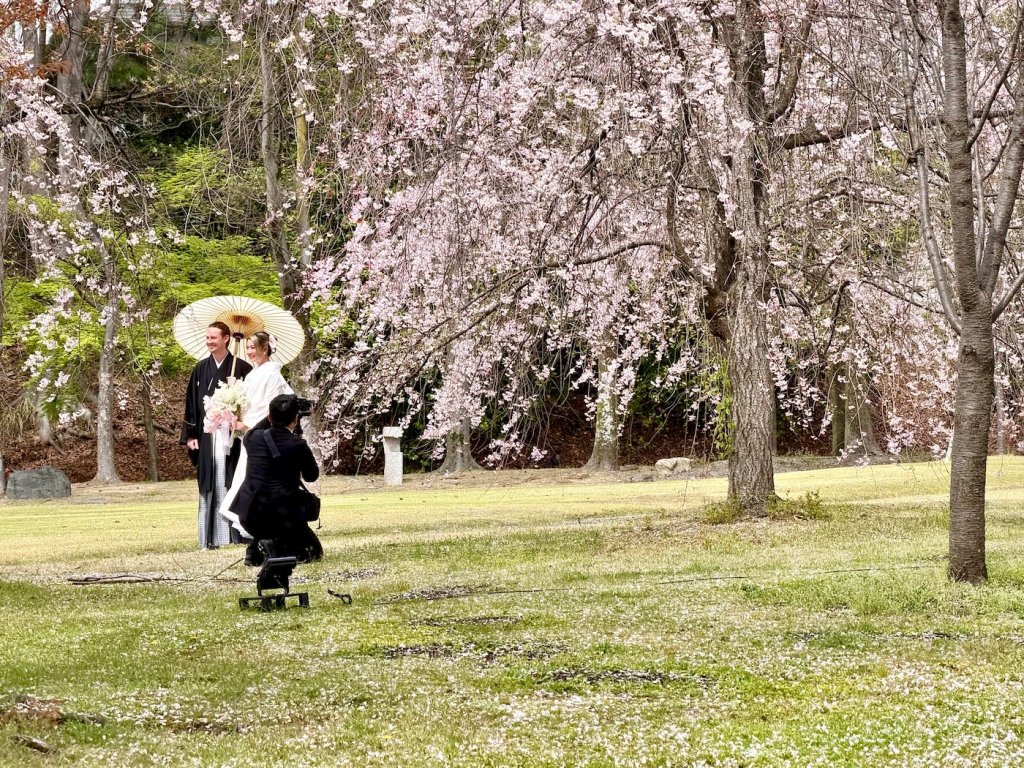
I can’t believe the coincidence of the photographer’s jacket matching the outline of the bride’s kimono sleeve 😳
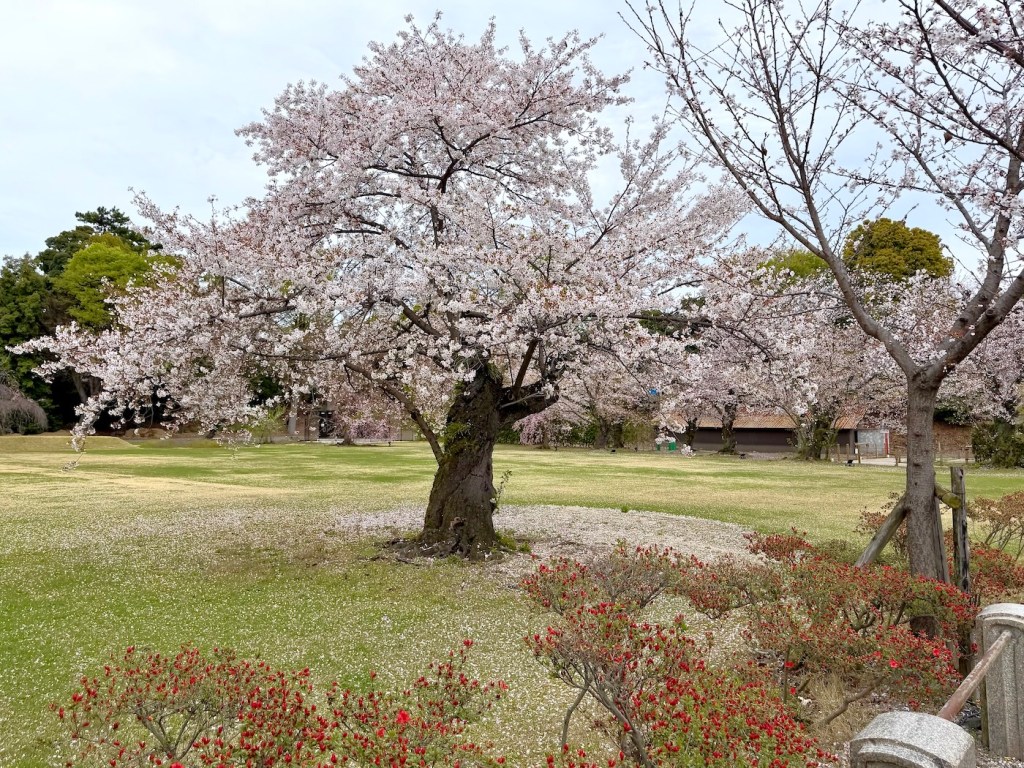
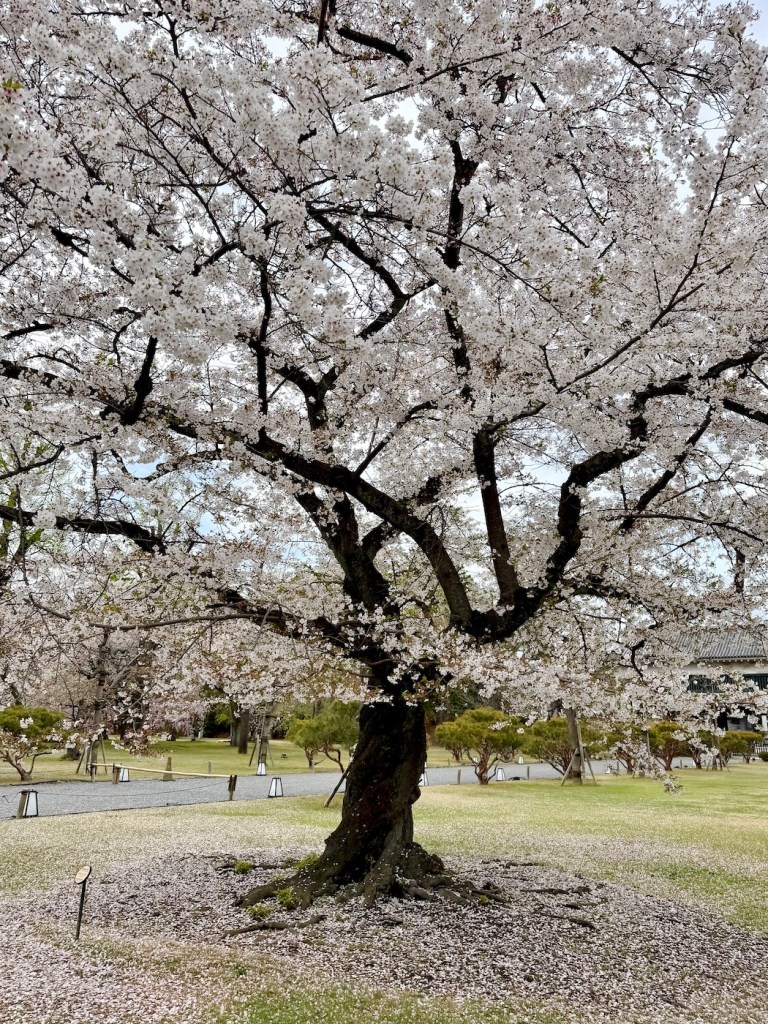
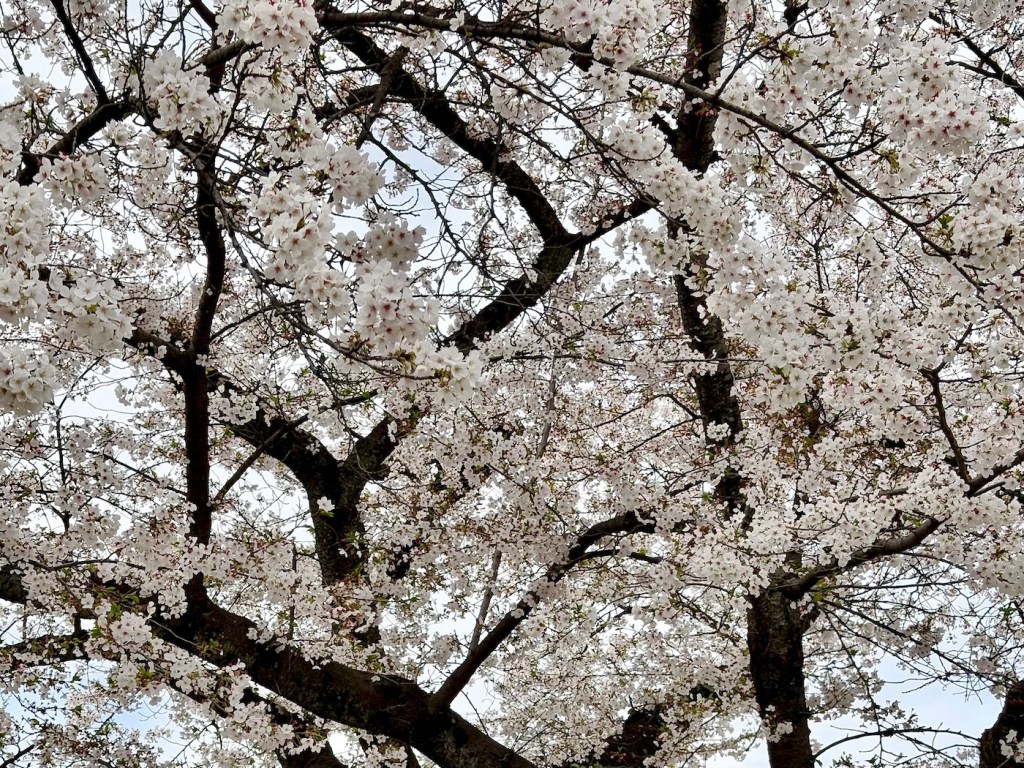
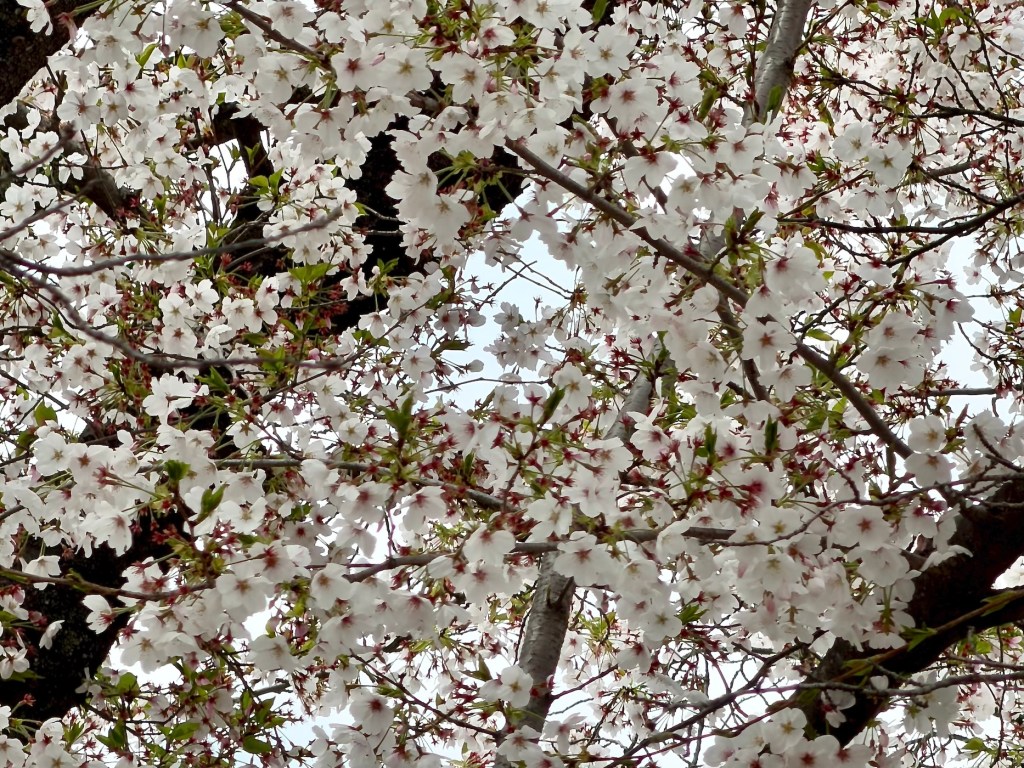
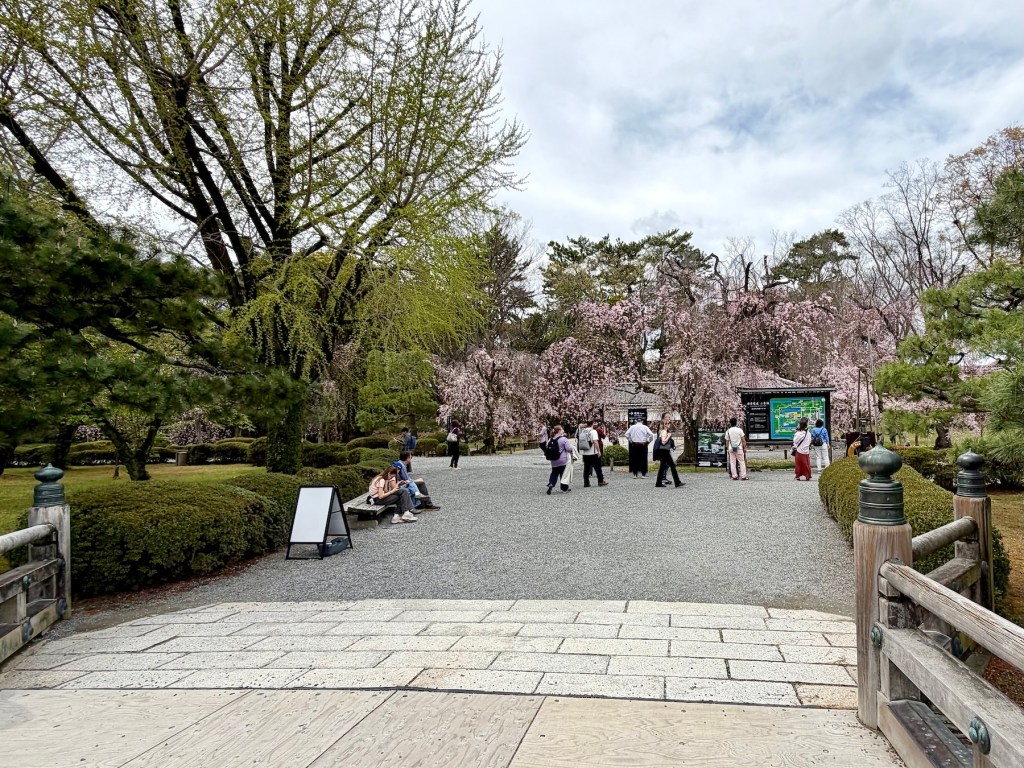
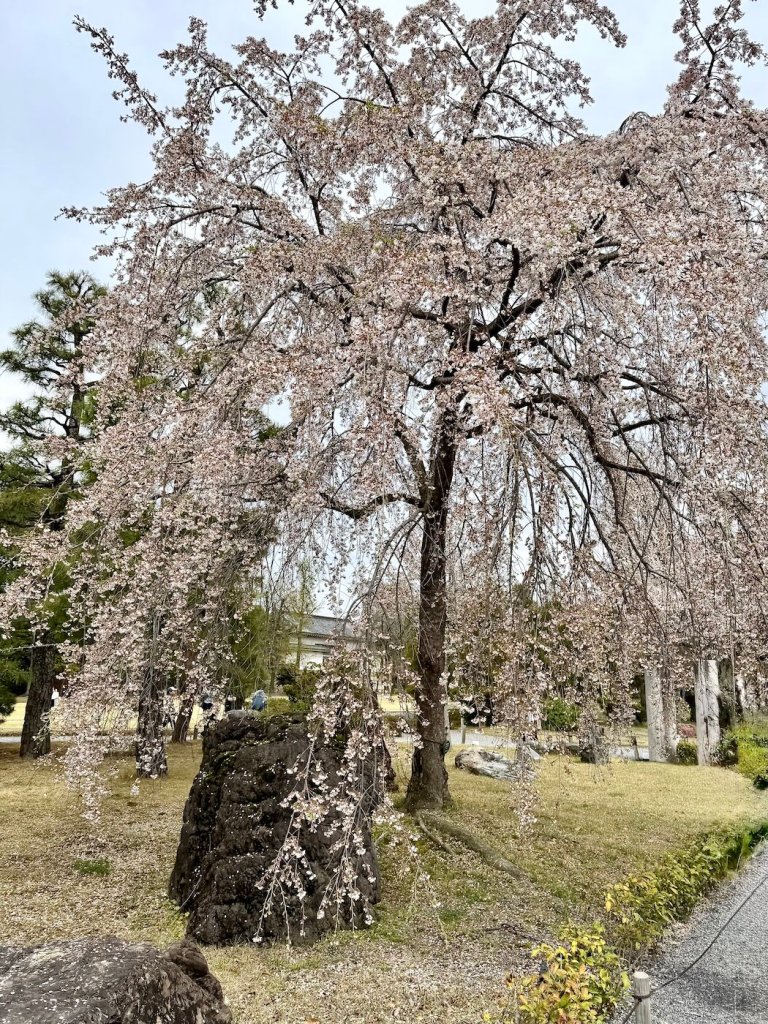
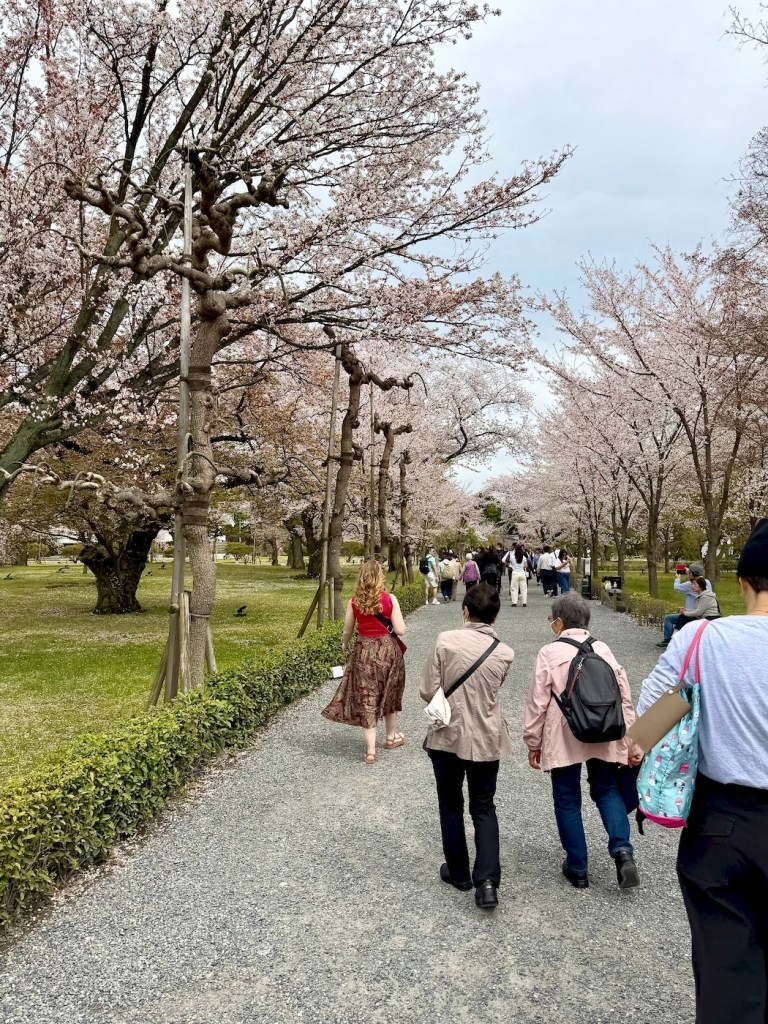
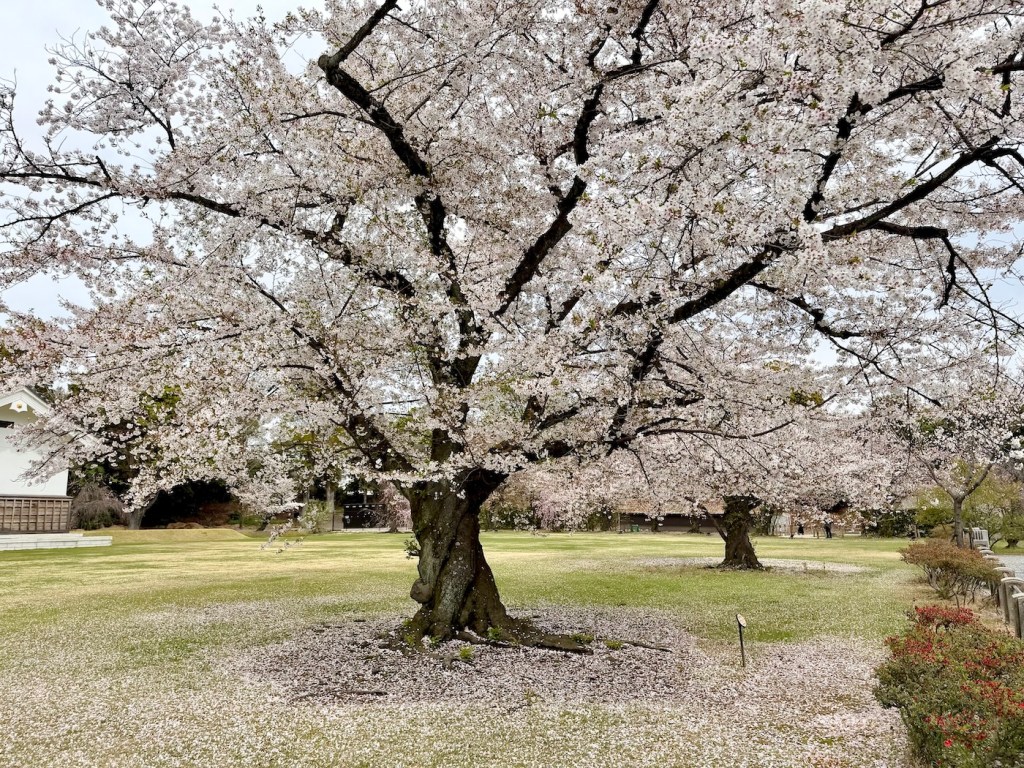
After an overload of sakura, or Blüten satt in northern German, it was time to cross the outer moat again, walk across the street, and rest our tired backs and sore feet after this amazing visit.


Excellent job of describing my favorite place in Kyoto!
Dr. Barry N. Leon
707 Cardinal Lane, #A1 Austin, TX 78704
USA
On Sun, Jun 7, 2026 at 9:42 PM NOT IN A STRAIGHT LINE by Photolera
LikeLike