On April 06, 08, and 13, we were guided by a high school teacher for Japanese History. Nakano-sensei was not only fluent in the minutiae of the Empire’s history, but he was also a great teacher of the traditions and mysteries of Buddhism and Shinto, as well as the anecdotes and fables associated with the temples and shrines we visited with him. On the 6th and the 8th, Nakano-sensei guided us through five temples in Kyoto, whilst on the 13th, we took the 新幹線, shinkansen, one of those fabulous bullet trains, to visit Himeji Castle.
The First Temple on April 06: 清水寺 or きよみずでら, Kiyomizu-dera, Pure Water Monastery
The Pure Water Monastery belongs to the Kita-Hosso sect of Japanese Mahayana Buddhism. The temple is dedicated to the worship of Senjū Jūichimen Kannon, the thousand-armed and eleven-faced Kannon Bosatsu, and as such is a stop on an important Kannon Pilgrimage Route in the Kansai region that encompasses thirty-three temples dedicated to the bodhisattva.
Although many visitors to Kiyomizu-dera are tourists like us, it is above all an operational temple, meaning it is a house of worship, like churches, synagogues, or mosques. The religious focus of the temple has been twofold from its inception. The Kannon Bosatsu has always been the temple’s raison d’être. Still, here at Kiyomizu-dera, her mission of Mercy and Compassion is aided by the water of a spring halfway up Mt. Otowa in the East of Heian-kyō, which is now Kyoto City. The enmei-sui, the life-giving spring water, has defined the location of the temple since the year 778 CE. The water runs just as pure and crystal clear now as it did 1200+ years ago.
According to collections of ancient texts, the legend of the founding of Kiyomizu-dera includes three main characters. The monk Kenshin/later Enchin, the 200-year-old ascetic Gyōei Koji, a disciple of Senjū Kannon, and the samurai Sakanoue no Tamuramaro, who would later be named shogun. The story unfolds with Enchin-san, prompted by a dream, walking from his home monastery in Nara to Mt. Otowa, a distance of ~70 Km as the crow flies, where he found the hermit Gyōei-san behind a waterfall. Gyōei-san was relieved that Enchin-san “finally” showed up, as he had expected him for a long time. He left the monk in charge and disappeared, at which point Enchin-san realized that the ascetic was an incarnation of Senjū Kannon. He carved a statue of the Bosatsu and enshrined it behind the waterfall in Gyōei-san’s former hut. This is considered the founding of the temple. Samurai Tamuramaro’s involvement began two years later. He encountered monk Enchin near the waterfall while on a deer hunt. He needed the deer’s blood to cure his wife Miyoshino Takako, who was seriously ill. The monk convinced him that killing is sinful. Instead, he counseled devotion to Kannon Bosatsu. Takako-san recovered, and her grateful husband built a temple for the deity. Based on these ancient texts, the Kiyomizu-dera temple administration regards Gyōei Koji as its founder, Enchin-sensei as its founding priest, and Tamuramaro-sama as its principal patron.
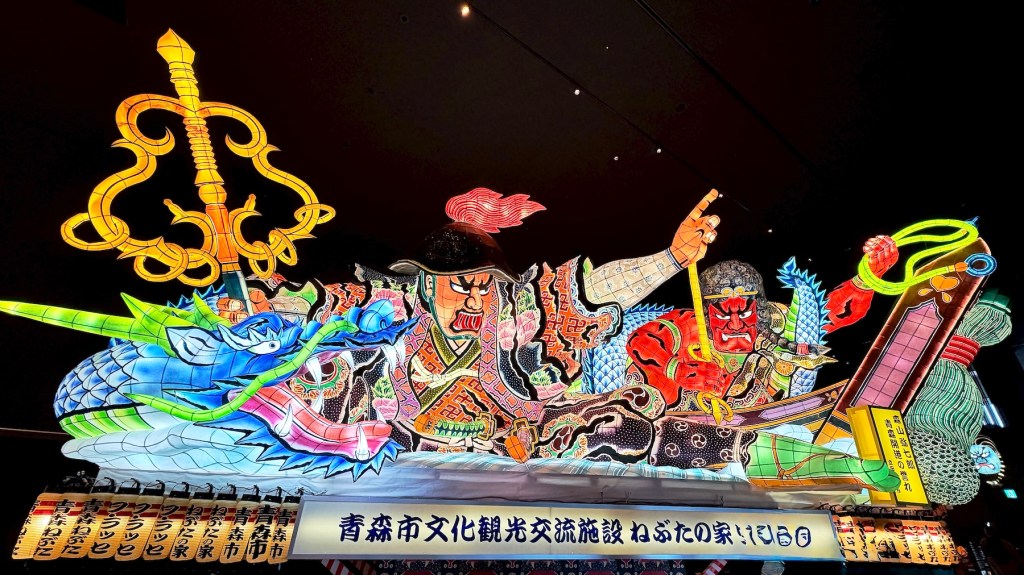
About a month after visiting Kiyomizu-dera, we came across Shogun Sakanoue no Tamuramaro (758–811) once more, quite by accident, actually. We were in the northern city of Aomori in the Nebuta Museum Wa Rasse. Nebuta are large illuminated floats that are the main event in the Aomori Nebuta Festival. It seems our warlord’s campaigns in the northern provinces may be connected to that tradition. More about that when we get to Aomori. For now, just a taste of the amazing floats, built with skinny bamboo sticks and wire, covered in painted paper.
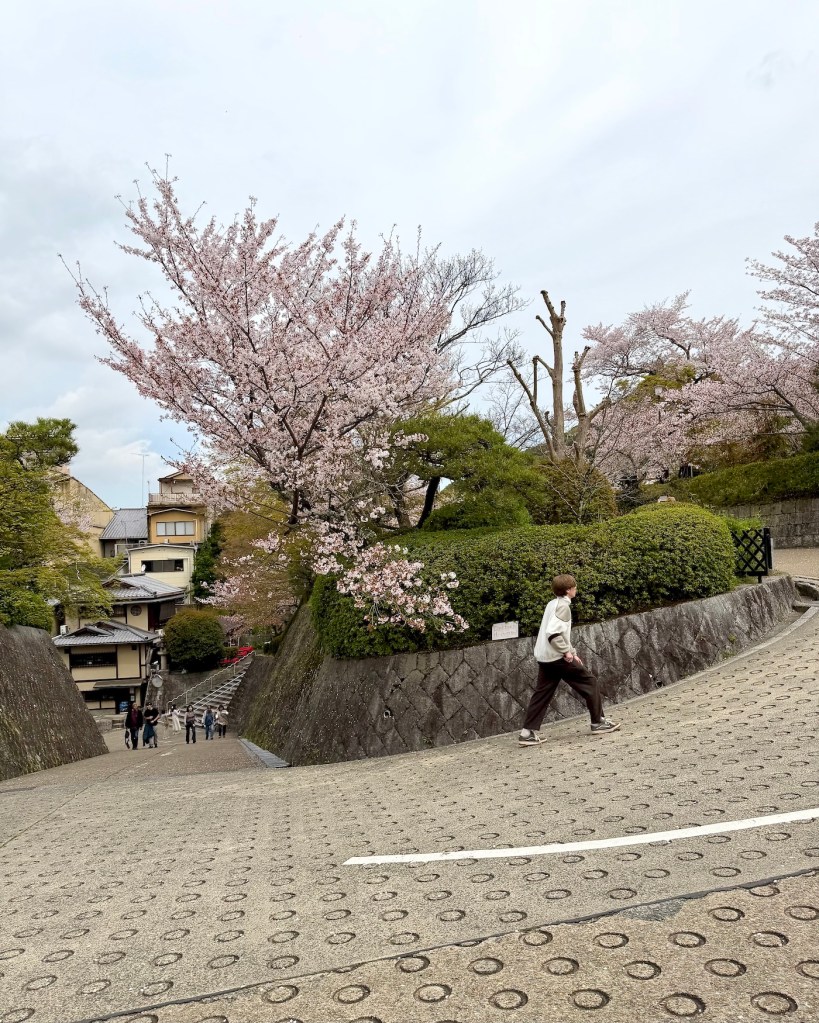
Back in Kyoto, on April 06, we met Nakano-sensei for the first time – at 7:30 hrs! We had to get an early start because the approach to Kiyomizu-dera’s entrance by car is prohibited after 8 hrs. Instead, one has to hike up to the temple along very steep streets, which might be an appropriate approach for pilgrims, but is definitely too steep for us elderly tourists.
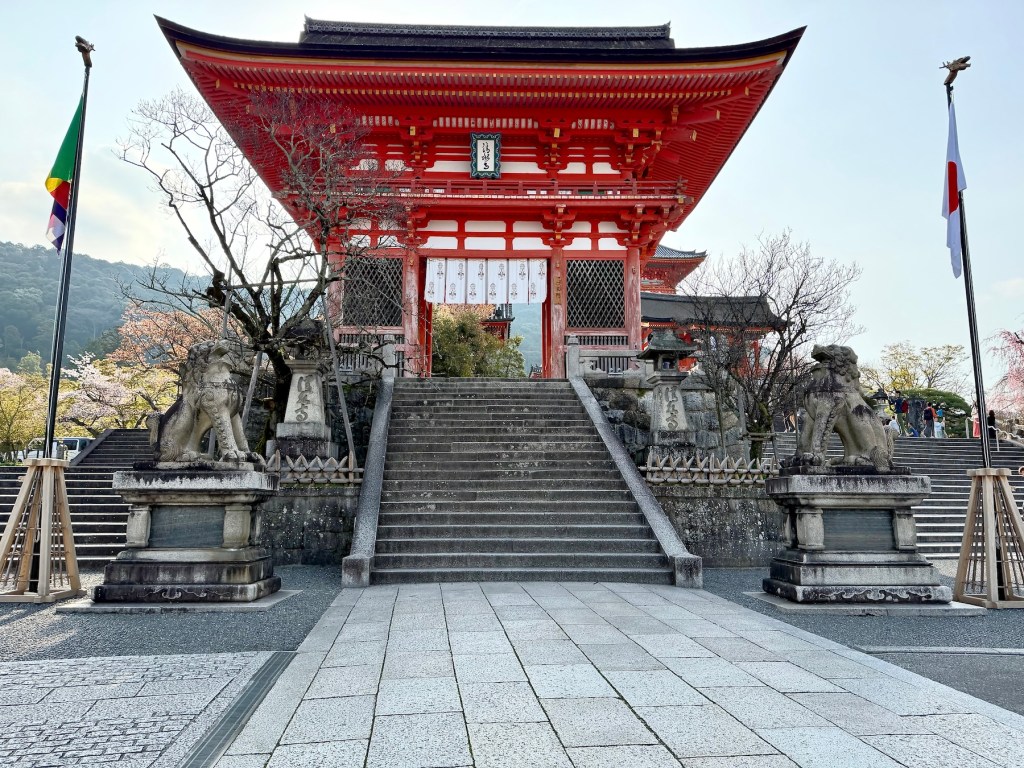
Temple gates are usually guarded by two fierce characters, the niō. They are installed to the right and left of the gate’s opening. Niō may appear to Western eyes like threatening and slightly demented pro-wrestlers owing to their muscular build and menacing postures. Niō are among the rare, openly aggressive Buddhist entities. They have to be ferocious because they are the guardians of the Buddha. Additionally, they protect the spiritual world inside monasteries and temples against the evils of the physical world. As with many traditions in Buddhism I have encountered in Japan, these travel companions of the Buddha can appear in a multitude of forms, belong to various Buddhist classifications, and have different names.
As you can see at the foot of the stone stairs in the above picture, the entrance to a temple or shrine may also be guarded by two 狛犬 komainu, Korean dogs*, also known as shishi, Lion dog guardians. They, too, stand as intermediaries between the spiritual and physical realms. Like the Niō twins, each pair of komainu is composed of one partner with an open mouth and the other with a closed mouth. An open mouth signifies the vocalization of ‘a’, while the closed mouth can only make an ‘un’ sound. Together, the two sounds form the sacred Sanskrit ‘aum’ syllable. This duality represents the eternal beginning and end, reminiscent of the alpha and omega in Christian tradition.
It is important to keep in mind that Buddhism originated in India during the 5th century BCE. From there, it was carried first to China, then to Korea, and finally to Japan almost a thousand years later. During its long journey toward the Japanese archipelago, Buddhist practices adapted to regional customs and picked up distinct idiosyncrasies of its local worshippers. Finally, in Japan, the imported belief has undergone, and continues to undergo, a multitude of interpretations and schools of thought. For example, the Kita-Hosso sect split off from the Hosso school only in 1965. During its 1200+ years of existence, the temple was under the leadership of several different sects, each with its unique creed, traditions, and practices.
*I want to be sure you don’t interpret “Korean dog” as a derogatory term. Koma is derived from the name of the ancient Korean kingdom of Koguryŏ, one of three kingdoms on the peninsula and in Manchuria from roughly 50 BCE to 700 CE. The western name Korea is based on it. Inu is Japanese for dog. So, komainu simply means a dog from Korea, since China and later Korea were the original homes of the temple guardian dogs.
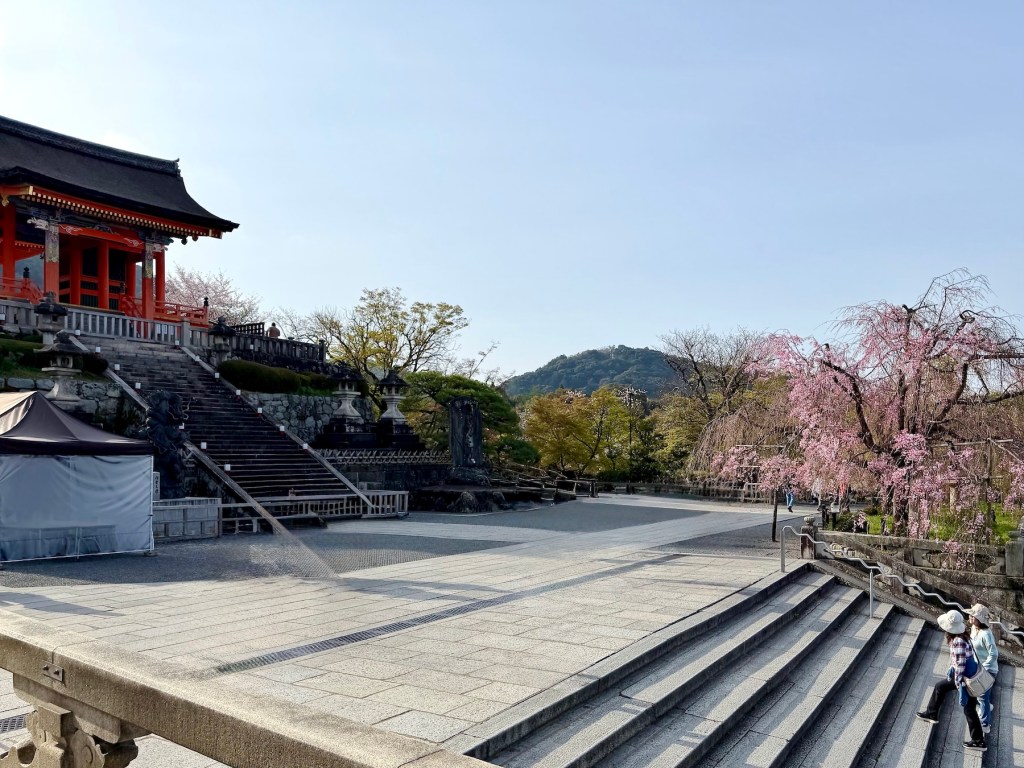
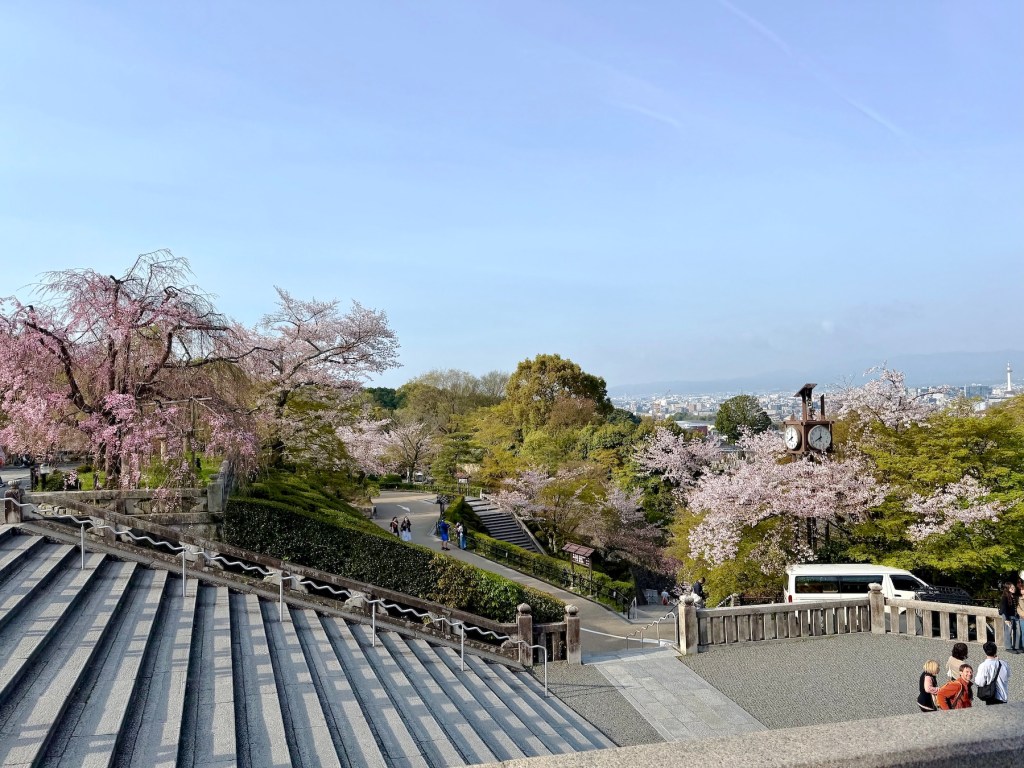
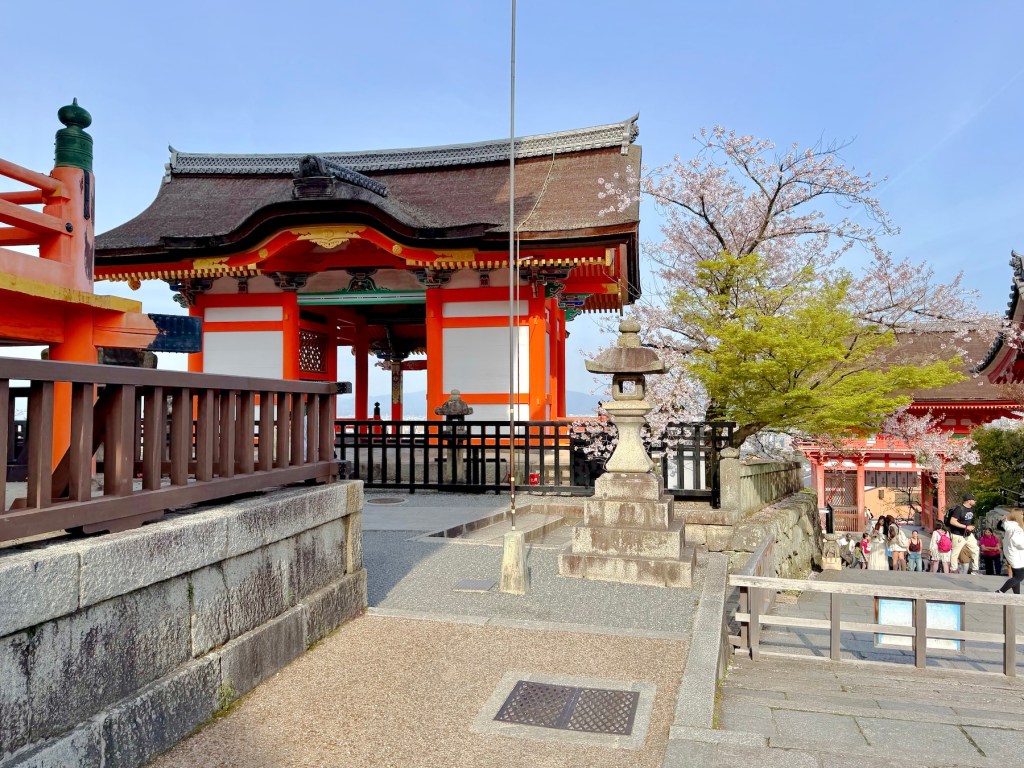
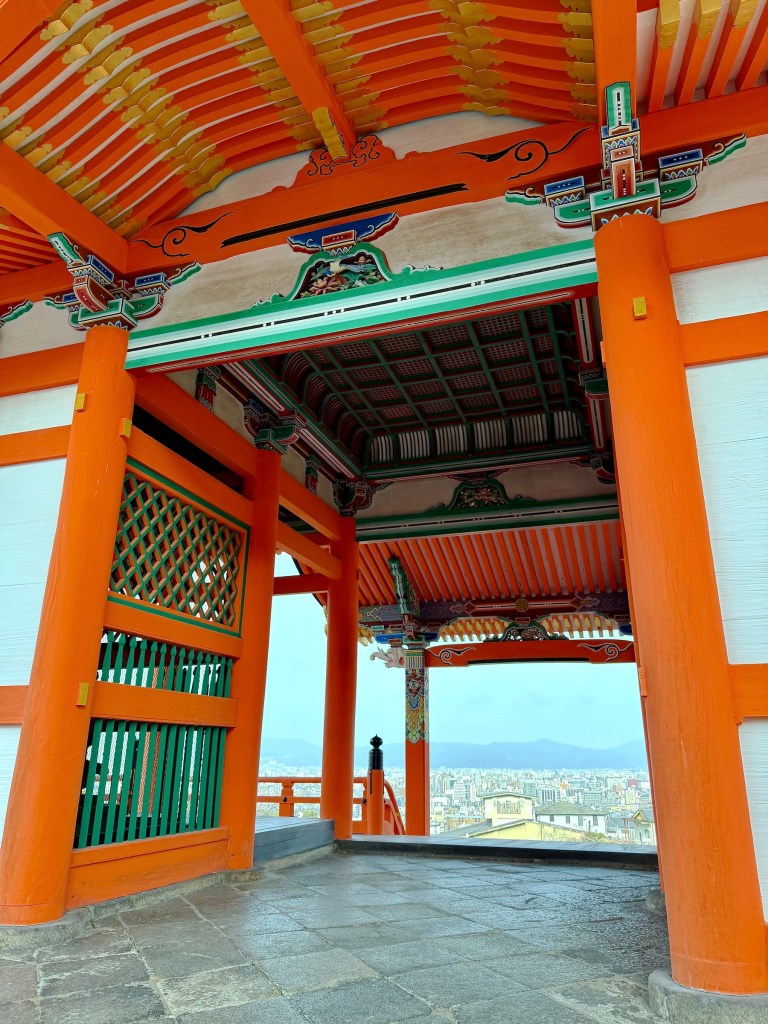
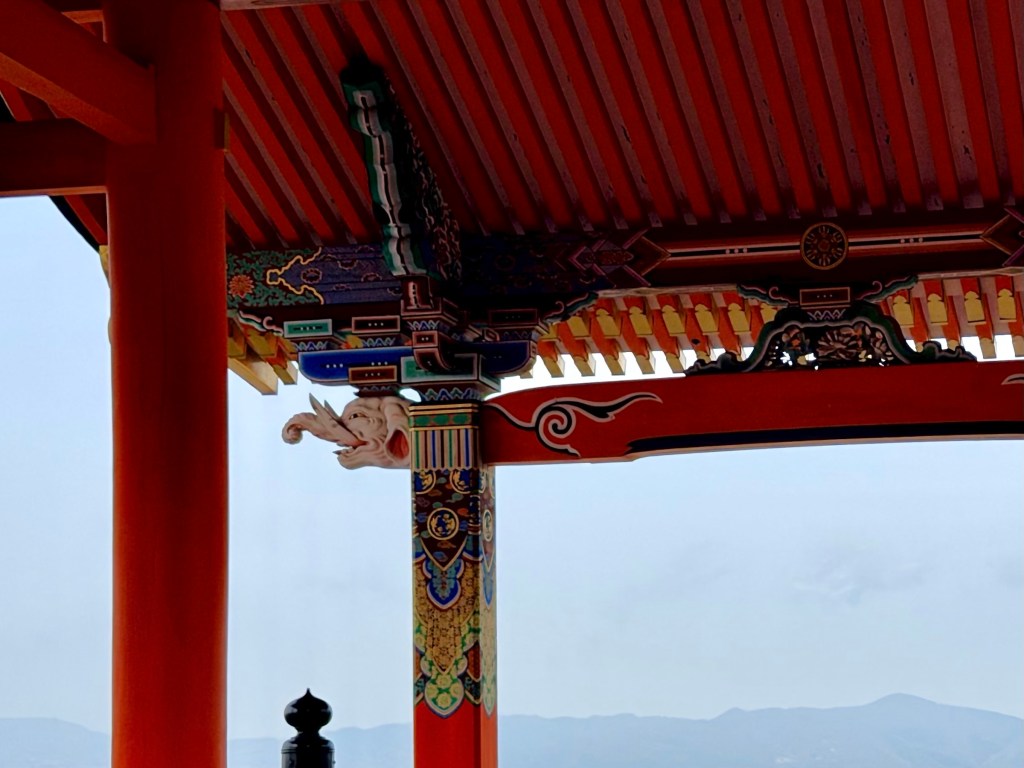
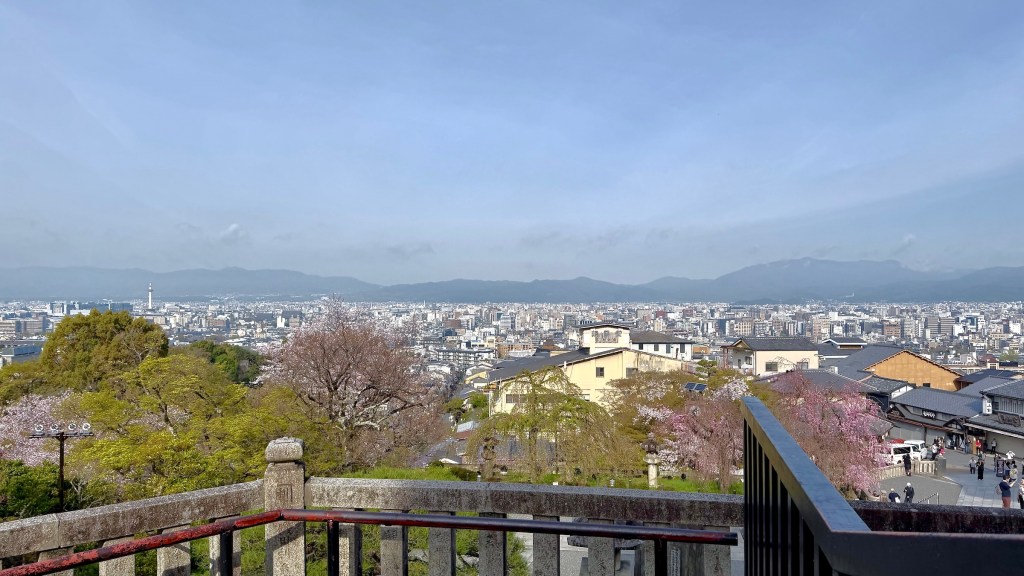
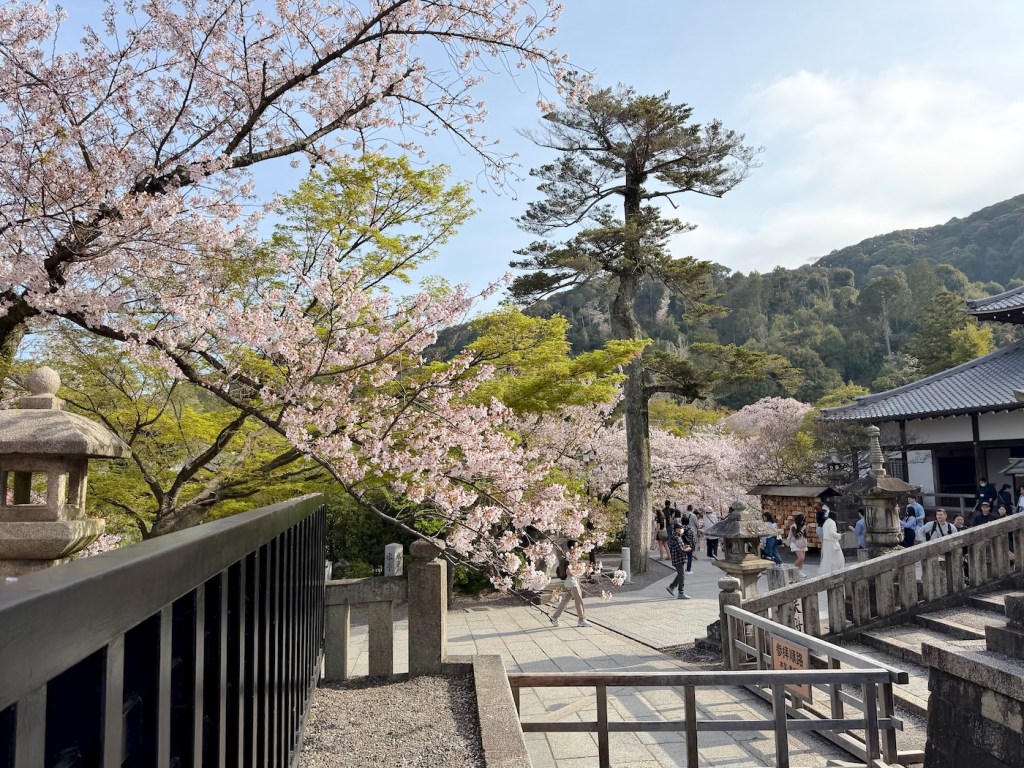
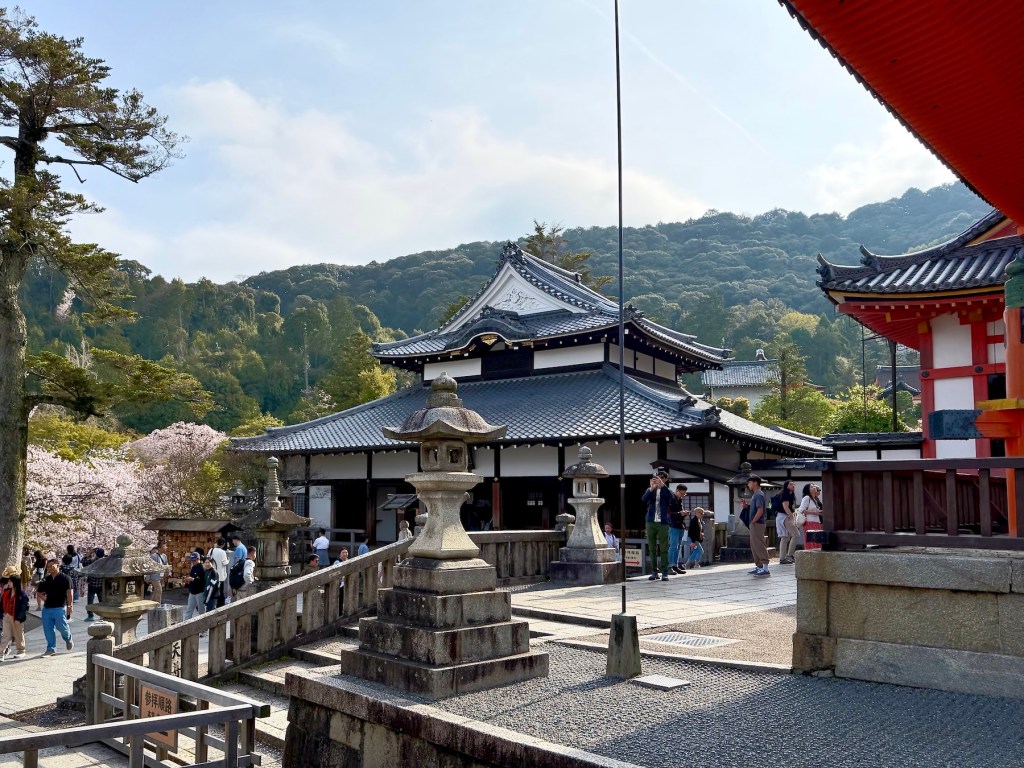
Sai-mon, the West Gate, offers spectacular views over the city, plus such beautiful sunset views that it is considered a gateway to paradise by believers, for whom the sai-mon is a sacred place to practice nissokan meditation.
Nakano-sensei pointed out the unusual features of some animal sculptures and paintings found in many temples and castles, just as Nakajima-san did at yōgen’in temple. At sai-mon, he drew my attention to the elephant carving, cute but not altogether anatomically correct. Japan is an island nation, quite separate from Asia at large. It also kept itself shuttered against foreign influences for long periods. Therefore, early artists had never seen exotic animals like tigers and elephants, and had to rely solely on descriptions of wildlife, mostly from Chinese poetry, for their artistic interpretations.
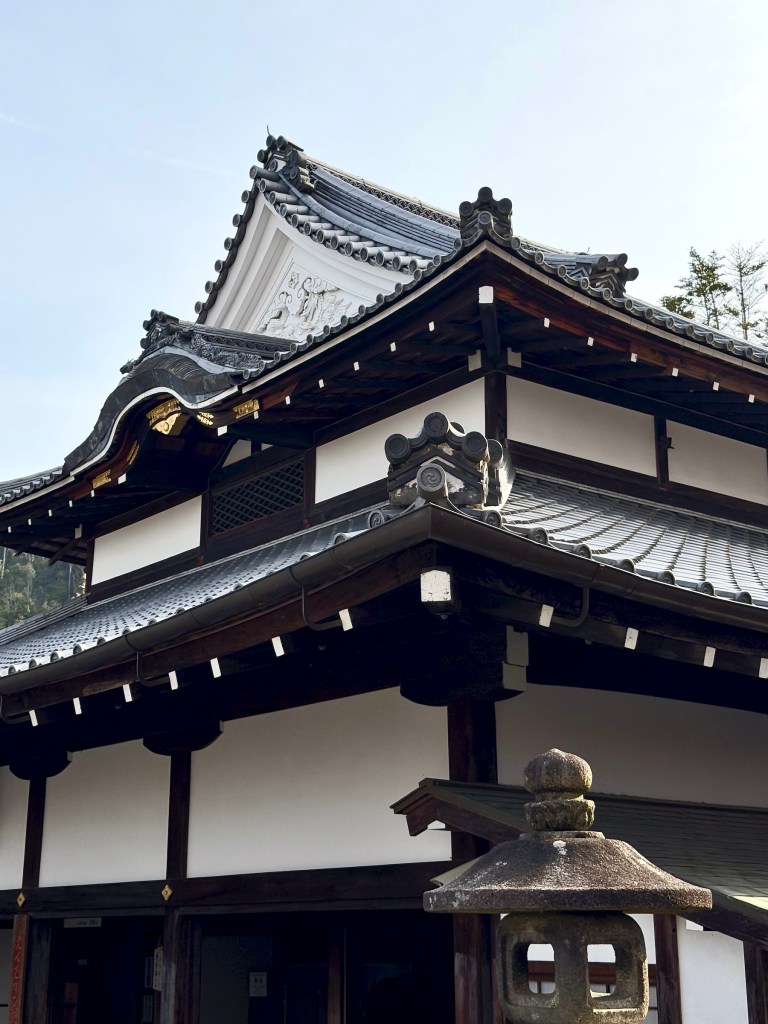
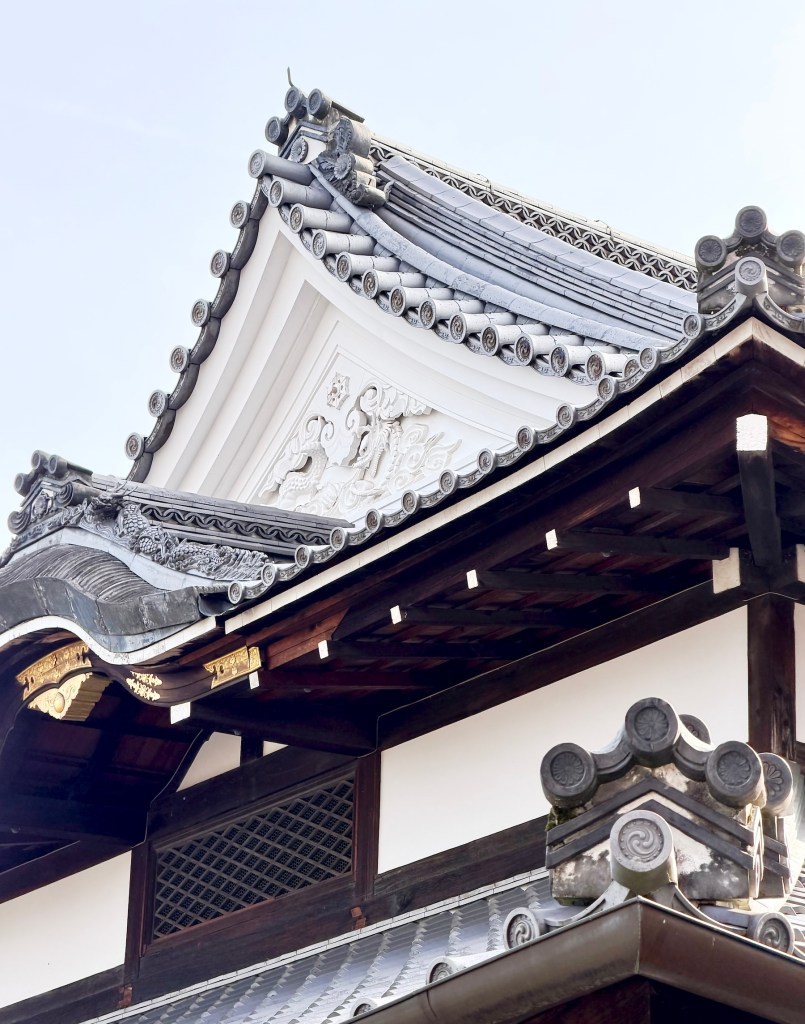
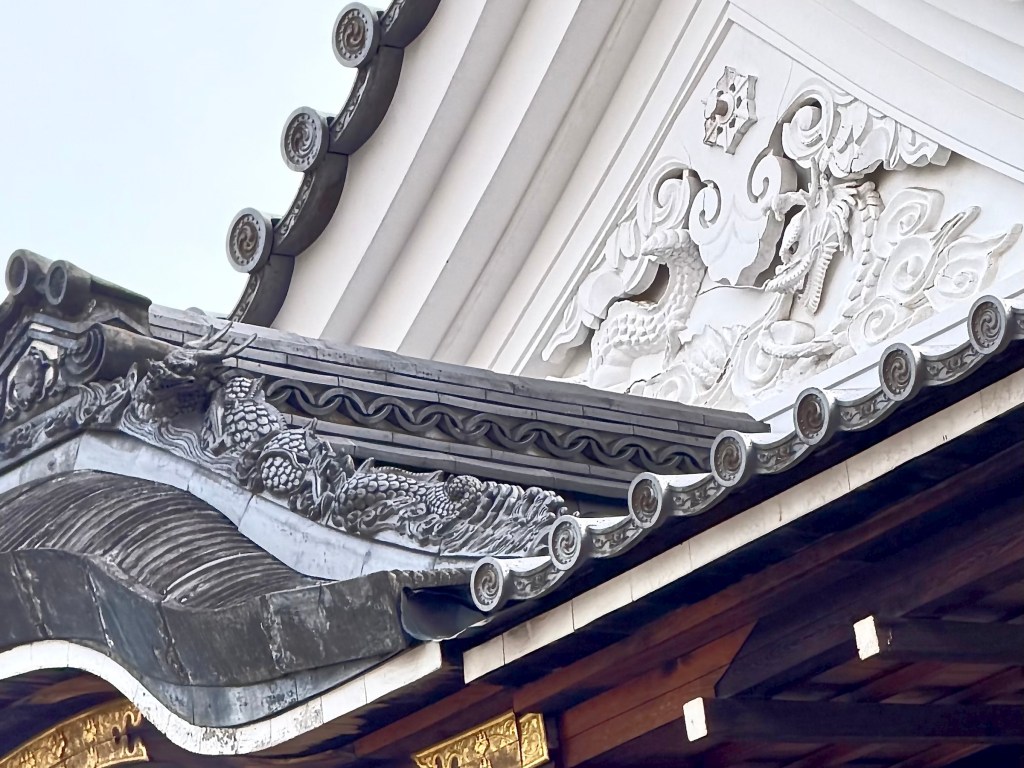
Dragons, oh, those dragons! Japanese dragons, 龍 ryū, do not align with the dragons we imagine in the West. They neither breathe fire nor do they have wings. Japanese dragons are benevolent creatures that serve as guardians. The serpent-like dragons are associated with water, nature, and wisdom – especially water. Sometimes dragons are fused with the characteristics of other animals. They may sport antlers, for example, like the dragons in the picture above. As I’ve mentioned in an earlier Japan post, Kyoto residents have always been paranoid about fire. Due to civil unrest, warrior-monk attacks, and frequent lightning strikes, most of the buildings in the Kiyomizu-dera compound have burned down multiple times between the late 8th and the early 17th centuries. So, it’s not surprising to see images of dragons everywhere in the hope they’ll douse potential blazes.
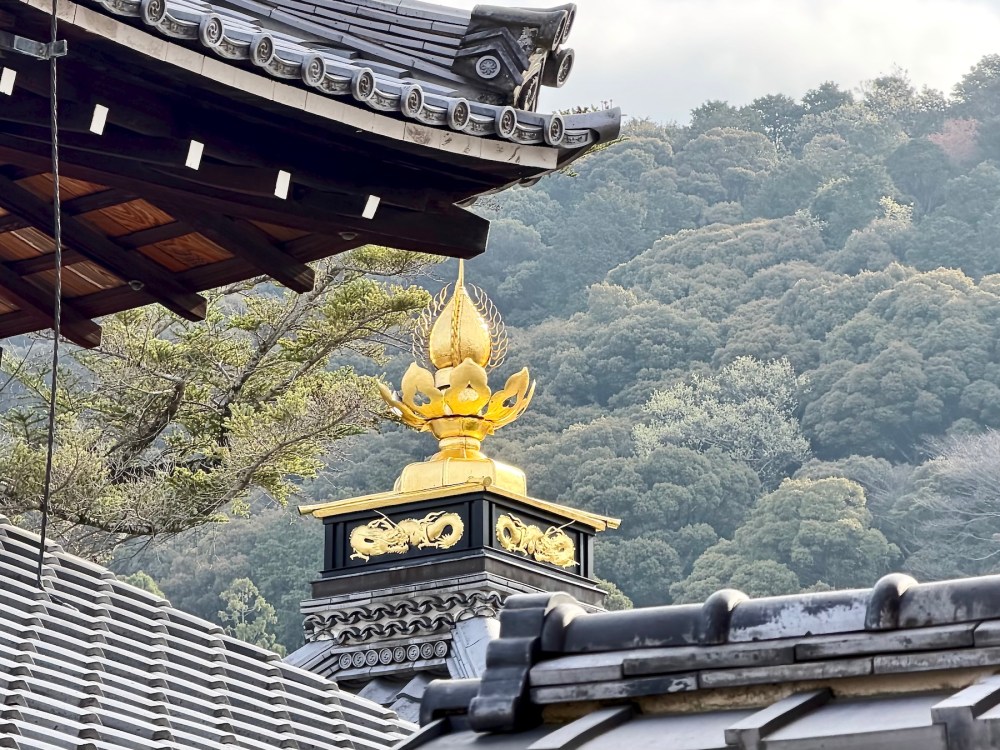
Lotus flowers hold significant meaning in Buddhism. They represent purity and enlightenment rising from murky waters, thus symbolizing the human journey of transcending suffering and adversity.
It’s high time to discover the main structure of Kiyomizu-dera, 本堂, hondō, the Main Hall. The large building consists of an outer sanctum that opens onto a veranda called the Kiyomizu Stage. There is an inner sanctum for worship and ceremonies, while the innermost sanctum of the Main Hall, the nainaijin, is the home of the thousand-armed and eleven-headed Kannon, deity of mercy and compassion. The nainaijin is accessible to worshipers only a few times a year. For example, the sanctuary of the Kannon Bosatsu opens for the day of the “Thousand-day-Prayer”. During this auspicious day, a single prayer amplifies the Bosatsu blessing a thousandfold. The sacred statue of the deity itself is only revealed briefly once every 33 years.
For us tourists, however, another feature of the Hall is most exciting: the Kiyomizu-dera Stage. A veranda extending out from the Main Hall at a height of 13 m/43 ft above the ground below.
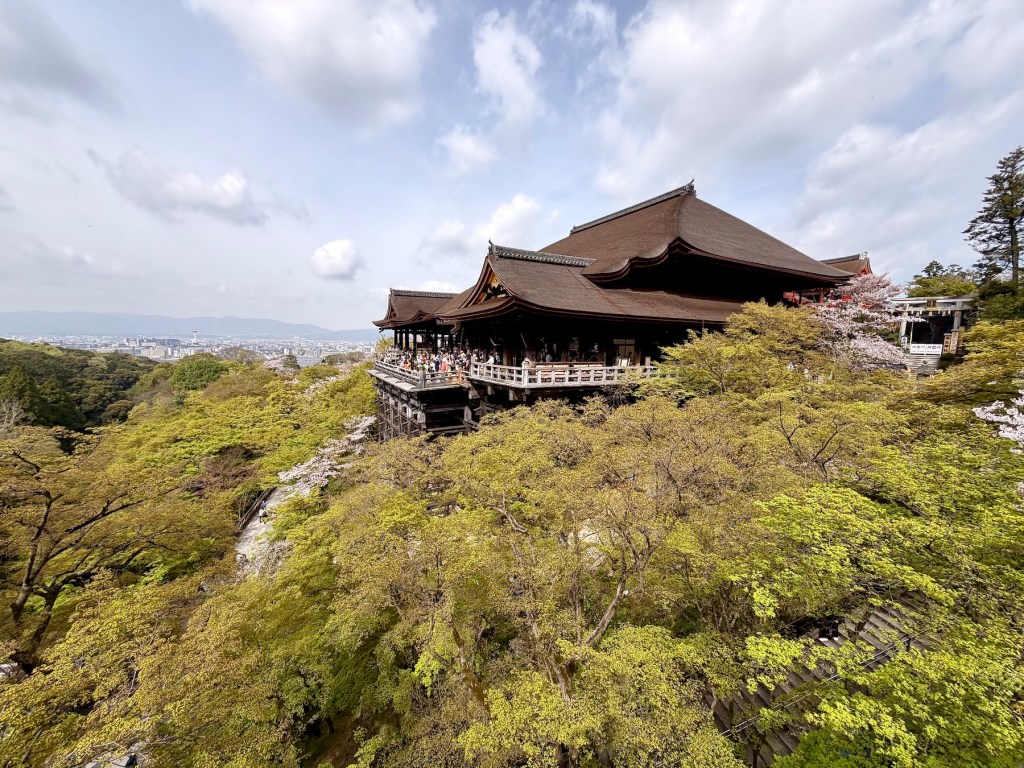
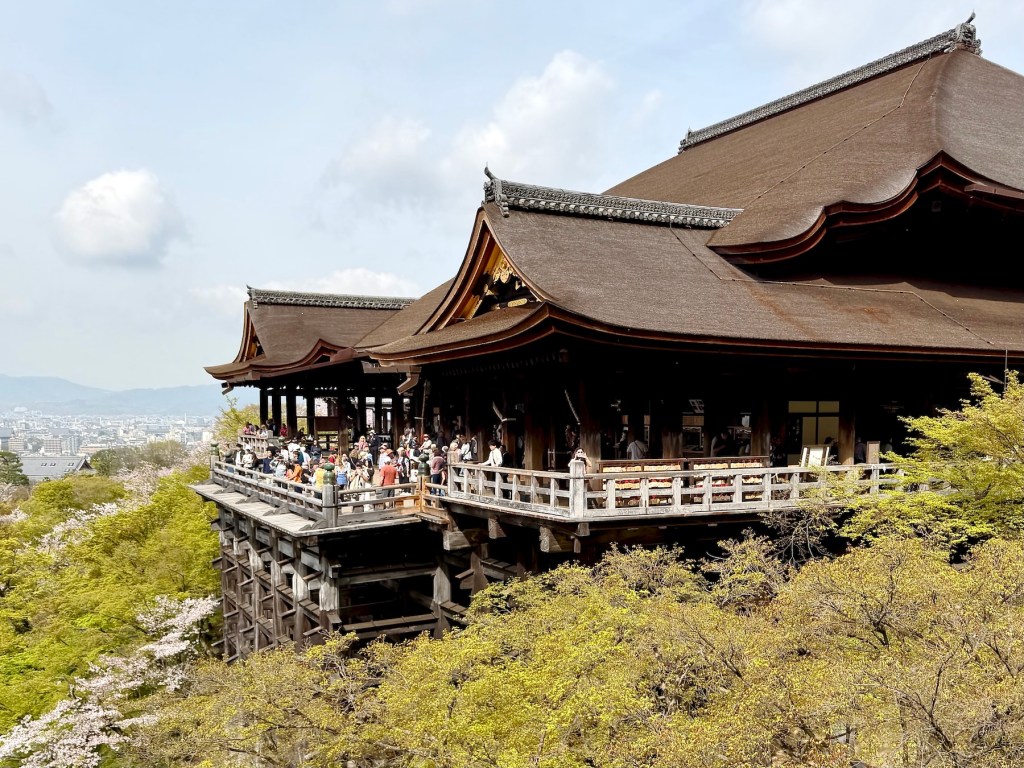
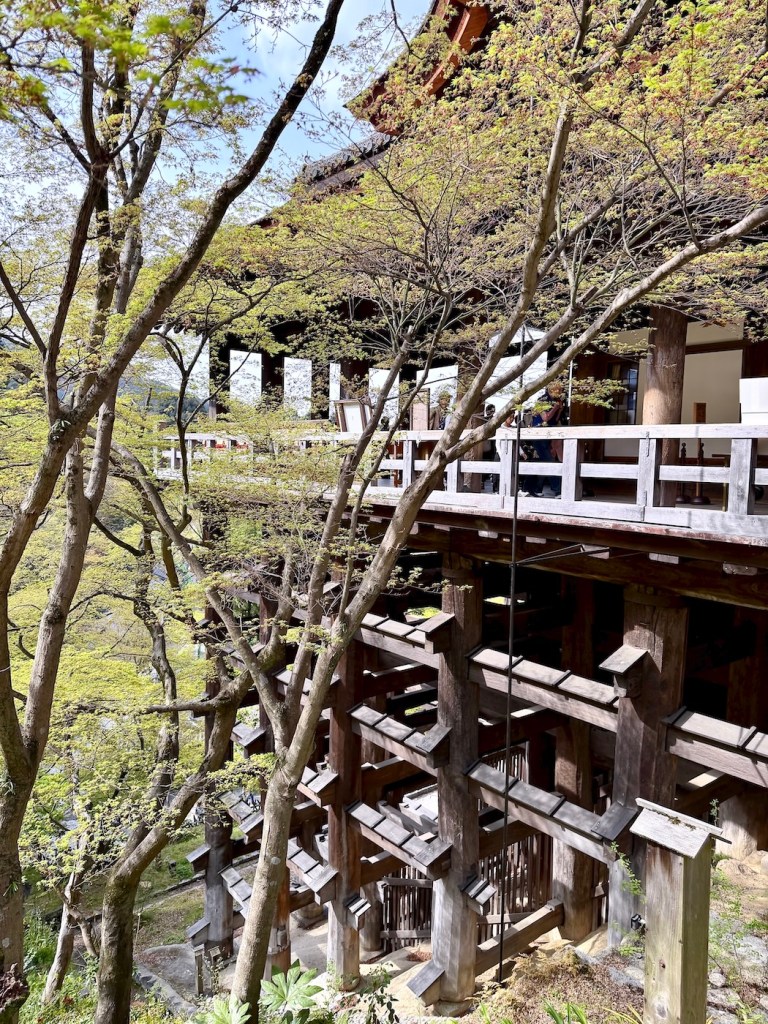
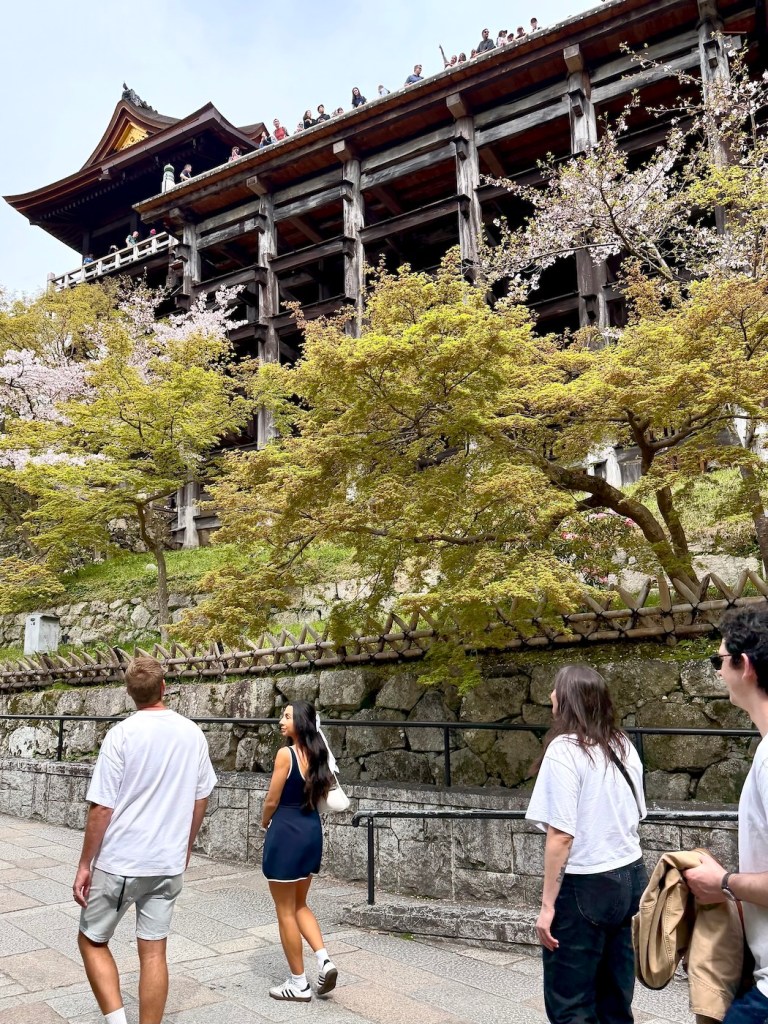
Brave fools used to jump off the Stage in the belief the Kannon Bosatsu would grant their wishes if the survived. 84% actually did. No one knows about their wish fulfillment percentage.
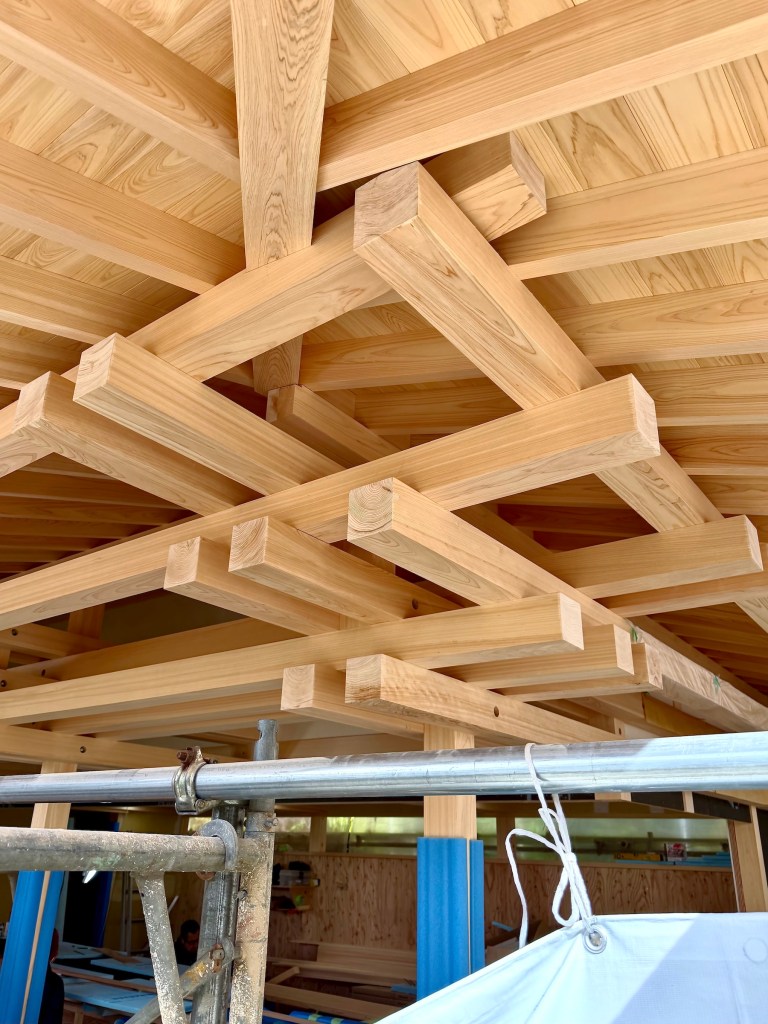
The current Kiyomizu Stage was reconstructed in 1633. It is supported by pillars made from elm tree trunks (Zelkova serrata, Ulmaceae), the largest of which is 12 meters high and has a sturdy circumference of two meters. The pillars are joined with crossbeams, which strengthen the overall structure without using a single nail. If you are interested in history and architecture, I would like to strongly encourage you to read this detailed article about the The Architectural Masterpiece of Kiyomizu-dera. Enjoy!
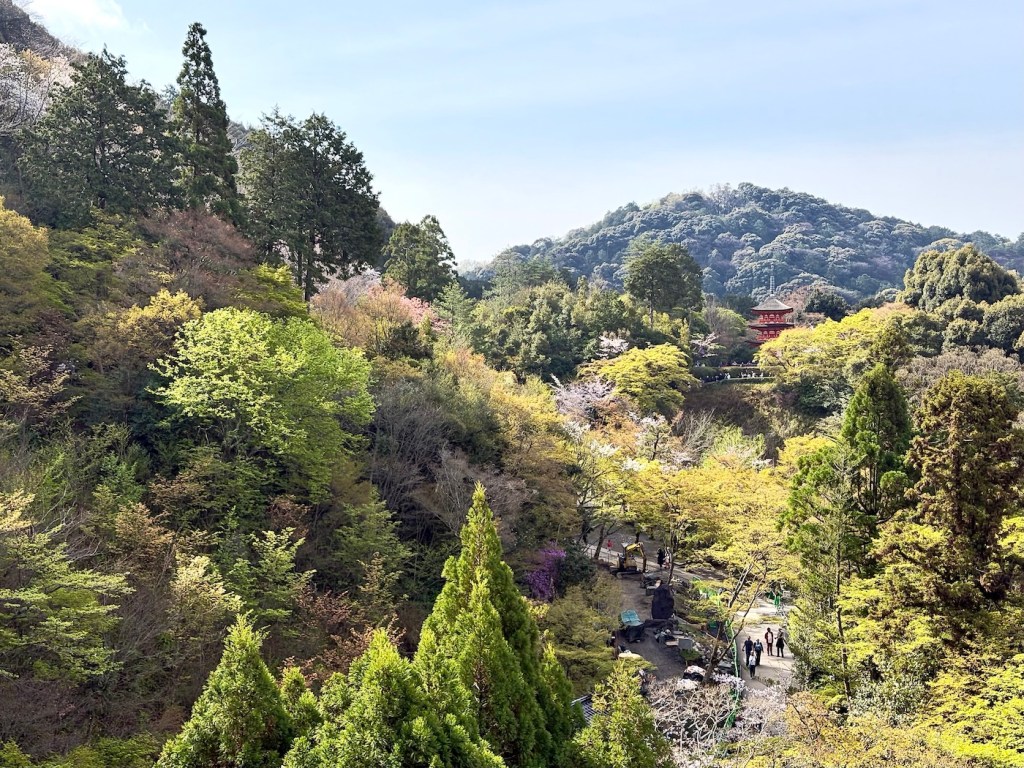
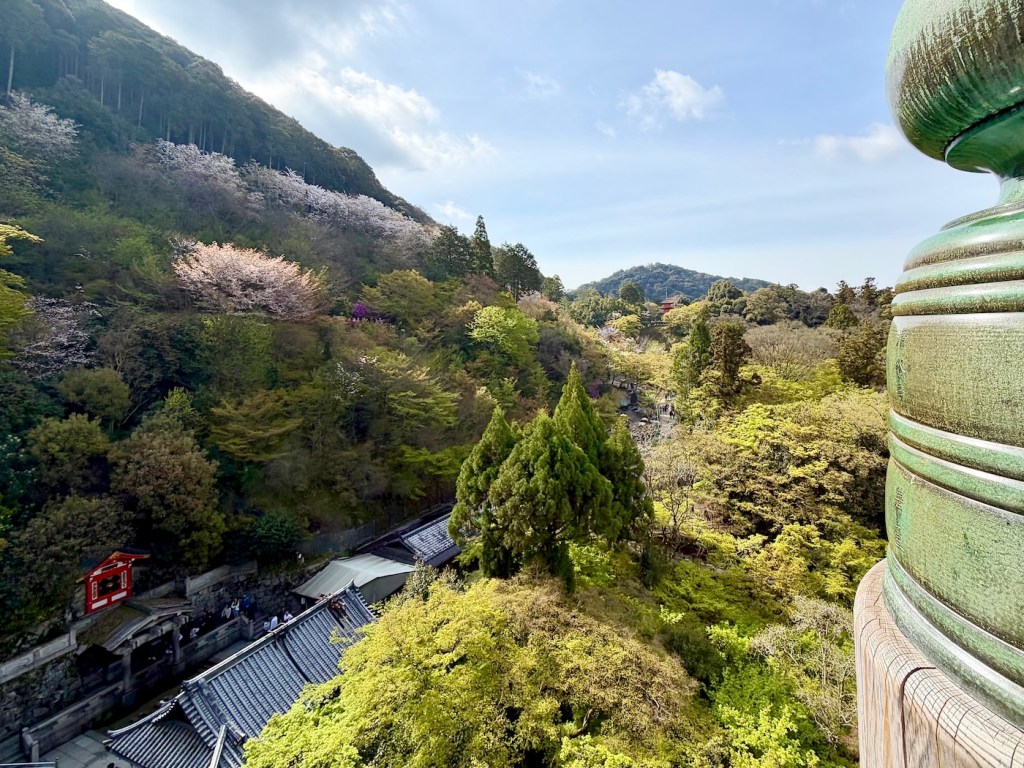
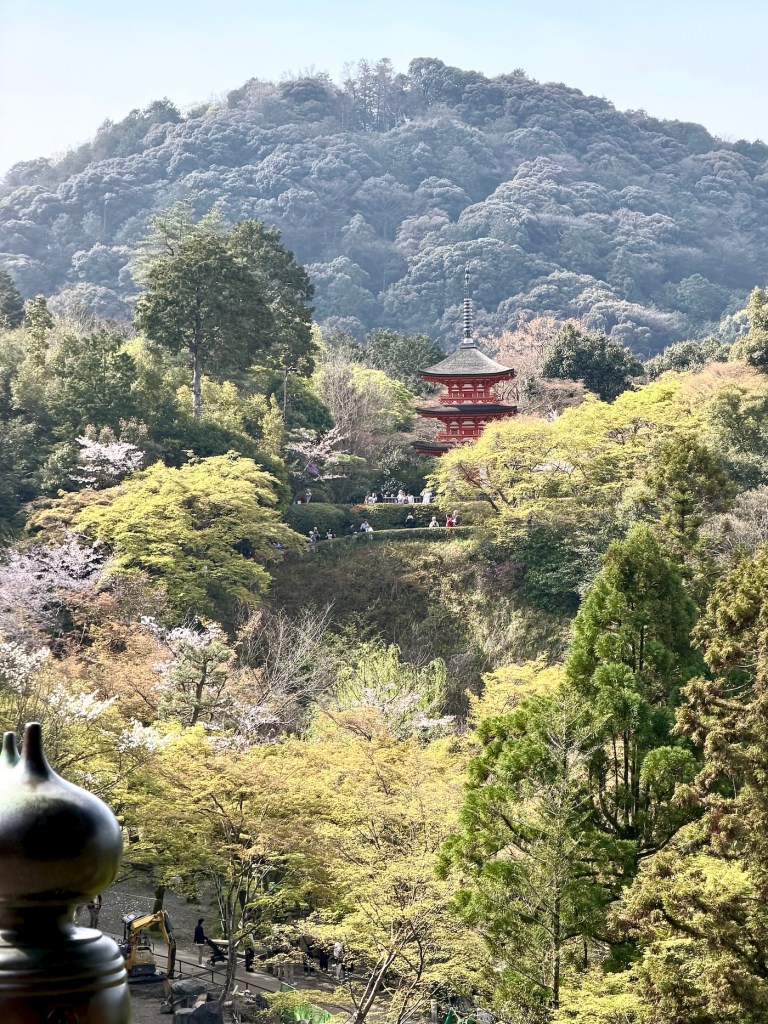
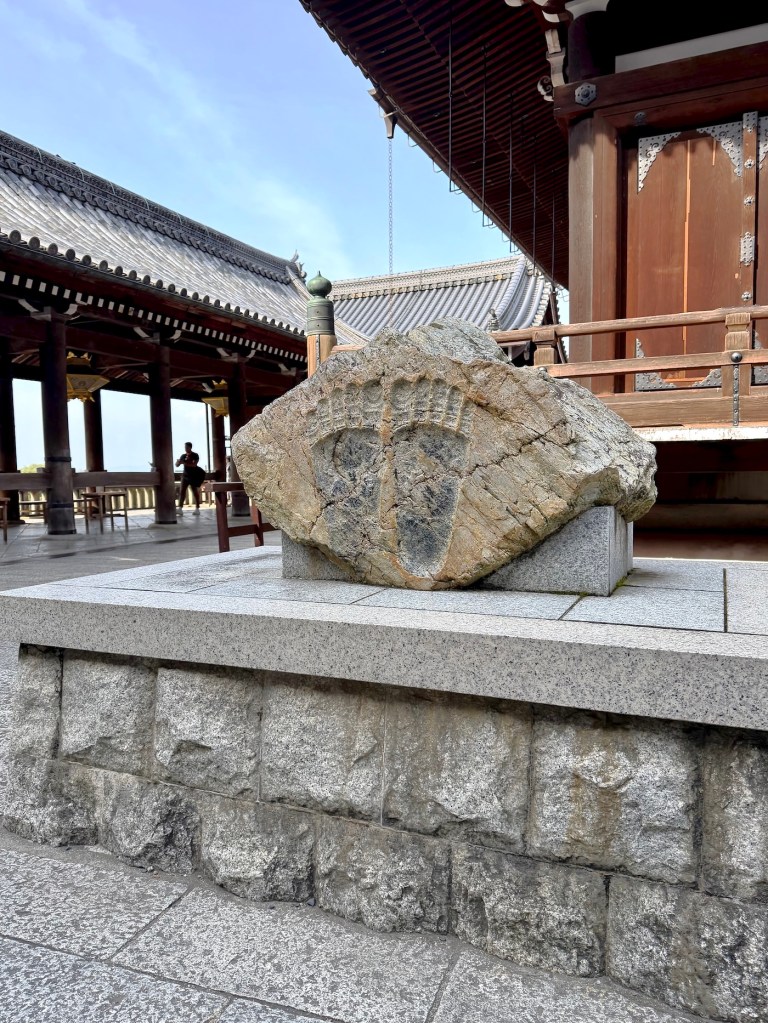
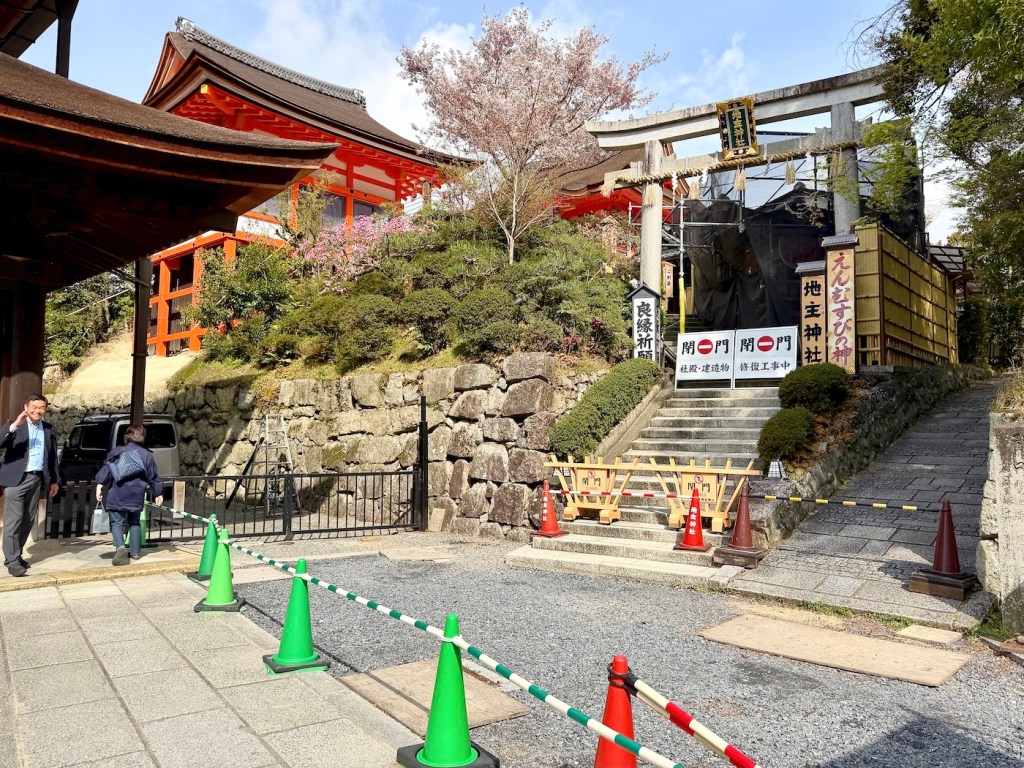
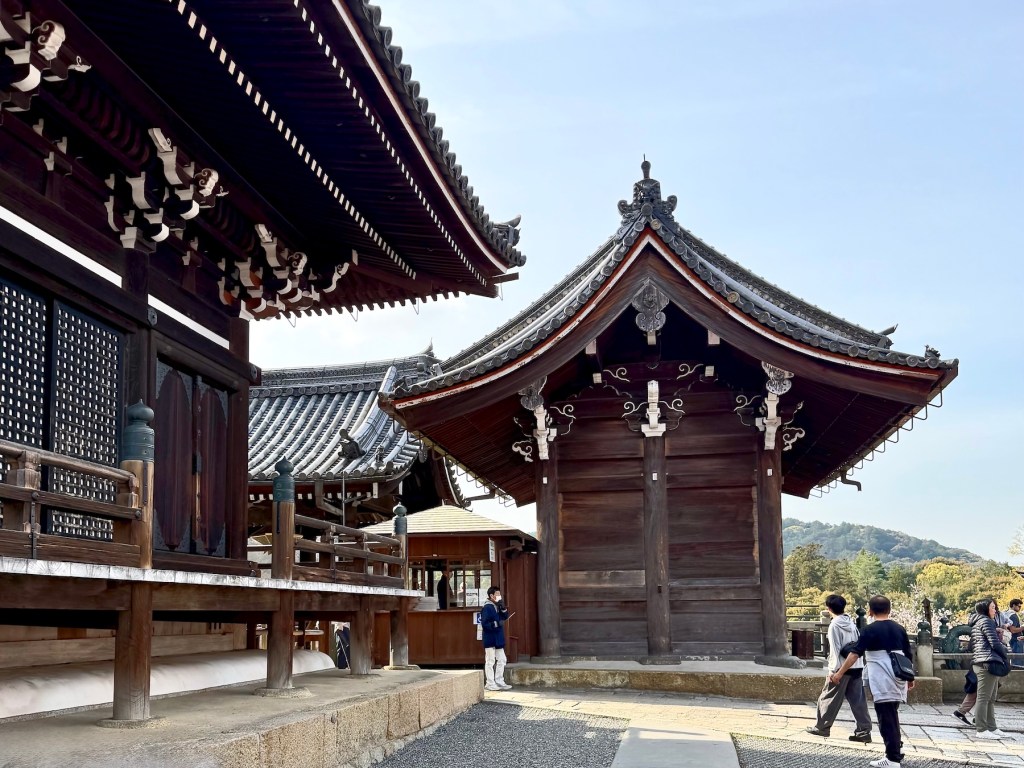
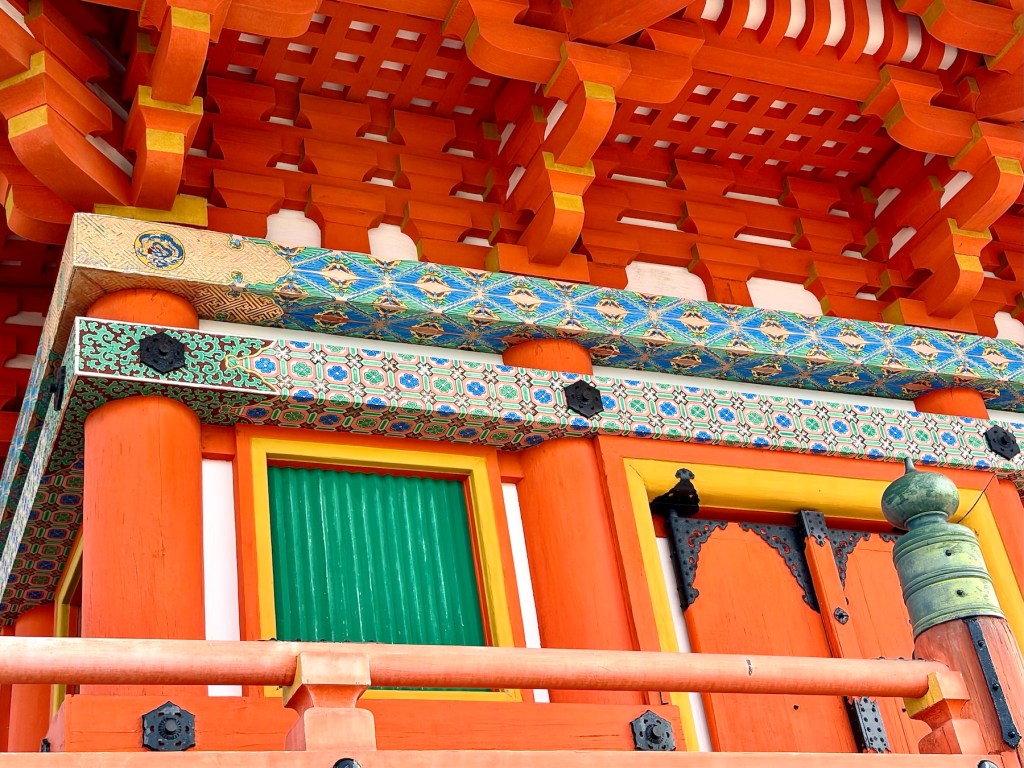
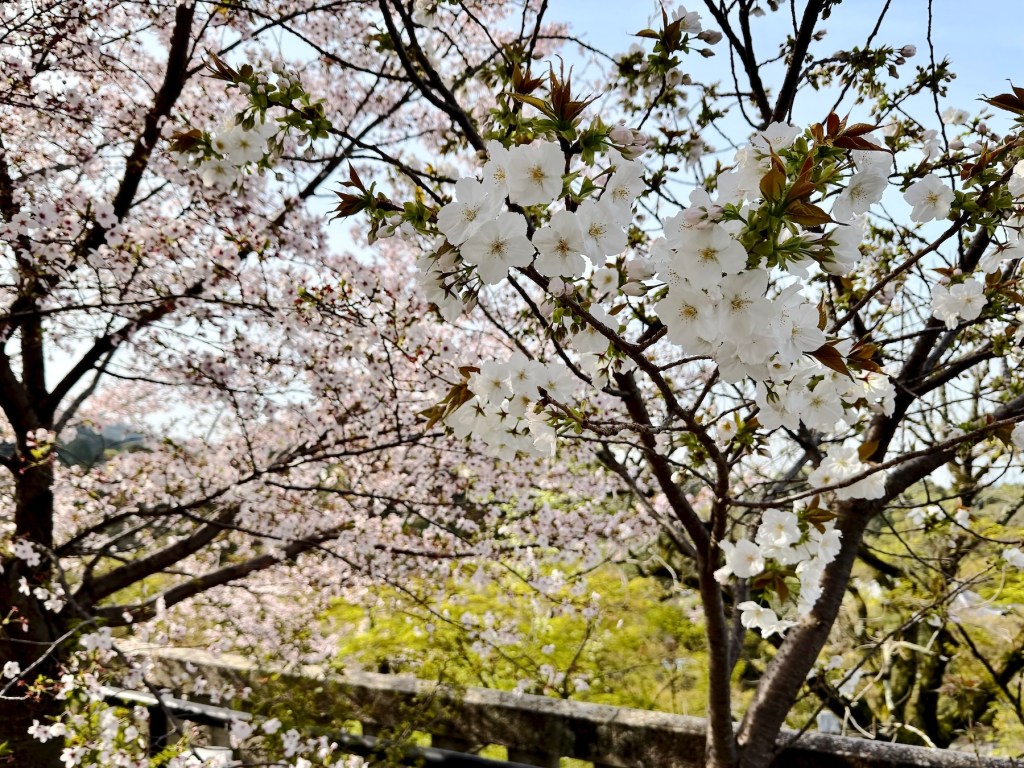
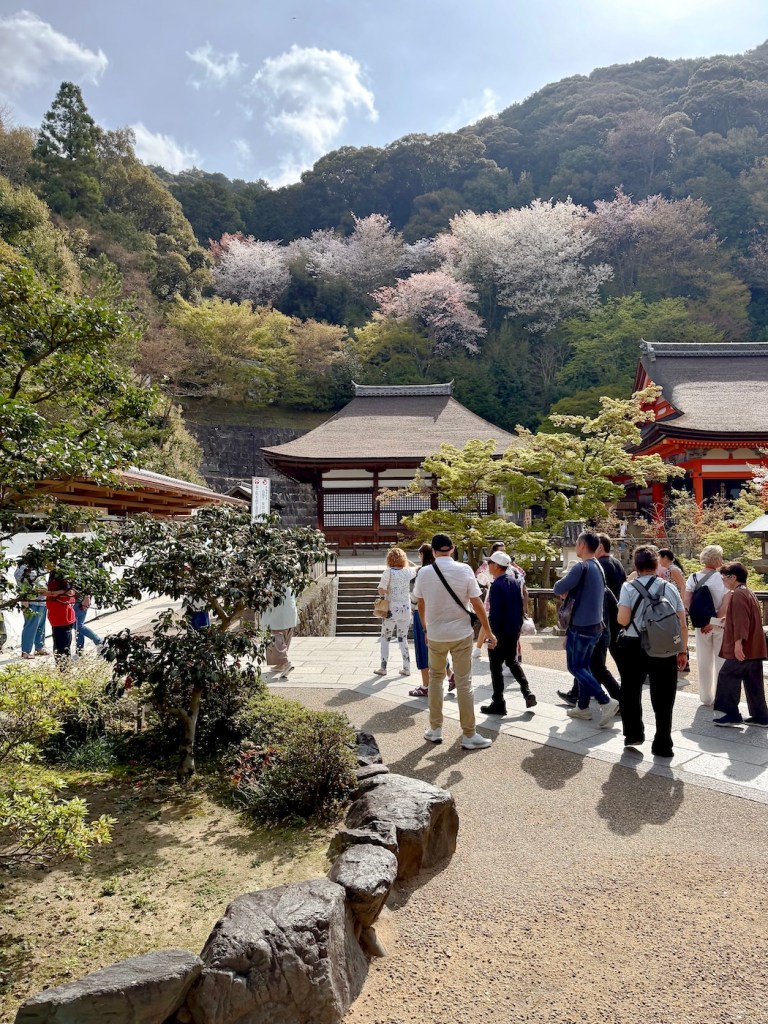
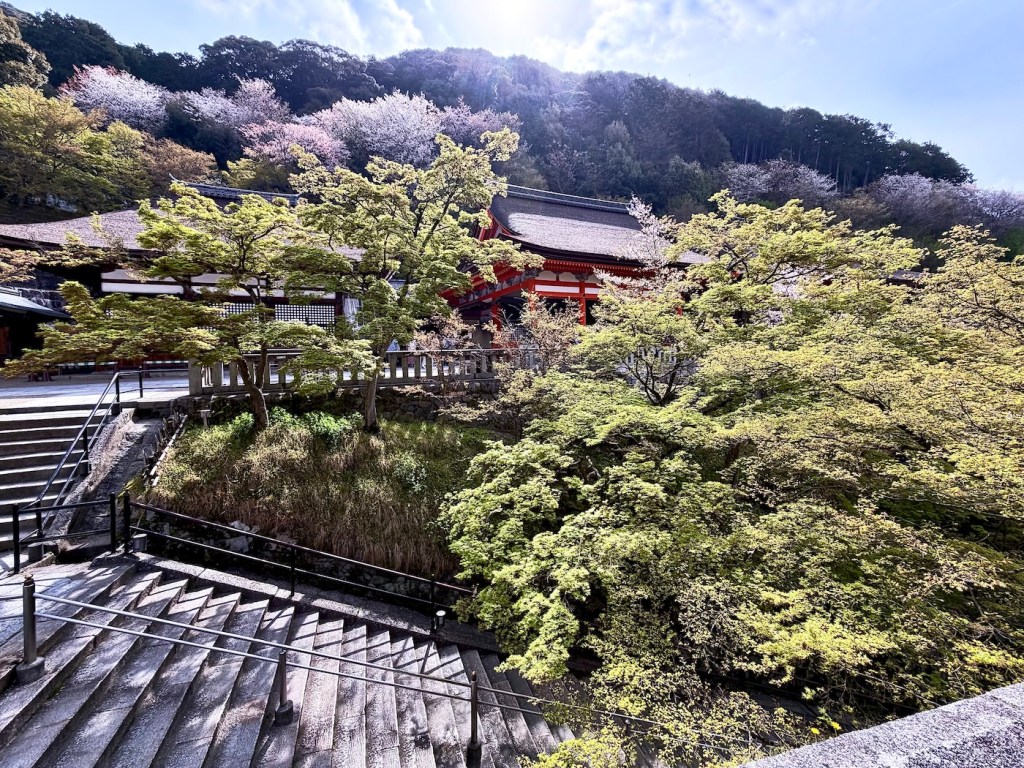
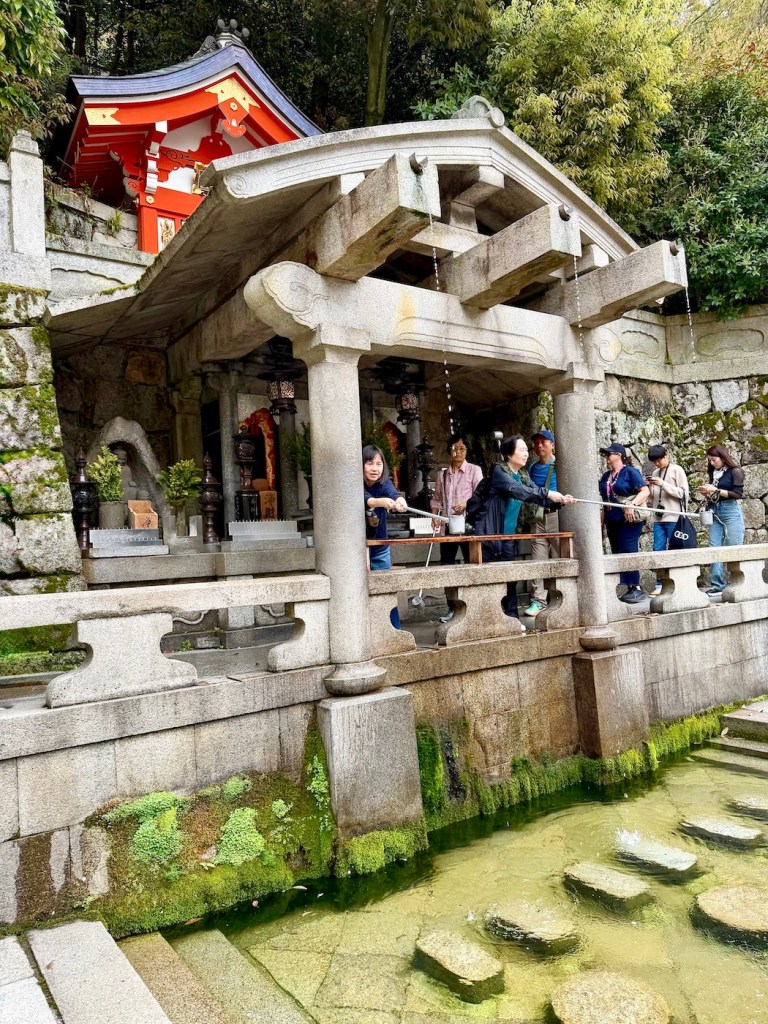
After a short rest, we were working our way down the seemingly endless stone steps toward the Otowa waterfall, where we observed worshippers purifying themselves with the konjiki-sui, the Golden Water of the sacred waterfall. Each of the three channels is supposed to carry specific wishes to the Kannon Bosatsu.
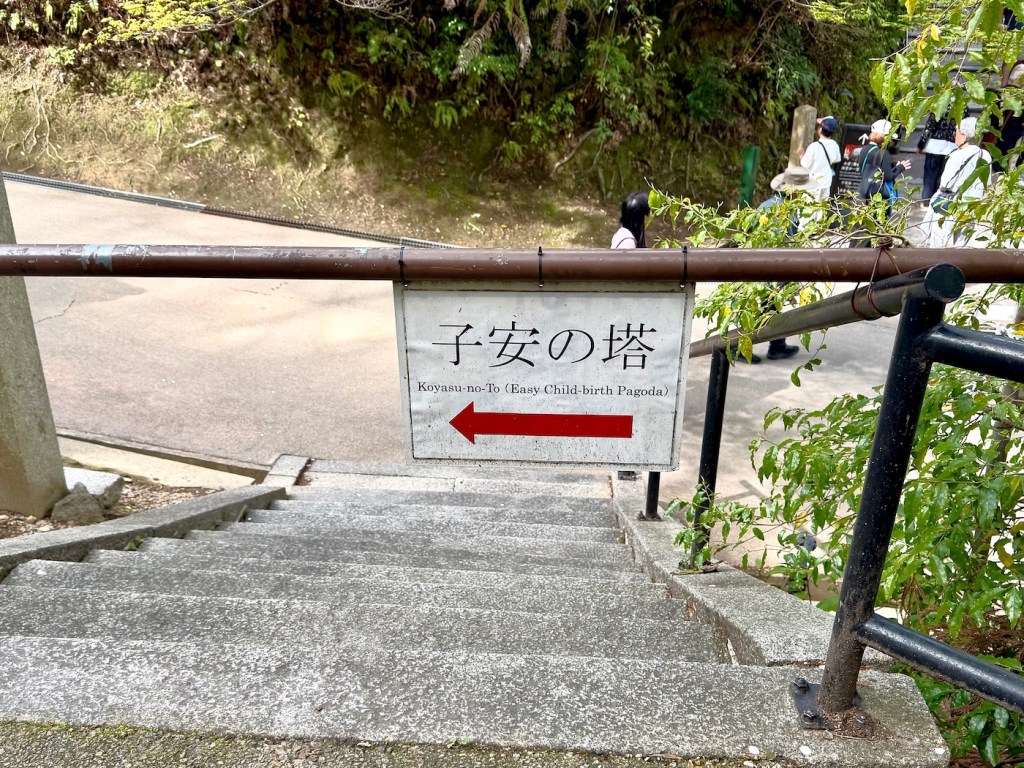
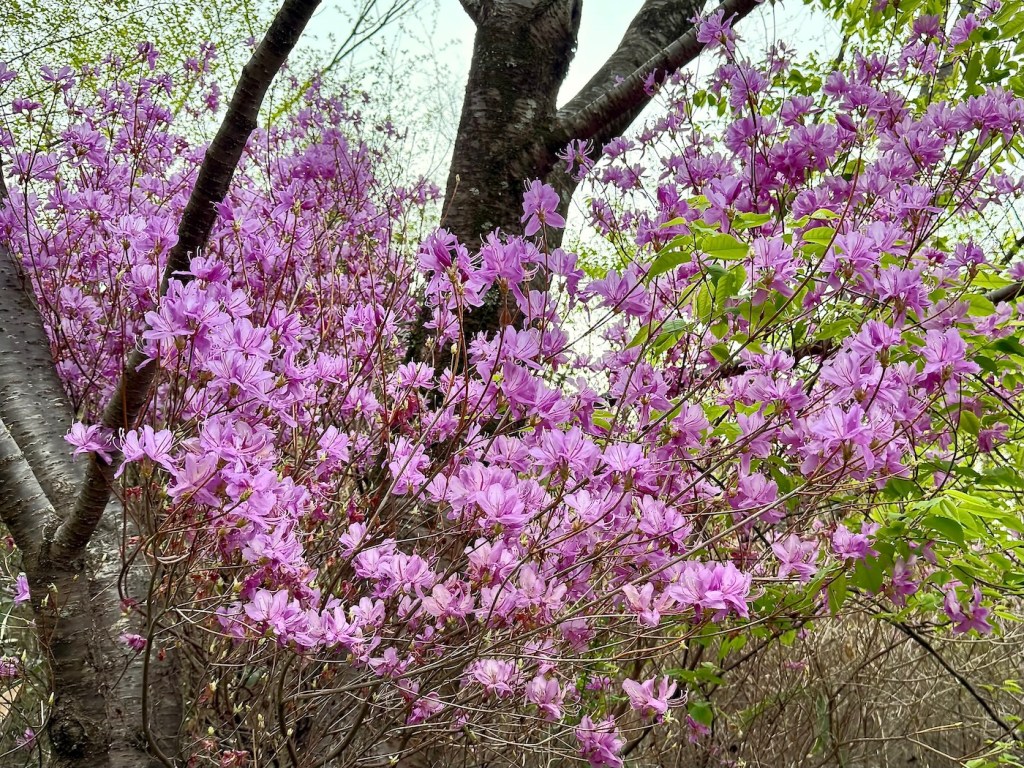
From there, we continued on toward the pagoda, admiring the brightly glowing azalea bushes along the pathway, while also noticing ancient cemetery plots.
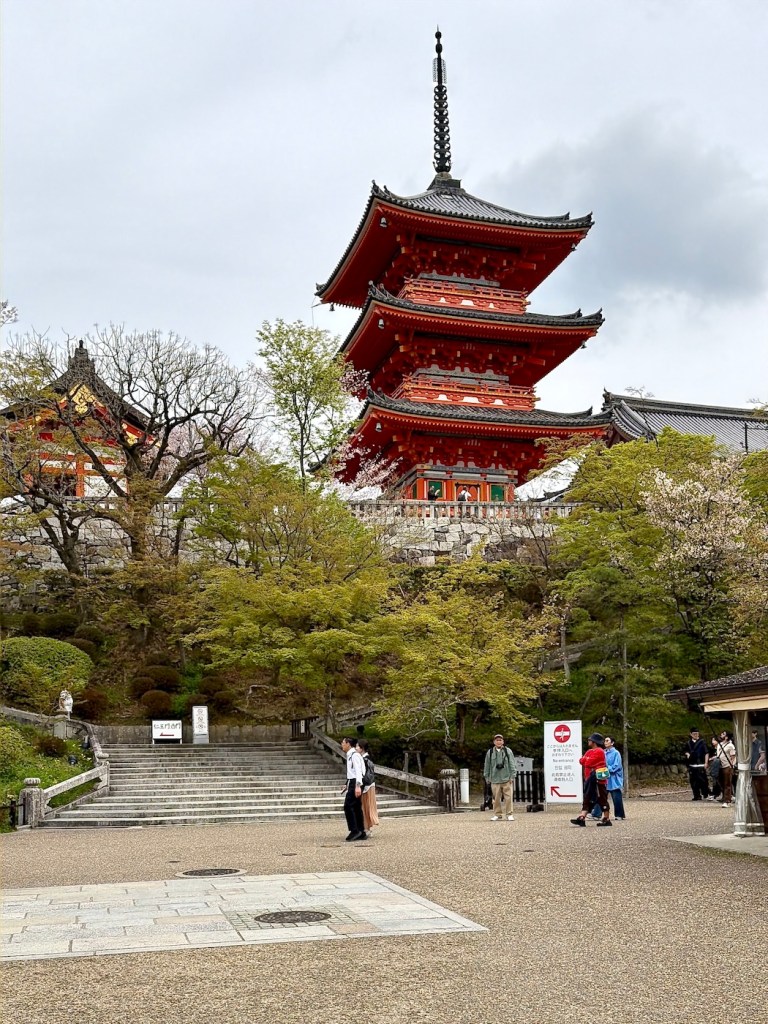
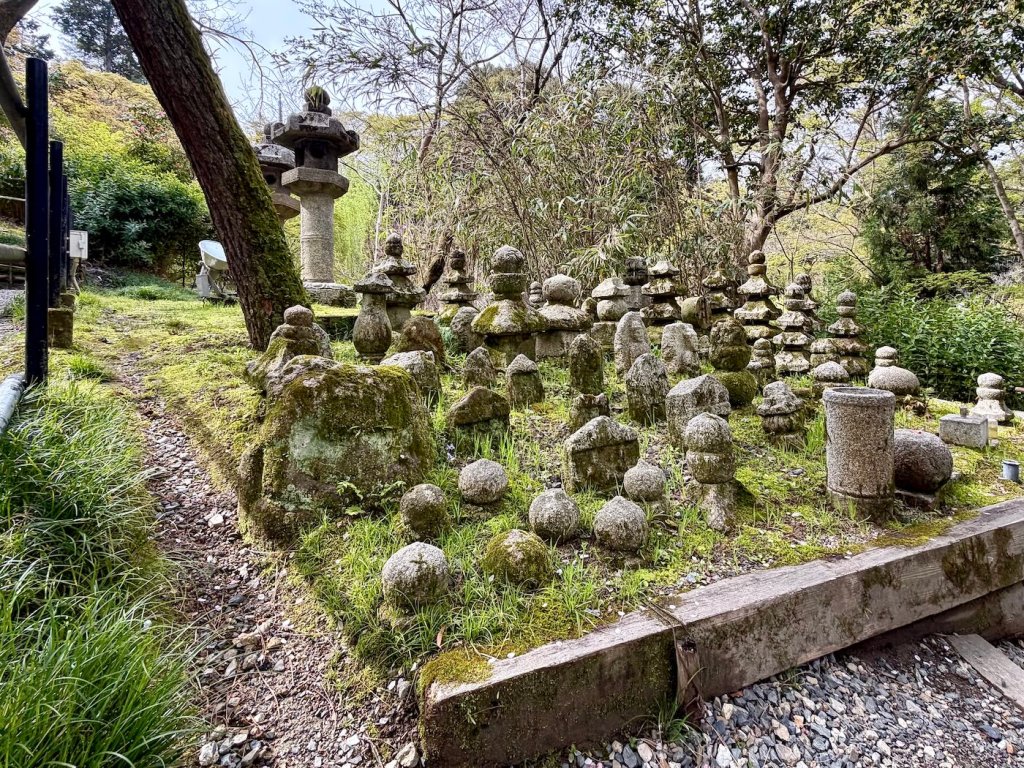
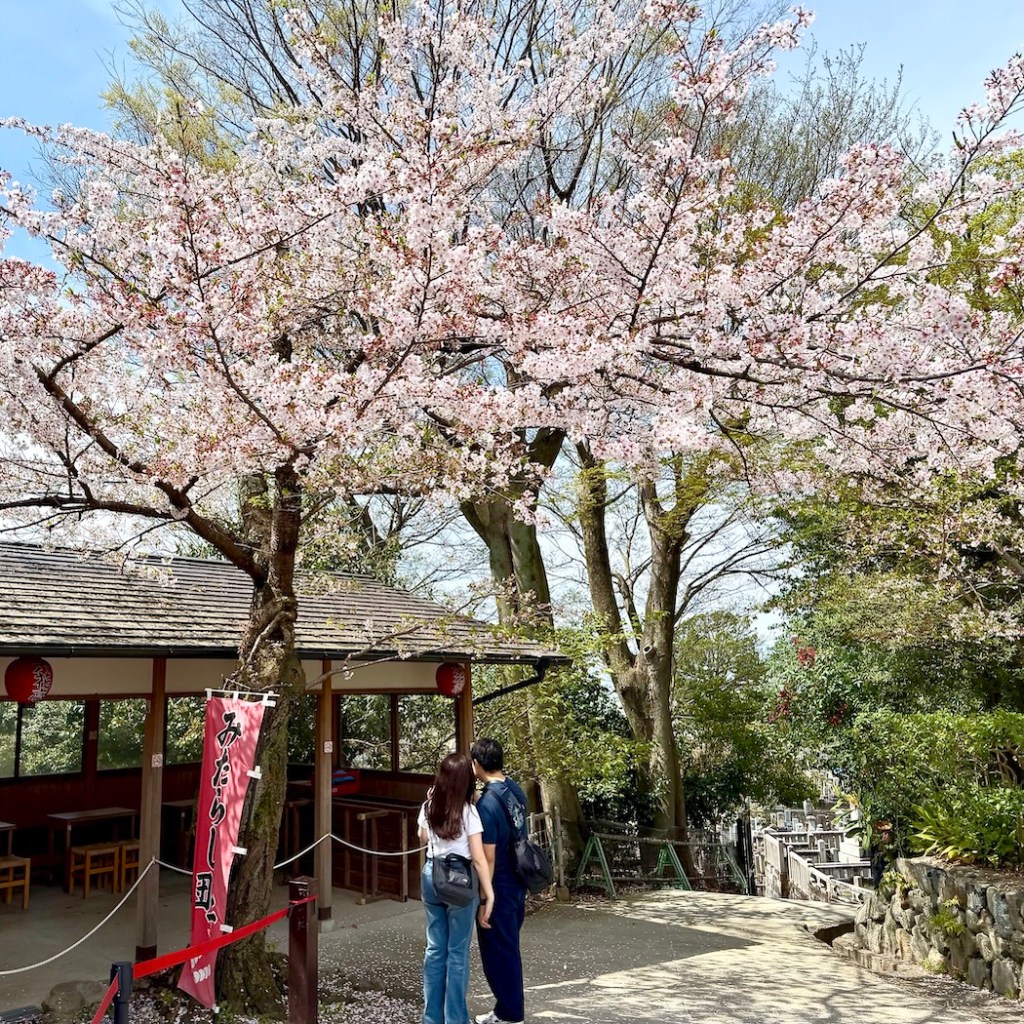
We left the temple area to have a cup of coffee before proceeding toward the Otani Hombyo Temple through the largest cemetery in Kyoto. Its 13K burial sites are a truly impressive sight as the stone markers fill the valley as far as the eye can see.
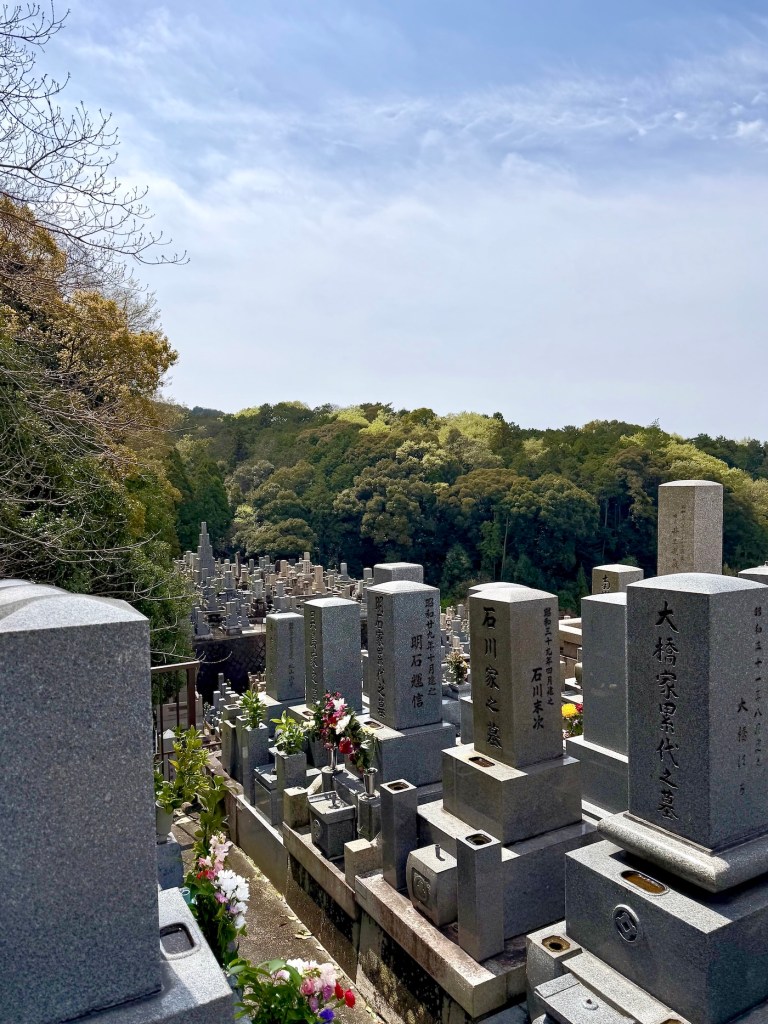
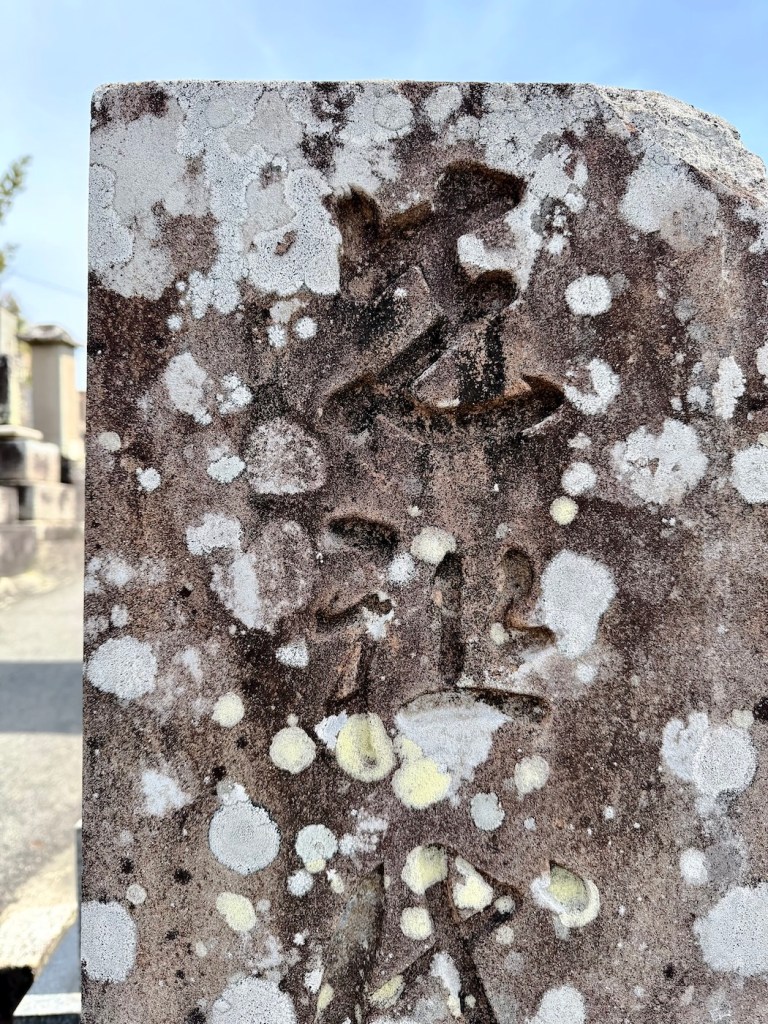
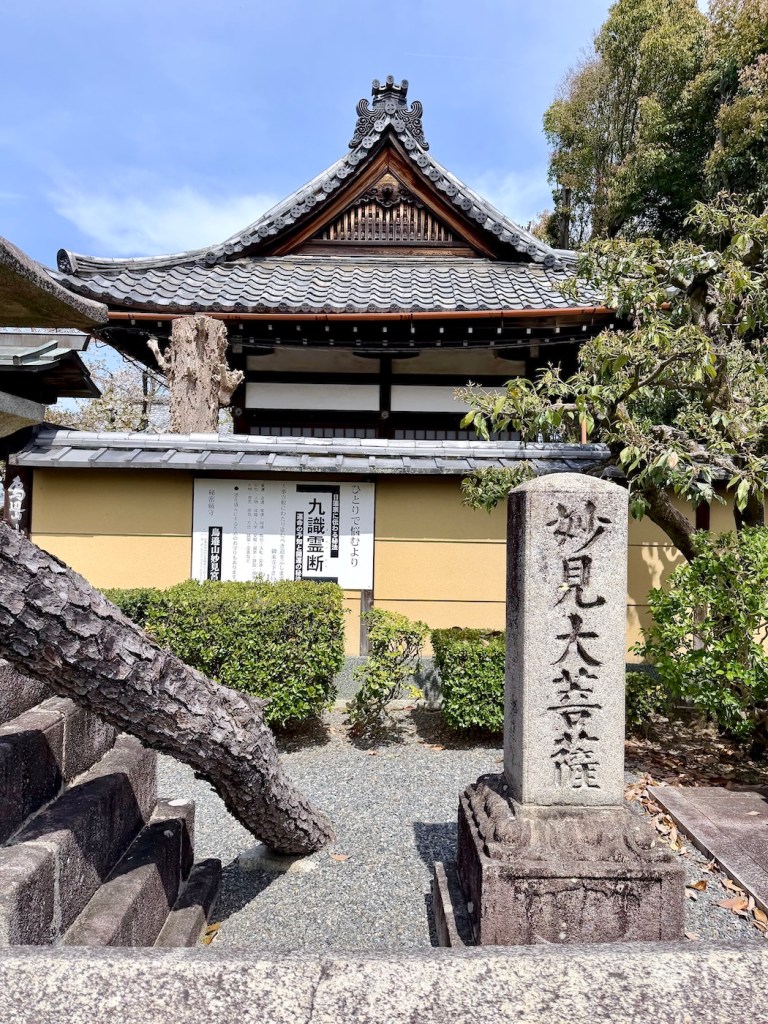
Looks like I managed to write about only one out of the three temples we visited that day. Sorry! But I hate to see you run out of reading material, so I’ll add one more link. This is the official website of KIYOMIZU-DERA. No worries, it’s the English version. There are many beautiful pictures, including period panels, and detailed descriptions of the temple buildings and ceremonies. Otani-hombyo and Nanzen-ji will follow soon …


Another superior job!!!
Dr. Barry N. Leon
707 Cardinal Lane, #A1 Austin, TX 78704
USA
On Sat, Jun 20, 2026 at 10:19 PM NOT IN A STRAIGHT LINE by Photolera
LikeLike